|
 April 1, 2024
|
|
New Jersey Shield Experiences Steady Growth as 3-Year Anniversary Approaches
 As the third anniversary of New Jersey Shield approaches April 14, the program continues to experience steady growth as it strives to carry out its mission of “Working Together to Build a Prepared and Resilient New Jersey.” A joint effort between the New Jersey Office of Homeland Security and Preparedness and the New Jersey Regional Operations and Intelligence Center, NJ Shield provides counterterrorism, cybersecurity and preparedness information and resources to its vetted government and business community members. Since its 2021 debut, NJ Shield’s membership has grown to 1,628 and now encompasses stakeholders from four countries, 27 states and all 21 New Jersey counties. Participants include New Jersey government agencies, homeland security affiliates, law enforcement, as well as private- and public-sector managers of security, emergency management and business continuity. NJOHSP’s Risk Management Bureau manages the program. During State fiscal year 2023, bureau staff coordinated with private-sector organizations and local communities to deliver 17 in-person and virtual seminars to more than 1,780 attendees. To kick off its third year, NJ Shield will host virtual Speaker Series sessions, featuring subject-matter experts, beginning May 22 and continuing throughout the year. The 2024 season overview topics include human trafficking and hurricane preparedness. The Speaker Series has been a successful tool to bring subject matter experts to NJ Shield members in a virtual setting to provide training and timely updates.
Additional Resources
New Jersey Shield
|
|
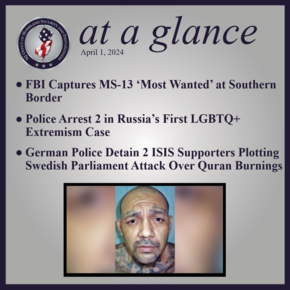
Terrorism At a Glance
|
|
 NJCCIC Warns: Continuation of SMS Text Phishing
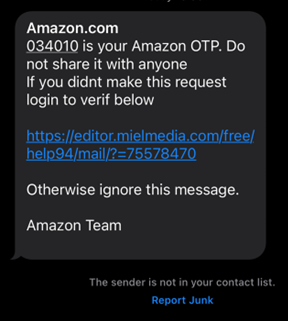 |
Threat actors continue to use SMS text messages in phishing campaigns to steal users’ personal data, account information and funds. SMS-based phishing may be more effective than email phishing as a user views these messages on a mobile device, making it more difficult for targeted individuals to identify potentially malicious communications; particularly when legitimate business and organizations are increasing their use of these types of communications. Users may also act on a message by clicking a link or responding impulsively, especially if they are fatigued by the number of text messages they receive. SMiShing messages will often impersonate a business or organization – such as Amazon, FedEx, UPS, Netflix or the IRS. These messages may request a users' sensitive information which could facilitate identity theft or account compromise. Additionally, there has been a recent increase in other SMiShing campaigns in which a user receives a text message from an unrecognized number that contains verbiage similar to, “Hey! How have you been?” The threat actors behind these campaigns seek to garner a response from the recipient. Responding may lead to a conversation that lures the user into a scam, or the threat actor may simply be attempting to confirm that the phone number is active. The NJCCIC advises users to navigate to any online account directly by manually typing the official URL into their browser; to refrain from clicking links delivered in text messages from unverified sources; to avoid providing sensitive information to unknown senders; to delete unsolicited text messages without responding; to consider blocking text messages from non-contacts; and to report SMiShing attempts to the Federal Trade Commission, NJCCIC and by forwarding the message to 7726 (SPAM).
Additional Resources
Incident Reporting | NJCCIC Membership
|
|
 France, Italy Ramp Up Security Following ISIS-Khorasan Terrorist Attack in Russia
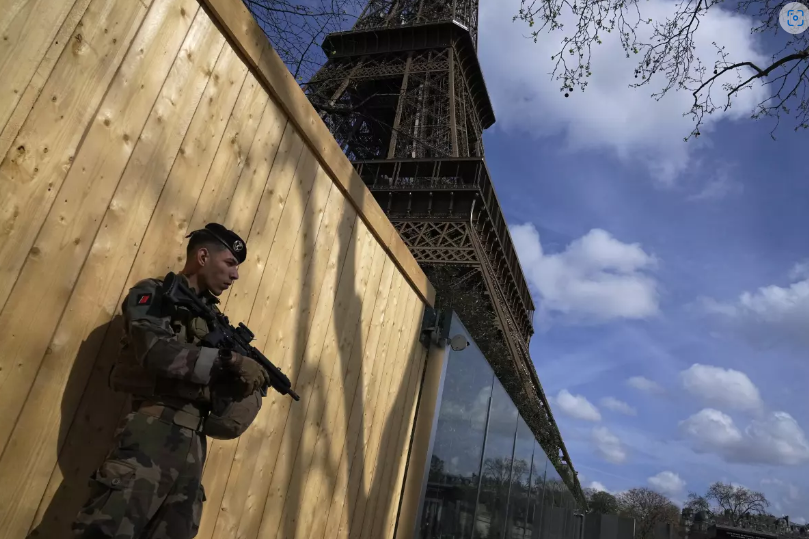 A soldier stands guard at the Eiffel Tower in Paris. Photo credit: Michel Euler/Associated Press.
European countries are stepping up security measures following the deadliest attack on Russian soil in two decades. France raised its security alert warning to its highest level March 25 in the wake of the recent Moscow, Russia, concert hall terrorist attack that killed at least 137 individuals and injured more than 180 others. The move comes just four months before Paris hosts the Olympics. Italy followed suit the same day, increasing its security around the Holy Week observances that led up to Easter, which Christians celebrated March 31. German officials, meanwhile, said the threat from ISIS extremists “remains acute” but did not increase its alert warning, despite the March 21 ISIS-Khorasan-led Moscow massacre. In Serbia, secret police officers armed with machine guns patrolled the streets of Belgrade after the attack. French Prime Minister Gabriel Attal said, “Given the Islamic State's claim of responsibility for the attack and the threats weighing on our country, we have decided to raise the Vigipirate posture to its highest level: attack emergency.” The security level indicates that French officials believe an attack at home or abroad is imminent. The designation allows increased patrols by armed forces in public places, such as train stations, airports and religious sites.
|
|
Contact Information
For more information, please contact communications@njohsp.gov.
The NJOHSP Weekly Bulletin is a weekly publication of the New Jersey Office of Homeland Security and Preparedness and is intended to provide our constituents with finished intelligence and resiliency publications and announcements. Please visit njohsp.gov/connect/weekly-bulletin to read previous bulletins.
Report Suspicious Activity: Call 1-866-4-SAFE-NJ or email tips@njohsp.gov.
|
|
|
|




