|
July 24, 2023

|
|
NJOHSP Summer Interns Conclude Program With Capstone Presentations
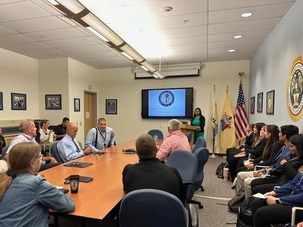
As the New Jersey Office of Homeland Security and Preparedness’ first paid internship program winds down, the agency’s 12 summer interns presented their capstone presentations this week to NJOHSP staff. During the eight-week program, interns work on ongoing projects under the guidance of a supervisor or mentor to help develop and apply their areas of study to a real-world setting as they explore various NJOHSP career paths. The internship concludes with a capstone presentation in which each intern focuses on one or two main projects, allowing them to develop and hone their public speaking skills, answer audience questions and receive feedback from their mentors and peers.
Presentation topics include:
- Threat and Hazard Identification and Risk Assessment
- Determining if a domain name is algorithmically generated or legitimate
- The relationships between NJOHSP training programs and real-world incidents and the implementation of these programs to assist in preparedness efforts
- Data science process of collecting, cleaning, analyzing and visualizing ransomware data
- Plots and trends of homegrown violent extremists, including most common targets, methods, activities and social media usage
- Potential cybersecurity vulnerabilities and events
- Identifying websites displaying improper content and sites with expired domains to help ensure the protection of the Garden State Network
- Analysis of New Jersey school-based suspicious activity reports from 2019 to present
NJOHSP offers a paid internship program during the spring, summer and fall semesters to students enrolled full time in an accredited college, university or post graduate program. The application window for the fall program closes July 28.
|
Additional Resources
NJOHSP Internship Program | NJOHSP Fall Internship Application
|
|
 Deepfakes: A Growing Cyber Threat
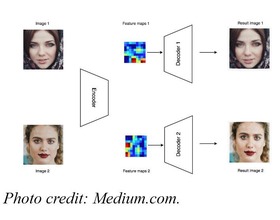
Experts are cautioning the public against threat actors who are finding innovative ways to use a newer technology known as deepfakes for nefarious purposes. Deepfakes are synthetic videos, images or audio recordings that have been manipulated using artificial intelligence to superimpose faces, insert new people or items, modify behavior or change audio and dialogue. Threat actors may use deepfakes to deliver malware, pose as victims to obtain access to sensitive data, spread misinformation and disinformation or cause reputational damage. Threat actors may also use deepfakes in schemes to extort money from potential victims. Earlier this year, a mother in Arizona received a phone call that appeared to be from her daughter. The voice on the other end pleaded for help before a man’s voice demanded a ransom of $1 million in exchange for the safe return of the young woman. Shortly after, an investigation revealed that the phone call was part of a deepfake kidnapping scam. Threat actors had found the daughter's voice online and used AI voice cloning to modify an audio snippet. The New Jersey Cybersecurity and Communications Integration Cell advises users to practice basic cyber hygiene to reduce the risk of being victimized and to update social media privacy settings to ensure that only trusted individuals can view their photos and videos. Visit NJCCIC’s website for more information regarding deepfakes.
|
Additional Resources
Incident Reporting | NJCCIC Membership
|
|
 Ransomware Criminals are Selling Students’ Confidential Files on the Dark Web
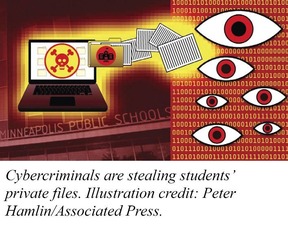
Data terrorists are stealing children’s confidential files from schools with relative ease and selling the data on the dark web if school districts refuse to pay a ransom, cybersecurity experts reported earlier this month. The confidential documents, they noted, are “raw, intimate and graphic” and include, among other things, student sexual assaults, psychiatric hospitalizations, abusive parents and suicide attempts. The subjects of those confidential documents are often unaware of the incidents, including victims of highly publicized cases. The trend first gained traction during the pandemic, temporarily decreased in 2020 and 2021 but became a lucrative and widespread crime during the last year and a half. A July 2023 Comparitech study reports 65 individual ransomware attacks of this nature affected 1,436 schools and colleges, potentially impacting 1,074,926 students and costing institutions nearly $9.45 billion in 2022. Malwarebytes, a corporation that makes anti-malware software, reports 190 known ransomware attacks against educational institutions between June 2022 and May 2023, including an 84 percent spike over the last six months. Ross Brewer, a cybersecurity expert with SimSpace, said the numbers are just the tip of the iceberg, noting that 85 percent of ransomware attacks are not reported.
|
Additional Resources
NJCCIC Ransomware Threat Profile
|
|
Contact Information
For more information, please contact communications@njohsp.gov.
The NJOHSP Weekly Bulletin is a weekly publication of the New Jersey Office of Homeland Security and Preparedness and is intended to provide our constituents with finished intelligence and resiliency publications and announcements.
Report Suspicious Activity: Call 1-866-4-SAFE-NJ or email tips@njohsp.gov
|
|
|
|