|
Having trouble viewing this email? View it as a Web page.
|
|
Monmouth County Environmental Newsletter: Summer 2024
|
|
|
|
|
NJ Protecting Against Climate Threats Resilient Environment and Landscape Proposed Rules are Moving Forward
NJDEP's Resilient Environment and Landscape rules (REAL) are part of the regulations Protecting Against Climate Threats (NJ PACT) which aims to avoid, mitigate and adapt the State to the risks of climate change. These rules were developed as a result of the Rutgers University Science and Technical Advisory Panel (STAP) Report released in 2019. The reforms will modernize the NJDEP land resource protection rules to respond to chronic flooding, prepare for sea level rise, and facilitate climate resilience by supporting green infrastructure and renewable energy. The rules propose modifications to the Coastal Zone Management rules, Freshwater Wetlands Protection Act rules, Flood Hazard Area Control Act rules and several additional rules that are cross-referenced.
The proposed rule is expected to be published in the NJ Register this summer for a 90-day public comment period. Topical webinar focused on Sea Level Rise & Inundation Risk Zone, Environmental Enhancements, Coastal Climate Protection, and Stormwater are available on NJDEP's website: https://dep.nj.gov/njreal/webinars/. A courtesy copy of the draft rule has been released.
The Federal Flood Risk Management Standard rule (FFRMS), published in the Federal Register on April 23, is the Housing and Urban Development (HUD) agency's final rule which revises its regulations governing floodplain management and protection of wetlands. HUD now has its own defined flood risk area. According to HUD's press release, flooding is the most common and costly weather-related disaster in the United States, and underserved communities are disproportionately impacted by flooding events.
This rule strengthens the flood risk standards to better protect communities and taxpayer-funded investments, such as those projects which are administered by the Monmouth County Office of Community Development, from the economic loss, health impacts, and recovery costs associated with flooding. It is anticipated severe weather events will increase in frequency over time. Increasing the base flood elevations and flood-proofing requirements is intended to ensure that investments within communities will consider both today's and tomorrow's flood risk.
The "Floodplain Management and Protection of Wetlands; Minimum Property Standards for Flood Hazard Exposure; Building to the Federal Flood Risk Management Standard" is available in the Federal Register. An informational webinar is also available here: https://www.youtube.com/watch?v=h4kHzMPnRU0.
|
|
Upcoming Environmental & Outdoor Events in Monmouth County:
Some activities may require fees and/or registration.
•July 24, 7-8 p.m., Sea Stars, Sand Dollars and Other Sea Urchins, Bayshore Waterfront Park Activity Center, Port Monmouth.
• July 26, 7-8 p.m., Native Plant Society of New Jersey hosts On-Site Native Plant Flower Arranging Competition at Monmouth County Fair, East Freehold Showgrounds, Freehold, Advanced Registration Required.
•July 27, 8 a.m., Yoga on the Beach at Sandy Hook, Sandy Hook Gateway National Recreation Area, Spermaceti Cove Parking Lot Center Chute.
•August 7, 7 -8 p.m., Save Coastal Wildlife Sunset Beach Cleanup at Sandy Hook, Parking Area C, Sandy Hook National Recreation Area. Registration requested.
• August 9, 5 -7 p.m., Waterspirit Summer Evening Beach Cleanup, Sandy Hook National Recreation Area, Parking Area L - Horseshoe Cove.
•August 22, 6 p.m. Monmouth County Audubon Society Sandy Hook Summer Evening Bird Walk, Sandy Hook Gateway National Recreation Area., Lot M, Advance Registration Required.
• August 27, 9 a.m. Casual Birder, Fisherman's Cove Conservation Area, Manasquan.
|
|
|
NJ Heat Hub and the Extreme Heat Resilience Action Plan
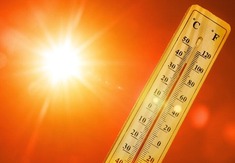
It's summer and we're sweating! It's supposed to be hot. But, this hot? Extreme Heat, defined by FEMA as a period of 2 to 3 days of high heat and humidity with temperatures above 90 degrees, is a dangerous weather condition that is becoming more common and severe. The combination of hot weather and high humidity can quickly cause heat-related illness, as it is easy to become dehydrated and overheated. As reported in the April 22, 2024 press release New Jersey Interagency Council on Climate Resilience Releases Draft Extreme Heat Resilience Action Plan, Launches Updated Heat Hub NJ, extreme heat is considered to be one of the deadliest climate-related hazards facing New Jersey.
"Climate change and its impact on the environment is happening now in New Jersey. Ensuring a healthy environment contributes directly to healthy bodies and minds," said New Jersey State Health Commissioner Kaitlan Baston, M.D. "As New Jersey sees increasing frequency of extreme heat events, awareness of the physical and mental impacts of heat- and how to help- becomes more and more important." said Sarah Adelman, Commissioner of the New Jersey Department of Human Services. |
|
 |
The draft Extreme Heat Resilience Action Plan released by NJDEP outlines agency-led initiatives, polices and programs to address the challenges extreme heat poses. The plan calls out five priorities to mitigate the impacts of extreme heat. These are 1) building resilient and healthy communities; 2) strengthening the resilience of New Jersey ecosystems; 3) promoting coordinated governance; 4) investing in information and increasing public understanding; and 5) promoting climate-informed investments and innovative financing.
The Heat Hub NJ website has many resources available to learn about the health impacts of extreme heat and tips to respond in extreme heat emergencies including where to Chill Out NJ. Cooling centers can also be located using the website https://nj211.org/nj-cooling-centers.
|
|
The U.S. Department of Agriculture releases the 2022 Census of Agriculture
The United States Department of Agriculture National Agricultural Statistics Service has released the 2022 Census of Agriculture report. Conducted every five years, it is a complete count of farms and ranches and the people who operate them. To be included in the census, a farm or ranch needs to produce or sell $1,000.00 or more of agriculture products in a year. The census provides agriculture data for every state and county across the U.S. and serves as a guide for federal farm programs, policy, and funding decisions.
According to a Feb. 14, 2024 New Jersey Department of Agriculture press release, the data showed that more than 80 percent of total sales for New Jersey agriculture are in the top three sectors. New Jersey's leading agricultural sector with sales of nearly $725 million is its nursery, greenhouse, floriculture and sod industry.
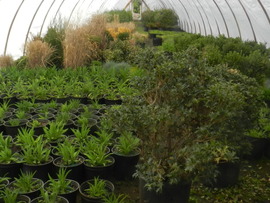 Second is the vegetable industry with sales of nearly $295 million, and third are the sales of fruit and berries at $200 million.
The market value of agriculture products sold in Monmouth County is available in the Monmouth County Profile data. The profile data also highlights information on number of farms, farms by size, land use, operator characteristics, production practices and notes that Monmouth County had 8 percent of the state agriculture sales.
|
|
Monmouth Beach Adopts Microplastics Construction Waste Ordinance
On June 18, 2024, Monmouth Beach adopted an ordinance intended to keep microplastics from reaching waterways. Microplastics are tiny plastic pieces which measure less than five millimetres (0.2 inches). They are non-biodegradable, environmental pollutants that can long-term consequences for aquatic life and human health. As stated within National Geographic, microplastics have been found in marine organisms from plankton to whales, in commercial seafood and in drinking water.
At construction job sites, cutting of materials creates tiny shards of plastic. Microplastics can easily be blown by the wind, ending up in storm drains and traveling into rivers or the ocean, into the soil or can even be inhaled. The Monmouth Beach ordinance requires contractors to use a vacuum attachment when cutting or drilling AZEK, TREK or any fiberglass, plastic, poly-compound materials, plastic or wood, to minimize the release of dust and microplastic particles. Contractors must also place a tarp down before cutting or drilling and should do so in enclosed spaces to minimize dust levels, which will ultimately protect aquatic and human health.
Construction sites are just one source of microplastics. Microplastics form through the breakdown of plastic bags, bottles, tires, synthetic clothes, or blankets which do end up in our waterways, washing ashore beaches. How much microplastic waste is there? A community science program partnership created by the Plastic Wave Program, Save Coastal Wildlife, and Save Barnegat Bay collect samples four times a year to study microplastic concentration. Those interested in learning more or volunteering can sign-up at Microplastics Monitoring Community Science Program.
|
|
|
EPA Funding Supports Water Quality Monitoring at NJ Beaches
|
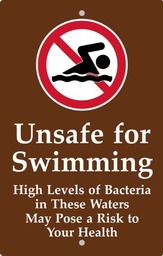
With 27 miles of Atlantic coastline in Monmouth County, recreational beach water quality monitoring from mid-May through September helps to protect the health of beachgoers who enjoy a dip in the ocean. On June 18, the U.S. Environmental Protection Agency announced an additional $258,000 in grant funding to assist in testing New Jersey's coastal communities beach water for illness-causing bacteria.
Through the NJDEP administered Cooperative Coastal Monitoring Program, local health departments collect water samples to check that the concentration of bacteria does not exceed 104 colonies of Enterococci bacteria per 100 milliliters of sample. If there is an exceedance after the initial sample, a swim advisory is posted to warn the public of potentially unhealthy water conditions. If two consecutive samples are in exceedance, the beaches are closed until follow-up sampling indicates the water is safe for swimmers and users.
|
|
 |
The most up-to-date information on current beach status, water quality sample results, reports of beach advisories and beach closings can be found on the State website, https://njbeaches.org/
To view Monmouth County specific beach information, visit the Monmouth County Safe Beach Day dashboard.
|
|
Acidic Ocean Water Likely Contributes to Decreasing Shell Density of Blue Mussel
Researchers from the American Museum of Natural History have investigated the impacts of environmental changes on blue mussels (Mytilus edulis) in the study "Using Museum collections to assess the impact of industrialization on mussel (Mytilus edulis) calcification". The study found that warming water temperatures are likely contributing to increased porosity (small holes) and decreased density of their shells.
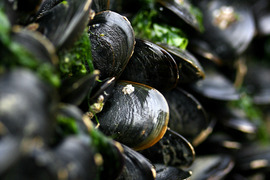 Shellfish, like the blue mussel, use calcium and carbonate from the ocean to grow their shells. According to Britannica, an increasing amount of atmospheric carbon dioxide leads to the ocean absorbing an increasing amount of carbon dioxide. This causes the water to become more acidic. Ocean acidity reduces the concentration of the carbonate ions and the availability of aragonate (a significant source of calcium carbonate) in seawater, thereby reducing the available calcium and carbonate needed by shellfish to grow their shells.
Specimens of blue mussel shells collected from five sites dating back to the 1900s and 1960s were compared with modern samples from the same sites. Researchers examined the shells' thickness, their surface area and volume, and their density and porosity. Over the last 120 years, the porosity in mussel shells have increased, and shells today are significantly more porous than shells collected in the past. Increasing porosity makes shells weaker and potentially more susceptible to damage.
Besides being an edible shellfish, blue mussels are considered an ecologically important species. Blue mussels are able to help filter water, provide coastal protection through formation of large mussel beds which create microhabitats for small organisms. If acidification of the ocean continues, this could in time reduce the positive role the blue mussel has on coastal water quality and enhanced biodiversity of their microhabitats.
|
|
Delisting the Bald Eagle and Osprey from NJ's list of Endangered, Threatened, and Vulnerable Species List
The NJDEP Division of Fish and Wildlife published a Notice of Rule Proposal for amendments to the Lists of Endangered and Nongame Wildlife in the Division of Fish and Wildlife Rules N.J.A.C. 7:25 which proposes to change the listing of the bald eagle and ospreys. The current bald eagle protection status in New Jersey is endangered during the breeding season and state-threatened for the non-breeding season. Under the rule proposal, the bald eagle status would change to species of special concern. Ospreys are currently listed as threatened in New Jersey, and under the rule proposal, would be classified as stable.
The bald eagle and osprey, both raptor species, have been listed on New Jersey's endangered, threatened and special concern wildlife lists since the 1970s due to the widespread use of a pesticide DDT, and habitat loss. DDT was sprayed to control insect-borne diseases that impacted public health (malaria, typhus, body lice), and against insects that impacted crops. Although there was success in protecting public health and crops, insects became resistant to DDT. It was found this chemical accumulated within the fatty tissue of organisms, impacting the food chain. This was a deadly consequence for many species of birds, including the bald eagle and osprey. DDT thinned the eggshells of their offspring causing the shells to break during incubation. This issue, along with habitat loss, pushed these species to be in danger of extinction.
With the banning of DDT in 1972 and other restoration and recovery efforts, the bald eagle and osprey have made their way back from the brink. As noted in the June 3, 2024 press release ENSP Chief Kathy Clark states "The recovery and de-listing of bald eagles and ospreys is a huge milestone for our state. This is an achievement for all those who work on behalf of the natural ecosystems of New Jersey."
|
|
|
About This Newsletter
The purpose of the newsletter is to inform Monmouth County citizens on the health of their environment and list environmental outreach events in their community. The newsletter is produced by the Environmental & Sustainability Planning Section of the Monmouth County Division of Planning in coordination with the Monmouth County Environmental Council. The County of Monmouth and the Board of County Commissioners do not necessarily share the viewpoints of any environmental group mentioned in this newsletter.
If you have questions, comments, or wish to have an event listed in the newsletter, please contact: Melissa Bezahler melissa.bezahler@co.monmouth.nj.us
|
|
|
|