NJ TRANSIT Making Payment More Accessible
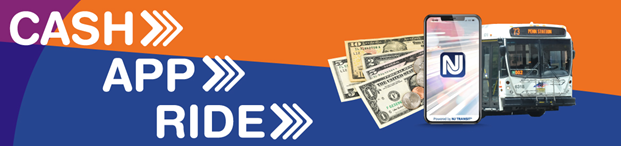 In an effort to provide more payment options and greater convenience to travelers, NJ TRANSIT introduced a cash payment option through it’s mobile app in early March. How do you add cash? When visiting any of the over 1,000 participating retailers, customers can add cash to their MyTransit Wallet by having a store clerk scan your barcode on the NJ TRANSIT app and add your cash to your digital balance, which can then be used to pay for any NJ TRANSIT service. Having location services turned on your cell phone allows you to see the closest participating locations. Retailers participating in the program include Walgreens, CVS, 7-Eleven, and more. NJ TRANSIT views this change as an opportunity to further distance themselves from cash and paper-based systems, advancing transportation in the State into a more modern and convenient era.
$13.2 Million Allocated for Pedestrian Tunnel at Long Branch Station
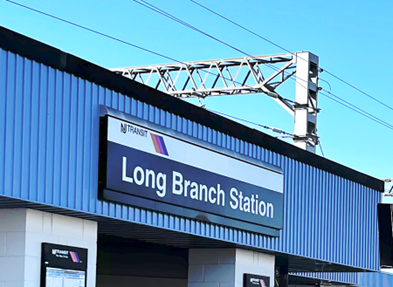 The Reconnecting Communities Pilot Program awarded a $13.2 million grant to New Jersey Transit to build a tunnel connecting Long Branch neighborhoods located on the east and west sides of the rail line. These areas are currently separated by the train tracks and a sound barrier. The Reconnecting Communities Pilot Program aims to assist communities, financially and administratively, in infrastructure projects and planning efforts to mitigate transportation barriers and better connect communities. In addition, the grant will go towards the revitalization of the station’s commuter parking lot through a greater emphasis on multi-modal transportation, landscaping improvements, a heated pedestrian overhang, and more. With a pedestrian tunnel in place, residents will no longer have to cross tracks to get where they need to go, building on a culture of safety that has been manifesting all over the state.
USDOT Now Accepting Applications for Building EV Charging Infrastructure in Communities & along Corridors Nationwide
The United States Department of Transportation announced it is now accepting applications for a new $2.5 billion program to fund electric vehicle and alternative fuel infrastructure across designated highways, major roadways, and interstates. The program aims to build half a million charging stations and reduce national greenhouse gas emissions by 50% by 2030. One priority of the initiative is bringing electric vehicle charging into urban and underdeveloped communities. Additional program information and information on how your community can apply is available on the Notice of Funding Opportunity page.
More NJ to NYC Commuters Choosing not to Work in the City
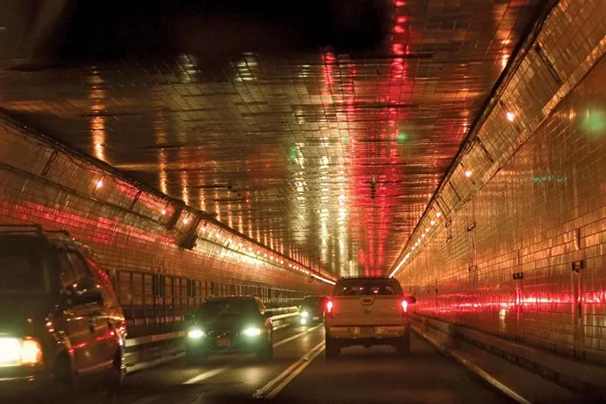 While 13% of North Jersey commuters reported traveling into New York City for work in 2019, that number dropped to just 8% according to the 2021 U.S. Census Bureau American Community Survey (ACS). Individuals who previously worked in Manhattan were found to be more likely to work from home post-pandemic due to the high number of office-based jobs based in Manhattan. NJ TRANSIT saw a tremendous drop in ridership from pre-pandemic levels with just 41% of the 2019 ridership in 2021. In general, more NYC Metro commuters are going into the City for work as time goes by with commuter rail ridership averaging between 75 - 80% of 2019 levels by the end of 2022. Time will only tell if levels will continue to rise to where they were or the trend to work from home continues.
Did You Know?
Over 99% of all the light duty vehicles manufactured in 2022 had automatic transmissions. This compares to just 65% of all light-duty cars made in 1980, an increase of over 34% in 42 years.
|