 Brian M. Hughes, Mercer County Executive
|
|
Mercer County Sustainability
|
Prepping your garden for the spring?
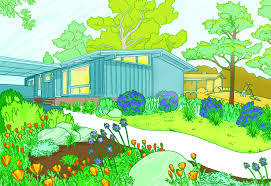
Here are some tips to reduce your impact on the earth while creating your beautiful garden.
- Plant native plants -- they require less watering and fertilizer than other plants (they actually don’t require fertilizer at all), while providing important habitat for pollinators and other wildlife.
- Use an electric mower instead of a gas mower.
- Reduce your use of chemical fertilizers and pesticides on your property. Instead, look for organic alternatives to help manage pests and fertilize your plants.
- Create a brush pile in your yard rather than putting brush and vegetation on the street (saves the gas needed to pick it up, decomposing vegetation is good for the soil).
- Turn unused parts of your lawn into plantings.
- Try to avoid using an automatic sprinkler system -- they often overwater.
- If you have a lawn service, ask them to come less often.
- Don't use power equipment for leaf removal.
|
|
All About Composting, Part 1: What is Compost?
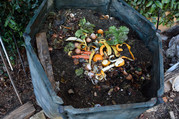
All About Composting is a two-part series where you learn all about composting. In Part 1, you will learn what composting is and why it’s important for the environment.
Compost is a pile of organic waste that over time breaks down or “decomposes” into a nutrient rich soil. The compost pile is usually made of a mixture of “green” organic materials like food scraps, garden trimmings or fresh manure and “brown” organic materials like dead or dry leaves, cardboard and wood chips. The “green” materials contain a chemical called nitrogen and the “brown” materials contain a chemical called carbon. These chemicals, plus air and water, make the perfect living conditions for bacteria and creatures like worms and insects; they feed on the organic matter and help to break it down. The resulting compost can be mixed into normal soil to help plants, flowers and crops grow faster and stronger.
Composting is a great practice for a number of reasons. Here are just a few of them:
- It saves water by helping the soil hold moisture and reduce water runoff.
- It benefits the environment by recycling organic resources while conserving landfill space.
- It reduces the use of petrochemical fertilizers.
- It helps control silt erosion.
- It moderates soil temperature and reduces weeds when used as mulch.
Want to learn more about composting? Check out this informative presentation by Margaret Pickoff, Mercer County Horticulturist; and Meredith Melendez, Mercer County Agricultural Agent: Soil and Compost 101: What Every Vegetable Gardener Needs to Know. Use the Access Passcode: Garden*2021.
Be sure to check out next month's Mercer County Sustainability Newsletter for All About Composting, Part 2: Yes, You Can Learn to Compost.
|
Have questions about gardening? Check out the Rutgers Master Gardeners of Mercer County
The Rutgers Master Gardeners of Mercer County can help you achieve many of the eco-friendly gardening tips discussed in this newsletter. The office regularly provides information on soil testing, planting native plants, low-input lawn care, starting a home compost bin, creating insect-friendly habitat and more. Members of the public can send Margaret Pickoff, Mercer County Horticulturist, an email anytime with gardening questions at mpickoff@mercercounty.org.
You can also refer to the Master Gardener’s Homepage, which has a lot of information and resources for environmentally-friendly gardening practices and updates on upcoming free webinars throughout the year.
The Master Gardeners put together a newsletter with seasonal gardening tips each month. Be sure to sign up!
|
Check out the Beyond the Bucket Guide!
Beyond the Bucket is a resource guide on how to recycle uncommon objects for Mercer County Residents. In order to ensure that the guide remains useful, we’ve updated it to include additional resources and remove locations that are no longer accepting items.
Please note that while all these locations were in operation at the time of the release of the documents, hours of operation and ability to accept items may have been impacted due to the ongoing Covid-19 pandemic. Please reach out to the organization to confirm the best way to get your items to them.
|