|
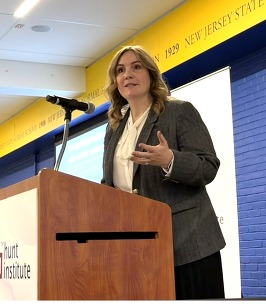
"Today, we are beginning a year of honest, statewide engagement to strengthen New Jersey’s school funding system. We will examine the full range of interconnected issues—from special education, transportation, preschool, and enrollment to local fair share, adequacy, and the tax levy cap—but we will not begin with a finished plan or focus on dollars alone. We will begin with students: the opportunities and supports every child needs to be safe, successful, and prepared for life after graduation. From there, we will identify the systems required to deliver those opportunities and consider how funding can support them responsibly, fairly, and sustainably. This work will be difficult, but through listening, learning, transparency, and partnership, I believe we can develop practical recommendations and a roadmap toward a stronger system for students across New Jersey."
-Excerpt from Commissioner’s Message on September 25, 2026, at the New Jersey School Funding Steering Committee.
Recent Highlights: Stakeholder Engagement Begins
Steering Committee convened
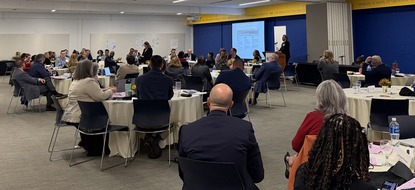 |
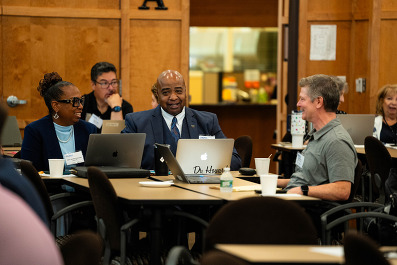
The New Jersey Department of Education recently convened the first meeting of its School Funding Steering Committee in partnership with The Hunt Institute, a national nonprofit founded by former North Carolina Governor Jim Hunt that supports education policymakers through research, technical assistance and collaborative convenings. The Steering Committee brought together leaders from education, government, business, philanthropy, policy and communities to begin developing a shared understanding of New Jersey’s school funding system and identifying opportunities to strengthen it for students. During the meeting, members examined the current system and national context, shared perspectives on the issues and outcomes that matter most, and began considering what a modern school funding system should accomplish. Once synthesized, notes from each convening will be posted on the NJDOE School Funding Outreach website. The Hunt Institute will continue to facilitate the committee’s evidence-informed process, bring research and national perspectives to the discussion, and synthesize members’ input to help inform recommendations for the path forward.
Regional forums kicked off
Regional and virtual forums will provide participants with an opportunity to offer public comments for up to three minutes. All feedback shared will be recorded and thoughtfully considered as part of this outreach effort. Registration for regional public forums is now available on the NJDOE Events webpage.
Community Roundtables
NJDOE is partnering with organizations across New Jersey to co-host community roundtables. These facilitated, small-group conversations will give participants an opportunity to learn about the school funding system, share their experiences and perspectives, and hear from others in a collaborative setting. Like the survey and regional public forums, roundtables are one of several ways NJDOE is gathering input so people can participate in the way that works best for them. NJDOE will share what it learns across these outreach efforts through public summaries and future reports. Some roundtables will be open to the public, while others will bring together invited participants to support focused, productive conversations. Registration for public community roundtables will be added to the events page on a rolling basis.
Section 4 - Take Action This Week
Step 1: Get to know the School Funding Outreach Project:
Step 2: Learn about School Funding:
- Watch the first installment of the School Finance Learning Series called “State Aid 101”
-
Take the survey and let us know what else we should add.
Step 3: Get involved:
Step 4: Stay informed:
-
Sign up to get this newsletter every two weeks.
What we have heard so far:
Participants have highlighted the need for a school funding system that is transparent, understandable, and aligned with the realities facing students and schools today. Stakeholders so far have told us they want a better understanding of how school funding decisions are made, how state aid and local property taxes work together to support schools, and how communities can better anticipate changes in funding from year to year. Participants have also expressed interest in continued public discussions and clear, accessible information that helps connect funding decisions to student opportunities and outcomes.
|