In this issue...
...and something fun!

What should climate resilience look like in New Jersey, and how can we measure progress toward it? Building a more climate-resilient New Jersey starts with establishing and tracking meaningful, evidence-based goals and metrics.
The New Jersey Department of Environmental Protection’s Office of Climate Resilience (OCR) is working in collaboration with Rutgers University’s New Jersey Climate Change Resource Center, New Jersey Future, and the Regional Plan Association to develop a statewide framework of climate resilience goals, objectives, and metrics.
We want to hear from you! We're inviting members of the public to share their perspectives and expertise through a brief, 5-minute survey. Your input will help shape New Jersey’s initial climate resilience goals and inform how we measure progress toward a safer, stronger, and more resilient future.
Take 5 minutes to help define data-driven climate action: https://bit.ly/48pZbZR
|
 |
Have questions about climate resilience, our initiatives, or the work of the Office of Climate Resilience? Come visit us November 17–19 in Atlantic City at the League of Municipalities Annual Conference!
Our team will be available to answer your questions, share information about our programs and initiatives, and discuss how we can work together to build more resilient communities. Visit us at the NJDEP Local Government Assistance booth, 117, on the main floor.
Join members of our team at the following conference sessions on November 18 to explore strategies for building more resilient communities and preparing for the challenges ahead. We hope to see you there!
We look forward to connecting with you! Registration is still open, so be sure to sign up and stop by!
In 2026, the NJ Interagency Council on Climate Resilience helped connect local leaders and practitioners with resilience resources through a series of webinars and Lunch & Learn events. Highlights included a spring Lunch & Learn with the NJ Association of Floodplain Managers (NJAFM) and a fall event with the New Jersey Association of School Administrators (NJASA), where attendees learned about state agency grant opportunities, technical assistance programs, and other tools available to support local resilience efforts.
These events are part of the Council's ongoing Listening Session program, providing valuable feedback to inform the Council’s future workplan. Share your thoughts by visiting: .
 All throughout the summer, the Council's extreme heat webinar series highlighted proven strategies and real-world success stories from communities and organizations working to protect vulnerable groups from rising temperatures. Covering topics ranging from homelessness and youth to aging populations and municipal action, the series offered practical information that participants could apply in their own communities.
For additional extreme heat resources, visit.
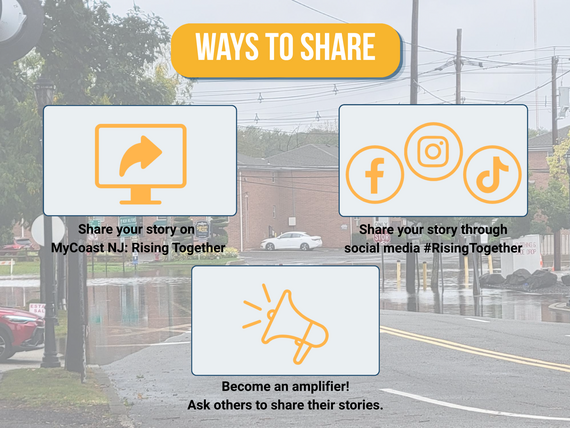
New Jersey saw widespread flooding this summer—and it wasn't just shoreline communities dealing with the impact. Heavy rainfall overwhelmed storm systems across the state, from parking lots miles from the ocean to residential streets in inland communities that have never been considered flood-prone. The message was clear: flooding is a statewide issue.
Your experiences matter. The photos, observations, and documentation you provide help identify flood vulnerabilities statewide, enhance emergency response protocols, and develop resilience initiatives that benefit every region.
Share Your Story Three Ways:
-
MyCoast NJ Platform - Upload photos and details at https://mycoast.org/nj/risingtogether.
- Social Media - Post using #RisingTogether and mention @njcoastalmanagement
- Spread the Word - Encourage neighbors and community groups to document their experiences.
Flooding doesn't respect geographic boundaries. A flooded home faces the same disruption whether it's inland or coastal. Understanding these statewide impacts requires input from every corner of New Jersey.

The Office of Climate Resilience (OCR) has launched the newly updated version of its Climate Resilience Planning Toolkit (previously titled “Local Planning for Climate Change Toolkit”). This online tool guides local government staff and planning practitioners through the process of developing a climate resilience action plan. It also highlights information useful for developing a climate change-related hazard vulnerability assessment for incorporation into municipal master plans, as required by the Municipal Land Use Law (MLUL).
The Climate Resilience Planning Toolkit provides an effective user experience with improved site navigation, interactive elements, and updated information on topics such as engagement and outreach, data collection and analysis, hazard, vulnerability, and risk assessments, action plan development, and action implementation.
Highlights of the new site include:
- A searchable resilience action matrix
- An extensive resource library
- A case study map identifying planning projects funded by the Resilient NJ program
To view the new Toolkit, click here or scan the QR code. For more on the Resilient NJ program, visit the website or contact ResilientNJ@dep.nj.gov.
|

The Sherrill Administration has announced the approval of $88 million in Garden State Preservation Trust (GSPT) funding for open space preservation projects statewide. Blue Acres plans to utilize the $26,325,000 allocation to offer voluntary buyouts to over 59 owners of flood-damaged properties in various flood-impacted areas across the state. The remainder of the proposed FY 2027 funding will support Green Acres land acquisition and nonprofit development projects, as well as capital improvements across DEP’s 800,000 acres of public lands.
“The approval of these funds by the independent Garden State Preservation Trust delivers on Governor Sherrill’s mission to protect critical water supplies, enhance natural resources, support recreational opportunities for everyone, and make New Jersey more resilient to the effects of storms and flooding,” DEP Deputy Commissioner Joe Seebode said. The funding, which comes from the constitutional dedication of Corporation Business Tax (CBT) revenue, was approved by the GSPT during its October 21 meeting, and has advanced to the Legislature for appropriation.
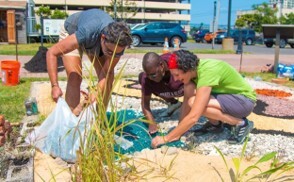
OCR and the New Jersey State Council on the Arts have selected four New Jersey artists for the 2026 NJ Climate Resilience Community-Based Arts Projects. These artists were chosen from more than 50 applicants to create site-specific visual or performance pieces that engage local communities. Each project uses art to spark conversations about climate resilience and to teach environmentally focused creative practices.
Congratulations to our selected artists and partner sites: Laia Cabrera and Isabelle Duverger (City of Hoboken); Tiffany Threadgould (Atlantic County Utilities Authority); Emily Loughlin (Camden FireWorks); and Mina Zarfsaz (Long Beach Island Foundation for Arts and Sciences).
Visit our Community-Based Art Program webpage to learn more, explore past projects, and follow updates as the 2026 work begins. Your community can get involved in events, workshops, and public art activities throughout the year.
|
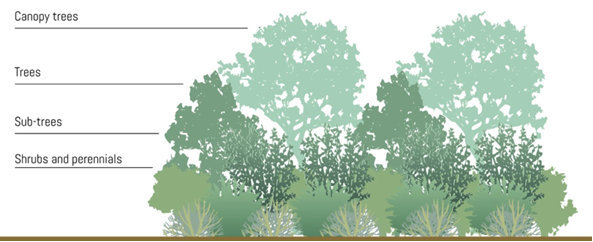
Open space from voluntary flood buyouts provides areas for flood storage. Could microforests enhance these benefits? These small, densely planted native forests can soak up rainfall, reduce flooding, and restore damaged land.
Microforests grow faster than traditional tree plantings because their design plants trees closer together, which encourages faster growth and mimics natural forest layers.
Microforests offer many benefits for communities. They help manage stormwater by absorbing water like a sponge, which reduces runoff and slows floodwaters during heavy rain. They also improve local air quality, reduce extreme heat, and expand urban tree cover.
Microforests can support long-term flood resilience while building stronger connections between residents and their environments. Community members can help plan, plant, and maintain these forests, creating a shared sense of ownership and pride.
If you are interested in establishing a microforest in your community, learn about the steps involved and how to get started by reading this article from leading experts in this growing field.
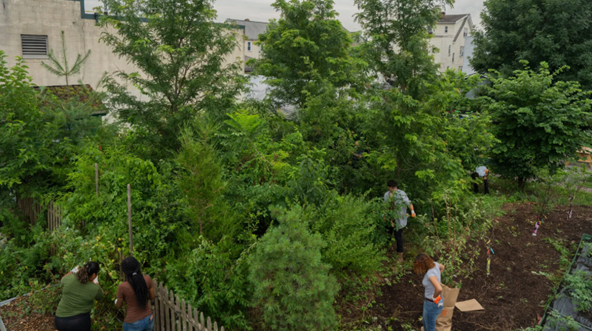 Microforest in Elizabeth, NJ. Credit: New York Times
|
What did the tree say when it realized it was the first day of fall?
They were in disbe-LEAF!
|
|
 |
|