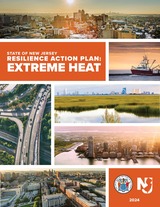
The New Jersey Interagency Council on Climate Resilience is happy to announce the release of the Draft Extreme Heat Resilience Action Plan. The Plan is only the third of its kind in the country and will direct efforts across state government to mitigate the effects of extreme heat (one of the deadliest climate-related hazards facing New Jerseyans). Recognizing the critical importance of engaging stakeholders and residents, the council invites public feedback regarding the actions outlined in the Draft Extreme Heat Resilience Action Plan through Monday, May 20th. Please visit this site to access the draft plan and submit comments and suggestions.
The State originally launched Heat Hub NJin September 2023 as a comprehensive online resource on all things heat-related in New Jersey.Heat Hub NJ is designed to be a “living” resource that would expand to include new and different information and resources available from the State. As such, member agencies and department representatives of New Jersey’s Interagency Council on Climate Resilience have coordinated to grow Heat Hub NJ’s resources. New to the Heat Hub NJ version release on Earth Day 2024 are:
A series of videos from different state agencies outlining the physical and behavioral impacts of extreme heat and how best to protect yourself and your community. You can find them on the NJDEP’s YouTube page;
A new section highlighting the toll extreme heat has on our mental functioning and resources to address those stresses;
Chill Out NJ, an interactive mapping feature to help New Jerseyans find public places to escape the heat that features a way for the public to provide feedback, suggest needed content, and help “crowdsource” Chill Out NJ with local knowledge and information, and;
A new focus section on identifying and dealing with heatwave emergencies when dangerously high temperatures continue over a period of time.
The Financial Times on Confronting Flood Vulnerabilities
The Financial Times recently delved into the increasing challenges faced by both residents and officials in managing floods. The article highlights the complex interplay of climate change, rising insurance expenses, and the necessity for modernized flood protection measures. Reporter Peter Barber interviewed a participant in the Blue Acres Program and NJDEP Commissioner LaTourette, as well as local government representatives and researchers addressing these pressing concerns.
“The costs associated with flooding are essentially getting socialized, or transferred to taxpayers generally,” said a researcher for the Environmental Defense Fund.
On average, 1,500 wildfires damage or destroy 7,000 acres of NJ forest each year. They not only damage our woodlands but are also becoming an increasing threat to property owners. The U.S. Department of Defense’s (DOD) Readiness and Environmental Protection Integration (REPI) Challenge Program partners the NJDEP, Forest Fire Service, and the DOD to help protect propertiesadjacent to military installations in the Pinelands from the increased risks of wildfire due to climate change. The partnerships between federal, state, and local governments help to ensure increased action in wildfire-prone areas.Check out the press release here for information on protection techniques, current projects, and available funding as well as information on the changes facing New Jersey Pinelands.
You have the right to know if you’re buying or renting a flood-prone property!
Beginning March 20, 2024, landlords and sellers of real estate property must notify prospective renters and buyers of specific flood risk information using new and enhanced property disclosure forms developed by the Department of Community Affairs and the Division of Consumer Affairs. The mandatory disclosure forms include the following, depending on if a property is being sold or rented:
To assist individuals with meeting the flood risk notification requirements, NJDEP has developed the Flood Risk Notification Tool, which enables users to search by mailing address to determine whether their property is in a FEMA Flood Hazard Area.
New Jersey’s law on flood risk notification (P.L.2024, c.94) was passed in response to increasing flood risks across the state. To learn more about this landmark law and how flood risks are changing in New Jersey, visit flooddisclosure.nj.gov.
In Case You Missed It
New Jersey Coastal and Climate Resilience Conference
NJDEP and theNew Jersey Coastal Resilience Collaborative(NJCRC)co-hosted their first New Jersey Coastal and Climate Resilience Conferenceearlier this year.To read more on the conference please check outourSpecial Edition Newsletter. Slides for many of the speakers and the agenda can now be viewed on the conference web page.
The Resilient Environments and Landscapes (REAL) Reform
Governor Murphy and NJDEP Commissioner Shawn LaTourette announce the first-in-nation suite of reforms to build resilience to coastal flooding and better protect communities from climate change impacts. Check out the press release and the NJPACT REAL website for more information, including upcoming webinars and a courtesy copy of the draft rule