|
Quarterly Newsletter - Fall 2023 |
|
Resilient NJ - NJ Coastal Management Program - Blue Acres |
|
|
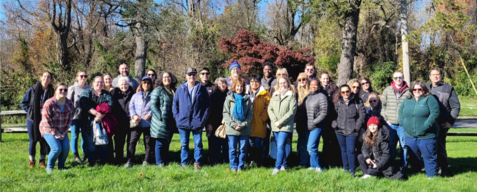
Welcome to the Office of Climate Resilience Newsletter! Our team is dedicated to increasing New Jersey’s resilience to climate change, working in partnership with local leaders, New Jersey's Interagency Council on Climate Resilience, and a diverse network of partners. We'll keep you informed on the latest developments, including funding opportunities, program announcements, upcoming events, job openings and more.
The Office of Climate Resilience team
In this issue...
...and something fun!
|
|
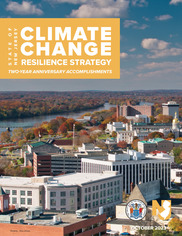
The New Jersey Interagency Council on Climate Resilience (IAC) collaborates to develop action plans promoting climate mitigation, adaptation, and long-term resilience throughout New Jersey. The IAC was established by Governor Murphy’s Executive Order 89, and released its framework document, the New Jersey Climate Change Resilience Strategy, in October 2021. With over 120 recommended actions outlined, this document presents strategies to strengthen NJ communities, ecosystems, and coastal resilience, and promote public outreach, government coordination, and climate-informed investments.
Since then, the IAC continues to turn the Resilience Strategy into action as summarized in the Climate Change Resilience Strategy Two-Year Anniversary Accomplishments Report. Among the noteworthy accomplishments is the development of an Extreme Heat Resilience Action Plan (RAP) (expected Spring 2024). The RAP will build on the foundational policy framework outlined in the Resilience Strategy and offers a more detailed approach to state agency actions around the increasingly prevalent issue of extreme heat, in line with the Resilience Strategy’s recommendations.
As one of the fastest-warming states in the country (and the fastest in the Northeast), New Jersey state departments and agency leaders recognize the challenges facing our residents and businesses due to increasing temperatures. New Jersey saw its third-hottest summer on record in 2022. In an average year, heat is the deadliest extreme weather event in the Garden State, accounting for almost double the number of fatalities as compared to flooding events. The Interagency Council has developed a survey for New Jerseyans to share priorities and concerns around extreme heat impacts.
|
|
|

A new Resilient NJ planning project will help eleven Burlington County municipalities assess climate change-related hazards and develop planning efforts that will make them more resilient to the climate impacts by evaluating vulnerability to current and future hazards including extreme temperatures, drought, flooding, hurricanes, and sea-level rise. The assistance is being offered through the Resilient NJ: Municipal Assistance Program to develop a Multi-Municipal Climate Change-Related Hazard Vulnerability Assessment (CCRHVA) for the Route 130 Corridor of Burlington County.
The municipalities selected for the Burlington County project are Beverly City, Burlington City, Burlington Township, Cinnaminson Township, Delran Township, Edgewater Park Township, Florence Township, Palmyra Borough, Riverside Township, Riverton Borough, and Willingboro Township. These communities are located along the Delaware River and the US Route 130 corridor and are frequently impacted by severe flooding events. Nine of the Burlington County project municipalities meet the state’s criteria as overburdened communities.
The DEP will select a consultant on behalf of the communities, pay the consultants for all associated costs and provide guidance as needed. The New Jersey Coastal Management Program, through the National Ocean and Atmospheric Administration, is providing $760,000 to fund the project. For more information on this project and learn more about the tour of some of the participating communities, please read the DEP Press Release.
|
|
|

Check out Heat Hub NJ, a digital resource on all things related to extreme heat in New Jersey! This site provides the basics of extreme heat, how it impacts daily life and the environment, the risks it poses to human health and wellbeing, ways to determine if you or a loved one are particularly vulnerable to the effects of extreme heat, and actions to take to protect yourself and others.
One of the tactics in addressing this issue is cooling centers. Cooling centers are spaces open to the public that can provide safety from the heat. Join us in making a difference! Take the Cooling Center Survey and help us improve the well-being of our community. Click here to take the survey or go to the website dep.nj.gov/coolingsurvey/
|
|
|
Window closes November 30, 2023
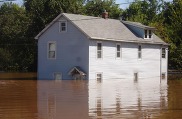
Blue Acres invites homeowners to submit applications for HUD-funded buyouts until November 30, 2023. The HUD Buyout Eligibility Application assesses homeowners' eligibility based on HUD's income criteria. Those meeting the criteria will receive notifications and be considered for a Blue Acres buyout funded by HUD. Other homeowners expressing interest will be retained for future buyout planning and grant opportunities. The current round of HUD Buyout Eligibility Applications closes at the end of November. Homeowners and local governments with inquiries can reach out to Blue Acres at 609-940-4140 or BlueAcres@dep.nj.gov.
Since the impact of Hurricane Ida in September 2021, Blue Acres has successfully acquired 45 homes susceptible to flooding and/or storm damage. Collaborating with willing sellers, the program aims to relocate families from vulnerable areas, contributing to enhanced local community resilience.
|
|
|
|
The newly released web resource, Climate Change in New Jersey: Impacts & Effects, provides an updated, direct and easy-to-read summary of the information in the 2020 New Jersey Scientific Report on Climate Change and the 2022 Human Health & Communities Addendum including photos, graphs, charts, tables, and animations as well as summaries of the climate change research findings relevant to New Jersey. This resource can be found on the new NJ DEP climate change website, along with curated climate change information for property owners, businesses, teachers, and local governments.
|
|
|
Why did the scarecrow win a medal?
He was outstanding in his field!
|
|
 |
|
|
If you were forwarded this email, join the OCR - Climate Resilience mailing list here. |
|
|
|
|