|
Gloucester, Somerset, and Union counties received notice at the end of last year to transition to the New Jersey Model Code Coordinated Ordinance by May 2, 2023. Additionally, notice to update to the new ordinance model by July 17, 2023 was sent to the communities of Camden, Essex and Passaic counties in January of this year.
Back to top.
Application Period is Open for Homeowner Assistance and Recovery Program (HARP)
The Homeowner Assistance Recovery Program (HARP) provides financial assistance to homeowners impacted by Hurricane Ida to repair, rebuild, and/or elevate their homes. The New Jersey Department of Community Affairs (DCA) is using Community Development Block Grant - Disaster Recovery (CDBG-DR) funds from the U.S. Department of Housing and Urban Development (HUD) to fund the program. This program is being offered for properties located within one of the following disaster-declared counties: Bergen, Essex, Gloucester, Hudson, Hunterdon, Mercer, Middlesex, Morris, Passaic, Somerset, Union, and Warren.
To be eligible for the program, homeowners must have a household income of less than $250,000. Priority will be given to applicants who are considered low- to moderate-income, which is less than 80% of the area median income. Eligibility requirements also dictate that homeowners must have been living in the home and owned the property at the time of the storm.
Additionally, the property must have at least one foot of flooding on the first floor of the living space OR $8,000 in damages, as determined by FEMA or a third-party damage assessment such as from the National Flood Insurance Program (NFIP). Furthermore, the property must have NFIP coverage at the time of the storm if the property is in a Special Flood Hazard Area (SFHA) with a household income greater than 120% of the area median income or previously received federal disaster recovery funds.
Types of assistance available to homeowners participating in HARP will be determined on a case-by-case basis. Homeowners may qualify for assistance to repair their home and/or elevate it. In some cases of substantially damaged homes, homeowners may be eligible to have their home rebuilt. There may be additional assistance provided to make homes more resilient to future storms by strengthening the home and improving drainage to reduce and/or prevent future flooding. Homeowners with disabilities may also receive assistance to add ramps, lifts, or roll-in shower stalls to make their home accessible.
Due to limited funding, DCA will implement the program in a phased approach, which is designated to prioritize low- to moderate-income households and households with residents who are 62 or older or who have a disability.
For complete information regarding who is eligible, what structures are eligible, and important application information please visit DCA's website at:
Back to Top
If a local Floodplain Administrator is interested in obtaining a copy of their community's RL and SRL properties to begin the process of verifying the status and mitigation of these properties, or to use the list for other planning purposes, a request must be made in writing to the FEMA Regional Point of Contact at fema-r2-nfip-datarequest@fema.dhs.gov.
Upon receipt of the data request, the FEMA Regional POC will assist the requesting municipality in drafting a formal data sharing request letter on official letterhead to be signed by the mayor or other chief executive officer of the municipality. The municipality will then be required to sign an Information Sharing Access Agreement (ISAA) with FEMA to protect Personally Identifiable Information associated with this list.
Back to top.
Next quarter, the NJDEP will be providing training opportunities to interested parties covering two important topics for floodplain managers: (1) Ordinance Administration & Model Permit Training; and (2) Letter of Map Change (LOMC) Training. Sponsored by FEMA Region II and the NJDEP State NFIP Coordinator's Office, a total of four sessions for each of the two training topics will be offered. Below you can find more information about the content of each training session and links to register for the trainings. Please be sure to use the links below to register for any training session(s) that you wish to attend.
"Ordinance Administration & Model Permit Training"
1-hour webinar sponsored by FEMA R2 and provided by NJDEP/Baker Engineering
During this training, we will discuss the Model Code Coordinated Ordinance, its administration and the Model Floodplain Development Permit. All 552 participating communities will have to adopt the new Model Code to remain in good standing with the National Flood Insurance Program. This ordinance incorporates New Jersey Flood Hazard Area Control Act higher floodplain standards and required National Flood Insurance Program regulatory requirements with Statewide Uniform Construction Code flood resistant design requirements. This presentation will describe how development should be designed, permitted, and constructed to ensure compliance with the National Flood Insurance Program under the Model Code Coordinated Ordinance and will answer the question: 'Why is Ordinance Administration and Permitting important?'.
Presenters: Joseph Ruggeri, P.E., CFM, NJDEP
Becky Lyne, PWS, CE, Michael Baker International
"Letter of Map Change (LOMC) Training"
3-hour webinar sponsored by FEMA R2 and provided by NJDEP/AECOM
The New Jersey Community Assistance Program – State Supported Services Element (CAP-SSSE) is responsible for assisting municipalities and their local floodplain administrators to better understand their floodplain management responsibilities under FEMA’s National Flood Insurance Program (NFIP) for evaluating and determining design flood elevations in FEMA’s Special Flood Hazard Area (SFHA) as determined by FEMA map products. This goal of this webinar that is sponsored by FEMA Region II and the NJDEP State NFIP Coordinators Office is to better communicate and implement FEMA map products, make modifications to map products through the Letter of Map Change process, and assist stakeholders and community officials in managing floodplain development.
Presenters: Joseph Ruggeri, P.E., CFM, NJDEP
Ben Kaiser, AECOM
John Dromsky-Reed. P.E., AECOM
Bhavin Gandhi, P.E., CFM, AECOM
Back to top.
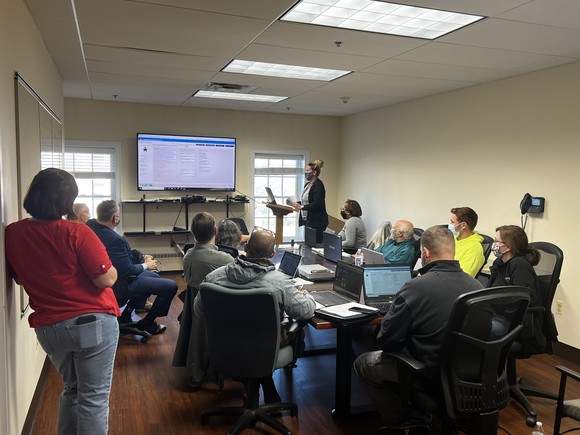
Last June, the New Jersey Floodplain Administrator Guidebook was introduced as a draft and is now being finalized. Other than updates to include a discussion of the Federal Flood Risk Management Standard and an updating of Local Design Flood Elevation and Determining Wave Height Worksheets, the finalized guidebook is substantially similar to the draft version. It will continue to be a living document and will be updated as needed.
Back to top.
The New Jersey Department of Community Affairs (DCA) has recently amended the Building Subcode of the Uniform Construction Code (UCC) to incorporate the 2021 Edition of the International Building Code (IBC). On March 6th, 2023, NJDCA posted in the New Jersey Register adoption of amendments to the Building Subcode, located within the New Jersey Administrative Code at N.J.A.C. 5:23-3.14, to incorporate the 2021 Edition of the IBC.
Back to top.
In December of 2022, New Jersey proposed amendments, repeal, and new rules to the Stormwater Management (SWM rules at N.J.A.C. 7:8 and Flood Hazard Area Control Act (FHACA) rules at N.J.A.C. 7:13. The proposed amendments are intended to ensure the use of current precipitation data and reliable climate science to aid NJ communities in better preparing to confront increased intensity of precipitation events and the resulting effects of additional stormwater runoff on stormwater management systems and flood elevations in fluvial areas.
Currently, NJDEP's Watershed and Land Management Program is working to review and respond to public comments concerning the proposed rule changes. Interested stakeholders can view the full text of the proposed rule changes in the NJ Register Issue from December 5, 2022 [54 N.J.R. 2169(a)] Proposed SWM and FHACA Rule Changes.
The proposed amendments incorporate climate-informed precipitation data rather than outdated and backward-looking precipitation data that is currently utilized, accounting for current conditions and the expected impacts of climate change on precipitation events.
These proposed amendments will result in increased protection to public safety in fluvial areas through the application of greater factors of safety that will provide protection to areas that are currently experiencing, or are expected to experience, worsening flooding impacts associated with increased precipitation events.
Back to top.
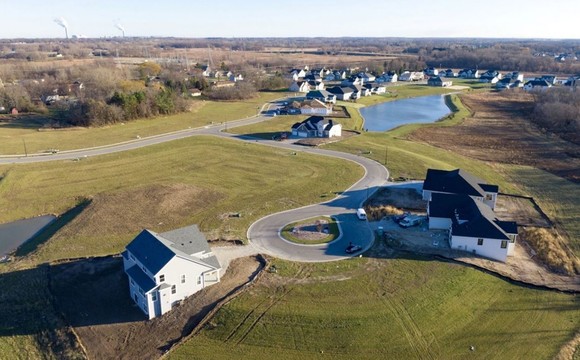 Technical Bulletin 10, Reasonably Safe from Flooding Requirement for Building on Filled Land (2023)
In 2001 FEMA revised the NFIP regulations and LOMR and LOMR-F procedures to include the addition of the reasonably safe from flooding requirements to address concerns regarding the inconsistent practice of construction on land removed from the SFHA. Emphasis was placed on the requirement that NFIP communities must review all permit applications to determine whether proposed building sites will be reasonably safe from flooding [44 CFR 60.3(a)(3)].
The first edition of Technical Bulletin 10 was issued in 2001 in response to these revisions. Technical Bulletin 10 was updated in March of 2023, and provides guidance on the NFIP requirements relating to making determinations as to whether building constructed on fill will be reasonably safe from flooding during the base flood.
This update reorganizes and clarifies previous guidance from the 2001 version of Technical Bulletin but does not change any requirements or design approaches. Technical Bulletin 10 includes guidance on:
- Building codes and standards provisions related to the placement of fill in SHFAs, as well as the proper design and placement of fill.
- NFIP regulations, including documentation and certification requirements, related to determining that buildings constructed on fill are reasonably safe from flooding. The bulletin also offers guidance on best practices for administrative procedures and more restrictive regulatory standards.
- NFIP flood insurance for buildings on land removed from SFHAs through the LOMR-F process.
- Types of foundations used for building on fill and the residual risk associated with basement and non-basement foundations.
- Technical approaches to analyze seepage into basements constructed on fill when evaluating whether the building on fill is reasonable safe from flooding.
Back to top.
FEMA is spearheading an effort to create guidance and resources for the whole community to help everyone understand and fulfill their critical roles related to increasing national resilience. The goal of this initiative is to generate resources that "promote a common understanding of resilience, incorporate the relationship between stressors and shocks, address the critical roles of all stakeholders, and inspire fresh, forward-looking, and people-centered planning approaches to move the needle on increasing community and national resilience". Read more about this initiative here.
To jumpstart this initiative, FEMA wants to hear from a broad range of stakeholders to inform the development of resilience guidance and resources. Examples of feedback FEMA is looking for include:
- Actions and partnerships that are need to increase national resilience.
- Roles and responsibilities of whole community stakeholders.
- Innovative approaches to resilience planning.
- Resources that would be valuable to aid the entire community in understanding and executing their roles.
Suggestions relating to this initiative can be emailed to FEMA here.
Additionally, FEMA is hosting a series of hour-long listening sessions to gather input to help inform the development of resilience guidance and resources. The sessions will include facilitated discussions with a range of stakeholders. The listening sessions will be held from April to June of this year. Advance registration is required. To register, please visit the registration page here and select your preferred session.
Back to top.
|