|
Gloucester, Somerset, and Union counties received notice at the end of last year to transition to the New Jersey Model Code Coordinated Ordinance by May 2, 2023. Additionally, notice to update to the new ordinance model by July 17, 2023 has just been sent to the communities of Camden, Essex and Passaic counties. Hunterdon, Mercer, and Warren Counties are still on track to transition to the New Jersey Model Code Coordinated Ordinance and will complete adoptions by February 15, 2023.
Back to top.
Two recent Federal Emergency Management Agency polices were released on June 3, 2022 and December 7, 2022 which affect the design flood elevations for projects funded with Federal Public Assistance and Mitigation funding. Together with FEMA’s policy on the use of available flood hazard information, a federal minimum standard has been established which adds additional freeboard above FEMA’s Base Flood Elevation mapping. It is anticipated that other Federal agencies will update their regulations in the future to comply with these policies. These are as follows:
The June 3, 2022 Federal Flood Risk Management Standard policy applies to structures (walled or roofed buildings, including mobile homes and gas or liquid storage tanks) in a mapped or established 100- or 500-year floodplain that have a substantial damage determination, require substantial improvement or involve new construction which is funded with Federal disaster recovery funds for public assistance after the date of this policy or funded under Federal agency regulations which have been updated to reflect this policy. This policy is applicable to the use of Federal funds regardless of the cause of damage. For example, if a school building located in the 100-year floodplain was substantially damaged by an earthquake, the flood elevation requirements of this policy would apply.
The December 7, 2022 Federal Flood Risk Management Standard policy applies to structure elevation, mitigation reconstruction, and dry floodproofing projects and all projects after this date where Hazard Mitigation funds, including Hazard Mitigation Grant Program and HMGP Post Fire, are used for new construction, substantial improvement, or to address substantial damage to structures. Starting with Fiscal Year 2023 and subsequent grant cycles unless otherwise noted in a Notice of Funding Availability, Building Resilient Infrastructure and Communities, Pre-Disaster Mitigation, and Flood Mitigation Assistance funded projects must also comply with the FFRMS standard.
The December policy also states that “If a state, local, …. or federal agency has adopted a higher standard applicable to the specific project, FEMA will require the higher standard”. This is especially important because of the following concerns which may arise from confusion surrounding these policies:
- State and local freeboard requirements in coastal areas may be lower than the Federal Flood Risk Management Standard policy, resulting in non-critical action projects which are built too low for Federal reimbursement.
- Project designers may not be aware that neither the preliminary or effective FEMA 500-year Base Flood Elevations include a wave run up or set up, necessitating a wave height analysis for critical facilities in coastal areas. Failure to properly evaluate the impacts of waves may impact Federal reimbursement.
- Project designers may not be aware of the requirement to determine the Flood Hazard Area Design Flood Elevation areal extent or factor of safety and the requirement to consider higher local floodplain standards when determining design flood elevations in riverine areas. Projects built below the Flood Hazard Area Design Flood Elevation and any higher Local Design Flood Elevation may be subject to State or local enforcement actions.
Back to top.
Recognizing that these policy changes may sometimes conflict with State and local floodplain regulations, the New Jersey NFIP State Coordinator’s Office has developed a draft guidebook for projects implemented using Federal disaster recovery and hazard mitigation funds which are constructed, retrofitted, relocated, or floodproofed in New Jersey. All projects proposing to utilize Federal funding must be constructed in cooperation and compliance with applicable Federal, State, and Local Floodplain Management regulations under the National Environmental Policy Act to receive reimbursement funds. This guidebook is being introduced for comment as a draft document on the DEP website.
The objective of this document is to ensure that new projects in the floodplain do not increase flooding or flood damage and are fully compliant with all applicable Federal, State, and local floodplain regulations. This guidebook includes a discussion of project applicability, best available data, wave height calculations, critical action and other related definitions including “non-critical action”, and determining accurate design flood elevations. It includes helpful flowcharts, tables, and checklists for compliant project implementation and mitigation activities. It also includes an updated Local Design Flood Elevation and Determining Wave Height worksheets which are established by local Floodplain Administrators having jurisdiction over new construction and substantially improved structures.
Back to top.
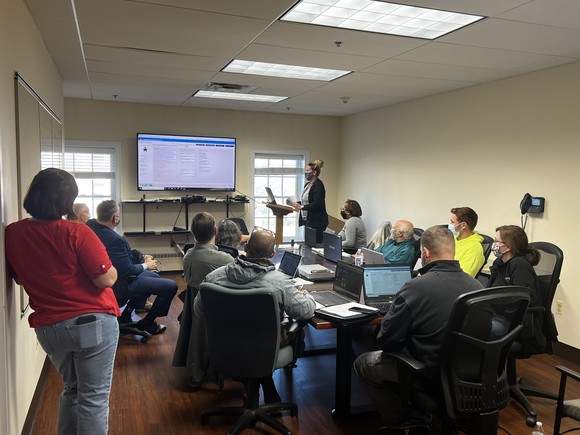
To assist project designers and local officials with better understanding these policies, the NFIP Coordinator’s Office is holding a virtual training session with the date and time listed below. Please use the link below to register for the training session. After registering, you will receive a confirmation email containing information about joining the meeting:
One (1.0) Continuing Education Unit will be offered for individuals with Certified Floodplain Manager certifications from the Association of State Floodplain Managers and 0.1 Administrative Credit will be offered for Uniform Construction Code Officials.
Back to top.
Last June, the New Jersey Floodplain Administrator Guidebook was introduced as a draft and is now being finalized. Other than updates to include a discussion of the Federal Flood Risk Management Standard and an updating of Local Design Flood Elevation and Determining Wave Height Worksheets, the finalized guidebook is substantially similar to the draft version. It will continue to be a living document and will be updated as needed.
Back to top.
Recently, an Area-Specific Memorandum was issued by the Federal Emergency Management Agency for Monmouth and Ocean Counties that provided guidance for the use of Available Flood Hazard Information for these counties. To better understand why this was necessary, it is important to understand the history of coastal mapping following Superstorm Sandy. In 2012, Advisory Base Flood Elevation Maps (ABFEs) were issued in New Jersey’s coastal areas in accordance with FEMA’s abovementioned policies. In 2014, preliminary coastal FIRM maps replacing the ABFE’s were issued. However, New York City appealed the maps citing concerns with storm surge analysis. FEMA decided to restudy these areas while keeping the current preliminary coastal mapping in effect. In Winter 2022, FEMA released a newsletter that anticipates new effective coastal Flood Insurance Rate Maps will be adopted in 2026.
In June, 2022 some NFIP participating communities in these counties decided to adopt the 2014 preliminary mapping as their effective mapping. This required several communities that were located within the same FIRM maps of these communities to adopt the new FIRM maps even though they were not changing their effective mapping. Because these maps are used for determining flood insurance premiums and mandatory flood insurance purchases, there is only one FIRM map for a given area which is why communities not adopting new maps had to clarify the new panel numbers and FIS date by adopting a new flood damage prevention ordinance. The new map panel effective dates and new FIS study date resulted in confusion about whether a new Flood Insurance Study and whether new mapping was developed in these areas. To clarify the data used by each affected municipality, the Memorandum includes Tables 1 and 2 which clarify the source of the FIRM data for each affected municipality.
Additionally, because New Jersey regulates using the best available flood hazard information, this clarification is helpful for anyone determining the Flood Hazard Design Flood Elevation and the Local Design Flood Elevations. The use of best available flood information is also required for setting design flood elevations for critical and non-critical actions funded with Federal funding under the new FEMA Federal Flood Risk Management Standard policies discussed in this letter.
It is anticipated that the best available flood hazard information will change again as the coastal study data is released as work maps in 2025. To following the restudy process, you can visit the FEMA Region 2 FEMA Coastal Restudy webpage.
Back to top.

Last year the DEP released the Substantial Damage Management Plan Template for NFIP Communities. New Jersey’s Climate Change Resilience Strategy predicts a 50% chance of a 1.4 foot increase in sea level rise by 2050 and predicts more frequent, more intense precipitation events that will redefine the 100 year/1% annual chance base flood event. Implementing a Substantial Damage Plan clarifies substantial damage and improvement decision-making and provides a path forward after a disaster. It also helps communities assist property owners with consistent communication and predictable floodplain management practices that can speed recovery after a flood event.
|
Recently, the plan was updated to include guidance for leveraging FEMA Public Assistance funding after a Federally-declared disaster under Section 1206 of the Disaster Recovery Reform Act of 2018 (DRRA 1206). This new regulation now authorizes FEMA to “provide assistance to state and local governments for building code and flood administration and enforcement, including inspections for substantial damage”. Information about the opportunity to leverage this funding after a disaster is now incorporated into this planning document.
Recognizing that additional staffing may be necessary to accomplish substantial damage reviews, floodplain permitting, and building code inspections, an informational spreadsheet describing Federal, State, and Local procurement thresholds is now included in the planning document. This informational spreadsheet will aid substantial damage planners in developing a pre-event DRRA 1206 strategy with their community’s Chief Finance Officer. Pre-event strategies can include using Force Account Labor hired directly by the community and/or leveraged through a shared services plan or developing a compliant contracting strategy for procuring for additional assistance to speed post- event recovery. It will also allow at least 75% of funds expended for floodplain management and construction code enforcement within the 6-month post-disaster eligibility period to be recouped by the community under FEMA Public Assistance. Developing a funding strategy which is compliant with all Federal, state, and local regulations before a flood event is highly recommended given the magnitude of increased responsibilities of all local officials after Federally-declared disasters.
A link to download the New Jersey Substantial Damage Management Plan Template can be found on the DEP Bureau of Flood Engineering website here under the category 'Local Floodplain Management Resources'.
Back to top.
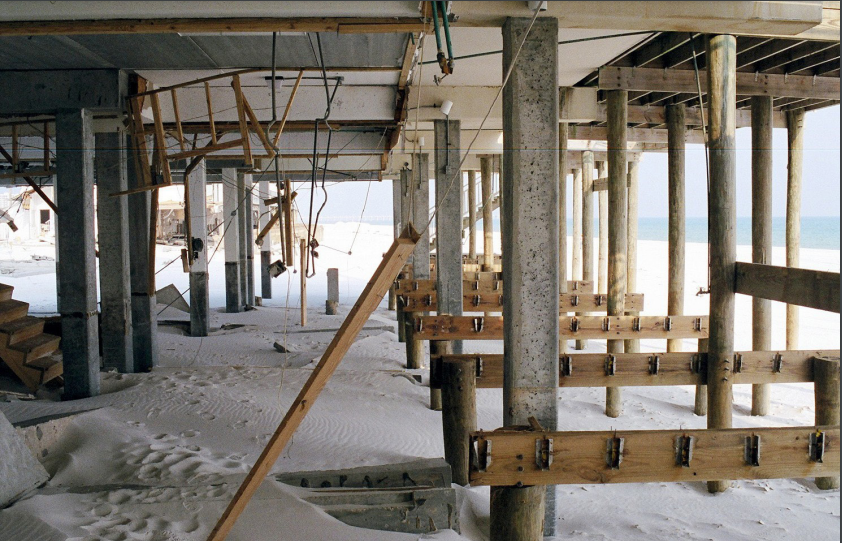 Technical Bulletin 5, Free-of-Obstruction Requirements for Buildings Located in Coastal High Hazard Areas (2020)
Technical Bulletin 5 provides guidance on the NFIP free-of-obstruction requirements in Coastal High Hazard Areas (Zone V), as well as general construction methods that minimize flood damage potential in Zone V. Technical Bulletin 5 describes methods for avoiding potential building and site obstructions that could divert or obstruct floodwater and waves below elevated buildings, which could impose additional flood loads on foundation systems or adjacent buildings. Updates to Technical Bulletin 5 include:
- Clarification of the requirements for design certification in Zone V.
- Revised guidance on below-BFE building elements.
- Guidance on enclosed areas below elevated buildings, including louvers/lattice, above-grade enclosures, and two-level enclosures.
Technical Bulletin 9 , Design and Construction Guidance for Breakaway Walls (2021)
Technical Bulletin 9 provides guidance on the NFIP requirements concerning the design and construction of breakaway walls beneath elevated buildings in Coastal High Hazard Areas (Zones V, VE, and V1-30). Updates to Technical Bulletin 9 includes:
- Updated prescriptive, simplified and performance-based design methods for breakaway walls.
- Updated terminology (ultimate load versus allowable load) to align with the current state-of-the-practice in wind design based on ASCE 7, Minimum Design Loads for Buildings and Other Structures, while still maintaining consistency with 44 CFR 60.3(e)(5).
- Expanded guidance on partial height breakaway walls.
- Revised guidance on site development practices such as accessory storage structures, the use of fill, swimming pools and spas, erosion control structures and others.
- Guidance on detached garages. Update to the NFIP Technical Bulletins
Back to top.
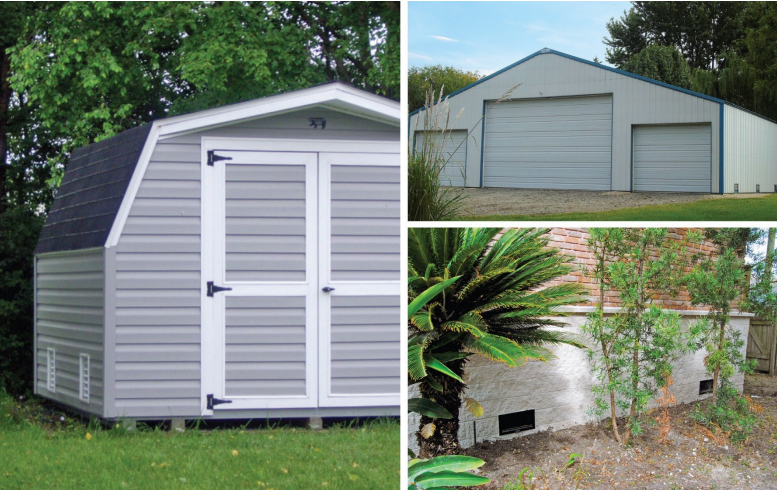 Technical Bulletin 7, Wet Floodproofing Requirements and Limitations for Buildings and Structures Located in Special Flood Hazard Areas (2022)
Technical Bulletin 7 provides guidance on the NFIP requirements for the design and construction of wet floodproofed buildings and structures. Technical Bulletin 7 describes limitations on the use of wet floodproofing and how to evaluate the feasibility of using wet floodproofing measures for historic structures, agricultural structures, and functionally dependent uses. Updates to Technical Bulletin 7 include:
- Updated to be consistent with the requirements of FEMA Policy #104-008-03, Floodplain Management Requirements for Agricultural Structures and Accessory Structures, and FEMA P-2140, Floodplain Management Bulletin, Floodplain Management Requirements for Agricultural Structures and Accessory Structures.
- Expanded discussion on best practices and measures to reduce flood damage when NFIP compliance is not required.
- Clarification of when wet floodproofing measures that require human intervention can be used.
Back to top.
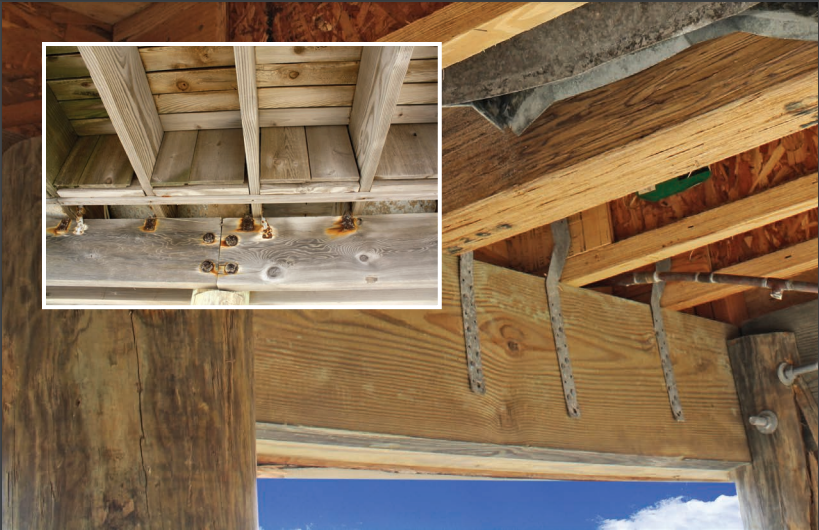 Technical Bulletin 8, Corrosion Protection for Metal Connectors and Fasteners in Coastal Areas (2019)
Technical Bulletin 8 provides guidance on the NFIP requirement for maintaining load paths in buildings subject to high humidity and airborne salts. The importance of connectors and fasteners with proper corrosion protection in coastal areas is emphasized. Updates to Technical Bulletin 8 includes:
- How to select appropriate connector and fastener material based on intended location on the building.
- How preservative treated wood can impact corrosion protection and an explanation of wood product identification tags.
- Expanded descriptions of connector and fastener materials, corrosion protection coatings and maintenance, including inspection and scheduled replacement.
- Guidance for the selection of connectors and fasteners with various corrosion resistant materials and treatments and how combining dissimilar metals can cause premature corrosion.
Back to top.
|