A Note From Secretary Howe
A valuable and often overlooked part of civic engagement happens before you head to the polls. It's the willingness to have open and honest conversations. Talking with others before an election can help voters make informed decisions based on what matters to them.
Conversations help us see new points of view and better understand issues. They can be initiated in the circles where we naturally find ourselves such as when volunteering at school activities, at the grain elevator while unloading a truck, meeting friends for coffee, or on a break with coworkers. Being informed, keeping an open mind, and being willing to admit we may have missed information or received incorrect facts are imperative to fostering genuine conversations.
Before talking with others about the election, it's helpful to have accurate, objective information. In this issue, you'll find resources you can pass along to help voters learn what's on the ballot and make a plan to vote for the November 3 General Election. Democracy works best when people are informed, engaged, and willing to listen to one another.
Thank you for subscribing to this newsletter. We look forward to providing more voting information for you to share with your coworkers, friends, and neighbors leading up to Election Day!
|
Important General Election Dates
-
Now - Voters can submit an application for an absentee ballot
-
Sept. 24 - Absentee ballots available to qualified voters who request them
-
Oct. 22 - Early in-person voting starts in Burleigh County
-
Oct. 26 - Early in-person voting starts in Stutsman, Ward Counties
-
Oct. 27 - Early in-person voting starts in Cass, Grand Forks, Morton Counties
-
Oct. 29 - Early in-person voting starts in Stark County
-
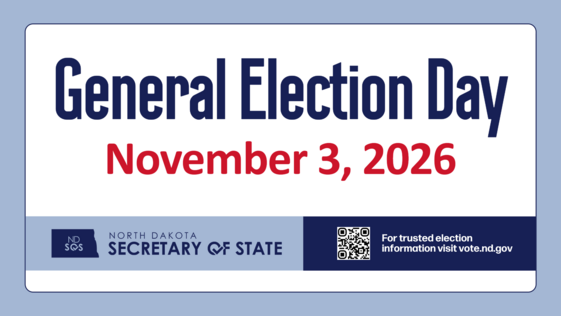
Nov. 3 - General Election Day (In-person voting; absentee ballots must be received by the county auditor by close of polls)
Resources to Learn About Issues and Candidates on the Ballot
Statewide Ballot Measure Guide - On September 18, the North Dakota Office of the Secretary of State mailed households with active voters a nonpartisan educational information about the two statewide measures on the 2026 General Election ballot. It includes a summary of each measure, its fiscal impact, how it was initiated, and what a vote in favor or opposed means. The ballot measure guide is also online and will be available at polling locations.
Campaign Finance and Statement of Interests - Voters can use the Secretary of State’s Campaign Finance system (cfrs.sos.nd.gov) and Statement of Interests system (soi.sos.nd.gov) to view financial disclosures and candidate interests. Please note that county, city, school board, and park board offices submit these filings to their local filing officer and do not file with the state’s online system.
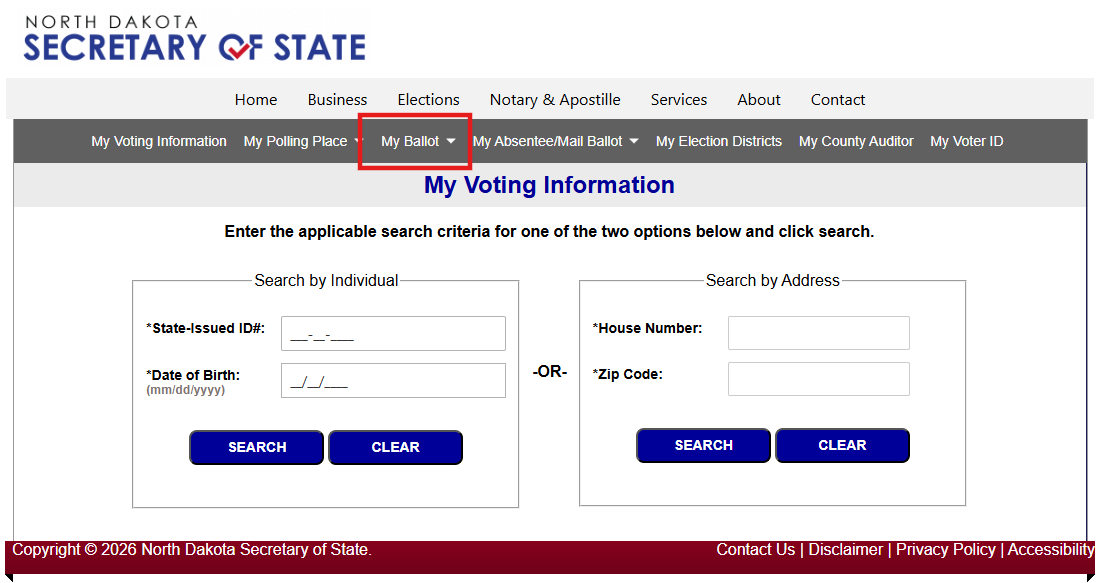
Sample Ballots - Before each statewide election, sample ballots are made available so voters can be informed about candidates and measures. For the 2026 General Election, sample ballots specific to a voter's address can be accessed online through the My Voting Info Portal (vote.nd.gov/myvotinginfo). After entering either their identification information or street address, the My Ballot dropdown at the top of the screen will have an option to see a sample ballot.
Ideas for Action
Based on the election timeline, here are some ideas for putting the toolkit into action within your business or organization.
- Include the November 3 General Election Day and Make Your Plan to Vote graphics on break room tvs or in an internal newsletter or email.
- Share the Make Your Plan to Vote handout featured in the Toolkit Highlights section below.
- Invite Secretary Howe or another member of our team to speak to your group and answer questions about voting and elections by submitting an appearance request form. We can come to you, or schedule a virtual visit.
Toolkit Highlights!
The following toolkit materials may be helpful for voters as they plan how they want to fill out their General Election ballot. Check out the Make an Impact Voter Engagement Toolkit for additional information and resources to help share information about voting in North Dakota.
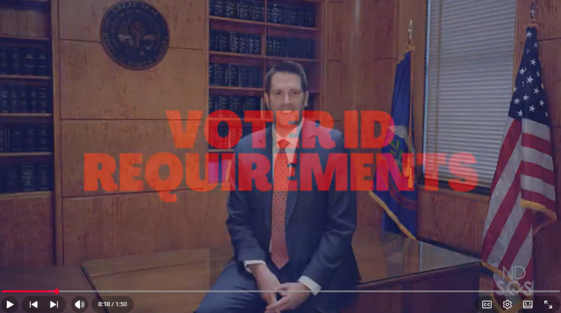
Elections 101: Voter ID Requirements Video
All North Dakota voters are required to have one of the following forms of ID to vote: North Dakota driver's license, North Dakota non-driver ID, Tribal ID, or long term care certificate. Check out this Voter ID Requirements in North Dakota video for additional information, including how to update your ID before Election Day.
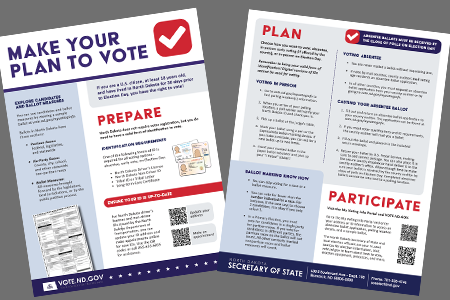
Make Your Plan to Vote Handout
The Make Your Plan to Vote handout includes all the information voters need to prepare, plan, and participate in North Dakota elections!
Follow Us on Social Media
We'd love to connect with you through our social media channels! Throughout the year we will post about North Dakota elections including dates, deadlines, news, and facts. This is a simple way for you to stay in the know and share information about voting in North Dakota with others.
|
|