|
TFFR Employer Newsletter
|
Briefly, July 2025
|
|
|


Before submitting FY2026 reports, employers must update or affirm their Employer Payment Plan in MyTFFR.
✓ MyTFFR will not accept reports or payments until your FY2026 payment plan is confirmed. Paper forms are no longer accepted.
✓ If your contribution model changes, be sure to update your payroll software accordingly.
✓ All employees covered under your plan (teachers, administrators, full-time and part-time staff) must follow the same contribution model.
More info on Employer Payment Plan selection (aka "Project Model Data") is available in the MyTFFR Employer Self-Service Handbook, on RIO's YouTube Channel, or by selecting the "Help" button on MyTFFR Dashboard.
For assistance, submit a ticket using the “Contact Us” tile on your MyTFFR Dashboard.
|
Effective July 1, 2025, employers using the Model 2 Partial Employer Payment Plan must make member contributions in whole percentage increments (e.g., 1% or 2%). Fractional percentages (such as 1.5%) will no longer be accepted under this plan.
|
|
Need help navigating Enrollments and Return to Teach?

Join RIO for a MyTFFR Employer Self-Service training focused on enrolling new members, returning members, and re-employed retirees. We’ll walk through Enrollment Files, when to manually add employees, and tips for accurate, timely reporting.
Register for the Aug. 6th webinar: MyTFFR Office Hours: Enrollment Training. You will receive a confirmation email with a calendar invite and webinar access details.
|
Are you employing a retired TFFR member?
After satisfying the required waiting period, retired members may return to TFFR-covered employment in teaching, supervisory, or administrative services positions as long as they adhere to the employment hourly limitations.
1) General Rule - Annual Hour Limit
- Maximum Number of Hours in FY (July 1-June 30) based on Length of Contract.
- 9-month contract = 700 hours
- 10-month contract = 800 hours
- 11-month contract = 900 hours
- 12-month contract = 1,000 hours
- Waiting period is 30 days from retirement date (assuming the retiree has been paid their first TFFR benefit).
- TFFR employer and employee contributions must be paid.
2) Exception A: Critical Shortage Area determined by ESPB
- Can exceed the General Rule - Annual Hour Limit.
- Waiting period is one year from retirement date.
- TFFR employer and employee contributions must be paid.
3) Exception B: Benefit Suspension and Recalculation
- Waiting period is 30 days from TFFR retirement date.
- TFFR employer and employee contributions must be paid.
Reminder: Employers must complete the Retired Member Employment Enrollment in MyTFFR within 30 days of a retiree’s return to work. (Late submission may result in a $250 employer penalty and loss of one month’s benefit for the retiree.) This process is required each year a retired member returns to TFFR- covered employment.
Retirees performing in-staff subbing, extracurricular duties, or professional development are exempt from hour limits and reporting, and no contributions need to be paid.
For guidance: review the Employer Guide available on the TFFR Employer webpage.
|
|

Summer school and drivers ed salaries, typically earned in June and July, must be reported in the fiscal year earned, not when paid. Salary earned in June should be reported on the June report due July 15. Salary earned in July should be reported on the July report due Aug. 15.
If a salary is reported in the wrong fiscal year, submit a ticket using the “Contact Us” tile on your MyTFFR Dashboard so RIO's fiscal team can help you make the correction.
|
TFFR reporting and payment deadline reminder

TFFR reports and payments are due the 15th of the following month (i.e., June report is due by July 15).
✓ Only one report can be submitted per day.
✓ If reports or payments are late, a $250 penalty plus interest of 1% of the amount due per month will be accessed.
Except for unintentional reporting errors, any TFFR business partner failing to file reports or pay the amounts required is subject to a civil penalty under state statute, NDCC 15-39.1-23.
|
|
|
Empowering members to manage their own accounts
With the launch of MyTFFR, members now manage their own retirement account details through the Member Self-Service Portal. This includes updating contact information and designating beneficiaries. Employers no longer submit Member Action forms.
Encourage your employees to log in and explore MyTFFR. In addition to maintaining their account, members can:
-
View salary, service credit, and account balance
-
Purchase service credit
-
Estimate or apply for retirement benefits
If they need help, direct members to MyTFFR's Help Center or the Member Self Service videos on RIO's YouTube Channel.
|
|
MyTFFR tools provide immediate answers

If support is needed, select the “Contact Us” tile on your MyTFFR Dashboard. This ensures your request is tracked and addressed in the order received.
Please note due to high volumes, response times may take several business days.
|
|
|
Adding MyTFFR organization contacts and assigning roles
Business Partners can add additional Organization Contacts in MyTFFR and assign them specific roles - Contribution Reporting, Human Resources, Finance, Viewing and Web Administration.
For more info, refer to "Create & Maintain Organization Information" in the MyTFFR Employer Self-Service Handbook. For a description of the roles, refer to Appendix 1.
|
|
Critical Shortage Areas approved for 2025-26
The Education Standards and Practices Board has declared all content areas as Critical Shortage Areas (CSAs) for the 2025-2026 school year. No administrator areas are CSAs.
TFFR contribution rates remain the same for FY2025 (i.e., July 1, 2025, to June 30, 2026).
- Member Contribution, 11.75%
- Employer Contribution, 12.75%
|
|
Connections: meet a board trustee and team member
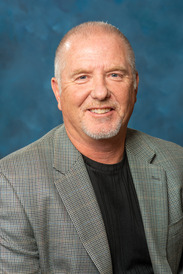
Scott Evanoff, TFFR Board Trustee
Tell us a little about yourself? I have lived in the Minot area my whole life. My wife Rhonda and I have 3 children, Emily (34), Erin (31), and Easton (25). We have 5 grandchildren. I graduated from Minot State University and taught mathematics for 37 years, 34 of them in Minot.
What motivated you to join the TFFR board of trustees? One of my fellow teachers was a member of the board as an active teacher for many years and we had numerous conversations about the purpose and actions of the board. I found it interesting and when someone nominated me, I was happy to become part of this board. Safeguarding the defined benefit plan is important to me.
What do you see as the greatest challenge the TFFR is facing? The greatest challenge as I see it is working to get the plan fully funded. Currently, we are on a path for that to occur in approximately 19 years. There are many economic factors that can affect the trajectory of that plan, so we need to be able to react to these factors and do our best to keep us headed to the goal of being fully funded.
How do you stay informed about issues affecting the education profession? As a lifelong educator, I stay in touch with many colleagues that are still in the classroom, as well as many retired teachers. The staff of RIO have done an excellent job of keeping us informed on bills in the state legislature that affect North Dakota education, and I try to keep myself well-read on those issues.
What message would you like to share with employers and members? One of the most important aspects of retirement investing is time. It is important for our members to understand that getting retirement planning started early in your career will pay big dividends when retirement actually occurs. Right now, RIO staff are making it a point of emphasis to get members educated on their retirement plans through TFFR. This should allow members to make informed decisions about their retirement plans well in advance of the date they actually retire.
|
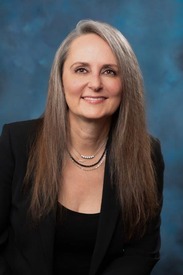
Jodi Smith, Executive Director
Tell us about life before you joined the RIO team? Professionally, I have accumulated over 27 years of experience, primarily in government administration and healthcare sectors. Since November 2021, I have served as the Director of Lands and Compliance at the Metro Flood Diversion Authority in Fargo, ND. In this role, I oversaw land and property rights acquisitions for the $3.2 billion metro flood control project. Prior to this, I was North Dakota Land Commissioner from 2017 to 2021 and Vice President at Sanford Health Foundation from 2015 to 2017.
Tell us a little about yourself? I currently reside in Bismarck, ND, and hold a Bachelor of Arts degree from Pepperdine University. Additionally, I have earned two master’s degrees, one from the Nutritional Therapy Institute and another from Regis University.
Why did you choose to work for RIO? After years of public service in roles that focused on stewardship, resource management, and long-term planning, especially as North Dakota’s Land Commissioner and with the Metro Flood Diversion Authority, the opportunity to lead at RIO was a natural extension of my passion for serving North Dakotans.
RIO plays a critical role in ensuring the financial security of public servants, educators, and retirees across the state. I was drawn to the agency’s mission of managing billions in public investments with integrity, transparency, and long-term sustainability. The work aligns with my values of fiduciary responsibility, accountability, and strategic leadership.
Taking on the executive director role felt like a way to bring together my experience in governance, complex project oversight, and interagency collaboration—to ensure that the retirement and investment systems we rely on remain strong for generations to come.
What aspects of your job do you find the most challenging? Working with multiple stakeholders—including state boards, elected officials, external investment managers, and internal staff—requires political savvy, diplomacy, and clear communication. Balancing transparency and confidentiality while maintaining trust is demanding.
What do you enjoy doing in your free time away from work? Outside of work, I enjoy activities that allow me to recharge and stay grounded. I love spending time outdoors. Whether it’s walking, kayaking, or simply appreciating North Dakota’s wide-open landscapes. I also value quality time with family and friends; meaningful connections are a big part of what keeps me balanced.
Health and wellness are important to me, so I often carve out time for activities that promote physical and mental well-being. That could be cooking healthy meals, practicing mindfulness, or diving into a good book that broadens my perspective.
|
|
|
Reporting Reminders
TFFR's Employer Guide: answers common program administration questions.
Presentations: recordings and handouts from MyTFFR Office Hours are found on the TFFR Employer webapge.
Fast Facts: an overview of the TFFR program includes a breakdown of contribution rates and membership tiers.
|
MyTFFR Employer Resources
MyTFFR Employer Self-Service Portal for reporting and managing employer and employee contributions. Resources to help TFFR's Business Partners are available on the TFFR Employer webpage.
|
|
|
|
|