Verification Reporting Opens Nov 15.
Authorized reps will find the ‘Verification Collection Report’ opening in their queue in NDFoods around Nov. 15. This report must be completed and submitted by Dec. 15. North Dakota Department of Public Instruction (NDDPI) Office of Child Nutrition and Food Distribution (CNFD) is then required to submit a summary of all these reports early the following year. Scott’s color-coded Verification Help Document will enable you to fill this report out easily. Find it here: School Food Authority (SFA) Verification Collection Report Help document.
For more tips on submitting the results of your verification process, register and participate in the November “Across the Desk” webinar.
Average Daily Participation (ADP) tells you the average number of students who eat a school breakfast or lunch each day. Think of it as a quick check for the vitality of your school’s meal program. Knowing your school’s breakfast and lunch ADP can:
- Help the school understand how well its meal program is reaching students,
- Show whether meal participation is growing, steady, or dropping,
- Assist cafeterias in planning how much food to prepare so meals are available without creating too much waste, and
- Support budgeting and staffing decisions since meal reimbursement are tied to participation.
So how do you calculate ADP?
1) Infinite Campus includes ADP on the edit check report.
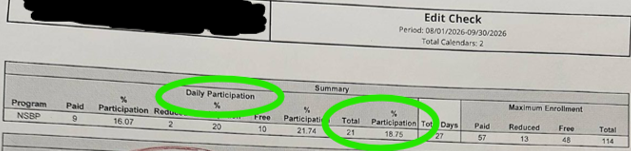 This example is from a district’s breakfast program. On average, the total average students who ate breakfast for this claim period was 21. Divided by their total possible students, this equals 18.75% breakfast participation. It is pretty common to see breakfast participation much lower than lunch participation since some students eat at home before school.
2) Use Meal Claims from ND Foods, which includes two simple calculations

- Divide the subtotal of meals served by the number of days served. This is your average number of students eating over a 1-month period (e.g. 3008 lunches / 21 servings days = 143.24 average students eating lunch this month).
Take this number one step further so you can meaningfully compare sites cross your district or months across the year.
- Divide your ADP from above by your total enrolled students and multiple by 100. This is your average daily participation as a percentage of your total student enrollment (e.g. 143.24 ADP for lunch / 216 total students = 0.6631 x 100 = 66.31%).
Just over 66% of students at this school eat lunch from the school cafeteria! Other students may pack lunch from home, not eat, or potentially leave the school campus. And that’s the cafeteria’s competition! Now the school can use ADP percentages to:
- Compare ADP to National averages: Breakfast: ≈31% & Lunch: ≈60.5%.
- Compare your school or district year to year (e.g. October 2025 to October 2026).
- Evaluate trends for one month at beginning of Year, middle of year, and end of year.
- Make goals to increase participation and brainstorm ideas to see the progress grow.
Although it may seem like common sense, the Cooperative Purchasing Connection recently reminded us that school food service contracts are strictly for official school use only. These agreements are designed to support district nutrition programs and ensure compliance with state and federal guidelines. Because of this, they may not be used to purchase food items for personal consumption or for any outside ventures, including side catering businesses.
We know this reminder also highlights something we can all be proud of: it proves our school food is delicious! It’s no surprise that people want to enjoy these items at home, and we understand that some of the products available through school contracts may not be found in local grocery stores. Even so, we encourage everyone to support your community by purchasing food for personal use from local supermarkets and vendors. Thank you for helping us protect the integrity of our procurement processes and for continuing to promote responsible use of school resources.
As we move into the new season and prepare for the year ahead, it's clear that the 2026-27 school year serves as an important bridge toward the next phase of federal meal pattern requirements. The good news is that districts are not expected to overhaul their menus all at once. Instead, this year provides the chance to fine-tune menus, strengthen documentation, collaborate with vendors, and introduce gradual changes that support both compliance and student satisfaction.
Key Priorities for 2026-27
Added Sugar Compliance
- Review cereals, yogurts, and flavored milks to ensure they meet current USDA product-specific added sugar limits.
- Begin testing lower-sugar products and recipes now.
- Gather student feedback to identify acceptable alternatives.
- Prepare for the 2027-28 requirement that added sugars account for less than 10% of weekly calories.
Sodium Reduction Planning
- Continue identifying lower-sodium menu items and ingredients.
- Work closely with vendors to evaluate available products.
- Explore seasoning strategies that enhance flavor without relying on sodium.
- Build gradual sodium reductions into menu planning to support future targets.
Communication with Families
- Provide simple updates explaining why menu changes are occurring.
- Share how changes support student health and nutrition goals.
- Use newsletters, school websites, social media, or handouts to keep families informed.
- Proactive communication can increase understanding and support for school meal programs.
Upcoming Support Opportunity
To help schools prepare for future meal pattern requirements, the upcoming November Kitchen Counter Conversation training will introduce an exciting new spreadsheet from our Team Nutrition resources designed to help districts establish a baseline for both added sugar and sodium content in their menus. Understanding your current baseline is an important first step in planning gradual adjustments and monitoring progress toward future requirements. Find the registration for the November training later in the newsletter.
Why This Matters
The year ahead is not about sweeping change overnight. It is about preparation, refinement, and taking intentional steps that position school nutrition programs for long-term success. Small adjustments made today can make future transitions easier while continuing to provide nutritious, appealing meals that students enjoy.
Need Assistance?
The Child Nutrition and Food Distribution team is available to help identify strategies for reducing sugar and sodium, reviewing products, and developing parent communication materials. Register for the Kitchen Counter Conversations coming up in November for a new spreadsheet to help you know where you are at for added sugar and sodium in your weekly menu and start to substitute and rearrange the menu to meet the requirement.
For questions, contact dpicnfd@nd.gov
This month’s topic is completing the Verification Process, discussing Geographic Preference and Buy American, and taking questions about the results of Measure 2 from the November 2026 ballot.
November topics will include:
- Verification Process wrap-up – a review of how to complete FNA 742 Verification Collection Report in ND Foods.
-
Buy American and Geographic Preference.
- Ballot result’s and your questions.
Nutrient Analysis Software & Weekly Weighted Averages
Join us for an informative webinar focused on approved nutrient analysis software options and a detailed walkthrough on a weighted averages spreadsheet.
What we’ll cover:
- An overview of approved nutrient analysis software.
- A step-by-step walkthrough of a spreadsheet designed to perform a weekly weighted average analysis.
- Practical insights into using the spreadsheet to organize data and streamline your analysis process.
Whether you’re looking to learn more about approved software options or want a closer look at how to perform a weekly weighted average analysis, this webinar will provide practical information you can put to use.
Don’t miss this opportunity to learn, explore, and simplify your nutrient analysis process!
📅 Date: Nov. 17, 2026
🕒 Time: 2 p.m. CST
ServSafe is a great way to obtain the 8-hour initial Food Safety and Sanitation certification required for each sponsor's foodservice director and every kitchen manager in North Dakota. This session of ServSafe session will be offered Dec. 1 at the North Dakota Department of Health & Human Services in Bismarck, North Dakota starting at 8 a.m CST.
Preregistration is required by Nov. 2.
*Note, school nutrition professionals are always welcome to take the no-cost ‘Food Safety in Schools’ course online at the Institute of Child Nutrition to fulfill the 8-hour Food Safety certification. https://theicn.docebosaas.com/learn/courses/21/food-safety-in-schools
Harvest of the Month: Carrots
Carrots are our vibrant Harvest of the Month star—crunchy, colorful, and packed with powerful nutrients that help students shine from the classroom to the playground! These naturally sweet veggies deliver a big boost of vitamin A for healthy eyes, fiber for good digestion, and antioxidants to keep growing bodies strong. Whether snapped up raw, roasted to perfection, or blended into a cozy soup, carrots make eating healthy both fun and delicious. Celebrate the season by adding a pop of orange to your plate!
If you would like access to Harvest of the Month characters, please contact Amanda Olson.
You can check out this year’s Harvest of the Month lineup at Farm to Child Nutrition | North Dakota Department of Public Instruction
Tray of the Month
This fun activity aims to highlight school nutrition and the amazing work you do to feed students. It’s a fun way to showcase the delicious meals you serve. This is an optional activity. Please participate if you feel inspired.
- You can submit a photo corresponding to the theme each month. Photos are due on at the end of the month.
Criteria: You can take a picture of a full lunch on a plate or tray (all meal components, full tray showcased).
- The photo is a close-up of the tray and is well-lit. Any students in the photo should have a photo release form signed. We will assume that you went through the proper protocol for that photo release form.
- Lunch or breakfast meets monthly theme - one-photo limit, except for October and May (two themes, two photos allowed).
You can submit your photo to Amanda Olson before the end of each month to qualify. If you have any questions, please reach out to Amanda.
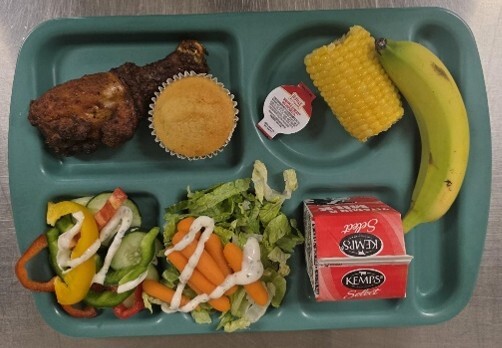
September Tray of the Month Winner is West Fargo Public Schools for their unique use of corn!
We are still voting for October winners and will announce soon.
November Tray of the Month initiative:
Tomatoes: Serve them your way! Fresh, roasted, or in salsa, soups, and sauces. Pictures due Nov. 25 to Amanda Olson.
We concluded our celebration of Farm to School Month on Oct. 31. We are still tabulating the Crunch Off numbers and will announce winners soon. Thank you for participating in and showcasing healthy eating with your students and celebrating Farm to School Month.
A Pride of Dakota Local Foods Grant will provide $20,000 to help schools incorporate more locally produced foods into their meal programs. Individual grants will range from $2,000 to $4,000. North Dakota schools and school districts operating child nutrition programs are eligible to apply and must provide a 50% match. Applications must be submitted electronically between Nov. 2 and Nov. 30, 2026.
Application materials and additional information will be available on the North Dakota Department of Agriculture’s website on Nov. 2. For questions about the grant program, contact Local Foods Marketing Specialist Jenna Nieters at (701) 328-2659 or localfoods@nd.gov.
As flu season approaches, the likelihood of bodily fluid incidents—especially vomiting—rises sharply across school environments. For food service teams, these incidents pose a serious food safety risk because they can spread illness quickly and contaminate nearby food, surfaces, and equipment. That’s why an updated, well‑practiced bodily fluid spill Standard Operating Procedure (SOP) becomes one of the most important tools your kitchen can rely on during the colder months.
Keep the SOP Current
Procedures that worked last year might not fit current staffing patterns, kitchen layouts, or available supplies. Ensuring the SOP is up to date helps staff understand exactly what to do, where cleanup materials are stored, and how to properly disinfect the area using the products on hand. When the SOP matches the real conditions in the kitchen, staff are more confident and cleanup is faster, safer, and more consistent.
Practice Makes Prepared
Just like fire drills, practicing the spill response—even briefly—helps staff react calmly and correctly when an incident occurs. A short run‑through reinforces the steps, builds muscle memory, and shows new or seasonal staff what to expect. Practicing also reveals any gaps, such as missing supplies or unclear responsibilities, before an incident happens. Think through what your procedures would be if an event happened in line while students are coming in to meal service, online while meal is being served and finally, out in the cafeteria somewhere.
Protecting Students and Staff
During flu season, preventing the spread of illness is about more than serving nutritious meals—it’s about safeguarding student health. A well‑maintained and well‑rehearsed spill procedure reduces the chance of cross‑contamination, protects exposed food, and keeps kitchens operating safely. Clear steps and regular refreshers help everyone stay confident, supported, and ready to respond.
By updating and practicing your bodily fluid spill SOP now, your team strengthens readiness, maintains safer workplace conditions, and helps keep students healthy throughout the flu season.
Final Reminder
Health inspectors will be looking for your posted procedure. Hang up a copy of their ‘Clean Up’ poster in a conspicuous spot in the kitchen….this does not need to be public facing.
Standard Operating Procedure (SOP): Cleaning Up Bodily Fluid Spills in School Kitchens
Bodily fluid spills—such as vomit, blood, or feces—require immediate, careful cleanup to prevent the spread of illness. In school food service, responding quickly and correctly helps protect students, staff, and the food environment. This SOP outlines the steps to follow any time a bodily fluid spill occurs in, or near food preparation or service areas.
Purpose To ensure bodily fluid spills are cleaned safely, consistently, and effectively, preventing cross‑contamination and maintaining a healthy environment for meal service.
When to Use This SOP
- Vomiting episodes,
- Blood spills from cuts or injuries,
- Diarrheal accidents,
- Any bodily fluid present near food, equipment, or service areas.
Immediate Actions
- Stop food service in the affected area.
- Restrict access to prevent students or staff from entering the contaminated zone.
- Put on personal protective equipment such as gloves, disposable gown or apron, and face mask if available.
Cleanup Procedure
- Remove visible debris using disposable towels.
- Apply an EPA‑registered disinfectant rated for norovirus or other bodily fluids.
- Allow proper contact time as listed on the disinfectant label.
- Wipe the area thoroughly and dispose of all used materials in a sealed bag.
- Clean and disinfect surrounding surfaces within at least a 25‑foot radius if the spill is vomit, since particles can spread widely.
Food Safety Controls
- Discard any exposed food within the affected zone.
- Remove and sanitize equipment that may have been contaminated.
- Wash hands thoroughly after cleanup and after removing PPE.
- Use fresh gloves and clean attire before returning to any food tasks.
Workplace Conditions to Support Safe Cleanup
- Make sure staff know where bodily fluid cleanup kits are stored.
- Ensure disinfectants and PPE are fully stocked.
- Train staff regularly so they feel confident following the procedure.
- Encourage immediate reporting—no one should feel hesitant to notify supervisors.
- Support staff by keeping workloads reasonable during cleanup so steps aren’t rushed.
Documentation—Record the spill location, type of fluid, cleanup steps performed, any discarded food, and names of staff involved. This helps maintain compliance with district requirements and protects the school in case of illness investigation.
When to Resume Service—Food preparation or service may resume only after:
- The spill area has been fully disinfected,
- All contaminated items have been removed,
- Staff have washed hands and changed PPE,
- The manager verifies that the area is safe.
Key Reminder—The goal is not just “cleanup”—it’s preventing illness. Taking the time to follow every step properly helps keep students safe and maintains a healthy food service environment.
We have been reviewing the fall health inspections completed so far this year and noticed a lot of schools being tagged for the following:
2-201.11(A)—Observation: An employee health policy shall be available to address employee illness, reporting, restriction, and exclusion.
If you have not completed this task yet, please do so as soon as possible. Next year, plan to do it at your own district’s ‘Back to School Workshop’ before the school year even begins. Kitchen staff should go through and sign Food Employee Reporting Agreement so everyone knows when they can and cannot show up to work when they are feeling ill if the work involves preparing and serving food. Then keep these signed sheets in the Kitchen office so they are available when the health inspector asks for them.
4-302.14—Observation: An appropriate test kit shall be provided and used to measure sanitizing solution concentration. QAC test strips have expired and shall be replaced.
Anywhere that sanitizer is required to be used—dishwasher, 3 compartment sink, or sanitizing bucket—the appropriate test strips must be available so that the concentration of the sanitizer is correct. Too little of the chemical sanitizer will not allow it to do its job and too much of it is wasteful and can actually be dangerous.
It would be worth your while to go check the dates on your test strips now as well. Dates on test strips indicate how long they are good for where ‘Sell by’ dates on food do not give the same indication.
|