|
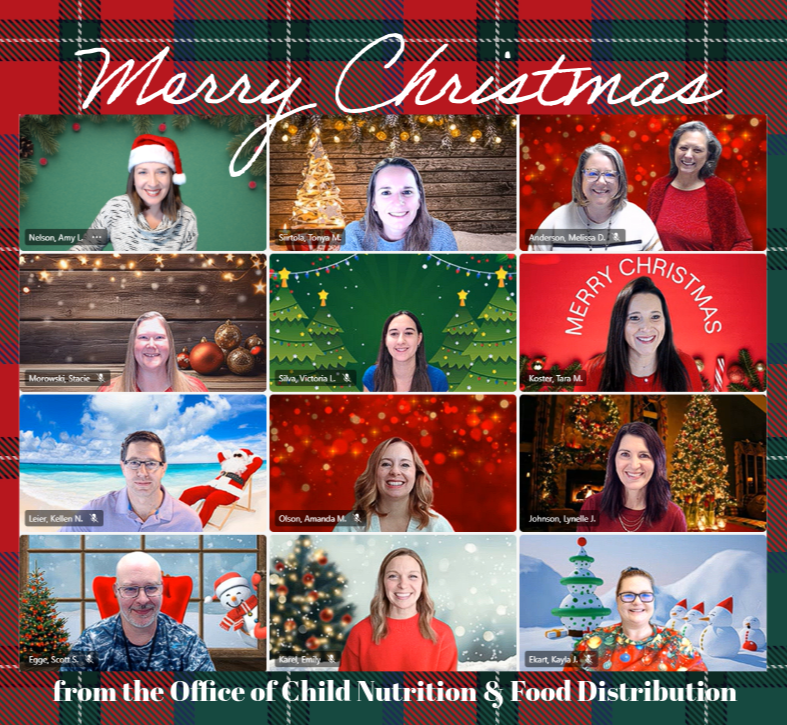
No frowns now, this is actually one of the most exciting times of the year! Yes, really. Procurement doesn’t have to be scary. In fact, it can be a creative, empowering part of your school nutrition planning. You’re not just buying food, you’re designing meals that fuel your students’ health and academic success.
✨ Dream, Create, Innovate
The holiday break is the perfect time to cozy up with a warm drink and start sketching out your cycle menu for next school year. Think of it as your culinary blueprint. Most menus don’t change drastically year to year: tacos, hamburgers, chicken patties, and pizza are staples for a reason! You might swap out a drumstick day or tweak your hamburger hotdish recipe, but the core stays consistent.
🔍 Time to Review Your Procurement Policy
Now’s also a great time to pull out your school foodservice procurement policy and give it a read by the glow of the fireplace. Highlight the sections that apply to your role. Are you responsible for forecasting quantities? Or are you the detail wizard who ensures every “i” is dotted and “t” is crossed in the legal clauses?
If you’ve been following the procurement process for years, a few tweaks to your solicitation might be all you need. If you’re just getting started, what are you waiting for? This is your moment to shine!
🎁 Make It Fun
Procurement is more than paperwork, it’s planning with purpose. It’s choosing vendors who align with your values, selecting ingredients that meet nutrition standards, and building menus that make kids excited to eat. So go ahead, make it festive. Turn on some music, light a candle, and let the procurement magic begin.
Running a successful school nutrition program requires more than serving healthy meals—it demands careful oversight, compliance with federal regulations, and strong leadership. At the center of this responsibility is the Authorized Representative, the individual designated by the school district or institution to ensure the program operates with integrity and accountability.
What Is an Authorized Representative?
The Authorized Representative is the person legally responsible for the school nutrition program. This individual signs agreements with the State Agency, serves as the primary contact for USDA and state officials, and ensures that all aspects of the program—from procurement to meal service—meet federal and state requirements. While tasks may be delegated to staff, the Authorized Representative retains ultimate responsibility for compliance.
Core Responsibilities
The role is broad and touches every part of program operations. Key responsibilities include:
-
Program Oversight: Ensure the program complies with federal regulations (7 CFR 210, 220, 245) and state policies.
-
Agreement Execution: Sign contracts and agreements with the State Agency on behalf of the district.
-
Financial Accountability: Safeguard the nonprofit school food service account, ensuring funds are used appropriately and costs for nonprogram foods are recovered.
-
Civil Rights Compliance: Uphold USDA nondiscrimination requirements and confirm staff complete annual civil rights training.
-
Procurement Integrity: Oversee purchasing in line with 2 CFR 200.318–326, including competitive bidding and the Buy American provision.
-
Meal Pattern Compliance: Verify menus meet USDA nutrition standards, including vegetable subgroups, whole grain-rich items, and sodium targets.
-
Recordkeeping: Maintain accurate records of meal counts, production, procurement, and finances for at least three years plus the current year.
-
Audit & Monitoring Access: Provide USDA, state agencies, and auditors access to records and facilities as required.
-
Staff Training: Ensure foodservice staff meet USDA professional standards for training hours and competencies.
-
Communication: Serve as the primary liaison with the State Agency, submitting claims, reports, and documentation on time.
-
Policy Enforcement: Support local wellness policies, food safety standards (HACCP), and district nutrition policies.
Why This Role Matters
The Authorized Representative is more than a signature on an agreement; they are the steward of the program’s integrity. Their leadership ensures that students receive nutritious meals, funds are managed responsibly, and the district remains in good standing with USDA requirements.
By embracing these responsibilities, the Authorized Representative helps build a program that not only feeds students but also strengthens the school community.
Running a school nutrition program means balancing compliance, cost control, and student satisfaction while keeping operations in tiptop efficiency. One of the most effective tools to achieve this balance is the cycle menu.
A cycle menu is a planned sequence of meals that repeats over a set period (commonly 4–6 weeks). Instead of reinventing the menu each day, schools rotate through a structured plan that ensures variety, compliance, and predictability.
There are many benefits of adopting a cycle menu for your school nutrition programs.
-
Consistency & Compliance: Cycle menus make it easier to meet USDA meal pattern requirements, including vegetable subgroups, whole grain-rich items, and sodium targets.
-
Operational Efficiency: Staff know what’s coming, which streamlines ordering, production, and training.
-
Cost Control: Predictable purchasing reduces waste and allows districts to take advantage of bulk buying.
-
Student Satisfaction: Balanced rotation prevents menu fatigue while still offering favorite items regularly.
-
Staff Morale: Clear planning reduces last-minute stress and helps new staff learn routines quickly.
-
Flexibility: Seasonal items, Farm to School produce, or special events can be woven into the cycle without disrupting the overall plan.
Tips for Success
- Start with a 4‑week cycle to balance variety and manageability. If you find that you have missed too many great meals in 4 weeks, extend it to 5 or 6.
- Try not to repeat any menu although ingredients such as meatballs or chicken strips should be used in different applications as much as possible.
- Start with breakfast to ease into the process; afterschool snacks would also be a great place to start.
- Use the NDDPI-CNFD weekly menu planning worksheet to ensure that all requirements are met.
- Incorporate student feedback through surveys or taste tests.
- Review menus annually to adjust for updated USDA requirements or local preferences.
Cycle menus aren’t just a planning tool—they’re a strategy for compliance, efficiency, and satisfaction. By adopting a cycle menu, schools can simplify operations while ensuring students receive nutritious, appealing meals every day.
Our monthly Across the Desk session—highlighting the Administration of School Meal Programs—taking place on the second Tuesday of each month. Join us for the first Across the Desk of the New Year! 
🕒 Time: 2 p.m. CST
January's Theme: Getting Ready for Procurement
We’ll be diving into key procurement topics, including:
- Procurement Policies
- Forecasting for your menu
- Getting the most out of USDA Commodities
Your Voice Matters
Have a topic you’d like us to cover? Send it our way or bring your questions to the session. We’re here to support your program with clarity, compliance, and collaboration.
January 2026 Kitchen Counter Conversations: Menu Planning + Procurement: A Winning Formula for Child Nutrition Operations
Join us for our first Kitchen Counter Webinar of 2026! On Jan. 20, 2026, at 2 p.m. CST, we’ll dive into the essentials of effective menu planning and smart purchasing. This session will explore how to make the most of cycle menus, including practical tips, tricks, and techniques to streamline menu writing and enhance consistency, creativity, and compliance in your meal programs.
We’ll also cover procurement best practices, helping you strengthen your purchasing process, ensure compliance, and support cost-effective operations.
Whether you’re new to menu planning or looking to refine your current approach, this webinar will offer actionable insights you can put to use right away.
We need your help!
The topic for the February 2026 Kitchen Counter Conversations is Community Outreach: Shout it Loud and Proud – Using Social Media to Your Advantage.
We would like to showcase schools that are using social media platforms to engage with students and their community. If your program is active on social platforms, please reach out to Emily Karel — we’d be excited to showcase your great work!
ServSafe is hosting an in-person class on Feb. 10, 2026, at the Southwest District Health Unit in Dickinson, ND. The training runs from 8 a.m. to 4 p.m. MST and testing starts immediately after. Registration is due by Jan. 16, 2026.
Those who cannot make the ServSafe training or are comfortable taking the training and testing online, “Food Safety in Schools” is available at any time through the Institute of Child Nutrition. Enroll in the course here.
Please remember to send us the completion certificate!
|
|
Farm to School

Harvest of the Month: Potatoes
December Harvest of the Month is America’s favorite – potatoes. Whatever way you slice it, potatoes are delicious! More than 72,000 acres of land are dedicated to growing potatoes in North Dakota. Stored properly, potatoes can last months, giving you the opportunity to buy your favorite potatoes locally in North Dakota most of the year.
|
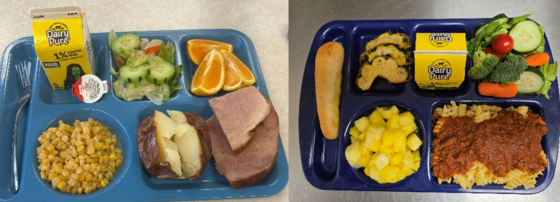
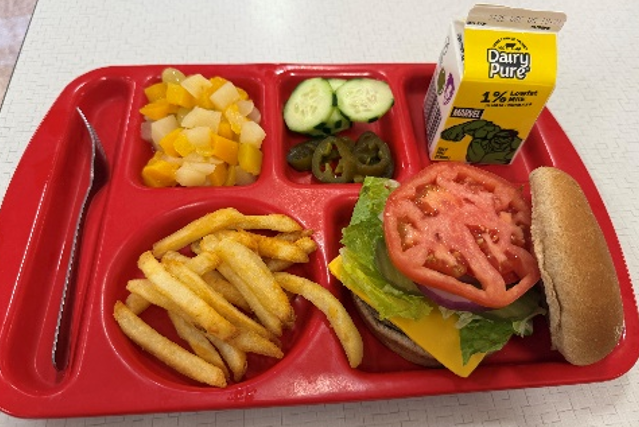
Tray of the Month
This fun activity aims to highlight the importance of school nutrition and the amazing work you do in feeding children. It’s a fun way to showcase the delicious meals you serve. This is an optional activity. Please participate if you feel inspired.
Criteria: You must take a picture of a full lunch on a plate or tray (all meal components, full tray showcased) to qualify for the contest. Don’t forget the milk 😊
- The photo is a close-up of the tray and is well-lit. Students and staff may be included in the photo, but a signed photo release form is required for each student. We will assume that you went through the proper protocol for that photo release form.
October’s Tray of the Month winners are Surrey Public School (Farm to School, below on left) and West Fargo Public Schools (National School Lunch Week, below on right).
November’s Tray of the Month winner is Central Cass School District in Casselton (below).
December Tray of the Month theme is Winter Wonderland Breakfast. Think of pastries, hot cocoa, Santa, or snow-themed breakfast meals. Capture a photo of staff or the cafeteria dressed up for the holidays. Please submit one photo to Amanda Olson by Dec. 31.
North Dakota Crunch Off
North Dakota crunched its way to victory, earning the title of 2025 Mountain Plains Region Crunch Champion with over 70,000 participants biting into healthy, locally grown snacks!
The Crunch is a fun, regional event that celebrates local food and farm to school efforts. This year’s turnout in North Dakota was outstanding, thanks to the incredible support from schools, communities, and local partners.
Statewide Shoutouts to:
-
Big Apple Award: Bismarck Public Schools With more than 19,000 participants, Bismarck Public Schools led the state in Crunch enthusiasm and engagement!
-
Community Grower Award: NDSU Extension, Stutsman County Recognized for their unique collaboration with local schools and community events, showcasing the power of partnerships in promoting local food.
-
Apple Spark Award: Drayton Public School Honored for their creative Crunch celebration paired with National Apple Day, including educational presentations from local producers.
-
Golden Carrot Award: North Dakota Department of Agriculture (NDDA) The NDDA was recognized for having the most participants and events of any state agency. Their coordination and outreach efforts were instrumental in helping North Dakota secure first place in the regional Crunch Off! Their events had over 33,000 participants.
These awards highlight the amazing work being done across North Dakota to connect students and communities with fresh, local foods. Thank you to everyone who participated and helped make this year’s Crunch a huge success!
The Turnip the Beet Award recognizes outstanding summer meal program sponsors across the nation who work hard to offer high-quality meals to children that are appetizing, appealing, and nutritious during the summer months. High-quality summer meals provide daily energy and help ensure children are healthy and ready to learn when they return to school in the fall. The Turnip the Beet Award was created to showcase sponsors who go above and beyond to ensure that children in their care receive high-quality meals that are both nutritious and appetizing.
Sponsors who operated SFSP during the summer of 2025 can apply for this award. A completed application form along with all required documentation must be emailed to dpicnfd@nd.gov by Jan. 9, 2026.
🍏 Meet the Opal apple – the diva of the produce aisle. This isn’t your grandma’s mellow Golden Delicious; this is her glamorous, world-traveling, high-maintenance cousin who refused to turn brown no matter how long she’s been sliced. With its sunshine-yellow skin and crispy, juicy snap, the Opal struts into your fruit bowl like it’s walking a runway. One bite and you’ll understand: this apple didn’t come here to play; it came to outshine every other apple you’ve ever politely tolerated.
The Opal apple knows it’s special. It’s sweeter, snappier, and more photogenic than the apples you grew up with, and it’s not afraid to remind you. This apple will steal the spotlight and make you wonder why you would want another Golden Delicious. The perfect apple to add to the FFVP lineup to get the kids talking. So go ahead, serve this to the kids. Just be prepared: the kids will be excited about this apple, just like ‘Six Seven’!
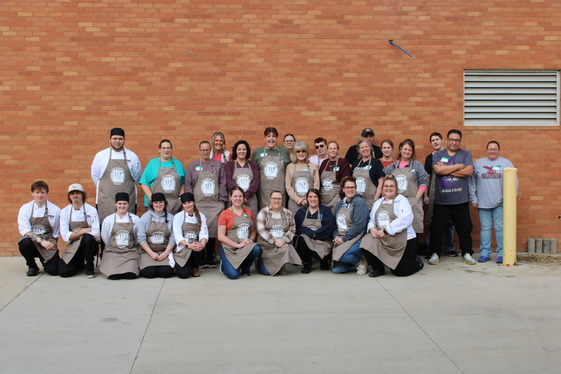
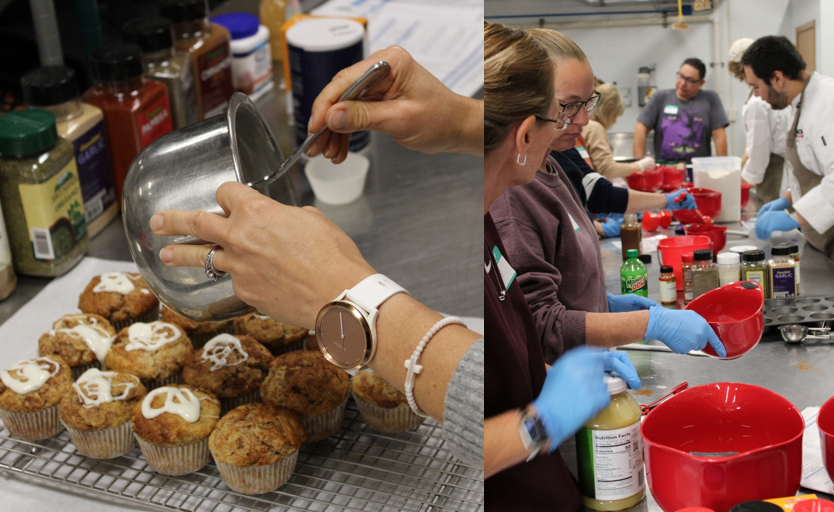
This October and November, we hosted two sessions of the Added Sugar Intensive and Culinary Training—first in Wahpeton, ND, with nine participants, and later at United Tribes Technical College in Bismarck, ND, where we welcomed 37 attendees representing 25 different school food authorities and a few NDDPI staff.
Both sessions were incredibly successful, with the November training standing out for its strong turnout and energetic engagement. Feedback has been overwhelmingly positive. One school was so inspired that they brought their recipe samples back for student taste testing the very next afternoon!
Early survey results show that expectations were consistently met or exceeded, and the hands-on portion emerged as a clear favorite. As one participant shared: “I enjoyed mixing classroom with actual hands-on. It was helpful to try recipes and see the feasibility of their use in each cook’s unique kitchen. I also enjoyed networking with other cooks.”
More than just training, these events sparked meaningful conversations, new connections, and practical learning that will support schools as they prepare for the upcoming added sugar restrictions.
Whether you joined us this fall or are considering attending a future session, we are excited to continue offering opportunities that empower school nutrition professionals with the knowledge, confidence, and skills to succeed. More Added Sugar Intensive and Culinary Trainings will be scheduled in the spring of 2026 in the Bismarck and the Fargo areas. Stay tuned for the registration link!
|
|
|
NDDPI Child Nutrition and Food Distribution
Main Office:
600 E. Boulevard Ave, Dept 201
Bismarck, ND 58505
PHONE: 701-328-2294 or 888-338-3663
FAX: 701-328-9566
Email: dpicnfd@nd.gov
Mayville Office:
14 Main St E, Mayville, ND 58257
PHONE: 701-788-8901 or 888-788-8901
Website: https://www.nd.gov/dpi/districtsschools/child-nutrition-and-food-distribution
Non-Discrimination Statement
In accordance with federal civil rights law and U.S. Department of Agriculture (USDA) civil rights regulations and policies, the USDA, its agencies, offices, employees, and institutions participating in or administering USDA programs are prohibited from discriminating based on race, color, national origin, religion, sex, disability, age, marital status, family/parental status, income derived from a public assistance program, political beliefs, or reprisal or retaliation for prior civil rights activity, in any program or activity conducted or funded by USDA (not all bases apply to all programs). Remedies and complaint filing deadlines vary by program or incident.
Persons with disabilities who require alternative means of communication for program information (e.g., Braille, large print, audiotape, American Sign Language, etc.) should contact the state or local agency that administers the program or contact USDA through the Telecommunications Relay Service at 711 (voice and TTY). Additionally, program information may be made available in languages other than English.
To file a program discrimination complaint, complete the USDA Program Discrimination Complaint Form, AD-3027 (PDF), found online at How to File a Program Discrimination Complaint and at any USDA office or write a letter addressed to USDA and provide in the letter all of the information requested in the form. To request a copy of the complaint form, call 866-632-9992. Submit your completed form or letter to USDA by:
- mail:
U.S. Department of Agriculture
Office of the Assistant Secretary for Civil Rights
1400 Independence Avenue, SW, Mail Stop 9410
Washington, D.C. 20250-9410;
- fax:
202-690-7442; or
- email:
Program.Intake@usda.gov.
This institution is an equal opportunity provider.
|
|
|
|
|