Farm to School

Harvest of the Month: Tomatoes
We are celebrating tomatoes this November for the Harvest of the Month feature. There are so many delicious ways to use tomatoes. They are so versatile and packed with nutrients. Even canned tomatoes can add a nice flavor to many dishes.
Tomato Recipes
Farm to School Month Recap
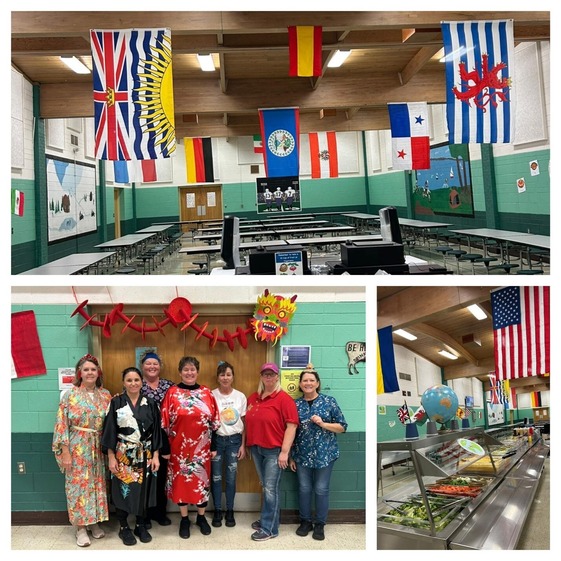
Thank you for celebrating North Dakota Farm to School Month in October, between the Crunch Off and Tray of the Month. It was so fun to see your creativity shine to celebrate our local agriculture.
We will have the results of the 2025 Crunch Off soon. As of the end of October, there were 60,053 total participants, surpassing 2024.
|
Tray of the Month
This fun activity aims to highlight school nutrition and the amazing work you do to feed children. It’s a fun way to showcase the delicious meals you serve. This is an optional activity. Please participate if you feel inspired.
Criteria: You must take a picture of a full lunch on a plate or tray (all meal components, full tray showcased). Don’t forget the milk 😊
- The photo is a close-up of the tray and is well-lit. Students and staff can be in the photo, but should have a photo release form signed for the student. We will assume that you went through the proper protocol for that photo release form.
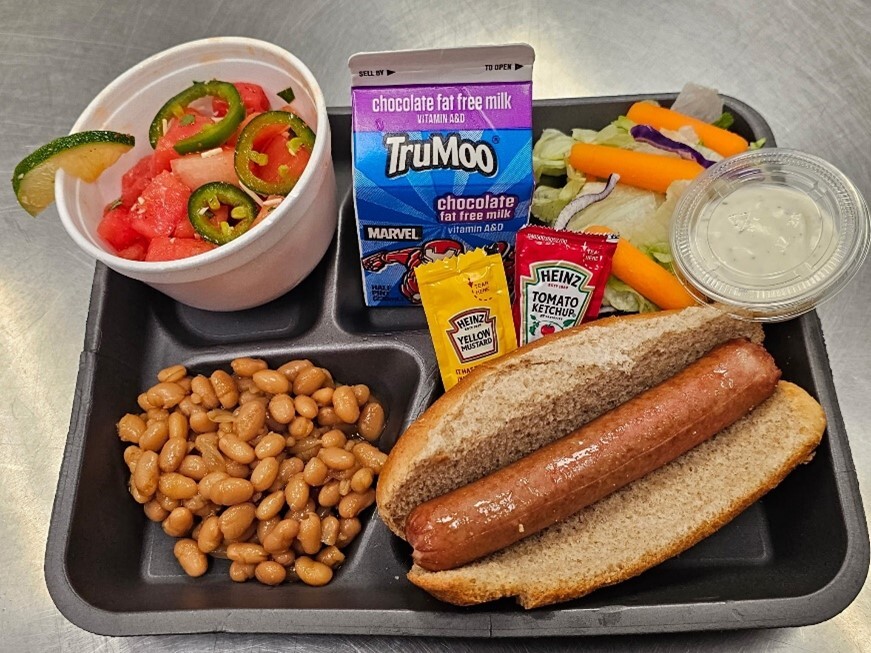
September’s Tray of the Month winner is Jamestown Public Schools with their Watermelon Jalapeno Salad.
We are currently voting on October’s Trays of the Month winners and will announce them soon.
November Tray of the Month is Tomatoes!
To pair with November’s Harvest of the Month, we are featuring tomatoes. Serve them your way—fresh on the salad bar, roasted, homemade salsa, or canned in your favorite entrée! They don’t have to be local tomatoes to be featured! Share your favorite menu items featuring tomatoes. Please submit one picture of your tray by Nov. 28. You can submit your picture to amolson@nd.gov
When school lets out for the summer, many children lose access to the healthy meals they depend on during the school year. This summer, more than 40 sponsors operated SUN Meals across North Dakota, helping to fill that gap—and their successes are worth celebrating.
Over 130 sites provided free meals in schools, parks, libraries, and through mobile delivery routes, making it easier for families to access meals close to home. With food costs on the rise, these programs eased financial pressure on parents while ensuring children had access to nutritious breakfasts, lunches, snacks, and suppers. Nearly 500,000 meals were served—an 11% increase from last summer—keeping kids fueled for summer activities and ready to return to school healthy and prepared to learn.
The program continues to grow each year thanks to strong partnerships with local schools and nonprofit organizations. If your school is interested in participating in SUN Meals next summer, please contact our office for details on site eligibility and program operations.
The North Dakota School Nutrition Association held its annual conference on Oct. 16 and 17. We were energized by Desi Payne as she clowned around with participants, revealing her story from hospital nurse to stint with the Greatest Show on Earth.
Haley Miskowiec, gave us practical advice for keeping all forms of dairy on the school menu, even with the added sugar limits coming in two years. Find her Midwest Dairy presentation resources available along with Conference credits for Professional Development on the NDSNA website: https://northdakotasna.com/conference
Patrick Zylla, the marketing chef for UNOX wowed us with his knife skills. He showed off various cuts to make fruit plates and vegetable charcuterie, quick and easy and finished with a divine Tomato, Basil and Mozzarella salad. A form of his salad recipe is available on Healthy School Recipes, although this recipe only uses olive oil and he substituted half of the olive oil with a balsamic vinegar reduction. Do a taste test with your kids to see which they prefer.
The vendor show was a hit with the evening ‘Sip and Stroll’ format. Local vendors were particularly interesting with micro greens, grass-fed beef, and freshly milled grains featured in the first aisle of the show. Manufacturers have been busy reformulating for the new added sugar limits and vendors had an exceptional number of products to taste and ideas on how to include them in the school meal program.
Just before the end of our time together, we all participated in a Crunch Off event, thanks to the North Dakota Department of Agriculture.
We hope you will Save the Date for next year’s NDSNA annual conference: July 28-July 29!
🍎 The Sweet Success Seen Behind the Orchard — and the Bitter Reality for Farmers by Amira McKee | Oct. 13, 2025
It was a sound before it was a taste: a sharp, explosive crunch. When David Bedford took his first bite of the mystery apple in 1988, he knew he’d found gold.
That syrupy-sweet and shockingly crisp fruit came from an unremarkable sapling that Bedford, then a graduate student, had rescued from the discard pile of a University of Minnesota breeding program.
But the apple had problems. It was too big, too fragile and a magnet for disease. The farmers who sampled it were quick to dismiss the finicky tree.
“They said, ‘Oh, it’s a nightmare, we’ll never grow that,'” Bedford recalled with a chuckle.
Thirty years later, that apple—now named Honeycrisp—dominates the American market.
Consumers, bored by the softer, blander Red Delicious variety that had ruled grocery aisles for decades, discovered an apple that was sweet and so texturally satisfying they never looked back. Buyers could even stomach a premium price, often three times the cost of other varieties.
But if consumers are charmed by the supermarket star, the farmers who grow it, especially in America’s apple-growing capital of Washington state, often wish they never met it.
“She’s a diva, an absolute diva,” fourth-generation Washington apple farmer Kait Thornton said of the Honeycrisp.
Thornton’s family has been farming in the same valley 20 minutes south of the Canadian border for nearly a century, and their yearly Honeycrisp crop is a painstaking ordeal. The same qualities that make the variety so delicious leave farmers griping.
Its thin skin is easily punctured by its own stem, which means workers must hand-clip the fruit from the tree, cutting productivity in half. The tree tends to produce more apples than it can handle, so growers must thin out the fruit. The Thorntons spray the trees frequently to treat an endemic calcium deficiency.
And to coax the apple into developing its signature red-pink hue, workers lay out sheets of reflective material by hand. Even a healthy apple is susceptible to bitter pit, a disorder that marks the skin with black splotches and ruins the fruit’s flesh.
That, Thornton said, is just the work required to get it off the tree. The fall apple harvest supplies the market for the entire year, so shelf-life is crucial. The apple’s signature foamy texture means it is an easy bruiser and doesn’t store as well as other varieties. If in January, nine out of 10 Honeycrisps survived storage, a farmer might only get seven out of 10 by the summer.
While farmers might lament growing Honeycrisps, production is on the rise. Honeycrisps, known by some farmers as “moneycrisps,” can fetch handsome paydays.
“That’s where the consumer taste profile is going,” said Chris Gerlach, vice president of insights and analytics for the U.S. Apple Association. “They want these fantastically flavorful apples.”
This year is expected to bring a bumper Honeycrisp crop, but farmers aren’t celebrating. A big harvest can send prices plummeting broadly as retailers discount other varieties like Gala or Fuji to compete with cheaper Honeycrisps. Apple growers say they’re at the mercy of the volatile Honeycrisp, unsure from season to season how it’s going to affect the price of their other varieties.
It’s no surprise that the industry has been desperate to dump its high-maintenance lover for almost as long as they’ve been together. Fruit breeders across the country have been racing to create crispier, more flavorful apples that will capture consumer loyalty like the Honeycrisp—but are easier to grow
Kate Evans, an apple breeder at Washington State University, developed the Cosmic Crisp, a variety she’s worked on for two decades. The variety is a love child of the Honeycrisp and a more robust Enterprise apple, producing an eating experience that is reminiscent of its parent but slightly more tart and dense.
For farmers, the difference is drastic. The Cosmic Crisp is more resilient, stays fresh longer in storage and its U.S. production is limited to Washington state.
Washington growers bet big on the new variety, launching it with a massive marketing campaign, deep retailer discounts and aggressive consumer outreach. In the past year, production of the Cosmic Crisp grew by nearly 800% and it cracked the top 10 bestselling varieties in the country.
Some farmers see the Cosmic Crisp as a newcomer poised to overthrow the Honeycrisp. Evans isn’t so sure.
“There are very, very, very strong Honeycrisp fans,” she said of consumers. “I don’t think they’ll ever waiver from that.”
Few produce items inspire the kind of cult following and fierce loyalties that surround apple varieties. When Thornton took to TikTok to complain about the trials of harvesting Honeycrisp after an especially grueling day this fall, the video got 1.8 million views and more than 4,000 comments.
“One commenter was like ‘I like Honeycrisp…that makes sense why they’re my favorite apple because I’m also a diva,’” she said.
Citation: McKee, A. “America’s Favorite Apple Is a Farmer’s Nightmare.” The Wall Street Journal, Oct. 2025. Retrieved from https://www.msn.com/en-us/foodanddrink/foodnews/america-s-favorite-apple-is-a-farmer-s-nightmare/ar-AA1OvrbE?ocid=BingNewsSerp
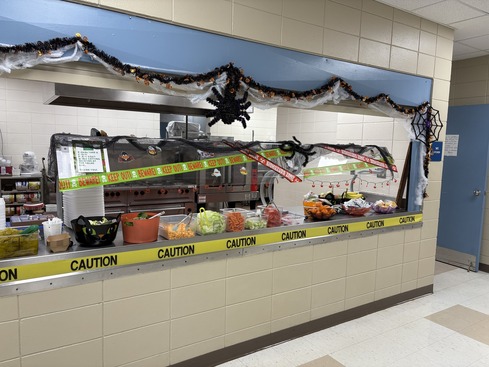
Spooky serving line spotted at Richland Public Schools.
|