|
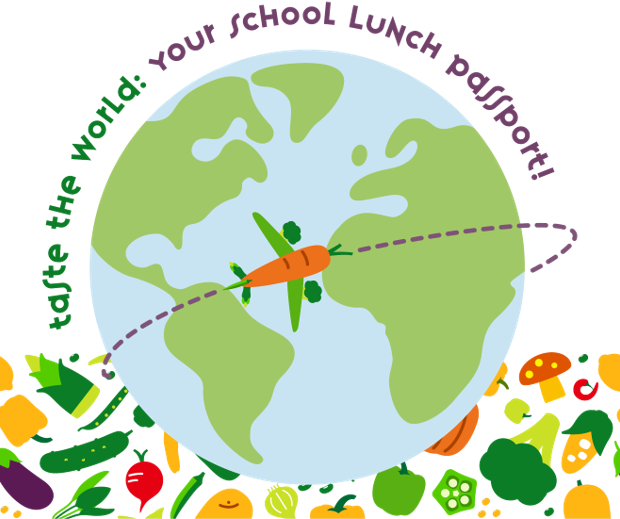
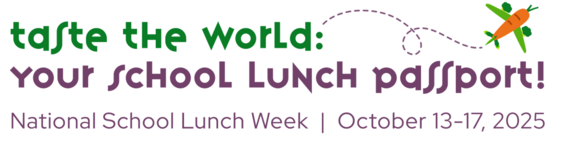 No matter how you choose to celebrate National School Lunch Week (NSLW), we hope it's packed with excitement, discovery, and delicious moments that make learning—and lunch—extra special!
Share pictures from your events with us (dpicnfd@nd.gov), as we hope to feature some of your NSLW activities in our November newsletter!
For more ideas, social media toolkit, and activities, check out the School Nutrition Association website: NSLW25 Resources
School districts and other School Food Authorities (SFAs) operating the National School Lunch Program (NSLP) must ensure students do not remain on last year’s free or reduced-price meal status beyond the 30-day carryover period.
Students who were eligible for free or reduced-price meals last school year can keep that eligibility for 30 school days into the new year. After those 30 days, meal status must change to Paid unless:
- ✅ The student appears on the current STARS Direct Certification list, or
- ✅ A new free or reduced-price meal application has been received. Eligibility must be updated immediately upon determination of the application.
How the 30-Day Carryover is Counted:
- Starts on the first day of school for each district.
- Counts school days only—not weekends or holidays.
- Each district has its own carryover date based on its calendar.
For many districts, the carryover date is approaching—or may already have passed. Please review your records and make necessary updates.
For assistance or questions, contact the Office of Child Nutrition and Food Distribution.
Federal regulations (7 CFR 245.6a(c)(7)) require schools to verify any questionable application and encourage case-by-case review when a school is aware of additional household income or members not reported. This process, known as verification for cause, protects the integrity of the free and reduced-price meal program.
How Verification for Cause Differs from Regular Verification
-
Regular Verification: Each year, a random sample (typically 3% of approved applications) is reviewed starting Oct. 1, and ending by Nov. 15. The results are reported on the FNS 742 “School Food Authority (SFA) Verification Collection Report” form in ND Foods.
-
Verification for Cause: Initiated at any time of year when an application appears questionable or incomplete. Unlike random selection, it is triggered by specific concerns about accuracy or good-faith certification.
Common Triggers for Verification for Cause
The school should establish internal procedures for describing the circumstances that will initiate the verification for cause action. These may include:
- Applications reporting $0 income for the entire household.
- SNAP case numbers do not appear on the direct certification list.
- Missing household members or income sources.
- Reported income is inconsistent with seasonal or annual work patterns.
- Applications from district employees that do not align with salary records (per FNS Memo SP 13-2012). PLEASE contact the district legal counsel prior to undertaking verification where concerns with staff income misrepresentation have been raised.
Procedure for Verification for Cause
- Review the application for discrepancies prior to certifying students for benefits. Remember that an incomplete application may not be determined. A complete application will list all children and adults in the household, all income for each household member, the last four digits of the adult submitting the application, and the signature of the adult certifying that the information provided is true and correct.
- Follow up with households on questionable and incomplete information.
- If discrepancies are found, the determining official should:
- Seek clarification in order to make a determination in a timely manner.
- Deny the application with an explanation that income information was provided.
- Approve the application and initiate ‘Verification for Cause’.
- If verification is necessary for integrity concerns, initiate the verification for cause after the application has been approved. A second staff member must confirm the initial determination and sign the application under the determining official’s signature.
- A ‘Notice of Selection for Verification’ letter is sent to the household requesting documentation within 10–14 days.
- A second follow-up attempt is required if no response is received.
- Eligibility is confirmed, changed, or denied based on documentation, or denied if no documentation is provided. A follow-up letter communicates the outcome.
During this process, students continue to receive benefits as determined by the original application until verification is complete, including any appeal period.
Encouraged Best Practice
The Eligibility Manual for School Meals (p. 99–100) strongly encourages contacting the household first to clarify questionable information before initiating verification for cause. In many cases, a simple phone call resolves discrepancies without requiring formal verification.
Key Reminders
- Verification for cause can be conducted at any time of the year and is separate from the October verification sample.
- Sponsors must follow all confidentiality, notification, and appeal procedures in 7 CFR 245.6a.
- Suspected fraud should be reported to the USDA Office of Inspector General at 800-424-9121.
By carefully applying verification for cause, sponsors of the National School Lunch and School Breakfast programs uphold program integrity while ensuring eligible students maintain access to nutritious meals.
📌 What Schools Should Do for Verification for Cause
✔ Be Alert – Review applications carefully for missing or questionable information.
✔ Document Concerns – Keep notes on why an application was flagged.
✔ Clarify First – Contact the household to resolve issues before starting verification.
✔ Follow Procedure – Use the same process as October verification
(confirmation, notices, timeline, follow-up, final determination).
✔ Maintain Confidentiality – Handle all household information with discretion.
✔ Continue Benefits – Ensure students continue receiving meals during the process.
✔ Report Fraud – Refer suspected intentional misrepresentation to USDA OIG (800-424-9121).
✔ Train Staff – Make sure that determining and confirming officials understand both regular and “for cause” verification procedures.
Districts participating in the National School Lunch Program (NSLP) and Afterschool Snack Program (ASP) must complete annual onsite monitoring using the required forms. These forms are included in the Administrative Records book and conveniently linked below from our website.
Requirements at a Glance
-
General Meal Program Worksheet: Covers Breakfast and Lunch.
- This form is a requirement for schools with multiple sites; however, it is strongly recommended to be completed by all schools as it is a thorough checklist for program details that must be completed each year.
- Monitor 50% of breakfast programs each year.
- Monitor all lunch sites annually.
- This form can also be found on pages 11-12 of the Lunch Production Record Book OR pages 127-128 in the Administrative Records Book.
-
Afterschool Snack Review:
-
First review: within the first 4 weeks of operation each year.
-
Second review: before the program concludes.
- This form can also be found in the ASP Production Record Book on pages 1-3.
For questions or assistance, contact the Office of Child Nutrition and Food Distribution. at 701-328-2294.
This monthly webinar provides timely updates and reminders on the administrative side of USDA meal programs. It’s a great opportunity to stay informed, ask questions, and connect with colleagues across the state.
This Month’s Topics
-
Verification: Who, What, When, Where, and HOW – step-by-step guidance on this annual requirement. The process starts on October 1st and ends with the FND 742 Verification Collection Report in ND Foods.
-
Upcoming Training Events – what’s scheduled and how to participate.
-
Open Forum Q&A – your chance to ask questions and share challenges with NDDPI staff.
We look forward to your participation and encourage all school nutrition program staff to attend to learn more about the free and reduced eligibility process.
📅 Date: Oct. 14, 2025
🕒 Time: 2 p.m. CDT
If you have topics you’d like us to cover in future sessions, please email your suggestions to dpicnfd@nd.gov.
Added Sugar: Cross the T's & Dot the I's
Join us for “Added Sugars: Cross the T’s and Dot the I’s,” a focused webinar designed to deepen your understanding of the upcoming 10% of added sugar from total calories dietary specification under the National School Lunch Program (NSLP) and School Breakfast Program (SBP).
This session will not only clarify the sugar limits and introduce calculation methods, but also bring in the reviewer’s perspective—with insights on how state agencies assess compliance using meal pattern review tools, including green sheets. Understanding how your menus are evaluated can help ensure your program is not only compliant but audit-ready.
📅 Date: Oct. 21, 2025
🕒 Time: 2 p.m. CDT
ATTENTION SCHOOL COOKS! ND Team Nutrition invites you to a hands-on culinary training focused on reducing added sugars in school meals.
📅 Dates & Locations:
Oct. 22, 2025 – North Dakota State College of Science, Wahpeton
Nov. 5, 2025 – United Tribes Technical College, Bismarck
🕒 Time: 6-hour in-person training (each session covers the same content; attend one).
Part of the Meal Pattern Modernization for the Dakotas initiative, this workshop builds skills to meet the updates to the USDA National School Lunch Program related to the 2020–2025 Dietary Guidelines for Americans. Learn scratch-cooking techniques and strategies to reduce added sugars in school meals.
💰 Cost: Free to attend
💵 Incentives:
- $75 payment to each ND School Nutrition Professional participant (W-9 and payment form required, provided to attendees upon completion)
- ND District eligibility for equipment sub-grants to support scratch cooking and fresh-produce preparation
Enhance your culinary skills, explore updated meal patterns, and bring delicious, lower-sugar recipes to your school cafeteria.
REGISTER TODAY!
|
|
|
Farm to School
🍎It’s Crunch Time!
The 2025 Mountain Plains Region Crunch Off runs Sept. 15–Oct. 31. This event celebrates local foods, supports farmers and ranchers, and promotes more fruits and veggies on our plates. Our goal: 750,000 crunches across Colorado, Nebraska, Kansas, Missouri, North Dakota, South Dakota, and Montana!
How to Participate: Anyone can join—schools, childcare centers, businesses, organizations, and families. Just crunch into fresh fruits and vegetables while supporting producers who feed us.
Even if you can’t find local produce, you can still register your event that supports healthy eating. REGISTRATION IS OPEN!
October is a busy month for our state’s farms and schools. Farmers are harvesting everything from apples to soybeans, while schools are celebrating Farm to School Month by raising awareness of the connection between fresh, healthy food and local food producers.
Farm to School connects communities to our nation’s farmers, ranchers, and fishers through field trips to farms, taste tests of local and seasonal crops, local food purchasing, and hands-on agricultural education. Farm to School also boosts rural economies and improves children’s health. In fact, more than 74,000 schools nationwide reported serving local foods on their menus in the 2023 Farm to School Census. In North Dakota, over 70% of our school districts participate in farm to school activities (gardening, serving local food, and agriculture education). So, this October, you too can take action and support farm to school in any of the following ways:
- Establish a relationship with your local farmers;
- Support your local school garden by donating funds or volunteering time; or
- Attend your local farmers’ market and buy local foods.
Farm to School Stickers Available
Do you need resources for your Farm to School Month celebration? Whether you are conducting taste tests, piloting new local foods on the menu, or planning a farmer visit, stickers can help you make the activity a success and spread the word about farm to school. Stickers are free and come in rolls of 200 stickers per roll.
Place an Order here: Patrick Leahy Farm to School Program - Stickers | Food and Nutrition Service

Harvest of the Month: Apples
Celebrate Farm to School Month with apples this October. There are so many delicious ways to enjoy apples. Many varieties of apples thrive in North Dakota. I bet you or your neighbors even have apple trees in the backyard. Many apple trees can live for 100 years.
Check out the fun promotion from September Harvest of the Month – Watermelon: https://youtu.be/HFg83DHiM38
|
Tray of the Month
This fun activity aims to highlight school nutrition and the amazing work you do to feed children. It’s a fun way to showcase the delicious meals you serve. This is an optional activity. Please participate if you feel inspired.
Criteria: You must take a picture of a full lunch on a plate or tray (all meal components, full tray showcased).
- The photo is a close-up of the tray and is well lit. Students and staff can be in the photo but should have a photo release form signed for the student. We will assume that you went through the proper protocol for that photo release form.
October has two themes where you can submit two pictures.
Pictures due Amanda Olson by Oct. 31.
Farm to School at the ND School Nutrition Conference
We are hosting a Farm to School panel of local producers and schools to discuss the successes and challenges of the Farm to School program and how we can improve and expand into the future.
We want to hear from you what your questions are regarding farm to school. Please take a couple of minutes to help guide the conversation.
Funding Opportunities
-
FY2026 Farm to School Grant RFA Out Now!
- Just in time for Farm to School Month, the Patrick Leahy Farm to School Program invites the farm to school community to apply for the fiscal year (FY) 2026 Farm to School Grant Program (Grant Program).
- The FY 2026 Grant Program offers more funding than ever before — up to $500,000 per applicant! It’s also easier than ever for interested organizations to apply thanks to streamlined application templates, a consolidated program objective, and additional instructions for completing Federal forms.
- Complete applications must be submitted by 11:59 p.m. Eastern Time on Dec. 5, 2025.
- For additional resources https://www.fns.usda.gov/grant/f2s/fy26
-
Growing Justice Fund
- The Growing Justice Fund supports community coalitions and organizations that build power to educate, engage, and mobilize communities in efforts to inform and influence public awareness and institutional practices and educate government decision-makers about good food purchasing. Find out more here: Funding Opportunity 2025 - Growing Justice
Please note that the upcoming TeamUp for Procurement training scheduled for Wednesday, Oct. 15, has a new location: Bismarck Hotel and Conference Center
The event remains free to attend, and participants will enjoy complimentary lunch and snacks.
What to Expect
This interactive training is designed to help schools strengthen their understanding of procurement requirements for child nutrition programs. Participants will:
- Learn how to develop compliant solicitations for goods and services.
- Review best practices for documenting the procurement process.
- Explore strategies to ensure fair competition and maximize program funds.
- Discuss common audit findings and how to avoid them.
- Each attendee will receive a Procurement Toolkit, which includes:
- ✅ Checklists to guide purchasing decisions
- ✅ Templates for solicitations and contracts
- ✅ Reference materials on federal and state regulations
- ✅ Practical tips for streamlining the procurement process
Why Attend?
Proper procurement practices are essential to:
- Ensure compliance with federal regulations
- Safeguard program integrity
- Maximize the value of school foodservice dollars
We look forward to seeing you there!
The question of the day: What is the right way to sanitize cafeteria tables after each group of kids has left and the next is waiting to sit down? Can the sanitizer be wiped off to dry the tables after a 1-minute contact time? If so, does it matter if paper towels or clean dishcloths are used?
This is a timely subject as schools gear up for the inevitable cold and flu season. Sanitizing doorknobs and water fountains will be particularly important to prevent the spread of communicable diseases. Teaching students to wash their hands often is also important. But what about the tables used at breakfast and lunch?
- Most lunchrooms are maximized to their fullest use during the short time that students and staff have to eat. At the very least, tables should be wiped clean of debris and then washed with mild soapy water to remove food, grease, and most germs that students left behind. This process helps prevent illness and keeps the cafeteria welcoming.
- The next step in the cleaning process is to rinse the tables with clean, clear water. The washing process removes the dirt, but it leaves a film of soap. Wiping this layer off the table before sanitizing is important to allow the sanitizer to kill the remaining germs.
- The last step, sanitizing, is strongly encouraged but may not be physically possible during the lunch rush. The tables are not actually a ‘food-contact surface’; the student tray is. Therefore, the most important process is to make sure that the tables are clean, i.e., spills are wiped up, forgotten packaging is swept away, along with the majority of germs.
Just to be clear, do not mix sanitizer with detergent in the cleaning process or in the rinse water to save a step. Sanitizers lose their effectiveness when they are mixed with other chemicals.
Sanitizer must be allowed to sit for a specified amount of time—usually 30 seconds to a minute—to kill germs. If time is built into the schedule to complete the sanitizing step between each class, then it is acceptable to wipe up any sanitizer that has not air-dried after the dwell time with either a clean cloth or paper towel before a child has to sit at the table again.
The clean-rinse-sanitize process must be performed on cafeteria tables at the end of meal service. It is also recommended that it be done again before meal service to ensure that the tables are clean, especially if the cafeteria is used for other activities.
This process should be written out as a Standard Operating Procedure for Cleaning and Sanitizing Cafeteria Tables. With a written procedure, all staff, including substitutes and volunteers, can know who, what, where and why to help reduce the spread of those pesky germs.
ServSafe to be Offered in Bismarck, November 4
ServSafe is a great way to obtain the 8-hour initial Food Safety and Sanitation certification required for each sponsors Foodservice Director and every kitchen manager in North Dakota. Another session of ServSafe is being offered in the Pioneer Room of the State Capitol Building in Bismarck, on Tuesday, Nov. 4 starting at 8 a.m.
Pre-registration is required by Oct. 3.
*Note, school nutrition professionals are always welcome to take the no-cost ‘Food Safety in Schools’ course online at the Institute of Child Nutrition to fulfill the 8-hour Food Safety certification. https://theicn.docebosaas.com/learn/courses/21/food-safety-in-schools
Many foodie newsletters are full of fun articles to celebrate the kids’ favorite holiday in October. With Oct. 31 falling on a Friday this year, we know schools will want to have fun as well.
It may also be prudent to ditch the dessert this year as students will have more sweets than they can eat by the end of the night.
Pumpkin puree is a cheap commodity. There are several recipes that you could try on the kids for their Hocus Pocus Day that are not desserts:
|
|
|
NDDPI Child Nutrition and Food Distribution
Main Office:
600 E. Boulevard Ave, Dept 201
Bismarck, ND 58505
PHONE: 701-328-2294 or 888-338-3663
FAX: 701-328-9566
Email: dpicnfd@nd.gov
Mayville Office:
14 Main St E, Mayville, ND 58257
PHONE: 701-788-8901 or 888-788-8901
Website: https://www.nd.gov/dpi/districtsschools/child-nutrition-and-food-distribution
Non-Discrimination Statement
In accordance with federal civil rights law and U.S. Department of Agriculture (USDA) civil rights regulations and policies, the USDA, its agencies, offices, employees, and institutions participating in or administering USDA programs are prohibited from discriminating based on race, color, national origin, religion, sex, disability, age, marital status, family/parental status, income derived from a public assistance program, political beliefs, or reprisal or retaliation for prior civil rights activity, in any program or activity conducted or funded by USDA (not all bases apply to all programs). Remedies and complaint filing deadlines vary by program or incident.
Persons with disabilities who require alternative means of communication for program information (e.g., Braille, large print, audiotape, American Sign Language, etc.) should contact the state or local agency that administers the program or contact USDA through the Telecommunications Relay Service at 711 (voice and TTY). Additionally, program information may be made available in languages other than English.
To file a program discrimination complaint, complete the USDA Program Discrimination Complaint Form, AD-3027 (PDF), found online at How to File a Program Discrimination Complaint and at any USDA office or write a letter addressed to USDA and provide in the letter all of the information requested in the form. To request a copy of the complaint form, call 866-632-9992. Submit your completed form or letter to USDA by:
- mail:
U.S. Department of Agriculture
Office of the Assistant Secretary for Civil Rights
1400 Independence Avenue, SW, Mail Stop 9410
Washington, D.C. 20250-9410;
- fax:
202-690-7442; or
- email:
Program.Intake@usda.gov.
This institution is an equal opportunity provider.
|
|
|
|
|