|
|
Office of Child Nutrition & Food Distribution
September 2025
|
|
CACFP Renewals Are Now Open!
The 2026 program year renewal are open now through Sept. 30. Please refer to the email sent from Stacie Morowski on Aug. 29, for step-by-step directions.
Reach out to our office with any questions or if you did not get the email!
Are you in need of a CACFP reminder checklist? You are in luck! NDDPI has compiled important reminders for successful operation of your CACFP program. Check it out below:
It’s Crunch Time! The 2025 Mountain Plains Region Crunch Off runs Sept. 15-Oct. 31. This event celebrates local foods, supports farmers and ranchers, and promotes more fruits and veggies on our plates. Our goal: 750,000 crunches across Colorado, Nebraska, Kansas, Missouri, North Dakota, South Dakota, and Montana!
🥒 How to Participate Anyone can join—schools, childcare centers, businesses, organizations, and families. Just crunch into fresh fruits and vegetables while supporting producers who feed us.
🥕 Eligible Crunch Items
- Locally-grown or raised: fruits, veggies, legumes, nuts, popcorn, and meat (beef, pork, poultry, lamb, jerky, roasts, etc.).
-
Not included: liquids (milk/juice), purchased value-added items (like salsa, ice cream, sauces), grains, or deep-fried foods.
- Scratch-made, value-added items do count. An example may include: local cucumbers with scratch-made tzatziki (the cucumbers count as your 'crunch' item).
- Regionally grown foods from programs like DOD Fresh or USDA Foods are also accepted. Even if you can’t find something local to bite into, you can still participate and register the event to help promote healthy eating habits.
REGISTRATION IS OPEN! Events can occur between Sept. 15 and Oct. 31!
Event ideas: School & Childcare Events
- 🥕 Lunchtime Crunch – Host a special lunch featuring local produce, then all students crunch together at the same time.
- 🍏 Classroom Taste Tests – Teachers bring in local apples, cucumbers, or snap peas for students to taste and vote on their favorites.
- 🎨 Veggie Art Contest – Kids create artwork using local fruits and veggies, then do a big group crunch.
- 📚 Storytime Crunch – Pair a farm to school themed storybook with a crunch snack in early childhood classrooms.
Community & Workplace Events
- 🥒 Community Crunch Day – Partner with libraries, farmers markets, or parks for a public group crunch.
- 🍿 Popcorn & Movie Crunch – Show a family-friendly movie and hand out locally grown popcorn for the crunch moment.
- 🥩 Farm-to-Fork BBQ or Picnic – Feature local foods, then gather everyone for a crunch at once.
- 👩🌾 Meet the Farmer Crunch – Invite a local grower to share their story, then crunch on their produce together.
Creative & Competitive Ideas
- 🥦 Crunch Challenge – Each classroom, workplace department, or community group logs their crunch numbers, competing for the largest participation.
- 📸 Crunch Selfie Contest – Encourage participants to snap a picture or video of their crunch and share on social media with the Crunch Off hashtag.
- 🎶 Musical Crunch – Pair the crunch with music or a countdown over the intercom.
- 🏫 Principal/Mayor Crunch – Invite a community leader or school principal to lead the group crunch
Starting Oct. 1, 2025, CACFP operators must evaluate added sugars in yogurt and breakfast cereal (as opposed to total sugars, from previous regulation).
- All yogurt must have no more than 12 grams of added sugars per 6 ounces (2 grams of added sugars per ounce).
- Breakfast cereal must have no more than 6 grams of added sugars per dry ounce.
|
|
|
On April 25, 2024, USDA's Food and Nutrition Service (FNS) published the final rule titled, Child Nutrition Programs: Meal Patterns Consistent With the 2020-2025 Dietary Guidelines for Americans. Updates with the final rule include guidance related to meal modifications. The following information comes from the Summary of Provisions:
'Schools, institutions, and facilities operating the National School Lunch Program (NSLP),
School Breakfast Program (SBP), and Child and Adult Care Food Program (CACFP) are
required to make meal modifications to ensure participants with disabilities have an equal
opportunity to participate in and benefit from the programs. ...
The final rule makes clear in regulations the existing policy guidance that State licensed
healthcare professionals may write medical statements to request meal modifications on
behalf of child or adult participants with disabilities in the NSLP, SBP, and CACFP. The final rule defines a State licensed healthcare professional as an individual authorized to write medical prescriptions under State law and expands the authority to write medical statements to registered dietitians.'
NDDPI has recently made updates to our Medical Statement to Request Meal Modifications in the CACFP. This is a template available for you to use if you have requests for meal modifications related to a disability.
For the purpose of the Meal Modification forms, a state-licensed healthcare professional in North Dakota is a: licensed physician, a physician assistant, a nurse practitioner, or a registered dietitian.
Once a valid version of this form is on file, it is valid as long as the child is under your care.
Playful and Fun Activities for ‘Picky’ Eaters
Have any of the children in your care started to develop ‘picky’ eating habits? Neophobia – or the fear of new foods – is fairly common, especially for toddlers as they begin increasing in independence and socializing with similar-aged peers. Many children need eight to 15 exposures to a new food before accepting it. Children may say ‘no’ at first, but early and repeated exposure to a variety of foods is key to:
- Making new foods less scary over time
- Helping build healthy eating habits early
- Supporting balanced nutrition
- Building the foundation for future likes and dislikes
- Encourage curiosity and make mealtimes more fun
Exposure to a food isn’t just limited to putting a food on the menu and encouraging children to eat it. It can involve games, activities, and reading, even the words we use to encourage children to try new foods. Check out these fun ideas to encourage all children in your care to try new foods:
Harvest of the Month
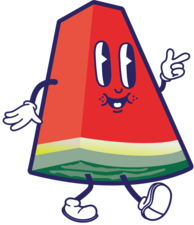
Our new feature for September Harvest of the Month is watermelon.
Vibrant, juicy, and delicious, watermelon is always a popular fruit option. Watermelon is certainly a nutritious food: it is high in vitamin C (providing 25% DV) and has 6% of the daily value for magnesium per serving. Plus, watermelon contains more of the antioxidant lycopene (12.7 mg per 2 cup serving) than any other fresh fruit or vegetable.
Even so, watermelon provides essential nutrients that students need for healthy growth and development. Plus, watermelon is hydrating, made up of 92% water. Refreshing, sweet, and juicy, what’s not to love?
Anamoose School District was featured in a spotlight on how they promote watermelon as part of their Harvest of the Month activities.
Check out more about watermelon here:
We have cute characters as well for great coloring pages. Please email Amanda to access them amolson@nd.gov
You can check out this year’s Harvest of the Month lineup at Farm to Child Nutrition | North Dakota Department of Public Instruction
|
Farm to CACFP Week Oct. 12-18, 2025
Farm to CACFP Week is a national education campaign hosted annually during the third week of October by the National CACFP Association. The campaign aims to raise awareness of the benefits of connecting child and adult care sponsors and operators with local foods. Through local food procurement, gardening activities and food-based education, Farm to CACFP leverages CACFP funding to help incorporate local foods into the nutritious CACFP meal pattern thus strengthening community food systems and supporting positive health outcomes for those in care.
Farm to CACFP - National CACFP Sponsors Association
If you plan to celebrate this week, please contact Amanda Olson for brainstorming ideas and ways to bring local foods into your childcare center or daycare home. We also love to see pictures of your fun Farm to CACFP activities. amolson@nd.gov
Meal Pattern Minute: Juice from Farm Stands
(article from the National CACFP Association Newsletter)
Meal Pattern Minute: Juice from Farm Stands - National CACFP Sponsors Association
“There’s something special about picking up a jug of homemade apple cider from your local farm stand, especially when it’s made with fresh, seasonal ingredients. But when it comes to serving apple cider in the Child and Adult Care Food Program (CACFP), not all farm-fresh options are created equal. So, can you purchase homemade juice like apple cider and count it toward the CACFP meal pattern?
Listen to this Meal Pattern Minute as Isabel Ramos-Lebron, MS, RDN, LD, discusses what CACFP operators need to know before serving juice from a local farm stand and why one important detail could determine whether it’s creditable or not. Meal Pattern Minute: Juice from Farm Stands - National CACFP Sponsors Association
The answer is that it depends. If the juice is pasteurized and is made from 100% juice, then yes you can purchase this juice from your local farm stand and credit towards the CACFP meal pattern. Unpasteurized juice is not creditable in the CACFP because they may contain harmful bacteria which may cause serious foodborne illness.”
For more information about purchasing local foods and how to join the Farm to CACFP Campaign, see resources below.
-
Crediting Handbook for the CACFP
- Can we purchase homemade juices such as apple cider from local farm stands? Yes. However, due to the safety hazards of unpasteurized ciders and juices, only pasteurized juice and juice products may be served.
-
USDA Procuring Local Foods
- The resources on this page will help Child Nutrition Program (CNP) operators buy local. This information applies to child care providers and summer feeding sites.
-
Webinar: Procuring Local Foods for Child Nutrition Programs ($)
- From beef and bison in Montana to apples in Michigan and radishes in Rhode Island, local foods are on the menu for children across the country. Local procurement not only supports increased economic opportunities for local farmers, but also helps child care institutions incorporate wholesome local foods into program meals and encourages children to make healthy food choices. Learn how local foods can meet meal pattern requirements, understand what is required when purchasing local foods, and get the resources you need for procuring them. Presented by Melissa Daigle-Katz, MPH, USDA Food and Nutrition Service and Lissa Ong, MPH, RDN, USDA Food and Nutrition Service.
2025 Garden Webinars
Thank you to everyone who joined our summer garden webinar series. Participants learned practical tips for starting and maintaining garden spaces in schools and childcare settings. Topics included choosing kid-friendly crops, safe gardening practices, integrating garden activities into learning, produce safety, and using harvests in meals and snacks. If you have any questions about starting, expanding, or maintaining a garden with children, please contact Amanda Olson at amolson@nd.gov.
|
|
|
NDDPI Child Nutrition and Food Distribution
Main Office:
600 E. Boulevard Ave, Dept 201
Bismarck, ND 58505
PHONE: 701-328-2294 or 888-338-3663
FAX: 701-328-9566
Email: dpicnfd@nd.gov
Mayville Office:
14 Main St E, Mayville, ND 58257
PHONE: 701-788-8901 or 888-788-8901
Website: https://www.nd.gov/dpi/districtsschools/child-nutrition-and-food-distribution
Non-Discrimination Statement
In accordance with Federal civil rights law and U.S. Department of Agriculture (USDA) civil rights regulations and policies, the USDA, its Agencies, offices, and employees, and institutions participating in or administering USDA programs are prohibited from discriminating based on race, color, national origin, religion, sex, disability, age, marital status, family/parental status, income derived from a public assistance program, political beliefs, or reprisal or retaliation for prior civil rights activity, in any program or activity conducted or funded by USDA (not all bases apply to all programs). Remedies and complaint filing deadlines vary by program or incident.
Persons with disabilities who require alternative means of communication for program information (e.g., Braille, large print, audiotape, American Sign Language, etc.) should contact the State or local Agency that administers the program or contact USDA through the Telecommunications Relay Service at 711 (voice and TTY). Additionally, program information may be made available in languages other than English.
To file a program discrimination complaint, complete the USDA Program Discrimination Complaint Form, AD-3027, found online at How to File a Program Discrimination Complaint and at any USDA office or write a letter addressed to USDA and provide in the letter all of the information requested in the form. To request a copy of the complaint form, call (866) 632-9992. Submit your completed form or letter to USDA by: (1) mail: U.S. Department of Agriculture, Office of the Assistant Secretary for Civil Rights, 1400 Independence Avenue, SW, Mail Stop 9410, Washington, D.C. 20250-9410; (2) fax: (202) 690-7442; or (3) email: program.intake@usda.gov.
This institution is an equal opportunity provider.
|
|
|
|
|