URGENT: Consolidated Application Narratives Due July 17 at 5 p.m.
Narrative DUE: Several districts have either not started or are in the “Editing” stage of the Consolidated Application and need to submit the narrative portion tomorrow. If the application is not submitted by 5 p.m. CDT, funds will be reallocated to other districts. All districts can access the Consolidated Application narrative section in WebGrants. Thank you to those districts who submitted early and are in the negotiation or approval process at this time.
Budget Update: Budgets will be created if and when grant award notifications from the U.S. Department of Education are released and the district has an approved Consolidated Application. Allocations and training resources are posted on the Consolidated Application webpage. As of July 16, 2025, the North Dakota Department of Public Instruction has not received 2025-2026 grant awards for the following programs as they are still under review by the U.S. Office of Management and Budget (OMB):
- Title II, Part A – Preparing, Training, and Recruiting High Quality Educators
- Title III – English Language Instruction
- Title IV, Part A – Student Support and Academic Enrichment
Because the state has not received the above funds, NDDPI cannot distribute grants for the programs to North Dakota schools and districts. Districts may still choose to include these federal funds in their 2025–26 budget planning; however, using other local or district dollars to begin funding activities associated with these programs, in anticipation of future federal allocations, is done at the district’s own risk. NDDPI has created some helpful guidance to assist you in navigating this unprecedented time.
We are also extending the due date of the Title I initial budget submission to September 30, 2025. However, NDDPI will review budgets in the order in which they come in, so that districts who need access to their funds can do so upon approval of their Title I budget.
If you have any questions regarding this process, please contact Melanie Pudwill at (701) 328-2282 or Amanda Peterson.
 Baesler Praises Finalists for 2026 ND Teacher of the Year
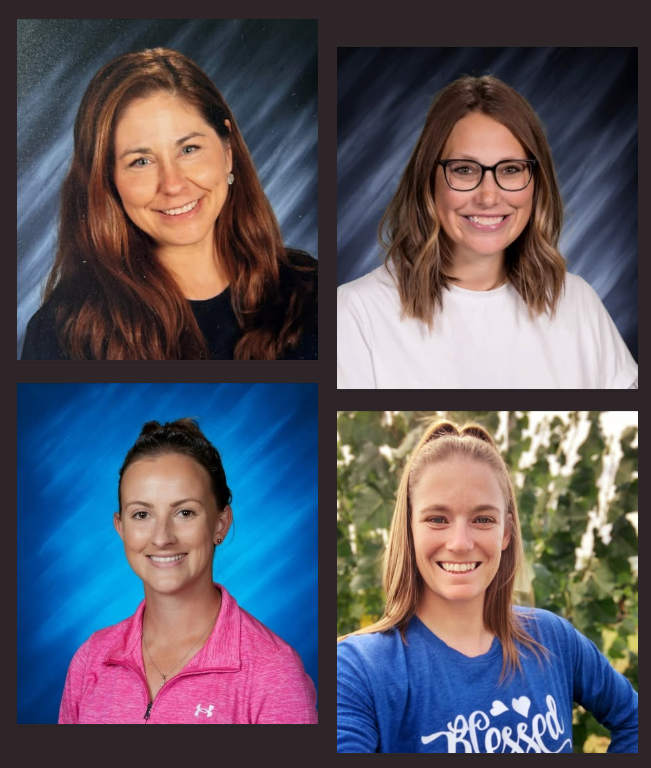
North Dakota State School Superintendent Kirsten Baesler on July 11 celebrated four North Dakota educators who are finalists for North Dakota’s 2026 Teacher of the Year award.
They are:
-
Emily Dawes, a first-grade teacher at J. Nelson Kelly Elementary School in Grand Forks;
-
Hannah Sagvold, a business education teacher at Lisbon Public School;
-
Frannie Tunseth, who teaches grades 4-8 at Mayville-Portland-Clifford-Galesburg Public School in Mayville;
-
Leah Wheeling, a sixth-grade teacher of physical education and digital literacy at Simle Middle School in Bismarck.
In April, Baesler honored 48 North Dakota educators who were named County Teachers of the Year from their respective counties. Dawes (Grand Forks County), Sagvold (Ransom County), Tunseth (Traill County), and Wheeling (Burleigh County) were picked as finalists from that group of 48 teachers.
“These finalists represent the skilled, compassionate educators that we blessed to have in our North Dakota schools,” Baesler said. “Our Teacher of the Year program is intended to lift up the teaching profession and show the respect, appreciation, and admiration we have for our teachers, and celebrate the work they do to educate the young people who represent our future.”
The Teacher of the Year selection process is spelled out in state law (NDCC 15.1-02-21). Dawes, Sagvold, Tunseth, and Wheeling will be interviewed by an eight-member screening committee, which will choose the 2026 Teacher of the Year.
Baesler and Gov. Kelly Armstrong are scheduled to announce the winner at 1 p.m. Friday, Sept. 26, in the state Capitol’s Memorial Hall. State law requires that the winner be announced before Sept. 30 each year.
North Dakota’s Teacher of the Year will become a candidate for the national Teacher of the Year award, which is selected by the Council of Chief State School Officers, a Washington, D.C.-based organization that represents state education interests. Baesler is a former president of the CCSSO’s board of directors.
North Dakota’s current Teacher of the Year is Kendall Bergrud, a mathematics teacher at Bismarck’s Wachter Middle School. His successor will begin serving as North Dakota’s Teacher of the Year on Jan. 1, 2026.
BRIDGE Transition: Answers to Your Latest Questions
North Dakota’s BRIDGE initiative is moving full speed ahead as we prepare to launch Infinite Campus as our new statewide Student Information System (SIS) in July 2026. This work is part of a broader effort to modernize how education data is collected, connected, and used to support student success. We continue to address real questions from the field to help educators stay informed and ready for what’s next.
- Q: Is STARS going away?
-
A: Yes, STARS will eventually be phased out. However, its core outcomes and reporting functions will remain integrated within the new BRIDGE data ecosystem.
- Q: Is TieNet going away?
-
A: Yes. NDDPI's Specially Designed Services team is collaborating with Infinite Campus to configure a module that replicates TieNet’s functionality within the new system.
- Q: Will districts have access to PowerSchool after the Infinite Campus SIS goes live in July 2026?
-
A: No, districts will not have access to PowerSchool once Infinite Campus goes live. However, they will retain access to their archived PowerSchool data.
- Q: When considering automation, wouldn’t it be wise to standardize course codes, grade scales, grading terms, and attendance codes to make the transition more seamless?
-
A: These remain local control decisions. While lack of standardization can limit automation, NDDPI has limited authority to require uniformity across districts. Districts will continue to map their local values to established codes within the SIS. While BRIDGE aims to support the automation of state and federal reporting and aggregate data analysis, reaching this goal requires strong collaboration between the state and districts. Some barriers include state reporting needs that extend beyond what LEA systems currently collect, unique reporting requirements for certain schools, and inconsistent data quality at the source. Districts will still be responsible for verifying their data. However, by implementing BRIDGE, we are creating a more unified system that reduces duplication and moves the state forward in its data modernization efforts.
📬 Have a question you’d like answered in a future FAQ? Let us know at BRIDGE@nd.gov. We’re committed to keeping you informed and supported every step of the way.
|