NEWS
 New Data Collection Shines Light on Broader School Staff Shortages
Article from the North Dakota University System Institutional Research Blog
When we think of school staff, typically it is teachers that first come to mind. Other salient school staff include principals, cooks, custodians, and librarians. However, paraprofessionals—known also as instructional assistants or teacher’s aides—also form a significant part of the educational workforce.
Many of North Dakota’s teachers and principals will tell you how important paraprofessionals are to their schools’ operations. From supporting regular classroom instruction and special education, to monitoring lunch and recess, paraprofessionals help keep students on-track and their presence increases the safety of the students and staff. In that sense, both their presence and their absence are felt by everyone in the school environment.
North Dakota is experiencing workforce shortages across a variety of sectors, and education is no exception. While attention has been paid to teacher shortages – e.g., the 2024 Teacher Recruitment and Retention Task Force – school staff without teaching licenses have received less attention despite the challenge their shortages pose for North Dakota’s schools. Shortages of paraprofessionals, cooks, bus drivers, and other non-licensed personnel need a closer look.
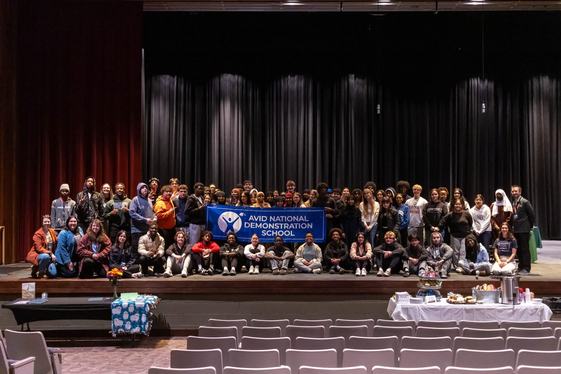 West Fargo High School Receives National Designation
Article from The Forum
West Fargo High School is the first school in North Dakota to be designated an AVID National Demonstration School.
Advancement Via Individual Determination, or AVID, is a nationally recognized program that helps students succeed in academically rigorous coursework.
West Fargo High is the first school in the state to receive the designation. In order to receive the designation, they underwent a rigorous validation process and will be reevaluated every few years to ensure high levels of implementation.
AVID is a program that aims to close the opportunity gap by preparing all students for college and career readiness and success, the release said. AVID graduates enroll in college at higher rates than the national average, and AVID students are more likely to complete four-year college entrance requirements, be accepted into four-year colleges, and continue into their second year of college.
OTHER UPDATES
Title I Funding Requirements and USED Method Webinar
NDDPI hosted a webinar on Feb. 27 to provide information regarding the upcoming transition of North Dakota’s Title I, Part A allocation process. NDDPI has developed a Featured Area on the website under Title I Funding, which can be accessed here.
Included in the Title I Allocation Featured Area:
- Allocation Transition Webinar Recording
- Allocation Transition Slide Deck
- Allocation Transition Q&A
-
North Dakota Census Data: Red highlights indicate districts ineligible for a Title I allocation for the 2025-2026 school year due to a poverty count below 10.
If you have any questions please contact, Angie Richter (701) 328-2287.
Rural Education Achievement Program Update
FY 2025 Master Eligibility Spreadsheet Data Review Window
An initial version of the FY 2025 REAP Master Eligibility Spreadsheet (MES) is now available for district review. In your review of the MES, please verify that all state-submitted data is accurate and up to date, including average daily attendance (ADA), LEA contact information, state rural definition, and LEA operational and/or virtual status. Note that this is an initial version, and the eligibility determinations included on the MES are subject to change, pending state coordinator and LEA review.
FY 2025 Small, Rural Achievement Grant Program Application Timeline
The U.S. Department of Education has shared a public version of the MES with LEAs that were eligible as of Feb. 28. The MES is now hosted here.
We ask that LEAs work with their Rural and Low-Income School Grant Program state coordinators if any information needs to be updated. Please notify your REAP state coordinator via email of any data changes as soon as possible so updates can be made prior to the opening of the SRSA application in mid-March.
If you have any questions, please reach out to Kate Waechter, NDDPI's REAP State Coordinator, at kwaechter@nd.gov.
Interpreting the Cognia Student Engagement Results
The Student Engagement Survey (SES) allows students to express their experiences and perspectives on engagement within their school and learning environment. Insights gained from this survey offer schools and districts a deeper understanding of student engagement, enabling educators to develop strategies that boost engagement and, in turn, enhance academic achievement, peer interactions, attendance, and interest in learning.
The survey evaluates engagement across three key areas:
-
Cognitive Engagement: A student’s cognitive processing effort brought to academic tasks and the amount and type of strategies a student applies (Walker, Greene, & Mansell, 2006).
-
Behavioral Engagement: A student’s observable actions or participation while in class that is considered through a student’s conduct, effort, and participation (Fredricks, Blumenfeld, & Paris, 2004).
-
Emotional Engagement: A student’s feelings toward his school, learning, teachers, and peers (Jimerson, Campos, & Grief, 2003)
To view essential information and resources, click here.
To view and download your summary results, follow these steps:
- Log into myJourney
- Go to the “Surveys” module
- Click the ellipsis icon next to the desired survey name (repeat this for all previous Student Engagement Surveys)
- Select “Download Summary Results”
- A link to the PDF will be sent to your email, allowing you to save it for future use
|