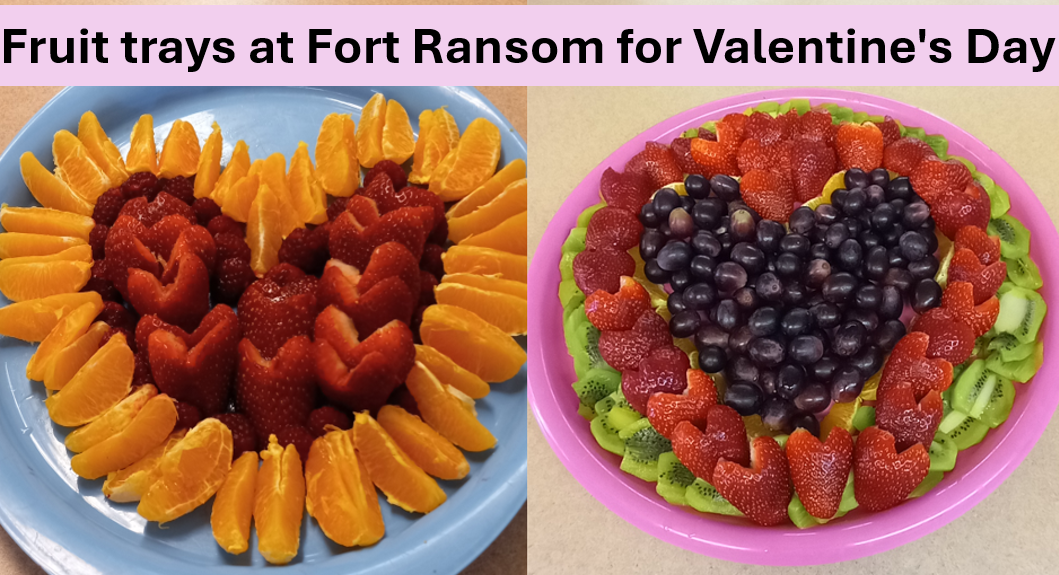
This week (March 3-7) is National School Breakfast Week! The theme is: Clue in to School Breakfast.
We hope you have some fun-themed events planned. If not, there is still time to celebrate! Email dpicnfd@nd.gov to share some of your celebrations with us.
|
March Edition, March 18 at 2 p.m. CST
Join us for our monthly Kitchen Counter Webinar: Win with Breakfast!
We will celebrate School Breakfast Week, discover innovative ways to incorporate vegetables into breakfast menus, along with creative and tasty menu ideas. We'll also talk about the parameters to serve juice and smoothies as it credits for the meal and ensuring you meet nutritional guidelines while keeping students satisfied and energized.
Key Takeaways:
🎉Celebrate School Breakfast Week
🥦Integrating vegetables into breakfast meals
🥤Best practices for serving juice and smoothies
Secure your spot and join us in making school breakfasts better than ever! 📅🍽️✨
As always, prior webinar recordings are posted on our website for viewing: UPDATES | North Dakota Department of Public Instruction (nd.gov).
With the operational period of the Summer EBT program quickly approaching, the CNFD office has been busy preparing for this year’s issuance of benefits. Office hours were held in February to assist schools in learning more about the program and to answer any questions. Office hours will continue in March, every Thursday at 2 p.m.
The CNFD office will “scrub” the student data collected from STARS in late March and contact schools whose enrollment isn’t in STARS. Those schools will be instructed to provide CNFD with a student enrollment list that includes sensitive data like student names, school lunch status, birthdates, current mailing addresses, and parent/guardian contact information. A CNFD staff member will contact those schools directly to obtain the student data. Schools with student data in STARS should have received guidance on how to review their “SEBT Enrollment” report in STARS to make any corrections before CNFD pulls the final streamlined certification student data.
This data, along with the student data collected in STARS, will be used for streamlined eligibility, allowing those students to not have to apply for the program. We will provide all schools with targeted outreach that can be shared with households with streamlined certified students to make sure they are aware of their eligibility and to NOT apply for S-EBT. The remaining households whose students have not been already determined eligible through streamlined certification, will receive outreach indicating that they would need to apply using the Summer EBT Alternative Income Application. Benefits will be issued to students in late April/early May.
To learn more about the Summer EBT program and to help us ensure that eligible students receive the benefit, please join us for S-EBT office hours in March.
Webinar: March 19, 2024 @ 2 p.m. CST
Join us for a webinar on March 19, where the CNFD office will share information about the SUN Meals program and how schools can help keep kids fed over the summer when school is not in session.
We are happy to provide, upon request, certificates for 10 years of service and for every 5-year interval after that. We also provide awards upon retirement at the request of the school district.
These are quality certificates of appreciation signed by our director, Lynelle Johnson and State Superintendent Kirsten Baesler.
If you would like years of service certificates for eligible school foodservice employees, please complete the Years of Service Request form and return it to our office either by e-mail vlsilva@nd.gov or fax (328-9566) no later than Friday, April 18, 2025. Please check your staff list now and submit your requests as soon as possible to ensure early delivery.
Certificates will be mailed out no later than Tuesday, April 22. Please check the certificates and immediately notify our office if there are any discrepancies. It is suggested that the certificates be presented to your foodservice personnel on School Lunch Hero Day, Friday, May 2, 2025, or during School Nutrition Employee Week, April 28-May 2, 2025.
Should you have questions about the Years of Service Awards, please call Victoria Silva at 701-328-2294 or toll-free at 1-888-338-3663.
School Lunch Hero Day is coming SOON!
May 2 is the designated date for School Lunch Hero Day, and it is time to start thinking about how you can make your nutrition staff feel appreciated after a long year of hard work planning, preparing and presenting meals for hungry students and staff. SNA has artwork, merchandise and marketing resources to get you started.
Breakfast and Lunch (SBP & NSLP) Changes
As you start to plan menus for the following year, please remember that there will be some small changes to the meal pattern requirements. According to the ‘Updates for the School Nutrition Standards’ on the USDA website here: Updates to the School Nutrition Standards | Food and Nutrition Service
Best Practice to meet the fall 2025 reduced added sugar requirements in cereal, yogurt and flavored milk.
- Please check your pantry now to move inventory that does not meet the following requirements:
Breakfast cereals may have no more than 6 grams of added sugar per dry ounce.
Yogurt may have no more than 12 grams of added sugar per 6 ounces (2 grams of added sugar per ounce).
Flavored milk may have no more than 10 grams of added sugar per 8 fluid ounces or, for flavored milk sold as a competitive food for middle and high schools, 15 grams of added sugar per 12 fluid ounces.
- It would be wise to delete items that don’t meet these new requirements from the order guide, so they do not slip through next year.
We developed an audit tool to help with this process. Check it out!
Afterschool Snack Program (ASP) Changes
The Institute of Child Nutrition has a new training course to cover the rule changes for menus served in the Afterschool Snack program. The changes are to bring this program into alignment with the same rules of the National School Lunch program. Check this program out to help you bring your Afterschool Snack program into compliance by July 1, 2025. USDA: The Road to Successful Menu Planning for School Meals Afterschool Snack Service
These include:
- Splitting the fruit and vegetable category into individual categories so there are now five meal components to pick at least two of for snack service.
- Juice cannot be any more than 50% of the fruit or vegetables offered over the week.
- Grains served over the week now will need to be at least 80% offered as whole grain rich.
- Grain-based desserts will be limited by product based. Items that are no longer credited in the Afterschool Snack program are cereal bars, granola bars, toaster pastries, sweet rolls, donuts, cakes, pies, and cookies.
- Milk, yogurt and cereal added sugar limits as well.
- If preschoolers are served, CACFP rules must be implemented:
- Milk can only be offered as unflavored, low fat or fat free
- Juice may only be offered at one meal service per day.
- Whole grain items need to be served only once per day
Our monthly Kitchen Counter Conversations as well as Back to School Workshops (held this summer) will also help to introduce you to the requirements. Please do your part to familiarize yourself to the upcoming menu changes!
Reminder: Finish up the second mandatory monitoring of the Afterschool Snack Program. The first one was to have been done within the first four weeks of beginning operation for the year. The second must be completed before the program ends for the year.
Begin procurement planning with a deep dive into the school’s procurement policy.
Procurement begins and ends with the procurement policy. It is the road map of who, what, when, where and how procurement happens during the year at any school. Check the school board policies to get started on the review. If one is not posted there or it does not seem to be for school food service purchasing, find a template to get started on our website under the Procurement tab for School Nutrition Programs located here: SNP Procurement | North Dakota Department of Public Instruction
Please let us know if you have any questions regarding procurement for the school kitchen in the coming year.
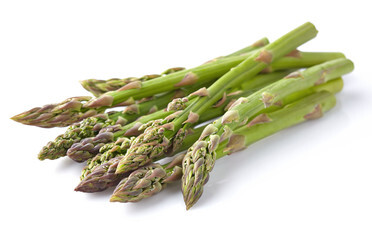
Asparagus is a vegetable that comes to mind when spring and Easter are near. Spring is when this vegetable is the most tender and flavorful, and the spears are freshly sprouted and bursting with nutrients. Introduce your students to this delicious vegetable, all you need for a sample is one spear.
Asparagus is a versatile, nutrient-dense vegetable known for its long, slender spears and distinct earthy flavor. Typically green, though white and purple varieties exist, asparagus has a slightly grassy, mildly bitter taste that can range from tender and sweet to more robust depending on its preparation. It's packed with vitamins A, C, K, and folate, along with fiber and antioxidants, making it a healthy addition to a balanced diet. It is commonly roasted, grilled, steamed, and even eaten raw.
|

March Harvest of the Month
Pork is the culinary name for the meat of a pig or hog. It is the most commonly consumed meat worldwide, especially in Eastern Asia. In North Dakota, we have more than 100,000 hogs in our state.
Cured pork products are very common and include ham, bacon, and sausages.
The U.S. produces 11% of the world’s pork. China and the European Union collectively produce 62% of the world’s pork. There are 377 breeds of pig around the world.
Pork has many beneficial qualities that make it easy to incorporate into a balanced menu. The variety of options range from decadent and flavorful to lean and nutrient-rich cuts that are affordable, easy to make, and enjoyable to people of all ages.
Both the pork tenderloin and pork sirloin roast meet the criteria for the American Heart Association Heart Checkmark, which means they contain less than 5 grams of fat, 2 grams or less of saturated fat, and 480 milligrams or less of sodium per label serving. Pork is also packed with protein, making it easy to include in a health-forward and balanced diet.
If you’re interested in featuring a Farm to School activity before the school year is finished, please contact Amanda Olson for ideas and ways to collaborate. She would love to come visit your school and learn about how to enhance or expand your Farm to School program. amolson@nd.gov
Educational Webinar Opportunity
NDSU Field to Fork Webinar Series provides research-based information about growing, preparing, preserving and selling vegetables and fruits.
The 2025 “Field to Fork Wednesday Weekly Webinars” are held Feb. 12 through May 7.
Missed a webinar you really wanted to see? No worries! Each week, the webinar recording will be archived for viewing under the corresponding webinar title below. Each webinar title also includes a PDF of the presentation and a certificate of completion. 2025 Field to Fork Webinar Series | NDSU Agriculture
|
Inquiring minds have asked for the following dates. Registration is in the works for most. Watch the April newsletter for more information.
Initial 8-hour Food Safety and Sanitation certification: Tuesday, June 3, in the Pioneer Room of the State Capitol building in Bismarck. Deb Strand with Serv Safe will be offering the certification class this year. She has a fee of $175 for the book, the training and the test that will earn the certification. You can find the registration form HERE. For the free option, school nutrition professionals are always welcome to take the ‘Food Safety in Schools’ course online at the Institute of Child Nutrition.
New Kitchen Manager ‘Boot camp’: Wednesday, June 4, through Thursday, June 5. Be ready for two days of immersion into the school nutrition program from menus and production records to professional development. The class will be held in the Pioneer Room of the State Capitol building in Bismarck.
2025 NDDPI Child Nutrition and Food Distribution Back to School Workshop:
-
Tuesday, July 29, in Fargo
-
Thursday, July 31, in Minot
-
Monday, Aug. 4, in Bismarck
This will be a full day of information about updates to the School Nutrition Program for the coming year. Changes for all menus regarding added sugar limits, updating the State 200 program to whatever the North Dakota legislative session mandates and the rollout of Infinite Campus for student data and how it will affect your POS are just a few of the many changes in the works for the program.
North Dakota School Nutrition Association annual conference: Thursday, Oct. 16, and Friday, Oct. 17, at the Bismarck Hotel and Conference Center (formerly the Ramkota) in south Bismarck. Your association is trying a different date and style for the coming year.
Team Nutrition Meal Pattern Modernization Culinary Trainings: Dates/locations TBD, however, the training sessions will occur during the 25-26 School Year. Stay tuned for more information.
If you still need a few hours to complete the Professional Development requirement for the year, remember the ND Educational Hub. It was rolled out a couple of years ago and went through a platform change over the summer, but it still includes some great courses for new kitchen managers and those who want a deeper understanding of school nutrition programs.
Farm to School Equipment Grants
Agriculture Commissioner Doug Goehring has announced that applications are now being accepted for Farm to School equipment grants.
Farm to School equipment grants will allow eligible recipients to purchase equipment that will further their participation in the Farm to School program, which allows schools to purchase food from local producers for their school lunch menus.
To be eligible for grant funds, an applicant must be a North Dakota producer, North Dakota K-12 school district participating in the National School Lunch Program, or North Dakota Early Childhood Education Center participating in the Child and Adult Care Food Program.
“After holding meetings across the state, schools and producers indicated that they need more equipment to help ease the process of getting local foods to students,” Agriculture Commissioner Doug Goehring said. “This grant will assist in that process.”
North Dakota received funding from the United States Department of Agriculture Patrick Leahy Farm to School Grant Award for the program. The North Dakota Department of Agriculture (NDDA) will distribute the $204,500 available for grants through a competitive process.
An informational meeting to provide information about the purpose and intention of the F2S grant, eligibility requirements and an opportunity to ask questions will be held TODAY, March 3, 2025 from 2:30 - 3:30 p.m. online via Teams.
Meeting ID: 291 252 009 81
Passcode: 5zv9v2mL
If you are unable to attend the meeting live, please fill out THIS FORM to receive the recording.
Applications must be submitted in electronic form by March 31, 2025. Applications will then be reviewed, scored, ranked and provided to Agriculture Commissioner Goehring for final approval.
Goehring said persons needing more information should contact Jenna Nieters at (701) 328-2659 or jnieters@nd.gov.
The end of the year is coming. This may be a soft sigh for you or a fist-in-the-air-leap reaction. There are two things to think about as we wrap the year up:
- Has the kitchen been inspected twice during this school year. If not, please contact your health inspector with the reminder of the two-inspections annually for any site that is participating in the National School Lunch program. This includes sites that are serve-only. The health inspector has a modified checklist for these sites.
- Does the Food Safety and Sanitation certification for Kitchen managers need to be updated.
In North Dakota, this is a requirement every five years. Every kitchen operating a National School lunch program must have a designated and certified person in charge.
Handwashing Resources
An article in the “Food Safety magazine” emphasizes how important food safety is in any kitchen. “Hospitalizations, Deaths Caused by Foodborne Illnesses More than Doubled in 2024” is an eye-opening read on where the major food illness outbreaks occurred and their results in the United States last year. Listeria, Salmonella and E.Coli were the germs that topped the lists. Remember that the first line of prevention for any foodborne illness is HANDWASHING! If you need more posters to hang around the kitchen and cafeteria that will encourage staff and students to wash their hands, here are some websites to print from:
Do you know where to find North Dakota Century Code (NDCC) and Administrative Rules that govern the State’s school nutrition programs?
NDCC 15.1-35-01 through 09 covers Child Nutrition and Food Distribution Programs under ‘Education’: https://ndlegis.gov/cencode/t15-1c35.pdf#nameddest=15p1-35-01.
Administrative Rules set by the Superintendent of Public Instruction to oversee the NDCC activities are at Title 67 and specifically Article 67-21 for School Food Programs. You can find the link to the rules HERE.
One last area to point out are the rules on completing Corrective Action for Schools. The steps are documented in case an issue arises. Check it out here: https://ndlegis.gov/information/acdata/pdf/67-22-01.pdf
-
SP - 07 2025 Requirement to Accept Medical Statements from Registered Dietitians for Schools and Child and Adult Care Institutions and Facilities
- Schools must now accept a signed meal modification medical statement from a registered dietitian. This goes into effect on July 1, 2025, although early adoption is encouraged.
-
SP - 08 2025 Non-Congregate Meal Service in Rural Areas: Questions and Answers #3
- Provides additional guidance on the rural non-congregate summer meals option clarifying requirements for meal service, civil rights compliance, monitoring, and program integrity.
-
SP - 09 2025 Buy American Accommodation Process for School Year 25-26
- For schools that will not be able to meet the 10% or less nondomestic food use in their program, this memo establishes a waiver for schools to apply for temporarily. The goal of the USDA School Nutrition program is to increase domestic product usage in school meals. Support your local farmer!

Meet Bettina: Our Culinary Expert!
We are excited to announce that Bettina Applewhite will be joining North Dakota Team Nutrition as the culinary expert for the Meal Pattern Modernization Training Program. Bettina brings a wealth of experience, having served in various supervisory and educational roles within school food systems.
Several years ago, Bettina started a business dedicated to recipe development, training, and public speaking specifically focused on school nutrition. She was also a contestant on Bravo TV’s culinary competition show: Top Chef Amateurs, Season 1 and has a full repertoire of recipes and videos on her website and YouTube channel.
We are thrilled to partner with Bettina and eager for her to share her tips, tricks and expertise in our culinary training. And she is just as excited to immerse herself in some of our local cuisine, including the delicious and top comfort food tator tot hotdish.
|
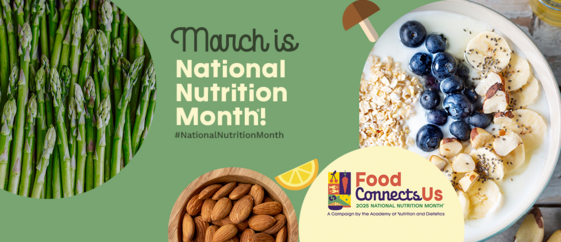
March is National Nutrition Month
This March, create connections to your food and your community. Celebrate how food ties us to culture, family, and friends!
Click HERE to explore the National Nutrition Month resource page. You will find two engaging activities: a Fact or Fiction handout or a word search, both available in multiple languages.
Consider sharing the word search with your students, and if you come across a fresh produce item you haven't tried before, why not give it a taste!
Ramadan Mubarak! Happy Ramadan!
The Islamic holy month of Ramadan will be observed from March 1 – March 29, 2025.
If students or staff observe fasting during Ramadan, here are a few key facts.
-
Fasting is the Fourth Pillar of Islam (The Five Pillars are the highest tenets of the Islamic faith).
-
Fasting lasts from sunrise to sunset each day during Ramadan.
-
Those observing the fast do not consume food or drink (not even water).
If your school district serves students who fast during Ramadan, contact our office so we can request a Non-Congregate Meal Waiver from the USDA. This would allow your school to prepare a reimbursable meal for students to take home and eat after they break their fast at sunset.
Do you want to support your Muslim students in another way? Offer a non-pork meat/meat alternative on your menus on days when pork is served. Often, Muslims avoid pork and other pig products as part of their religious dietary preferences.
|