Mark your calendars for CACFP Week - March 13-19th, 2022!
CACFP Week is sponsored by the National CACFP Sponsors Association as an educational and informational promotion designated to raise awareness of the USDA’s CACFP work to combat hunger. YOU as a provider of the CACFP help children across North Dakota by bringing children to the table and nourishing them.
If you would like to participate and use some of the pre-created flyers, visit: CACFP Week Campaign - National CACFP Sponsors Association
Share your CACFP Week Celebrations with us at NDDPI! Email us at dpicnfd@nd.gov with pictures from your celebration activities!
 |
|
If you typically send your cycle menu to Stephanie Miller for review and approval, please start sending these to Amy Nelson at amylnelson@nd.gov.
Thank you in advance!
|
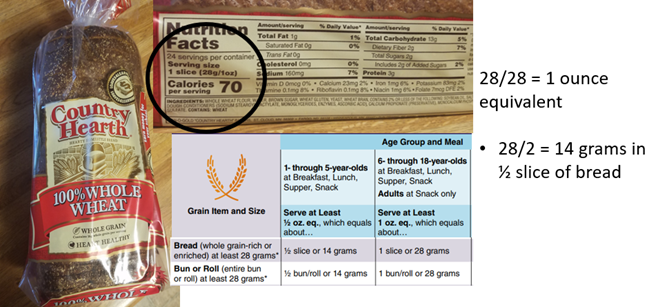
CACFP operators must ensure they are offering the minimum required serving size of creditable grains, using ounce equivalents for each age group. Grain ounce equivalents is using different verbiage, but also using the nutrition facts panel to assure that the serving of grain meets requirements.
For a listing of grain ounce equivalent resources, check out the USDA website:
Our favorite resource when it comes to using Grain ounce equivalence in your daily practice is this:
Here are a few examples of checking your ounce equivalents:
**DPI does not endorse any brand or company, however may reference brands or trademarks for training purposes.
 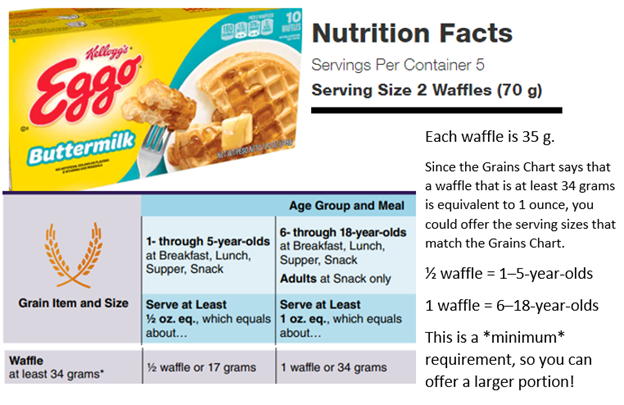 If you have questions on how to convert your current menu into grain ounce equivalents, or have questions on how to credit grains, please reach out to our office and we can help! Send us an email at dpicnfd@nd.gov and let us know you would like some assistance and we will be in contact with you!
We have heard that some recent health inspection reports have noted childcare centers/homes using raw eggs in meal production.
Child Care Providers provide meals to children, who are considered a vulnerable population, as they have a weakened immune system, since they are still growing and developing their immune system.
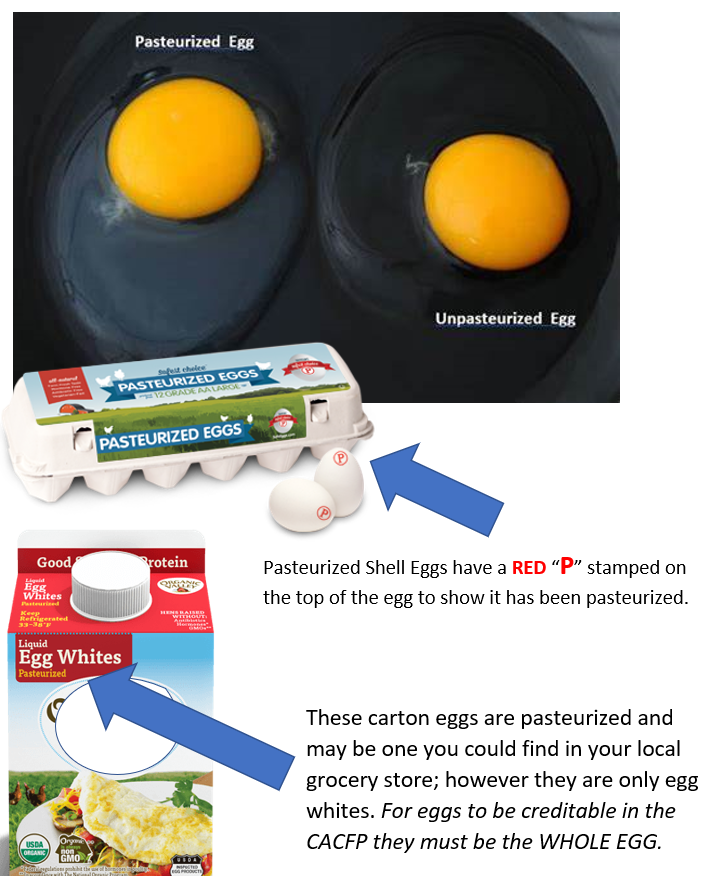
The reason for eggs being identified by the health department as a potential risk for foodborne illness, is that they can carry salmonella, and if not cooked to proper temperatures could lead to foodborne illness. To prevent this, the use of pasteurized eggs should be used, however these are tough to find in your traditional grocery store. Pasteurized eggs have to be ordered through a local food vendor, or online via Webstaurant. “Pasteurized” means that the egg has been cooked “slightly” to reduce the risk of food borne illness, especially for dishes that are not cooked or are only lightly cooked. The image below shows the difference between a traditional egg and a pasteurized egg.
North Dakota follows the 2013 FDA Food Code which indicates that “Raw shell eggs are allowed for baking or cooking (1 egg) for individual service”. They are looking to prevent shelling and pooling eggs, or preparing egg dishes too far in advance of when you are going to cook the items.
In conclusion, if you are able to purchase pasteurized eggs - do it! If you are unable to purchase pasteurized eggs, you need to ensure that all egg dishes are fully cooked to at least 145 degrees. You can also visit with the Health Inspector when they come to your facility to complete their inspection.
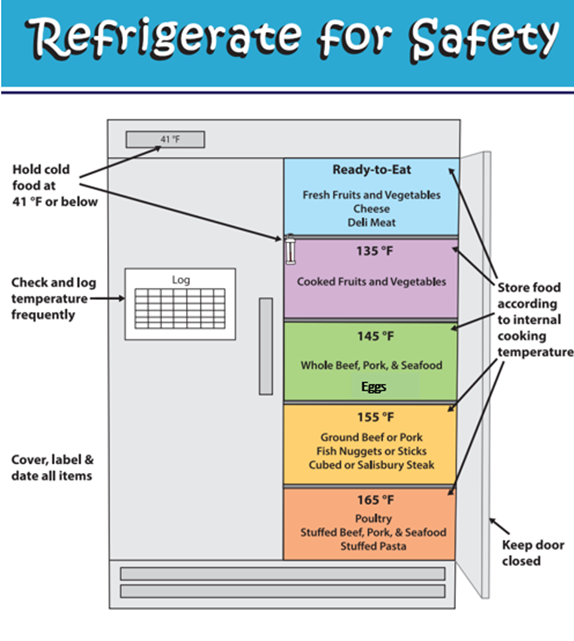
 Another aspect of food safety in relation to eggs is storing them. The image below indicates the best way to organize your food to prevent from cross contamination between food items and limit possibilities of food borne illness. Eggs need to be cooked to 145 degrees in order to kill bacteria, and so they are in the GREEN shelf (in the image below), since they are a raw product.
As you can also see in this picture, it shows having a temperature log on your fridge. If you have had a review recently – you have probably heard Kellen, Stacie or Amy recommend to start recording the temperatures of your cooler, freezer and dry storage. This is for food safety reasons, to ensure that your storage units are keeping your foods at appropriate temperatures.
We recommend that you take temperatures at least daily. You can create your own temperature log, or use one of our examples HERE. If you have any questions about recording temperatures of your storage areas, please reach out to us!
Proper Cooking Temperatures
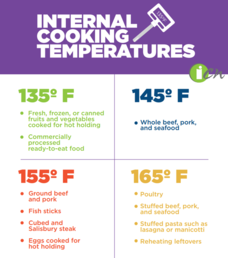
We have gotten requests from Centers asking for a resource about proper cooking temperatures. Click on the image to the right or HERE to download this resource. This would be a great poster to print, laminate and hang in your kitchen! Make sure to record your daily meal temperatures in you production record book!
If you have questions about proper cooking temperatures or recording your meal temperatures, reach out to us at dpicnfd@nd.gov.
|
USDA Team Nutrition have put together interactive quizzes to test your knowledge about the CACFP and meal patterns. Feel free to test yourself or bring your staff together to complete together! They are quick 10 question quizzes that also provide the WHY behind the answer. Have fun!
Team Nutrition Quizzes | Food and Nutrition Service (usda.gov)

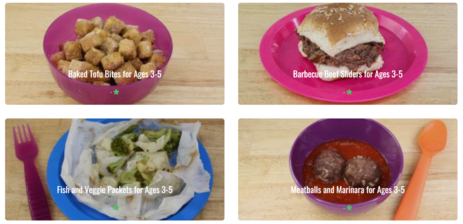
USDA Team Nutrition released 10 new lunch/supper recipes for CACFP! Some of the new recipes include: Fish & Veggie Packets, Barbecue Beef Sliders and Zucchini Boats.
Check out these new recipes and many more:
2022 CACFP Recipes – Child Nutrition Recipe Box (theicn.org)
Recipes for Child Care – Child Nutrition Recipe Box (theicn.org)
|