|

NDDOT updates long-range transportation plan
NDDOT has finalized the long-range transportation plan, Transportation Connection 2050. This plan sets the strategic direction for us and our planning partners to determine decisions, investments, and improvements to transportation infrastructure and programs over the next 25 years.
Transportation Connection 2050 is an update to North Dakota’s prior long-range transportation plan, Transportation Connection 2045. This plan looks ahead to identify plausible scenarios for transportation in the state and help address emerging challenges.
In updating the plan, we gathered input from numerous state agencies, metropolitan planning organizations, local governments, community organizations, trade associations, and tribal nations, as well as the general public.
Click below to view the final plan!
|
|
 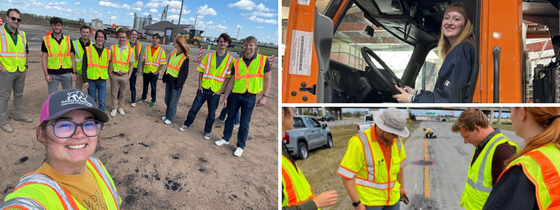
National Professional Engineers Day on August 5 provided a great opportunity for our DOT Support Center (DOTSC) and Student Design Center (SDC) engineering students to get an up-close look at the work happening across NDDOT. Students visited construction sites throughout the Fargo and Grand Forks districts, gaining insight into interstate concrete repair, roundabout construction, crack sealing, traffic signal operations and district snow and ice control.
The visits gave students a chance to connect what they are learning in the classroom and through internships with real-world engineering, planning and operations that keep North Dakota’s transportation system moving.
DOTSC is a partnership with North Dakota State University and SDC is a partnership with the University of North Dakota, both coordinated through the Design Division.
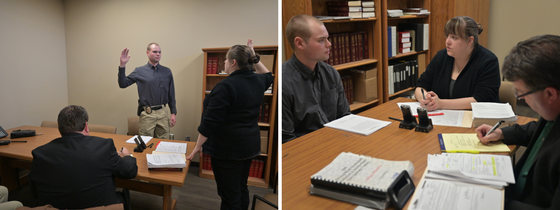
NDDOT is made up of employees with a wide range of backgrounds, expertise and responsibilities, all working toward one mission: safely moving people and goods. As one of the department's 19 divisions, the Legal Division helps ensure decisions are made fairly, consistently and in accordance with North Dakota law.
Did you know NDDOT employs attorneys who serve as hearing officers?
Hearing officers play an important role in ensuring the administrative hearing process is fair, impartial and completed within the timeframes required by North Dakota law. Most frequently, they act as an impartial neutral, adjudicating cases involving individuals whose driving privileges are at risk or have been suspended or revoked.
Under North Dakota Century Code, NDDOT must prove the legal requirements for suspending or revoking a driver's license before those actions can take effect. These hearings give drivers the opportunity to present evidence and explain why their driving privileges should not be suspended or revoked. Other types of administrative hearings also allow North Dakotans to correct or challenge information before a decision becomes final.
Here's how the process generally works, though details vary slightly depending on the type of hearing:
- Hearing officers receive certified case files and review them to ensure a fair and impartial hearing is scheduled.
- Hearing officers schedule the hearing date and time. The petitioner chooses whether the hearing is held in person or electronically, typically by telephone or Microsoft Teams.
- The hearing is conducted by the hearing officer and includes the petitioner and, if applicable, the petitioner's attorney, a member of law enforcement, a representative from the Attorney General’s Office, the state or city attorney or other members of NDDOT.
- After reviewing the evidence and testimony, the hearing officer issues a decision or recommended decision based on the facts presented. Some cases are dismissed when the evidence does not support the action. Most decisions may be appealed to state district court.
Our Legal Division has three full-time hearing officers and several part-time hearing officers located throughout the state. Thank you for all you do, hearing officers!
|
|
 
Here in North Dakota, motorcycle season is short. Whether you're making The Great American Road Trip or simply enjoying a ride closer to home, safety should be your top priority.
Tips for motorcyclists
-
Ride sober. Alcohol and drugs impair judgment, balance, and reaction time. Never ride impaired.
-
Wear the right gear. A DOT-compliant helmet, eye protection, gloves, sturdy footwear, long sleeves, and long pants can reduce the risk of serious injury.
-
Inspect your motorcycle before every ride. Check tires, brakes, lights, fluids, and mirrors before hitting the road.
-
Ride defensively. Assume other drivers may not see you. Stay out of blind spots, leave plenty of following distance, and be especially cautious at intersections.
-
Ride within the limits. Obey posted speed limits and adjust your speed for traffic, curves, construction, and weather conditions.
-
Take breaks. Long rides can lead to fatigue. Stop regularly to rest, hydrate, and stay focused.
A reminder for everyone else on the road
During summer, drivers should expect to see more riders than usual.
Look twice before changing lanes or turning, give motorcycles a full lane to operate safely, and avoid distractions behind the wheel. Motorcycles are smaller and can be difficult to judge in traffic, so an extra moment of attention can make all the difference.
Motorcycle safety is a shared responsibility and an important part of Vision Zero ND, North Dakota's commitment to eliminating fatal and serious injury crashes. Whether you're riding a motorcycle or driving another vehicle, every safe choice you make helps move us closer to zero.
|
|
Teens take the wheel at Driving Skills for Success
What’s better than talking about safe driving? Getting behind the wheel and practicing in a safe, controlled environment.
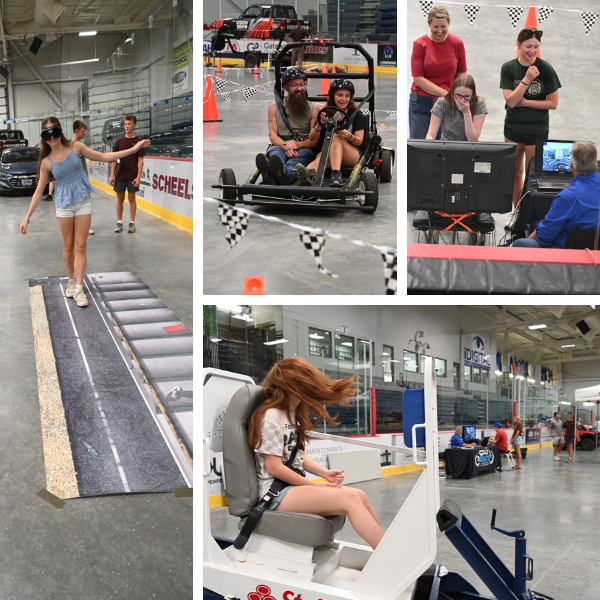
This summer, more than 220 teens in Bismarck and Minot got a hands-on introduction to safer driving during NDDOT’s two Driving Skills for Success (DSFS) events.
Held July 28 in Bismarck and Aug. 5 in Minot, the free events gave teens ages 14 to 18 the chance to practice their skills while having a little fun along the way.
Participants navigated a controlled driving course, tried simulators that demonstrate the dangers of distracted and impaired driving, and took part in hands-on traffic safety activities. They also learned why something as simple as buckling up can make a life-saving difference.
The experience is especially important for young drivers. In 2024, teens represented just 6% of licensed drivers in North Dakota but were involved in nearly 20% of all crashes, and 6% of fatal crashes.
DSFS gives teens a chance to learn from those risks in a safe environment, hopefully before they encounter them on the road.
Behind every DSFS event is a team of Vision Zero employees and partners working to give young drivers the knowledge, skills and confidence they need to make safer choices behind the wheel.
The goal is to help teens become safer drivers and support Vision Zero’s goal of zero fatalities and serious injuries on North Dakota roads.
And judging by the smiles, questions and hands-on participation, these young drivers were ready to put their new skills to work.
DSFS experiences, along with “Alive at 25” classroom trainings, are held each summer in different communities across North Dakota. Watch the Vision Zero website for information on 2027 sessions.

|
|
|
|
|