|
Friday, October 2, 2026
Highlights
EdNC - Molly Steur | September 29, 2026
WUNC News - Ronni Butts | September 22, 2026
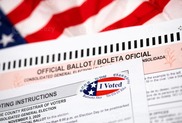
This November, in addition to deciding races for U.S. Senate, Congress, and the General Assembly - among others - voters will determine the fate of three proposed amendments to the North Carolina Constitution.
The ballot measures involve a broader mandate for voter ID, capping the state income tax, and limiting property taxes. Notably, the referenda will appear on the back of the ballot for many voters.
Here's what they are, what they would do, and what some supporters and opponents say.
Expanding the voter ID requirement
How it will appear on your ballot: "Constitutional amendment to require all voters, not just those presenting to vote in person, to present photo identification before voting."
What it will do, if passed: This amendment would alter the language of the current voter ID law to require absentee mail-in ballot voters to present photo identification - as in-person voters do. Here's a list of acceptable identification.
Although North Carolina already has a voter ID requirement, if this amendment passes, it would establish the law in the state constitution. Lawmakers voted to approve the amendment in December 2024. Because it was passed just a month after a statewide election, it now appears on this year's ballot.
Capping the state income tax
How it will appear on your ballot: "Constitutional amendment to keep the State income tax rate from being raised higher than three and one-half percent (3.5%)."
What it will do, if passed: Income tax revenue is a major source of the overall state budget and pays for expenditures like teacher salaries, state infrastructure projects, state universities and social services.
A provision in the latest budget that passed in July has already scheduled the income tax rate to drop from 3.99% to 3.49% in 2027 until 2029. But this amendment would permanently cap the rate.
Limiting property tax increases
How it will appear on your ballot: "Constitutional amendment requiring limits on property tax increases by local governments."
What it will do, if passed: There is no state property tax in North Carolina. Instead, local governments set property tax rates and collect funds to provide services like waste management, public safety, K-12 school facilities, teacher salary supplements, and recreation. This constitutional amendment would give the state legislature the power to set a limit on the ability of local governments to increase property taxes by creating a levy limit.
Local governments often adjust their property tax levy in accordance to how much money they need to fund government services, which can change depending on factors like population growth. If this constitutional amendment passes, the state legislature would set the levy limit, which could lead to some local governments falling short in funding to maintain the services if it is set too low.
Importantly, the ballot measure does not set a limit; it empowers the legislature to make that determination later.
|
EdNC - Hannah Vinueza McClellan | October 1, 2026
The U.S. Department of the Treasury and the Internal Revenue Service (IRS) released long-awaited proposed rules Thursday on the federal school choice tax credit that will offer people in participating states up to a $1,700 annual tax credit for donations made to qualifying “scholarship granting organizations.”
The department released two sets of proposed rules: a 181-page document of proposed regulations to implement the tax credit, and a 61-page document of temporary regulations to establish procedures for states and scholarship granting organizations (SGOs) to prepare for the launch of the tax credit on Jan. 1, 2027, per a department press release.
- How the tax credit will work
- First look at details from the new guidance
- Behind the Story
Planning & Work Session on Sept. 29 - Oct. 1
- Tuesday, September 29, 2026 at 11:00 a.m.
- Wednesday, September 30, 2026 at 10:00 a.m.
- Thursday, October 1, 2026 at 9:00 a.m.
New K-12 Math Standard Course of Study Adopted
The 2026 K-12 Math Standard Course of Study supporting crosswalks are available below:
The remainder of the 2026–2027 school year and the entire 2027–2028 school year will serve as the installation period for the new standards. The current K-12 Mathematics Standards will remain in effect throughout this period. During installation, the NCDPI K-12 Mathematics Team will collaborate with state, district, and school leaders; educators; school counselors; and other stakeholder groups to provide professional learning and resources to support local installation and implementation. Implementation of the newly adopted standards will begin with the start of the 2028–2029 school year.
NC State Board of Education in the News:
EdNC - Hannah Vinueza McClellan and Molly Steur | September 28, 2026
The State Board of Education’s Task Force on Accountability for Public School Units continued its work to redesign North Carolina’s school accountability system on Monday, Sept. 21, discussing the indicators that should be included in the proposal for a new model.
Task force members discussed what to include under eight potential indicators: growth, achievement, postsecondary readiness, student engagement, school climate, nonacademic supports for students, English Learner progress, and cohort graduation rate.
The Center for Assessment, a nonprofit supporting districts and states through the design, implementation, and evaluation of school accountability systems, will now work on drafting an initial report based on the points of consensus task force members reached last week. The task force is currently set to review an initial report in December.
- The work of the task force so far
- More on indicators
- What’s next?
Access all YouTube recordings of SBE meetings here.
|
Celebrate the Good in Public Education
Office of Governor Josh Stein Press Release | October 1, 2026
BlackRock Announces $1 Million Investment in Careers Electric to Expand Apprenticeship Opportunities to Eastern North Carolina
Governor Josh Stein announced that more than 500 high school students completed summer pre-apprenticeship and youth apprenticeship academies this year through the North Carolina Business Committee for Education (NCBCE) in programs focused on electrical trades, advanced manufacturing, agriculture, biotechnology, and health care. The academies build on the growth of NC Career Launch, NCBCE’s statewide youth apprenticeship initiative, which is funded by a grant from the US Department of Labor and has now supported 1,067 students who have completed youth apprenticeship in 48 counties in partnership with more than 165 employers in communities across the state since 2024.
Read the entire press release HERE.
Legislative Lookback: Week of September 28, 2026
- Location: Friday Institute for Educational Innovation
- Members
-
Meeting Goals:
- Review and refine the Commission’s draft recommendations for Student Advancement and Teacher Training in preparation for final action.
- Explore models for leveraging partnerships, shared services and regional collaboration to strengthen district operations and advance local priorities.
- Identify promising approaches, considerations and questions to inform the Commission’s recommendations on Administrative Operations.
-
Agenda
- YouTube Video Link
-
Resources
The Carolina Journal - David N. Bass | September 29, 2026
A state commission appointed by Gov. Josh Stein and Republican legislative leaders voted unanimously Sept. 28 to adopt its first set of recommendations on early reading and the teacher pipeline, after members had sent an earlier draft back to staff on Aug. 31 saying it was too general to act on.
The plan, created by the Blue Ribbon Commission on Public Education, calls for the state to adopt and fund up to three K-3 reading curricula by May 2028. Every public school unit in the state would be mandated to adopt one of them starting in the 2028-29 school year.
The plan also calls for a state-funded literacy coach, or an equivalent role, in every low-performing elementary school, plus a statewide framework for “high-dosage” tutoring by May 2028.
On teacher pay, the plan sets a 2028 target for a “competitive teacher compensation system” that “positions North Carolina as a regional leader in teacher pay.” That replaces language in the August draft that called compensation “a priority for future study.”
The Carolina Journal - David N. Bass | September 30, 2026
School finance officers told a state commission on Sept. 28 that they routinely assign employees to whichever budget the state will pay for, and that even then they send unspent teacher money back to Raleigh. The House’s top K-12 lawmaker, one of the legislators who serve on the commission in a non-voting role, said that proves the funding model is broken.
North Carolina funds teachers, principals, and most other licensed school staff by the position, not the dollar, according to the Department of Public Instruction’s allotment policy manual. What the positions don’t cover, districts patch together from state, local, and federal money all year long, the finance officers said.
That approach could be due for a change, however. The new state budget sets aside $300,000 for a work group to design a per-student formula instead, with a report due to lawmakers by July 15, 2027.
State Rep. David Willis, R-Union, who chairs the House Education K-12 Committee, spoke up as the Blue Ribbon Commission on Public Education opened questions for the panel. He said the state should “go back to the drawing board and figure out what the funding model should look like” rather than keep making small changes.
A Look Ahead: Adjournment until October 26
Pursuant to SJR 1091, the House and Senate may reconvene on the following dates:
- October 26-28
- November 16-19
- November 30-December 18
Items eligible for consideration include: veto override votes, appointment and confirmation matters, election law issues, litigation-related actions, impeachment proceedings, constitutional amendments, simple resolutions, conference reports, and resolutions to further adjourn the legislative session.
The NCGA legislative calendar is updated frequently, so be sure to check the NCGA Homepage for the most up-to-date information on committee meetings, voting sessions, press conferences, and more. Current Legislative Calendar
K-12 Education Bills
Education Bills to Watch
-
HB 171 Equality in State Agencies/Prohibition on DEI.
-
HB 301 Social Media & AI Safety.
-
HB 832 Education Omnibus.
-
SB 69 Various Local Provisions V.
-
SB 177 Continuing Budget Adjustments.
Reminder: Bills ≠ Laws
Only a few dozen bills typically make it “across the finish line” and become law each legislative session.
|
WRAL News - Caroline Yaffa, Will Doran and Brian Murphy | October 2, 2026
New laws that took effect on Oct. 1 could hit your wallet, your commute and your family. Here’s what changes — and what you need to know.
 |
|
Paid parental leave
Some state employees will get more parental leave. Eligible employees now qualify for at least 12 weeks of leave — up from eight. Employees would need to be working at an executive branch agency, public school, a community college, or the University of North Carolina system to receive the expanded benefit. It would apply to people who become parents through birth, adoption, foster care or other legal placement of a child.
|
|
|
Other Legislative Resources
2026 NCGA Candidate Information
State Budget Information & Resources
2026 State Budget Information
2025 Enacted "Mini Budgets"
Other State Budget Resources
K-12 Education Legislation Resources
|
Useful Acronyms
DPI = Department of Public Instruction
GS = General Statute
HB/SB = House Bill/Senate Bill
JR = Joint Resolution
LB/LOB = Legislative Building/Legislative Office Building
LEA = Local Education Agency
NCGA = North Carolina General Assembly
PCS = Proposed Committee Substitute
PSU = Public School Unit
SBE = North Carolina State Board of Education
SL = Session Law
For the glossary of education acronyms/terms, click here.
For the glossary of legislative terms, click here.
|
|
In Other News
NC Collaboratory K-12 Education 2026 Study Mandates
The NC Collaboratory is a funding agency created by the NC General Assembly in 2016 for the purpose of supporting academic research that generates practical information for State and local governments and the communities they serve.
The 2025–2027 budget expanded the NC Collaboratory’s legislative portfolio to a record 25 mandated studies spanning education, workforce development, health care, public safety and mental health. Together, these studies reflect the General Assembly’s growing reliance on the Collaboratory to provide independent research, rigorous evaluation and practical recommendations that help inform policy decisions across North Carolina.
Contact Jeni Corn at jeni_corn@unc.edu with any questions.
WRAL News - Emily Walkenhorst | September 29, 2026
The new campaign is intended to be a fun challenge to celebrate literacy at a time when young people report reading less than prior generations.

North Carolina school leaders are challenging the state's children to read 10 million books in 2027, after nearly two decades of decline in the percentage of students nationally who say they regularly read for fun.
Reading for fun is associated with higher test scores in reading. It's a subject area that North Carolina and the nation has posted more middling results in over the past decade, though the state recently posted some improvements in reading proficiency.
The 10 Million Book Challenge will launch in January and last the calendar year. Nearly every school district and 53 charter schools so far plan to participate.
That's roughly seven books per student, among the roughly 1.5 million students in the state's traditional public and charter school students. The challenge will promote novels, picture books, graphic novels, plays and audiobooks. For students who need an accommodation, schools can offer alternative text suggestions.
|
25-member council to help shape statewide approach to identifying and scaling promising practices
NC DPI Press Release | September 28, 2026
2026-27 Innovation Leadership Council Members
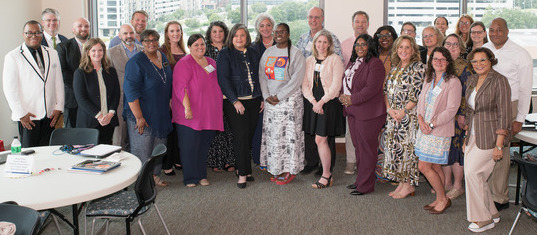
The Innovation Leadership Council (ILC) met for its inaugural convening to help shape a statewide approach of identifying and scaling promising practices, as outlined in the North Carolina Department of Public Instruction’s (NCDPI) Strategic Plan, Achieving Educational Excellence. The 25-member council is a statewide, cross-sector advisory council established to help identify, evaluate, elevate and scale classroom, school and district approaches with evidence they improve outcomes across North Carolina public schools.
Selected from nearly 400 applicants, the council represents all eight State Board of Education (SBE) regions and brings together educators and leaders from traditional public school districts and schools, charter schools, lab schools, higher education and research. Members serve communities spanning rural, suburban, urban and regional contexts across the state.
Read the complete press release and learn about all of the members here.
Applications are now open for the 2026-27 Purple Star Award, which recognizes North Carolina schools that demonstrate military-friendly practices and a strong commitment to military-connected students and families.
Application
- October 14 at 9 a.m. and 4 p.m.
- November 17 at 4 p.m.
- December 10 at 9 a.m.
- January 7 at noon
- January 26 at 4 p.m.
For questions on the application, please email Howard Lattimore.
Applications close February 1, 2027
|
Educational Programs and Opportunities
EdNC - Molly Steur | September 23, 2026
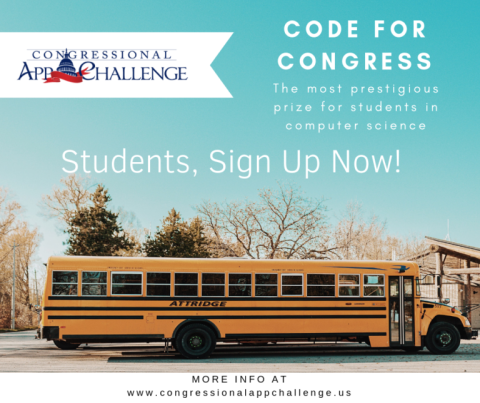
The 2026 Congressional App Challenge, the most prestigious competition in computer science.
Established by the U.S. House of Representatives in 2013, the Congressional App Challenge encourages middle and high school students from across the country to develop an innovative app for a mobile device or computer. The competition is designed to expose students to the world of app development without requiring prior coding experience.
PRIZES AND REGISTRATION
The winners of the competition will have their app featured on the U.S. House of Representatives’ website and displayed in the U.S. Capitol. Winners are also invited to the #HouseofCode Capitol Hill Reception.
GENERAL RULES
- Students must either be in middle or high school
- Students can participate as individuals or in up to teams of four
- For teams, 50% of the students must either live or go to school in the district
- For solo students, the student must either live or go to school in the district
- Students have until October 26, 2026 to submit their apps.
- Apps can be coded on any platform, using any programming language, on any topic
IMPORTANT DATES
-
October 26 – Deadline for students to register and submit their app online
-
December 31 - Winner announced by at the latest
NC College Connect delivers direct admission offers to more than 105,000 seniors; 64 percent admitted to dozens of two- and four-year colleges without an application
Your moment is coming! Get ready! - With NC College Connect, you will be directly admitted to participating colleges and universities where you already meet admissions requirements. No essays, test scores, or recommendation letters needed. Yes, it’s that simple.
NC College Connect is a program that directly admits North Carolina public high school seniors who are on track to graduate, have a 2.8 GPA or higher, are enrolled in a fourth-level math and meet program requirements to participating UNC System universities, North Carolina Independent Colleges and Universities, and their local North Carolina community college. The higher your GPA, the more schools to which you’ll be directly admitted!
Don’t have a 2.8 GPA? If you are on track to graduate, you’ll be directly admitted to your local community college.
Participating institutions include 11 UNC System universities, all 58 North Carolina community colleges and 29 North Carolina Independent Colleges and Universities.
Next steps for families
-
Check the offer online. Seniors can log in to their College Foundation of North Carolina (CFNC) student account at NCCollegeConnect.org to see where they have been admitted.
-
Watch the mail. An official NC College Connect letter will arrive in the coming weeks with the same information.
-
Talk with a school counselor or advisor. Counselors and advisors can help students research opportunities, compare offers, understand next steps and plan for financial aid.
-
Accept an offer or apply early. Students review their offers and submit a short form indicating their interest. Those who accept an offer during College Application Week, Oct. 19-25, avoid most application fees, and fee waivers are available for most other applications.
-
Complete the FAFSA. Filing the Free Application for Federal Student Aid (FAFSA) is the first step toward financial aid at any college.
-
Decide where to enroll and complete enrollment. Weigh academic programs, campus location and environment, family and individual needs, and financial aid packages.
|
Partner with the Governor's Council on Workforce & Apprenticeships
Businesses across North Carolina are coming together to strengthen the state’s talent pipeline—and Your Company is invited to join in! By partnering with the Governor’s Council on Workforce and Apprenticeships (and through it, the NCWorks system), employers gain access to talent connections, workforce training resources, and support designed to help companies recruit, train, and retain the skilled employees they need to grow.
The Council’s Goal: Engage 50,000 employers across the state.
Visit commerce.nc.gov/employers to learn more and complete the interest form.
Add your voice. Share your workforce needs. Help shape the future of North Carolina’s workforce...and ensure your business stays competitive.
 |
|
The Department of Education administers grant funding programs to fulfill the Department's mission to promote student achievement and preparation for global competitiveness, to foster educational excellence, and to ensure equal access. Search for open and upcoming grant opportunities available from ED in the list at this link. The definitive list of U.S. federal government grants is located at Grants.gov.
|
Click here to subscribe to the weekly legislative update or other NC Department of Public Instruction topics.
To view previous K-12 Education Legislative Updates, click here.
NCDPI Office of Government Affairs
Anne Murtha – Legislative Specialist
|
|
|
|
|