|
Friday, September 4, 2026
Highlights
Test Results for All Race and Ethnicity Subgroups Reach Three-Year Highs
NC DPI Press Release | Sept. 2, 2026
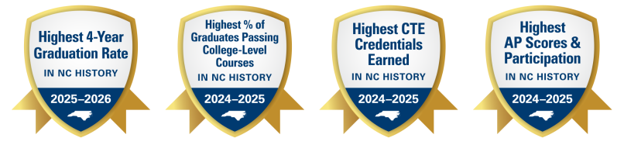
North Carolina public school students marked another year of noteworthy academic progress in 2025-26, achieving a record-high graduation rate and improving performance on most standardized tests, according to data presented Wednesday to the State Board of Education.
The four-year cohort graduation rate rose to 88.8% in 2025-26, up from a record 87.8% in the previous year, thereby marking a new historic high. This graduation rate moves North Carolina’s public schools closer to reaching a “Best in Nation Measure” as identified in the North Carolina Department of Public Instruction’s (NCDPI) strategic plan, Achieving Educational Excellence.
“These academic achievement results are a testament to the incredible work happening across North Carolina’s public schools,” North Carolina Superintendent of Public Instruction Maurice “Mo” Green said. “While I am pleased to see these results trending positively, including our highest graduation rate ever, I look forward to continued progress as we aim to achieve educational excellence for all North Carolina public school students and become the best public education system in the nation.”
School Performance Grades also continued to trend upward this year, with more schools earning an A, B or C, and fewer earning a D or F rating. These grades are based on student achievement, growth on state assessments and English learner progress at all grade levels. The ACT, ACT WorkKeys, math course rigor and graduation rates are also factored in for high schools.
The percentage of schools labeled D or F dropped to 23% in 2025-26, down from 31% the previous year. As a result, 162 fewer schools were designated low-performing in 2025-26 compared to the year before, and nearly 100 fewer schools were designated continually low-performing over the same span. Only 10 districts were designated low-performing this year, 13 fewer than in 2024-25 and the fewest since 2018-19.
Aligned with Achieving Educational Excellence, these results make notable progress toward measures identified in Pillar 1: Prepare Each Student for Their Next Phase in Life. Educators, families and community members can follow NCDPI’s continued progress on graduation rates, testing outcomes and school performance through the strategic plan dashboard.
Read the entire press release here.
|
EdNC - Molly Steur | August 31, 2026
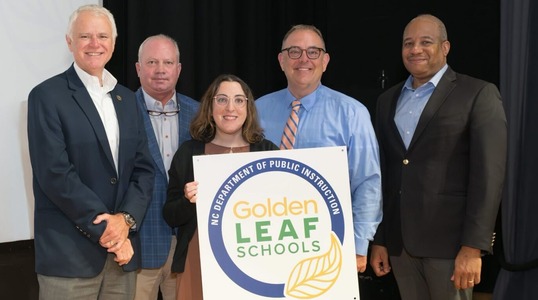
Golden LEAF Schools Initiative Summer Convening in June 2026. Courtesy of NC Public Schools
The Golden LEAF Schools Initiative (GLSI) has officially entered into its second academic year of operation. According to a recent update from the Department of Public Instruction (DPI), four new schools have joined the program. This summer, Golden LEAF led three opportunities for GLSI educators to come together, learning and working to “align (their) collective work.”
The Golden LEAF Schools Initiative is a five-year program which promotes educational improvement and innovation, focusing on pedagogy, leadership, school culture, career readiness, and math instruction, according to previous reporting by EdNC.
The new Golden LEAF toolbox
In the update, DPI highlighted a number of resources for GLSI schools, including guidance on communicating the message of Golden LEAF to communities, resource sharing, instructional standards, and more. The update explained that utilizing these tools would “set classrooms and leadership teams up for a highly successful year of implementation.”
To view the full list of announcements from GLSI, click here. To view the schedule of upcoming cohort personal development and meeting dates, click here.
September State Board of Education Meeting
-
Wednesday, September 2, 2026 at 10 a.m.
-
Thursday, September 3, 2026 at 9 a.m.
Access all YouTube recordings of SBE meetings here.
|
Meet the State Board of Education Student Advisors
 |
|
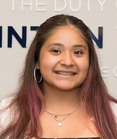
Senior Student Advisor, Daniela Mojica Uriostegui
Daniela Mojica Uriostegui is the State Board of Education's senior student advisor. She is a senior at Wilson Early College Academy (Wilson County Schools). She is passionate about leadership, service, and science. Daniela is also a small business owner, launching her own crochet business in 2021. This summer, Daniela participated in UNC’s Outset Pediatric Program, a competitive program for high school students interested in becoming pediatricians, as well as Governor's School of North Carolina to study Natural Science.
|
 |
|
Junior Student Advisor, Keely Noelle Deal
Keely Noelle Deal is the State Board of Education's junior student advisor. Keely is a junior at Purnell Swett High School (Robeson County Schools). She founded "You Are Enough," a youth initiative focused on promoting self-worth, confidence, and positive mental health. She is a National Beta Club Member, 2025-2026 Teen Miss Lumbee, and enjoys advocating for youth leadership, education, cultural preservation and healthy living.
|
Celebrate the Good in Public Education
Roanoke-Chowan News-Herald - Cal Bryant | August 21, 2026
J. Wendell Hall is the latest recipient of the Hometown Hero Award presented by the Hertford County Board of Commissioners. Hall, a Hertford County native who currently serves on the county’s Board of Education and the North Carolina State Board of Education, was honored at the Aug. 17 meeting of the board where his career as a school teacher and educational administrator was highlighted.
In accepting the award, Hall talked about how awarding it is to work in public education, something he’s done non-stop since 1968.
“This is all I do, it’s all I know how to do,” Hall said. “I enjoy what I do because deep down I know that the lives we as educators have touched have been and will continue to be our future. The work we do has always been and will always continue to be about children and their future."
“I thank this board of commissioners for recognizing me in this way,” Hall continued. “There is no other award I’ve ever received more important than this one because it comes from home folks.”
The 2026-27 school year is underway, and North Carolina’s public schools are building on historic momentum.
Students have set a graduation record for the second consecutive year, academic results are improving across student groups, and new survey data shows encouraging progress in student safety, well-being and belonging. This fall, we’re sharing three timely resources to help you tell that story:
Fall 2026 Toolkit Resources
Each toolkit includes key messages, data points, sample social media content, visual suggestions and practical tips. We invite you to choose the messages that resonate most, personalize them in your own voice, and share them with your friends, families, colleagues and communities.
Thank you for helping North Carolinians celebrate and elevate the excellence in our public schools.
Legislative Lookback: Week of August 31, 2026
The Carolina Journal - David N. Bass | Sept. 1, 2026
Members of the North Carolina Blue Ribbon Commission on Public Education pushed back Aug. 31 on a draft set of recommendations they said was too vague to act on, demanding a clearer teacher-pay proposal and leaving the panel’s planned September vote in doubt.
The commission had been working toward a vote on the recommendations at its Sept. 28 meeting. By the end of the daylong session at NC State’s Friday Institute, staff told members the vote was optional.
The draft is a six-page working document covering the commission’s first charge: teacher training and student advancement.
It calls for stronger early literacy instruction and a deeper teacher pipeline. Ideas include a short list of state-recommended K-3 reading curricula, a literacy coach in every low-performing elementary school, summer reading programs, tutoring, and streamlined teacher licensure.
But members zeroed in on the “gray boxes” containing the draft’s seven policy actions — the language the commission would eventually vote on.
The commission is aiming to deliver a final report in February.
A Look Ahead: Adjournment until September 28
Pursuant to SJR 1091, the House and Senate may reconvene on the following dates:
- August 31-September 2
- September 28-30
- October 26-28
- November 16-19
- November 30-December 18
Items eligible for consideration include: veto override votes, appointment and confirmation matters, election law issues, litigation-related actions, impeachment proceedings, constitutional amendments, simple resolutions, conference reports, and resolutions to further adjourn the legislative session.
The NCGA legislative calendar is updated frequently, so be sure to check the NCGA Homepage for the most up-to-date information on committee meetings, voting sessions, press conferences, and more. Current Legislative Calendar
K-12 Education Bills
Education Bills to Watch
-
HB 171 Equality in State Agencies/Prohibition on DEI.
-
HB 301 Social Media & AI Safety.
-
HB 832 Education Omnibus.
-
SB 69 Various Local Provisions V.
-
SB 177 Continuing Budget Adjustments.
Reminder: Bills ≠ Laws
Only a few dozen bills typically make it “across the finish line” and become law each legislative session.
|
|
|
Other Legislative Resources
2026 NCGA Candidate Information
State Budget Information & Resources
2026 State Budget Information
2025 Enacted "Mini Budgets"
Other State Budget Resources
K-12 Education Legislation Resources
|
Useful Acronyms
DPI = Department of Public Instruction
GS = General Statute
HB/SB = House Bill/Senate Bill
JR = Joint Resolution
LB/LOB = Legislative Building/Legislative Office Building
LEA = Local Education Agency
NCGA = North Carolina General Assembly
PCS = Proposed Committee Substitute
PSU = Public School Unit
SBE = North Carolina State Board of Education
SL = Session Law
For the glossary of education acronyms/terms, click here.
For the glossary of legislative terms, click here.
|
|
In Other News
EdNC - Ben Humphries | August 31, 2026
Public school enrollment in districts across North Carolina is declining, and is projected to continue dropping in the coming years, as it is nationwide.
The Opportunity Scholarship, North Carolina’s private school voucher program, is one culprit, according to a 2025 Carolina Demography study. State funding to school districts in North Carolina is allocated on the basis of average daily membership (ADM) — the measure of students in schools over a period of time. Fewer students in schools means lower ADM, reduced funding, and, likely, fewer schools.
K-12 Dive - Ed Finkel | Sept. 2, 2026
A majority of respondents across the political spectrum want clear guardrails on technology use in classrooms, a Century Foundation survey shows.
Dive Brief:
The vast majority of Americans, regardless of political affiliation, want the government to clearly regulate the use of artificial intelligence and other new technology in K-12 schools, according to survey data from The Century Foundation.
At least 80% of those surveyed said they were “very” or “somewhat” concerned about six issues related to AI and technology, including: students using AI to complete assignments without actually learning the material (85%), teachers being pressured to use AI tools without proven pedagogic benefits (81%), and schools not doing enough to prepare students for a world rapidly changing due to AI (80%).
Separately, respondents cited non-tech-related concerns about whether students are learning at grade level in math and literacy (81% saw it as a “major problem” or “somewhat of a problem”), whether they’re in safe (80%) and well-funded (75%) environments, and whether the right to public education might be eliminated (72%).
|
EdNC - Hannah Vinueza McClellen | August 28, 2026
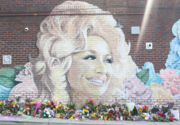
In North Carolina, where flags at state facilities [flew] at half-staff through sunset Sept. 1, Gov. Josh Stein said that “Dolly Parton was so special, so universally loved,” and “always herself.” Notably, following her death, politicians and leaders across the political spectrum have posted tributes to Parton, including President Donald Trump, House Republicans, former President Joe Biden, and Sen. Bernie Sanders, among many others.
In 1995, the foundation launched Dolly Parton’s Imagination Library in Sevier County, Tennessee, to give free books for children under 5 in the county, and to honor her father, who didn’t know how to read or write. “My daddy was the smartest man I have ever known, but I knew his inability to read probably kept him from seeing all of his dreams come true. Inspiring kids to love to read became my mission,” she said at the time.
Today, the program spans five countries, partnering with local program partners to mail 2 million free books to children from birth until age 5 each month. The Imagination Library provides the infrastructure for the program, including paying administrative expenses and coordinating book selections and wholesale purchasing, which is paid for by local partners. So far, the program has provided more than 330 million books to children around the world.
“If I’m remembered 100 years from now, I hope it will be not for looks but for books,” Parton once said, according to Imagination Library. Famously, kids often refer to her as “the book lady.”
In North Carolina, the Smart Start Network has worked with the Imagination Library to send over 21 million books to children since 2017, with the help of state funding.
In 2019, Parton visited North Carolina to attend Smart Start’s 25th Anniversary Gala.
|
Educational Programs and Opportunities
 |
|
The Department of Education administers grant funding programs to fulfill the Department's mission to promote student achievement and preparation for global competitiveness, to foster educational excellence, and to ensure equal access. Search for open and upcoming grant opportunities available from ED in the list at this link. The definitive list of U.S. federal government grants is located at Grants.gov.
|
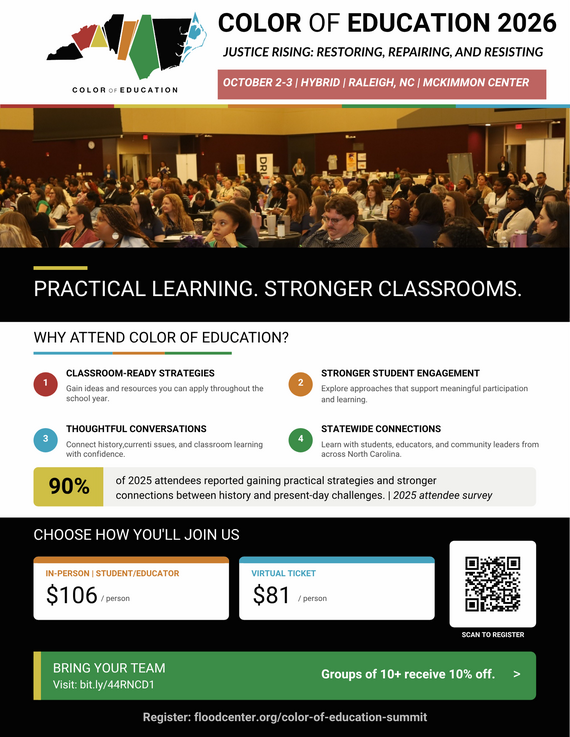 Strengthen your practice. Expand your perspective. Bring new ideas back to your students.
The 2026 Color of Education Summit brings educators and education leaders together for practical learning, thoughtful conversation, and statewide collaboration. Participants will explore strategies for engaging students, navigating complex classroom conversations, connecting history to present-day learning, strengthening relationships with families and communities, and creating learning environments where every student has an opportunity to succeed.
Join us October 2–3 and leave with ideas, resources, and connections that can strengthen your work throughout the school year.
Description
The Color of Education Summit is a statewide professional learning experience designed to strengthen teaching, leadership, and student success. Educators leave with practical strategies, new resources, and stronger professional connections that support effective instruction, meaningful student engagement, and responsive school communities.
Attend Color of Education to:
- Discover practical strategies that support effective teaching and student engagement.
- Explore ways to facilitate thoughtful, age-appropriate classroom conversations.
- Strengthen connections between current issues and classroom learning.
- Learn from educators, students, researchers, and education leaders.
- Build a professional network that extends beyond the summit.
- Return to your school with new resources, ideas, and opportunities for collaboration.
The United States Senate Youth Program (USSYP) is now accepting applications from North Carolina students for its statewide selection process through October 4.
The USSYP gives high school juniors and seniors interested in studying history or political science an opportunity to spend a week in Washington, D.C. meeting legislators, cabinet members, Supreme Court justices and officials from federal agencies and the White House.
The program will select two North Carolina students as delegates. Each delegate will receive a $12,500 scholarship and attend a week-long educational program in Washington, D.C. from March 6-13.
Use the links below to access information and application materials for North Carolina's USSYP Selection Process.
-
NC Eligibility (*Important: DO NOT apply until you have thoroughly read the "Eligibility" information.)
**A student who is a senior in the 5th year (year 13) of a five-year program at an early college is NOT eligible to apply.
Your Direct Admission Opportunity is Here!
In Fall 2026, every public high school senior on track to graduate with a diploma will be directly admitted to college in North Carolina!
NC College Connect is North Carolina’s direct admission program. This year, all North Carolina public high school seniors in membership and on track to graduate with a diploma are eligible for direct admission at participating colleges and universities through NC College Connect. Public high school students, including charter school students, with a weighted GPA of 2.8 and above who meet NC College Connect requirements are offered direct admission based on their academic profile to select colleges and universities.
And it doesn’t end there-- through NC College Connect, all students will also be offered direct admission to their local community college. In September, current seniors who are on track to graduate will receive an official letter to participate in the program and will be able to see their respective list in their CFNC portal on September 15. The higher a students' GPA, the more colleges to which they'll be admitted!
There are several upcoming events for students and staff. NCDPI and SEAA are hosting separate events for YOU! Feel free to join us to get your questions answered in real-time – please join us at the links below.
For students:
For education professionals:
|
Click here to subscribe to the weekly legislative update or other NC Department of Public Instruction topics.
To view previous K-12 Education Legislative Updates, click here.
NCDPI Office of Government Affairs
Anne Murtha – Legislative Specialist
|
|
|
|
|