|
Friday, August 14, 2026
Highlights
EdNC - Molly Steur and Hannah Vinueza McClellan | August 11, 2026
Gov. Josh Stein signed House Bill 268, a second technical corrections bill that adjusts the text of the new state budget, into law this week. Stein said he was signing the bill even though it includes some provisions that take away power from the executive branch.
“This bill strengthens disaster relief, teacher workforce pipelines, and economic development programs,” Stein said. “… It also enables public schools to start teacher apprenticeship programs as early as this year and supports access to loans for North Carolina teaching fellows.” Governor Stein statement on signing House Bill 268
Contents
- The NC High School Redesign Commission
- Other items in the technical corrections bill
EdNC - Sophia Luna | August 11, 2026
Education and business leaders gathered in Raleigh on Aug. 3 at the NC Chamber’s Education and Workforce Conference. This year’s conference asked business, higher education, community college, K-12, and government leaders to acknowledge the role they each play in owning a piece of the state’s workforce development efforts.
Education systems ‘have to keep up’ with AI’s changes to the labor market
Erik Leiden, managing director of workforce strategy at The Burning Glass Institute, told attendees that one way to conceptualize AI’s impact on the labor market is whether the technology is augmenting the worker or automating the work itself. Data from The Burning Glass Institute reports that fewer entry level roles are available in jobs that have high exposure to AI’s impact. Leiden said the data means that education must be prepared to teach students durable skills, such as problem-solving, critical thinking, oral and written communication, and leadership.
DPI released a living document of guidelines for incorporating AI into classrooms two years ago, and the state budget signed by Gov. Josh Stein in July directs the State Board of Education to adopt age-appropriate standards for instruction on AI literacy for grades K-12.
September State Board of Education Meeting
- Wednesday, September 2, 2026 at 10 a.m.
- Thursday, September 3, 2026 at 9 a.m.
Access all YouTube recordings of SBE meetings here.
|
Celebrate the Good in Public Education
Legislative Lookback: Week of August 10, 2026
The following education related bills had action this week:
-
HB 268 2026 Budget Technical Corrections - II.
-
HB 958 Election Law Changes.
- Presented to the Governor 8/7/2026
- Governor Stein is expected to take action on HB 958 on Monday, August 17
-
SB 445 Regulatory Reform Act of 2026.
A Look Ahead: Adjournment until Monday, August 31
Pursuant to SJR 1091, the House and Senate will reconvene on the following dates:
- August 31-September 2
- September 28-30
- October 26-28
- November 16-19
- November 30-December 18
Items eligible for consideration include veto override votes, appointment and confirmation matters, election law issues, litigation-related actions, impeachment proceedings, constitutional amendments, simple resolutions, conference reports, and resolutions to further adjourn the legislative session.
The NCGA legislative calendar is updated frequently, so be sure to check the NCGA Homepage for the most up-to-date information on committee meetings, voting sessions, press conferences, and more. Current Legislative Calendar
K-12 Education Bills
Education Bills to Watch

-
HB 171 Equality in State Agencies/Prohibition on DEI.
-
HB 301 Social Media & AI Safety.
-
HB 832 Education Omnibus.
-
SB 69 Various Local Provisions V.
-
SB 177 Continuing Budget Adjustments.
Reminder: Bills ≠ Laws
Only a few dozen bills typically make it “across the finish line” and become law each legislative session.
|
|
|
Other Legislative Resources
2026 NCGA Candidate Information
State Budget Information & Resources
2026 State Budget Information
2025 Enacted "Mini Budgets"
Other State Budget Resources
K-12 Education Legislation Resources
|
Useful Acronyms
DPI = Department of Public Instruction
GS = General Statute
HB/SB = House Bill/Senate Bill
JR = Joint Resolution
LB/LOB = Legislative Building/Legislative Office Building
LEA = Local Education Agency
NCGA = North Carolina General Assembly
PCS = Proposed Committee Substitute
PSU = Public School Unit
SBE = North Carolina State Board of Education
SL = Session Law
For the glossary of education acronyms/terms, click here.
For the glossary of legislative terms, click here.
|
|
In Other News
EdNC - Mebane Rash | August 12, 2026
While America at 250 played prominently in the news cycle this summer, significant policy changes impacting students, educators, and schools were underreported. The changes impact Head Start, vaccine recommendations, the Science of Reading and tutoring, the protection of students, policies regarding transgender students, nonwhite students, and the wind down of the U.S. Department of Education.
|
WNCN Raleigh - Shabnam Danesh | August 5, 2026
As students return to school, North Carolina education leaders are getting an early look at how the state’s new cellphone policy is playing out in classrooms. The Governor’s Student Safety and Well-Being Advisory Council heard from researchers and students about the state law that limits cellphone usage during instructional time in public schools. Because the state law allows local school boards to adopt their own policies, students reported varying experiences from school to school.
88.5 WFDD - Amy Diaz | August 12, 2026
New state legislation allows residents to challenge books in their local school district even if they don’t have a student enrolled.
Lawmakers embedded the change within the North Carolina state budget. Now, Winston-Salem/Forsyth County Schools leaders are working to update district policies to comply.
In addition to expanding the scope of who can challenge materials in a public school, the legislation changes what that process looks like. And instead of school-based review committees, the legislation calls for just one districtwide team. That will be made up of three principals, three teachers, three media coordinators and two parents. They’ll have two weeks to make a recommendation to the school board, which will ultimately have the final say.
|
Educational Programs and Opportunities
2026-27 School Resource Officer Grants - Deadline: Monday, August 24
The Center for Safer Schools (CFSS) is pleased to announce that the 2026-2027 School Resource Officer Grant application period is open. The purpose of this program is to improve safety in public school units by providing grants for services for the hiring and/or training of school resource officers (SRO) in elementary and middle schools.
Funding applications must be submitted by closing time: Noon on Monday, August 24. No exceptions.
Know a Champion? Submit a nomination by Monday, August 31, 2026.
myFutureNC is now accepting nominations for the 2027 Champions for Attainment! Champions for Attainment recognizes exemplary work happening at the local, regional, or state levels to increase educational attainment across North Carolina. Honorees demonstrate meaningful progress through one or more of myFutureNC’s Evidence-Based Attainment Practices and offer examples that can inspire and inform work in communities across the state.
We’re looking for organizations, partnerships, initiatives, and individuals whose work is making a measurable difference in helping more North Carolinians access and complete education and training beyond high school.
A note about future-focused work: K–12 initiatives may also be nominated when the work is directly connected to an Evidence-Based Attainment Practice and demonstrates a clear connection to future postsecondary access and attainment.
2027 Champions for Attainment will be officially announced on February 23, 2027, during the State of Educational Attainment in North Carolina.
|

Your Direct Admission Opportunity is Here!
In Fall 2026, every public high school senior on track to graduate with a diploma will be directly admitted to college in North Carolina!
NC College Connect is North Carolina’s direct admission program. This year, all North Carolina public high school seniors in membership and on track to graduate with a diploma are eligible for direct admission at participating colleges and universities through NC College Connect. Public high school students, including charter school students, with a weighted GPA of 2.8 and above who meet NC College Connect requirements are offered direct admission based on their academic profile to select colleges and universities.
And it doesn’t end there-- through NC College Connect, all students will also be offered direct admission to their local community college. In September, current seniors who are on track to graduate will receive an official letter to participate in the program and will be able to see their respective list in their CFNC portal on September 15. The higher a students' GPA, the more colleges to which they'll be admitted!
|

The Cash Club will be a statewide financial literacy initiative led by the North Carolina Department of State Treasurer; the organization named the 2026 Government Organization of the Year for Financial Literacy by the Institute for Financial Literacy. You have the opportunity to serve as one of the first schools for this initiative.
Who: Any high school or out of school organization with education curriculum
What: Weekly club to make financial literacy easily accessibly
When: Beginning in Fall semester of 2026-2027 school year
Where: Your school, home school or where your outside of school club typically meets
Why: Only 65% of adults can correctly answer basic financial literacy questions, and that number drops significantly among young people. The Cash Club exists to change that.
Mission: The club's mission is straightforward: to give students real, practical financial knowledge before they graduate. Most students encounter these topics too briefly and too late in high school, with little time to develop any real understanding. The Cash Club fills that gap. Meetings are built around the award-winning Finance Fridays newsletter, with each topic expanded into teaching slides, activities, discussions, review questions and scholarship spotlights every week. Guest speakers can be brought in throughout the year to connect these concepts to real careers and real decisions students will face after graduation.
Are you interested in launching a club at your school? Or your church group? Or out of school groups? Do you have questions? Email: FinanceFridays@nctreasurer.gov
|
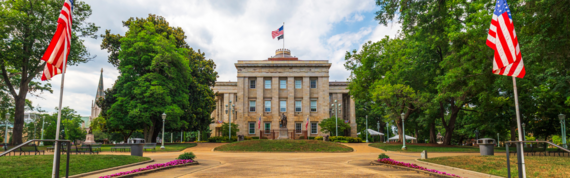 |
Image: DNCR Capital Area Visitor Services website
Capital Area Visitor Services (CAVS), part of DNCR’s Office of K-12 Education & Outreach, is central hub for coordinating group visits to Raleigh’s premier sites, including:
The CAVS team helps schools and other groups maximize their time by efficiently scheduling multi-site visits. CAVS’s oversight of site-specific protocols, capacity limits, timing logistics, and bus traffic ensures a seamless and enriching experience for every group. Make your reservation here.
Group Tour Requirements
- Tours for groups of 10 or more can be made for our venues through this platform.
- Our Chaperone Policy requires one adult per ten students.
- All reservations must be made at least two weeks in advance.
 Go Outside (GO) Grant applications are now LIVE on the North Carolina Youth Outdoor Engagement Commission website — Secure up to $5,000 in funding for your next field trip with outdoor activities and learning components!
Who Can Apply? | Applicants must qualify as either a North Carolina Public or Private K-12 school or nonprofit organization.
Applicant Requirements | Any member of a school’s faculty or administrative staff may apply for a GO Grant. Parent Teacher Associations, nonprofit organizations, and outdoor activity center staff may apply on behalf of a school or in partnership with a school, but the school’s administrative staff must sign off on the application.
Field Trip Funding | Up to $3,000 for single-day field trips or up to $5,000 for overnight field trips. An extra $1,000 is available per night’s stay up to the $5,000 cap. Field trips must include an outdoor learning component/activity and may include visits to National/State Parks, city/county parks, outdoor recreation areas, outdoor activity/education centers, and historical sites.
- You must create a free account with Grant Lifecycle Manager to apply.
- Questions or issues, please contact Anna.McKnight@nc.gov.
Click here to subscribe to the weekly legislative update or other NC Department of Public Instruction topics.
To view previous K-12 Education Legislative Updates, click here.
NCDPI Office of Government Affairs
Anne Murtha – Legislative Specialist
|
|
|
|
|