In Other News
NPR - Cory Turner | July 30, 2026
Over the course of one frantic, late-July weekend, 98 teens representing all 50 states put their busy lives on hold to try to do something remarkable.
The students, most of them high school juniors and seniors, gathered in a precise replica of the U.S. Senate chamber and attempted what the real, adult Congress has largely failed to do: draft and pass "legislation" to help the nation's K-12 schools navigate the questions and chaos created by artificial intelligence.
Should students be allowed to use AI on assignments? What about on tests? Is it schools' job to teach the nation's children what AI is and how to use it? There is no national policy for AI use in schools, meaning states and school districts have had to scramble to craft their own.
At times during the weekend, where NPR was able to watch the events unfold, the bill seemed doomed, only to be revived by a flurry of student-led negotiation, old-fashioned compromises and some spirited speeches.
Ultimately, their Students First Act passed overwhelmingly, 82-16. While the Students First Act isn't actually law, any more than the teens are actually senators, the national School Superintendents Association (AASA) plans to send the text to its members: 10,000 school leaders across the country, many of whom are right now crafting their own AI rules in the absence of regulation.
Among the bill's requirements: States should provide AI literacy as soon as students get access to classroom devices; AI use should be banned on all graded tests; and teachers can require an oral defense of any project from a student suspected of using AI inappropriately.
Rules for educators, parents and caregivers
The Students First Act not only covers students' use of AI but also insists on rules for educators:
-
Approved teacher use of AI: Allowed for tasks including lesson planning, making practice materials, providing feedback and improving instruction.
-
Must have a clear AI policy: Each semester, teachers need to post "a clear, written AI usage policy," explaining when AI is allowed and when it's not.
What's more, if an AI detector flags potential inappropriate AI use in a student paper, the bill says "teachers must personally investigate the issue before reporting the student to admin."
K-12 Dive - Naaz Modan | July 30, 2026
Young adults ages 18-29 were the least likely to support all-day school cellphone bans, at just 28%. That age group, however, was much more likely to support cellular device bans in class, at 57%.
A survey released in January, by Pew Research Center, showed that most teens oppose even classroom cellphone bans, with only 41% in support. Meanwhile, at least half of Americans 30 or older back all-day bans, the survey released Wednesday showed.
The rise in support for cellphone bans among adults comes as more states have adopted such measures to varying degrees. Thirty-five states ban or limit cellphones in classrooms, according to Ballotpedia.
See NC’s law on the use of wireless communication devices during instructional time. § 115C-76.100. Regulation of wireless communication devices.
EdNC - Amy Rhyne | July 27, 2026
When North Carolina educators open a new Standard Course of Study, they see a polished document that outlines what students should know and be able to do. What they don’t see are the years of collaboration, research, revision, and planning that made those standards possible.
The recently revised North Carolina English Language Arts (ELA) Standards, scheduled for implementation in the 2027–28 school year, are the result of an intentional, multi-year process that extends far beyond drafting standards. The work brings together classroom teachers, district leaders, higher education representatives, parents, business leaders, literacy experts, and North Carolina Department of Public Instruction (DPI) staff to ensure the standards reflect current research, classroom realities, and the evolving needs of North Carolina students.
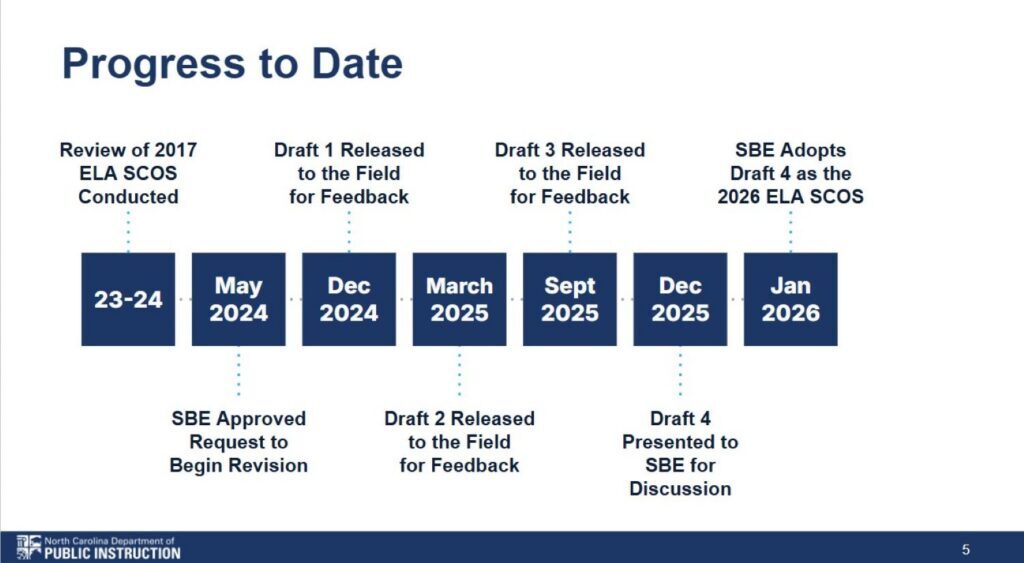 ELA Standards Development Progress Timeline. Courtesy of the Department of Public Instruction
Educational Programs and Opportunities
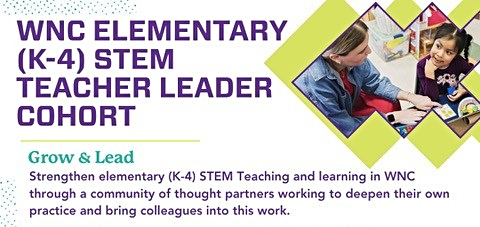
Apply now for WNC Elementary STEM Community of Practice
Western Carolina University is accepting applications until Aug. 19, for its WNC Elementary STEM Teacher Leader Cohort, a professional development opportunity limited to just five or six K-4 educators running from September to May 2027. The program features monthly virtual meetings, classroom mentoring, and a leadership role facilitating a regional spring retreat. Participants will earn CEUs, help co-author a regional STEM playbook, and receive a $500 classroom stipend alongside a $500 participation stipend. Interested teachers must submit an online application and a principal support form to be considered.
Your Direct Admission Opportunity is Here!
In Fall 2026, every public high school senior on track to graduate with a diploma will be directly admitted to college in North Carolina!
Eligible North Carolina public high school seniors are automatically admitted to participating colleges and universities where they already meet admissions requirements. No essays, test scores, or recommendation letters required.
Current juniors who are on track to graduate can participate. In September of their senior year, eligible students will receive a letter showing which schools have already admitted them. To qualify, students must have a 2.8 GPA or higher, be enrolled in a fourth-level math course, and meet program requirements. Higher GPAs may result in admission to more participating colleges and universities.
Questions? Email nccollegeconnect@dpi.nc.gov.
|
Click here to subscribe to the weekly legislative update or other NC Department of Public Instruction topics.
To view previous K-12 Education Legislative Updates, click here.
NCDPI Office of Government Affairs
Anne Murtha – Legislative Specialist
|