|
United States Semiquincentennial
250th Anniversary of the Declaration of Independence
Timeline: The Fight for Independence
Thursday, July 2, 2026
The Department of Public Instruction will be closed on Friday, July 3, in observance of the July 4 holiday.
Highlights
State Lawmakers Approve 2026 State Budget Package
DPI Staff | July 2, 2026
State lawmakers gave final approval to a new state budget on Thursday, July 2, and have sent the approved bill to Governor Stein for final consideration. The Governor now has 10 days to sign the bill into law, veto the bill (setting the stage for a potential veto override vote), or allow the bill to become law without his signature.
The latest version of Senate Bill 257, 2026 Appropriations Act, includes approximately $34.4 billion in state funding, of which $15.6 billion has been allocated for K-12 education needs. In addition to passing the budget legislation, lawmakers also approved House Bill 56, 2026 Budget Technical Corrections, which contains a small number of critical, mostly time-sensitive adjustments to the recently-passed budget. Lawmakers are expected to consider additional technical corrections when they return to Raleigh during the week of July 27, 2026.
The Department of Public Instruction plans to share a summary of the various funding and policy changes in the near future. Please see below to access the latest resources on the approved state budget package.
Senator Berger Press Shop | July 2, 2026
North Carolina senators gave final approval to the Fiscal Year 2026–27 budget, which cuts taxes for all North Carolinians, raises pay for state employees, and addresses the state’s most pressing needs.
The budget received significant bipartisan support, with a vote of 35–10. The bill now goes to Gov. Josh Stein for his consideration.
Office of the Speaker of the House Destin Hall | June 30, 2026
North Carolina legislative leaders finalized a comprehensive state budget. The agreement follows the previous framework announced by Senate Leader Phil Berger (R-Rockingham) and House Speaker Destin Hall (R-Caldwell), which includes teacher and state employee salary increases, guaranteed tax relief for all North Carolinians, and support for law enforcement officers across the state.
DPI Staff Note: The following are relevant excerpts from Speaker Hall's press release:
Top Line Information
- A $34-billion spending plan that provides guaranteed tax relief for all North Carolinians and increases salaries for state employees and law enforcement officers
- Expands Hurricane Helene relief efforts to ensure our mountain communities can continue to rebuild
- Sets aside more than $450 million for our state’s Rainy Day Fund, bringing the total up to just over $4.2 billion
- Releases $208.5 million for the N.C. Children’s Hospital from the ARPA Temporary Savings Reserve
- Appropriates $1.6 billion for capital projects throughout the state for state agencies and UNC System campuses, including $200 million for state agency repairs and renovations and $200 million for UNC repairs and renovations
- Appropriates $1.9 billion for capital projects throughout the state for state agencies and UNC System campuses
- Secures funding for the Propel NC workforce-driven funding model to ensure that North Carolina’s community colleges are prepared to meet the needs of all students and job creators
- Provides critical funding to maintain North Carolina’s participation in SNAP. The Federal government changed how SNAP administrative costs are shared, and this funding covers the state’s requirement to ensure continued food assistance for eligible North Carolinians
- Funds the state’s Medicaid program with an appropriation of over $1 billion
- Funds new Driver License Examiner positions to provide extended weekday and Saturday hours at high-volume driver license offices
Salary Increases
- An average 8% raise for teachers and bonuses based on years of service
- Boosts the base salary for beginning teachers to $48,000 before local supplements
- Assistant principals, who are paid based on the teacher salary schedule, will receive an average 6.3% salary increase
- Across-the-board 3% increase for all state employees and a bonus based on their salary
- School principals and non-certified staff will also receive this 3% raise
Tax Package
- Removes upcoming revenue triggers and locks in a schedule of set Personal Income Tax rate deductions, guaranteeing a rate of 2.99% by 2032, with additional quarter-percent rate reductions based on revenue triggers, with the goal of hitting a 2.49% rate
- Repeals the sales tax exemption on electricity for data centers
Education
- Invests in proven strategies that work for students by providing an additional $30 million for Advanced Teaching Roles salary supplements, and providing an additional $2 million to allow more schools and districts to participate
- Provides funding to ensure students have the foundational mathematics skills to be successful, including $6 million for low-performing schools to have a universal screener, $5 million to pilot and study mathematics tools, $4 million for mathematics training for middle school teachers, and $10 million to develop a standard math curriculum across the state in grades K-8
- Enhances our state’s literacy instruction by funding $13.8 million for middle school literacy professional development and expanding the early literacy screener to grades 4 and 5
- Reinvests savings from students enrolling in a private school using the Opportunity Scholarship program from the 2024-25 and 2025-26 school years. The $35.8 million in savings is reinvested in public
schools through the funding of mathematics curriculum, literacy professional development, and bonuses for school nutrition and custodial staff
- Expands training programs for students with intellectual and developmental disabilities (IDD) to 10 more community college campuses
- Provides $6 million to assist community colleges in starting high-cost workforce programs to meet the workforce demand
- Funds enrollment growth across UNC System campuses
- Expands the Cheatham-White Scholarship program to Winston-Salem State University and increases the number of scholarships at North Carolina Central University and North Carolina Agricultural and Technical State University
- To meet the growing needs of our healthcare workforce, this budget provides $20 million to support the development and expansion of related programs at UNC System schools
- Provides funding to clear the Personal Education Student Accounts for Children with Disabilities program waitlist, bringing the total appropriation to $94 million
Read the entire press release here.
WRAL News - Emily Walkenhorst | June 30, 2026
North Carolina lawmakers’ newly unveiled state budget contains dozens of policy changes and budget adjustments affecting K-12 education. It’s the first budget proposal between the House and Senate in nearly three years, totaling more than 600 pages of changes to state government.
-
Math changes. Adds screeners for math deficits for young students and requires more time on grade-level math in low-performing schools. Includes contracts for new math initiatives and funding to buy another state's K-8 math curriculum and adapt it for North Carolina.
-
Bonuses. $17 million for a bonus of $1,750 for all school nutrition and custodial staff and $13.8 million for middle school teachers' professional development in literacy.
-
Literacy. Extends literacy screening to fourth and fifth graders, along with parental notice of any reading difficulties shown by the screeners.
-
Period products. Changes a grant program for period products into a program that disburses the products to schools based on the numbers of sixth- through 12th-grade girls they enroll. Products would be provided by the Diaper Bank of North Carolina.
-
School meals. Incentivizes schools to participate in the federal school meals program that provides free meals to all students, called the Community Eligibility Provision program. It would incentivize schools to participate by funding any portion of the meals not covered by the federal reimbursement for serving them.
-
‘Meals of shame.’ Prohibits schools from serving so-called “meals of shame” to students in too much meal debt. In many school districts — including Wake until this past school year — students who have borrowed more than a few meals' worth from their cafeteria are served a substitute meal that includes only fruits and vegetables and no protein-based entree.
-
Suicide and Crisis Lifeline. Expands promotion of the Suicide and Crisis Lifeline phone number and NC Peer Warmline phone number. Proposes placing the phone numbers on the back of new student IDs, school websites, the home screen of any electronic device issues to students, school agendas, school calendars, suicide awareness documents and student registration documents.
-
New way to challenge books and other classroom materials. New process for people to challenge materials in schools that they believe are inappropriate in some way, including library books.
-
Teacher licenses. Grants a full, renewable license to any teacher from another state who was licensed in another state, has three years of experience and is in good standing with their previous state. Also grants a full, renewable license to any teacher from another country that was licensed in that country, was in good standing there, and has either taught three years or been authorized to teach for five years. Eliminates exam requirements for full, renewable licenses for teachers who have proven to be highly effective. Extends kindergarten through sixth grade teaching licenses to cover seventh and eighth grades, as well.
-
Promoting health and high-tech career exploration. Creates several new programs designed to immerse students in education related to healthcare and high-tech careers. Creates a Northeast Regional School of Biotechnology and Agriscience serving 18 northeastern counties, including Edgecombe, Halifax and Northampton counties.
-
Artificial intelligence in schools. Requires DPI to adopt standards for teaching artificial intelligence and to draft a model AI policy for school boards, which would be required to adopt an AI policy.
July State Board of Education Meeting
-
Thursday, July 9, 2026 (Virtual Meeting)
Access all YouTube recordings of SBE meetings here.
|
Legislative Lookback: Week of June 29, 2026
The following education related bills had action this week:
-
HB 328 Regulate Hemp-Derived Consumables.
-
HB 1126 2026 DST Admin/Technical/Clarifying Changes.-AB
-
SB 445 Regulatory Reform Act of 2026.
-
SB 1041 Public Workforce Modernization Act.
|
A Look Ahead: General Assembly Adjourns Until Monday, July 27
The NCGA has temporarily adjourned, with lawmakers set to return the week of Monday, July 27, 2026.
-
HJR 1243 Adjournment Resolution - A joint resolution adjourning the 2025 regular session of the General Assembly to a date certain and providing for the matters that may be considered upon reconvening.
The NCGA legislative calendar is updated frequently, so be sure to check the NCGA Homepage for the most up-to-date information on committee meetings, voting sessions, press conferences, and more. Current Legislative Calendar
K-12 Education Bills
Education Bills Pending the Governor's Signature
Education Bills to Watch
-
HB 171 Equality in State Agencies/Prohibition on DEI.
-
HB 443 Const. Amendment: Council of State Vacancies.
-
HB 451 Diabetes Education for Parents.
-
HB 496 Patriotic Youth Group Access.
-
HB 832 Education Omnibus.
-
HB 1026 Remote Instruction for Excess Emergencies.
-
HB 1043 CHCCS Act.
-
HB 1086 Child Care Initiative Funds/Reform/Study.
-
HB 1110 Early Intervention School Attendance Pilot.
-
HB 1124 Interstate Compact for School Psychologists.
-
HB 1143 Principal Fellows & MSA Intern Stipends.
-
HB 1163 Workforce Act of 2026.
-
HB 1243 Adjournment Resolution.
-
SB 864 Safe and Responsible AI in Schools Act.
-
SB 986 Workforce Act of 2026.
-
SB 990 Students First Act.
-
SB 991 Community College Workforce Readiness Act.
-
SB 1006 K-12 Innovation and Transformation Act.
-
SB 1044 Foundational Mathematics Act.
Reminder: Bills ≠ Laws
Only a few dozen bills typically make it “across the finish line” and become law each legislative session.
- During the 2025-27 biennium, 2,300+ total bills have been introduced so far.
- Of these, 133 bills have become law.
- Of these 133 new laws, NCGA staff have noted 51 laws relate to education in some way.
|
|
|
Other Legislative Resources
2026 NCGA Candidate Information
State Budget Information & Resources
2026 State Budget Information
2025 Enacted "Mini Budgets"
2023 State Budget
Other State Budget Resources
K-12 Education Legislation Resources
|
Useful Acronyms
DPI = Department of Public Instruction
GS = General Statute
HB/SB = House Bill/Senate Bill
JR = Joint Resolution
LB/LOB = Legislative Building/Legislative Office Building
LEA = Local Education Agency
NCGA = North Carolina General Assembly
PCS = Proposed Committee Substitute
PSU = Public School Unit
SBE = North Carolina State Board of Education
SL = Session Law
For the glossary of education acronyms/terms, click here.
For the glossary of legislative terms, click here.
|
|
In Other News
Office of Governor Josh Stein Press Release | June 30, 2026
Governor Josh Stein signed an executive order to make health care more affordable for all North Carolinians. Executive Order No. 39 establishes the Health Care Affordability Commission, made up of health care experts from across the health care landscape, including medical providers, hospitals, insurers, researchers, and patient advocates. The commission, co-chaired by North Carolina State Treasurer Brad Briner and NC Secretary of Health and Human Services Dev Sangvai, will develop timely, concrete solutions to rein in surging health care costs.
Executive Order 39 directs the Health Care Affordability Commission to examine the following priority areas, as well as other areas that data indicate are drivers of increased health care costs:
- Improving transparency, data collection, and recordkeeping to better serve consumers and inform policymakers;
- Promoting competition in the market for health care services, including increasing system capacity;
- Addressing health care workforce shortages by increasing supply of providers, especially primary care providers;
- Expanding access to and utilization of primary care across the state;
- Exploring value-based care models; and
- Examining unique solutions to improve affordability in rural areas.
Read the entire press release and view commission members here.
EdNC - Ben Humphries | June 29, 2026
Big changes are coming to the State Health Plan, which provides health insurance for nearly 750,000 teachers, state employees, retirees, and their dependents. Starting in 2027, State Health Plan members will be incentivized by lower deductibles and out-of-pocket costs to seek out “preferred providers” for their care.
“We are asking our members to become shoppers in health care, and we’ve never asked them to do that, really, before,” State Treasurer Brad Briner said at a June 5 State Health Plan Board of Trustees meeting.
Ahead of the July board meeting, here is what you need to know about the new tiered-provider structure.
Contents
- Changes driven by State Health Plan finances
- Will the tiered-provider structure reduce costs?
- What the new structure will look like
- Some details for members
- Not ‘one and done’
- Looking ahead to July
NC Music Educators Association Press Release | June 30, 2026
On June 24, 2026, more than 300 music education leaders, advocates, and future educators gathered in Washington, DC, to highlight the importance of music education and advocate for stronger federal support during the annual Hill Day hosted by the National Association for Music Education (NAfME). Leaders from North Carolina were among participants from across the nation who traveled to the nation's capital to champion equitable access to music education for all students.
During meetings with members of Congress and their staff, advocates shared personal stories illustrating the profound impact music education has had on their own lives and on the students and communities they serve. These conversations helped demonstrate the value of music education and underscored the importance of federal policies that support a well-rounded education that includes the music and the arts for every student.
Read the entire press release here.
Educational Programs and Opportunities

The 2026 RISE Back to School Safety Summit will be held from Tuesday, August 4 to Thursday, August 6 at the Greenville Convention Center.
Join us for session topics including Behavioral Threat Assessment and Management, Internet Safety, Suicide Prevention, Exceptional Children, Discipline Data Reporting and Student Engagement.
Don’t forget to download the Whova app to receive updates and engage with fellow attendees leading up to RISE 2026. Space in each session is limited, so we encourage you to add your desired sessions to My Agenda. For those who are new to the Whova app, this step-by-step guide will assist you.
|
NC Political News | June 23, 2026
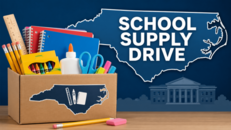
North Carolina’s annual Governor’s School Supply Drive will collect classroom materials from June 29 through July 31, with donation boxes placed at all 275 State Employees’ Credit Union branches.
The Governor’s Office said the drive is designed to help provide supplies to local classrooms and reduce the amount educators spend out of pocket for basic classroom materials. This is the eighth year the Governor’s Office has held the school supply drive. In addition to SECU branch collection boxes, the Governor’s Office and cabinet agencies will collect donations during the effort.
The drive is being held in partnership with SECU, the North Carolina Parent Teacher Association, Boys & Girls Clubs of North Carolina and Communities in Schools of North Carolina. The Governor’s Office said donated supplies will go to students in need across the state.
Requested items include paper, pens, pencils, crayons, markers, dry erase markers, fidget toys, headphones, spiral notebooks, sanitizing wipes and tissues.
|
The Burroughs Wellcome Fund’s Career Award for STEM Teachers (CAST) recognizes outstanding STEM teachers in North Carolina public primary and secondary schools.
The award provides $175,000 over five years and is available to teachers who have an outstanding performance record in educating children and who demonstrate a solid knowledge of STEM content. Teachers working in hard-to-staff, economically deprived classrooms in North Carolina will receive special consideration. Efforts to integrate environmental science and climate change into STEM-related curricula will also receive special consideration.
|
Click here to subscribe to the weekly legislative update or other NC Department of Public Instruction topics.
To view previous K-12 Education Legislative Updates, click here.
NCDPI Office of Government Affairs
Anne Murtha – Legislative Specialist
|
|
|
|
|