|
Do you know someone who doesn't get our emails?
Share this email with them and encourage them to sign up for the Arts Education listserv!
 In This Issue
- Save the Date - CAEC Registration Opens Soon!
- NCVPS Screendance & Digital Music Production - Now Enrolling
- Professional Development for Arts Education - Summer Opportunities from NCDPI
- UNCW Orff Institute 2026
- What's Behind the Numbers
- Resources from Music Will
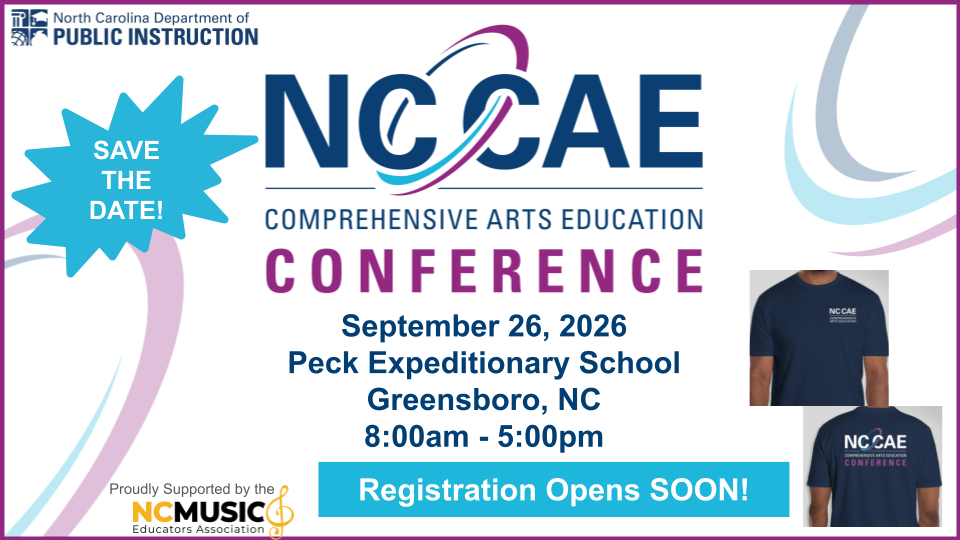 Save the date to attend the Fall Comprehensive Arts Education Conference, Saturday, September 26th at the PECK Expeditionary Learning School, in Greensboro, NC.
This day-long conference serves as a statewide professional development opportunity for dance, music, theatre, and visual arts educators, district arts education leaders, teaching artists, arts integration specialists, and pre-service teachers from across North Carolina working in K-12 programs, independent studios, performing arts organizations, and higher education institutions.
The mission of this conference is to support the three essential components of the North Carolina Comprehensive Arts Education Model: Arts Education, Arts Integration, and Arts Exposure. Sessions will be centered on the four K-12 Arts Education Standards core strands of Connect, Create, Present, and Respond and aid to reinforce the 2024 standard course of study.
This event is proudly supported by the North Carolina Music Educators Association. All conference participants will receive a boxed lunch and a NC CAEC tee shirt with registration. Stay tuned for a future bulletin for registration information later this month and be sure to follow us on Facebook and Instagram!
-
Course Spotlight: Movement and Screendance
|
|
|
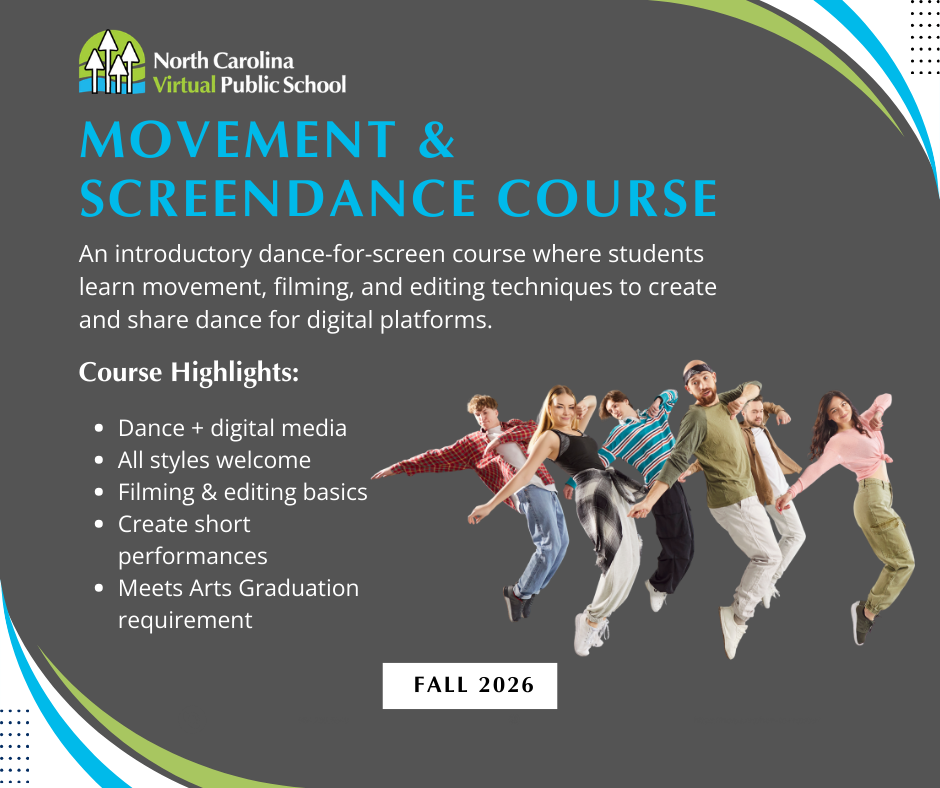
Movement and Screendance is a beginning-level art course designed to teach the basics of physical movement and filming techniques for capturing dance for digital platforms, through the four Arts Standards processes of Connect, Create, Present, and Respond.
The course will explore the history and current applications of dance for screen and cover basic dance elements of Body, Space, Time, and Effort applicable to any dance form, including but not limited to hip-hop, modern, jazz, ballet, and cultural styles. Camera angles and editing techniques will be learned as students work independently to create and film themselves and/or others in short movement sequences. Students will analyze and evaluate their own work and their peers' work. This course is specifically designed to meet the Arts Graduation requirement and is perfect for both those with previous dance training and students with little or no prior dance experience who enjoy performing short dances on various digital platforms.
|
|
Course Spotlight: Digital Music Production
|
|
|
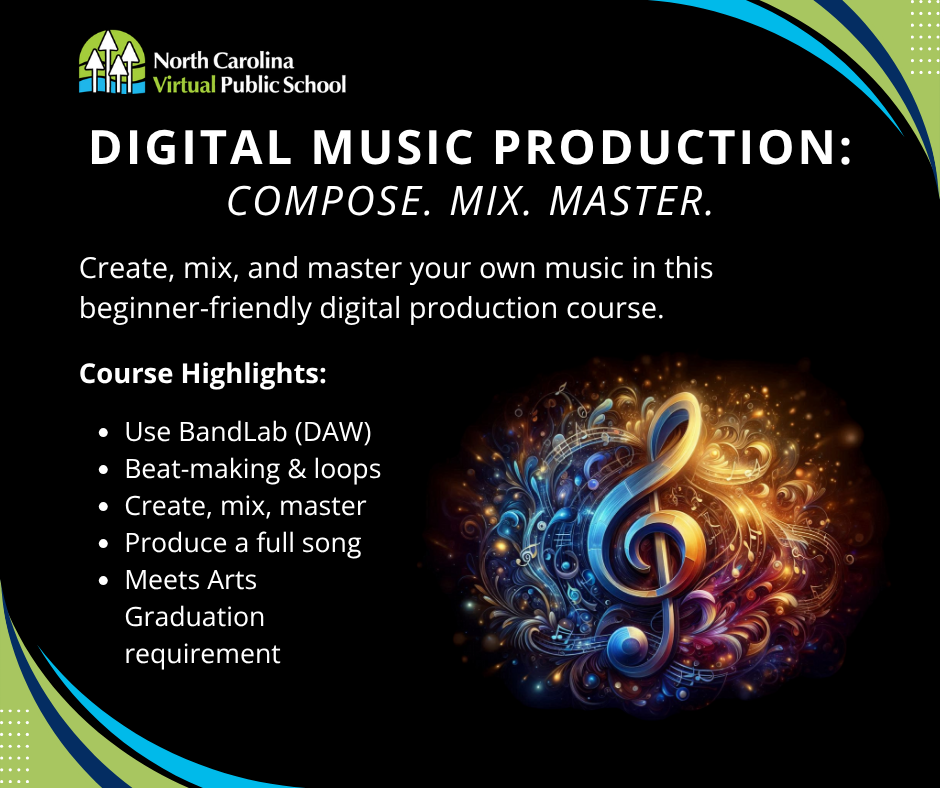
Digital Music Production is an introductory course in music production using the Digital Audio Workstation (DAW), BandLab for education. In this course, students will explore the fundamentals of music and DAWs, learn about song structure, and develop music-making skills through beat-making and loops-based compositions. Students will work through the three phases of music production—creating, mixing, and mastering—culminating in a fully produced song. Students will learn how to prepare music for release by exploring album artwork, different distribution formats, and copyright essentials. This course is specifically designed to meet the Arts Education Graduation Requirement.
|
|
NCDPI Growing Success for MLs and The Standards Academy
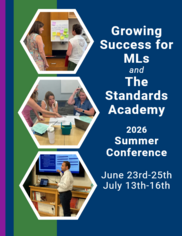
NCDPI's 2026 Growing Success for Multilingual Learners (MLs) Summer Conference and The Standards Academy offers educators across North Carolina an opportunity to deepen their understanding of standards-aligned instruction and effective practices that support MLs.
What Makes This Special? Dual Conference Access – Attend sessions from both conferences at one location, at no cost. Consider bringing a team to maximize learning and collaboration.
Flexible Attendance Options – Choose from the in-person location or attend virtually to fit your schedule and preferences.
- June 23 - 25 at Cleveland High School in Johnston County
- July 13 - 16 online
Expert-Led Sessions – Engage with best practices, collaboration strategies, and proven methods for elevating multilingual learner success and implementing state standards, including these sessions designed for World Language administrators and teachers:
- Championing MLs Home and Heritage Languages: CDM, Honors Courses, and the Seal of Biliteracy
- Exploring World Language Policies & Programs: DL/I, Honors Courses, and the Seal of Biliteracy
- Implementing the World Language Standards in K-12 Classrooms
Professional Networking – Connect with fellow educators, exchange ideas, and build lasting professional relationships.
Please click on the button below or the flyer in this article to access additional details, including registration.
|
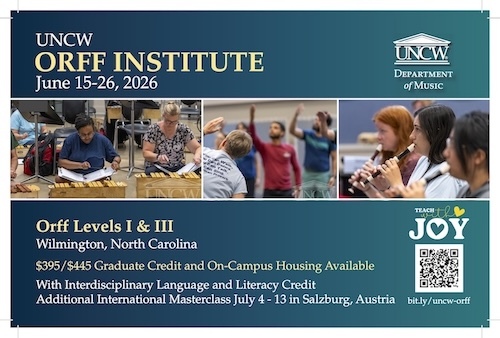
We are excited to welcome you to the 2026 Orff Institute at UNCW, a two-week immersive professional development event in Orff-Schulwerk courses from June 15–26, 2026.
These summer professional development courses are for music teachers and provide 60 contact hours, include interdisciplinary literacy credit and emphasize teaching with creative joy! All courses are nationally accredited and feature award-winning instructors.
Features
- American Orff-Schulwerk Association (AOSA) Approved
- 60 Contact Hours
- Optional Graduate Credit with National Board Certification
- On-Campus Housing Available
- Digital Badge for Each Level Completed
Event Details
Interested participants will register via the UNCW Community Music Academy. Read on for more details about courses and the option to stay on campus.
-
Dates: June 15–26, 2026
-
Schedule: Monday – Friday, 8 a.m. to 4:45 p.m.
-
Courses: Levels I & III Orff Courses
-
Location: On-Campus in the Cultural Arts Building
Registration
Below are the registration options and associated fees for the 2026 Orff Institute.
Course Registration
-
Early Bird Registration: Due April 1
-
General Registration: Due May 15
On-Campus Housing Option
Participants of the 2026 Orff Institute have the option to stay on campus in Seahawk Village during the two-week event. On-campus housing provides convenient access to all courses and activities, creating an immersive learning experience.
 This new feature in the arts ed newsletter highlights data from the National Arts Education Data Project and how others are using the data to shape conversations around the nation.
To start conversations about NC Arts Education data, visit the dashboard at:
artsednc.org/resources/arts-education-data-project/
On its own, a number like 71.4% does not actually tell us very much.
Is it strong? Is it plateauing? Does it reflect broad access or only concentrated participation in certain grades or communities? Without context, it is just a statistic. Numbers only become powerful when we understand how participation is distributed across the system and whether access is expanding or contracting.
In this case, context changes everything.
In Pennsylvania, 71.4% represents the arts enrollment rate for the 2025 school year. While the rate dipped slightly from 2024, it remains historically high and reflects a system that has expanded arts access substantially over the past five years.
According to the data:
-
The arts enrollment rate is 71.4% in 2025
-
This represents a 0.5 percentage-point decline from 2024 (71.8%)
- Participation trends from 2021–2025:
-
2021: 64.9%
-
2022–2024: steady growth to 71.8%
-
2025: 71.4%
Grade-level participation patterns:
-
Elementary: 83%
-
Middle: 95%
-
High: 40%
-
Mixed-grade schools: 75%
Enrollment by free/reduced meal (FRM) category (known data only):
-
Low poverty: 76%
-
Mid-Low: 72%
-
Mid-High: 72%
-
High poverty: 70%
Arts access trends provide additional context:
- Students without arts access declined from 12.7% in 2021 to 8.9% in 2025
- Schools without arts declined from 515 (17.5%) in 2021 to 349 (12.0%) in 2025
This number reflects broad statewide expansion of arts access, with persistent secondary-level drop-off.
Several structural patterns are evident:
- Pennsylvania has expanded arts access steadily since 2021, reducing both student and school exclusion
-
The slight 2025 decline appears to be a minor pullback after multiple years of growth, not a reversal
-
Participation is extremely high in middle school (95%) and remains strong in elementary grades
-
High school participation drops sharply to 40%, reflecting the shift from required or embedded arts to elective participation
- Poverty-based disparities exist but are relatively modest, suggesting broad access across economic contexts
The statewide average is strong because access is broad and improving. The largest participation challenge now lies in sustaining engagement into high school.
A 71.4% participation rate indicates a mature and expanding system.
What it confirms:
- Arts participation in Pennsylvania remains high statewide
- Access has improved significantly since 2021
- Poverty does not appear to be a major statewide barrier to enrollment
What it does not yet reveal:
- Why high school participation remains dramatically lower than middle school
- Whether the 2025 decline is temporary or the start of a plateau
- How long current growth can be sustained without further intervention
Strong statewide averages can still conceal structural drop-off points.
Use 71.4% as both a success story and a strategic prompt.
Talking points:
- “More than seven in ten Pennsylvania students participate in the arts.”
- “Arts access has expanded significantly since 2021.”
- “The next challenge is sustaining participation into high school.”
Key advocacy question:
What policy or scheduling changes would help more Pennsylvania students continue arts participation beyond middle school?
Pennsylvania has built a strong statewide arts access system. The opportunity now is turning broad access into sustained participation across the full K–12 pipeline.
 Welcome to the North Carolina Arts Council Arts Education Corner! The North Carolina Arts Council Arts Education Corner is a new monthly newsletter feature supporting arts educators statewide. Each month, we'll share valuable resources, highlight opportunities for teachers and students, and showcase the incredible work of schools, organizations and teaching artists who are making an impact in their communities.
The NCAC Arts Ed Corner is on a brief hiatus but will be back next month!
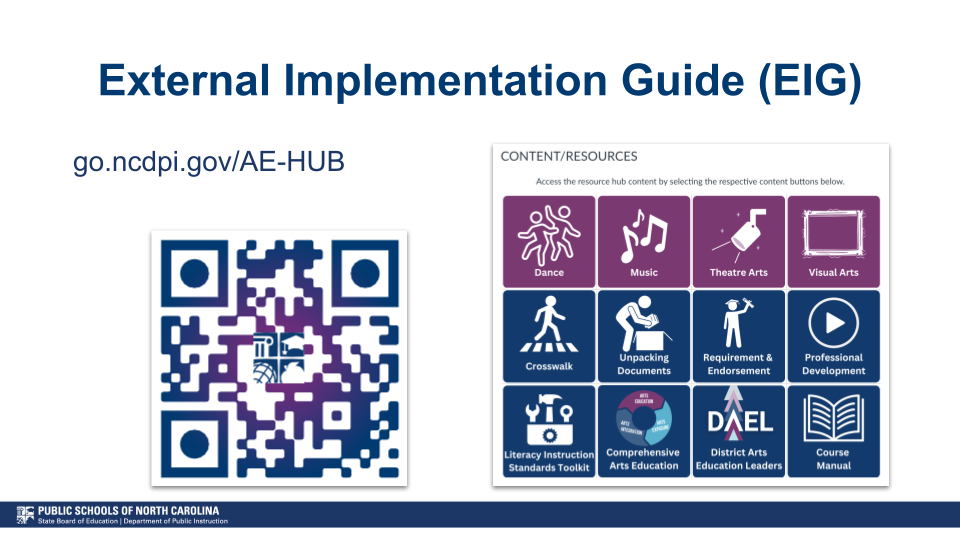
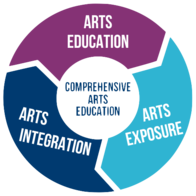
North Carolina's Vision for Comprehensive Arts Education
In today's globally competitive world, innovative thinking and creativity are essential for all school children. High quality, standards-based instruction in the arts develops these skills and effectively engages, retains, and prepares future-ready students for graduation and success in an entrepreneurial economy. Dance, music, theatre arts, and visual arts, taught by licensed arts educators and integrated throughout the curriculum, are critical to North Carolina's 21st century education. (Senate Bill 66: Comprehensive Arts Education Task Force, 2010)
Learn More about Comprehensive Arts Education
NCDPI Arts Education - NCDPI Arts Education Website
@ncartsed - NCDPI Arts Education Instagram
@nck12artsed - NCDPI Facebook
Contact Us!
Laura Stauderman: K-12 Dance and Visual Arts Consultant
Brandon Roeder: K-12 Music and Theatre Arts Consultant
|
Disclaimer Statement
The links on this page will bring you to third-party websites, owned and operated by independent parties over which NCDPI has no control. Any link you make to or from these 3rd Party Websites will be at your own risk. Any use of these 3rd Party Websites and any information you provide will be subject to and governed by the terms of the 3rd Party Website, including those relating to confidentiality, data privacy, and security.
Unless otherwise expressly agreed in writing, NCDPI is not in any way associated with the owner or operator of any of the 3rd Party Websites or responsible or liable for the goods and services offered by them or for anything in connection with such 3rd Party Websites. NCDPI does not endorse and makes no warranties, representations or undertakings relating to the content of any 3rd Party Website.
|