|
Friday, March 27, 2026
Highlights
Carolina Journal - Andrew Pomeranz | March 24, 2026
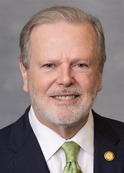
Senate Leader Phil Berger has conceded in the closely contested North Carolina Senate District 26 race, congratulating Rockingham County Sheriff Sam Page on his victory.
“While this was a close race, the voters have spoken, and I congratulate Sheriff Page on his victory,” Berger said in a statement.
The race between Berger and Page was one of the closest in recent North Carolina election history, with Page holding a narrow 23-vote lead following the canvass and recount process.
“Over the past 15 years, Republicans in the General Assembly have fundamentally redefined our state’s outlook and reputation. It has been an honor to play a role in that transformation,” Berger said.
Berger has served as president pro tempore of the North Carolina Senate since 2011 and has been one of the most influential figures in state politics during that time.
See also: Senate leader Phil Berger’s defeat marks the end of an era (News & Observer)
|
Office of State Budget and Management (OSBM) | March 2026
General Fund
The Consensus Forecasting Group, comprised of economists at OSBM and the General Assembly’s Fiscal Research Division, has agreed upon a revised consensus General Fund Revenue forecast for the 2025-27 biennium.
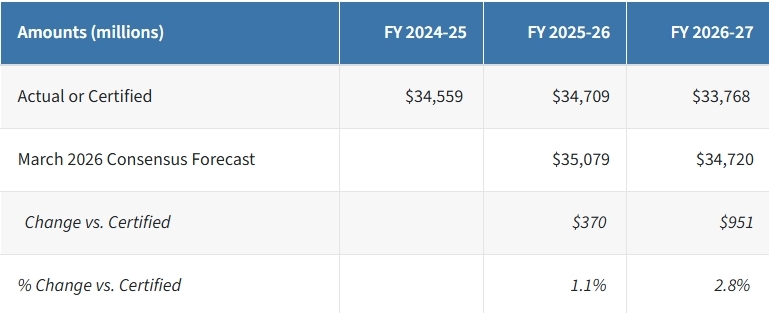
March 2026 Consensus General Fund Forecast Overview
Source: OSBM-FRD consensus revenue forecast as of March 24, 2026
Revenue Outlook for the Remainder of FY 2025-26
The consensus forecast anticipates $35.1 billion in General Fund revenues in the current fiscal year, representing overcollections of $370 million (+1.1%). The upward revision is due to stronger economic growth than expected at the time of the last consensus forecast in May 2025. Year-over-year, this represents a 1.5% increase in total General Fund revenues compared to FY 2024-25.
Revenue Outlook for FY 2026-27
The consensus forecast anticipates $34.7B in General Fund revenue collections in FY 2026-27, an upward revision of 2.8% ($951M) relative to certified revenues. Year-over-year, this represents a 1% ($360M) decrease in revenues compared to the consensus forecast for FY 2025-26. This adjustment is associated with a stronger outlook for wage growth, equity values, and business profits than at the time of the last forecast. The economic outlook underlying the May 2025 consensus forecast anticipated a modest deceleration in economic growth starting in late 2025. Although job growth has slowed, business investment and profits have proven resilient.
Looking ahead, lower short- and long-run interest rates, combined with fiscal stimulus from recent federal tax cuts for households and businesses, should modestly boost consumer spending and business investment through late 2026 despite continued sluggish job growth. Beginning in 2027, the economic outlook anticipates slowing growth in consumer spending and wages.
Previously enacted reductions in income tax rates will reduce revenue collections in FY 2026-27. Individual income tax rates fell from 4.25% in 2025 to 3.99% in 2026, and the consensus forecast anticipates revenue collections in both FY 2025-26 and FY 2026-27 will be high enough to trigger two additional 0.5% rate reductions. This will lower the personal income tax rate further to 3.49% in 2027 and then to 2.99% in 2028.
Read more to learn about the upside and downside risks to the Forecast, as well as Forecasts for other Funds, such as the Lottery, HERE.
NOTE: Should the economic or revenue outlook change substantially by the time the Department of Revenue finishes processing April income tax returns, the Consensus Forecasting Group will consider revising the consensus forecast for General Fund revenues again in May.
Additional Information on the 2026 Revenue Forecast
Resources
Office of NC Governor Josh Stein | March 24, 2026
NC Speaker of the House Destin Hall | March 24, 2026
The News & Observer - Dawn Baumgartner Vaughn | March 25, 2026
WUNC - Colin Campbell | March 24, 2026
WRAL News | March 25, 2026
EdNC - Hannah Vinueza McClellan | March 24, 2026
April State Board of Education Meeting
Access all YouTube recordings of SBE meetings here.
|
Closes Next Tuesday, March 31!
Your Voice Matters.
Teaching conditions in schools are important. The North Carolina Department of Public Instruction and the North Carolina State Board of Education have made a sustained commitment to listening to educators and reforming schools to create the working conditions necessary for student and teacher success. This biennial survey collects the anonymous voices of educators across North Carolina to determine strengths and improvement opportunities in schools and districts.
Need More Help? Please email NCTWC@dpi.nc.gov if you have any NC TWC questions for NCDPI. Individual educators should reach out to their NC TWC Coordinator if they need a survey code or have questions about participation. TWC Coordinators can reach out to the Survey Support team to update educator counts, if they have questions, or need additional assistance.
|
NC Superintendent’s Student Advisory Council
NOW OPEN - 2026 Advisory Council Application
Calling all rising juniors (current 10th graders) in high school! Apply today to serve as a Student Advisor on State Superintendent of Public Instruction Mo Green's Student Advisory Council. If you are interested in state K-12 education issues, advocating on behalf of your peers, and serving as an advisor to decision-makers in K-12 education, this opportunity is for you!
About the Council
The Superintendent’s Student Advisory Council (SSAC) is a strong and diverse group of high school students from across the state’s eight education regions. The SSAC meets virtually each month, and members serve a two-year term that concludes at the end of their senior year of high school.
Throughout their appointment, advisors hear from experts at the Department of Public Instruction, State Board of Education, the General Assembly, and the Governor's Office, among others, to learn about issues facing our state and share their input on what can be done to support students, teachers and our local school districts and charter schools.
At the conclusion of each year, advisors have the opportunity to participate in a Student Advocacy Day at the North Carolina General Assembly. The council members will also meet with the Superintendent of Public Instruction during their visit to Raleigh.
This survey closes on May 1, 2026 at 11:59pm. APPLY HERE
Celebrate the Good in Public Education
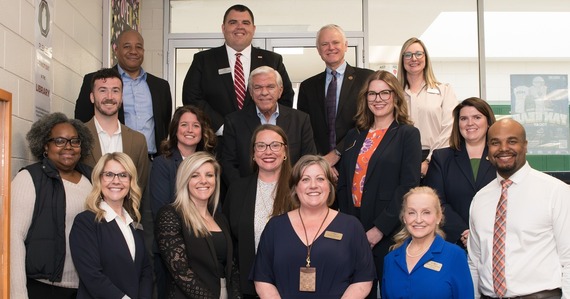 Golden LEAF Foundation team visited Union Middle, West Lee Middle and SanLee Middle
It was a memorable week for the Golden LEAF Schools statewide tour. On Monday, Superintendent Mo Green, NCDPI staff and the Golden LEAF Foundation team visited Union Middle (Sampson County Schools), and on Wednesday, the group visited West Lee Middle and SanLee Middle (Lee County Schools) to see the initiative in action.
District and school leaders shared updates and progress, and highlighted how quality professional development and instructional support are strengthening instruction, improving school culture and preparing students for success. Student ambassadors and school leaders led classroom tours, giving visitors a first-hand look at teaching and learning in classrooms. A culinary class from Southern Lee High treated the group to a special lunch, demonstrating the real-world skills future chefs are building for college and careers.
The Golden LEAF Schools Initiative is a five-year, $25 million investment supporting rural middle schools across North Carolina with a focus on instruction, math achievement and career readiness to help students succeed in high school, college and the workforce.
Final Bow: Arts in Our Schools Month
 |
|
Thank you for celebrating the excellence in public education and recognizing the importance of arts programming in our K-12 schools!
Missed the student performances from Arts in Our Schools Month? Access the Video Recordings on YouTube.
Don't forget to also check out the Virtual Visual Arts Galleries!
|
Scheduled Education Committee Meeting
K-12 Education Bills

Bills To Watch
The following bills have been placed on the House Calendar for Monday, April 6, 2026.
-
HB 87 Educational Choice for Children Act (ECCA).
-
HB 171 Equality in State Agencies/Prohibition on DEI.
-
SB 50 Freedom to Carry NC.
-
SB 153 North Carolina Border Protection Act.
-
SB 227 Eliminating "DEI" in Public Education.
Reminder: Bills ≠ Laws
Only a few dozen bills typically make it “across the finish line” and become law each legislative session.
- For the current 2025 legislative session, 1,800+ total bills were introduced.
- Of these, 108 bills have become law so far.
- Of these 108 new laws, NCGA staff have noted 42 laws relate to education in some way.
|
|
|
North Carolina General Assembly
2026 NCGA Candidate Information
The NCGA is currently scheduled to reconvene on the following remaining dates pursuant to SJR 776: Adjournment Resolution Changes. Legislative action on these dates, if any, is still to be determined:
o April 6, 2026 - April 9, 2026
o April 21, 2026 — Start of 2026 Short Session
State Budget Information & Resources
2025 State Budget Proposal
2025 Enacted "Mini Budgets"
2023 State Budget
Other State Budget Resources
K-12 Education Legislation Resources
|
Useful Acronyms
DPI = Department of Public Instruction
GS = General Statute
HB/SB = House Bill/Senate Bill
JR = Joint Resolution
LB/LOB = Legislative Building/Legislative Office Building
LEA = Local Education Agency
NCGA = North Carolina General Assembly
PCS = Proposed Committee Substitute
PSU = Public School Unit
SBE = North Carolina State Board of Education
SL = Session Law
For the glossary of education acronyms/terms, click here.
For the glossary of legislative terms, click here.
|
|
In Other News
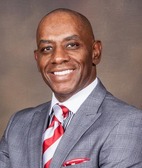
Public School Forum of North Carolina | March 24, 2026
The Public School Forum of North Carolina is pleased to announce the appointment of Dr. Anthony D. Jackson as its next president and chief executive officer following a national search. Dr. Jackson will assume his role on July 1, succeeding interim executive directors Ann McColl and Dr. Lauren Fox. This leadership transition coincides with the Forum’s 40th anniversary — an important milestone that Dr. Jackson views as an opportunity to both honor the organization’s legacy and lead a bold, forward-looking refresh. He is committed to strengthening the Forum’s role as a trusted, nonpartisan voice for public education, advancing the connection between research, policy and practice to support strong public schools and thriving communities across North Carolina.
|
North Carolina Association of School Administrators | March 27, 2026
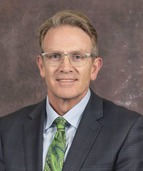
Surry County Schools Superintendent Dr. Travis L. Reeves has officially been named incoming Executive Director of the NC Association of School Administrators (NCASA). In his remarks at the 2026 NCASA Conference on Educational Leadership (CEL), he shared his commitment to meeting with NCASA members, listening to their needs, and working alongside them to strengthen NC’s local public schools and communities. Reeves is set to begin his new role on July 1, 2026, the day following his retirement as Superintendent of Surry County Schools.
|
EdNC - Liz Bell | March 25, 2026
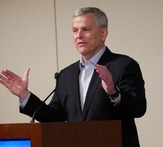
Gov. Josh Stein on Monday outlined his education priorities ahead of this year’s short legislative session, including raising teacher compensation and adding additional school support personnel to meet students’ nonacademic needs. “If we truly believe that kids are the future of this state, then we have to make the job of educating them more attractive,” he said to a room of education leaders at nonprofit BEST NC’s annual Education Innovation Lab meeting.
|
Reuters - Bo Erickson | March 25, 2026
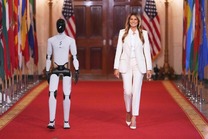
A humanoid robot walked down a red-carpeted White House hallway on Wednesday, accompanying U.S. first lady Melania Trump into an event where she urged greater use of artificial intelligence in education.
The human-shaped robot, which introduced itself as "Figure 03," joined Trump in the East Room to welcome dozens of first spouses from around the world to the technology-focused "Fostering the Future Together" summit.
Trump said Figure 03 was the first American-made humanoid guest at the White House, and used its appearance to promote the need for governments and major technology companies to work together to use AI for student instruction.
The first lady, a former model, described how in the near future a hypothetical humanoid teacher could quickly access classical studies, mathematics and other subjects to deliver personalized education to students based on their learning speed and "emotional state."
|
The National Law Review - Scott J. Gelbman, Marne Marotta, Guillermo S. Christensen, Michael F. Doyle, Tracy L. Lawless, and Abby Dinegar K&L Gates LLP - K&L Gates HUB | March 24, 2026
On 20 March 2026, the White House released its National Policy Framework for Artificial Intelligence (the Framework), together with companion legislative recommendations, marking the Administration’s next major step following President Donald Trump’s December 2025 executive order limiting state authority to regulate artificial intelligence (AI). Taken together, the Framework and legislative recommendations are intended to translate the December Executive Order’s calls for a unified, minimally burdensome national AI policy into legislative guidance for Congress. With the Framework, the US Government continues to move away from a highly prescriptive approach to regulating AI toward a more balanced, innovation-friendly approach, setting up a clear alternative to the approaches of other major players, such as the European Union and China.
Protecting Children and Empowering Parents - The Framework places significant emphasis on safeguarding minors from AI-related risks while empowering parents and guardians. The Administration urges Congress to require commercially reasonable, privacy-protective age-assurance mechanisms (like parental attestation) for AI services likely to be accessed by minors; to mandate features that reduce risks of sexual exploitation and self-harm; and to affirm that existing child-privacy laws, including the Children's Online Privacy Protection Act, apply to AI systems. At the same time, the Framework cautions against ambiguous content standards or open-ended liability regimes that could create compliance uncertainty or constitutional concerns and legislation that would preempt states from enforcing their own generally applicable child protection laws.
Workforce and Education - The Framework calls for integrating AI training into existing education and workforce programs, studying AI-driven labor-market impacts, and supporting land-grant institutions and other educational entities in developing AI-related skills, rather than creating new, stand-alone federal workforce programs.

EdNC - Chantal Brown | March 23, 2026
The North Carolina State Council for the Interstate Compact on Educational Opportunity for Military Children met in Onslow County on March 19 to discuss policy priorities and military friendliness in schools.
The Military Interstate Children’s Compact Commission (MIC3) is the governing body of the Interstate Compact on Educational Opportunity for Military Children. In 2006, the compact was drafted to address educational challenges faced by children of military families. The language was then finalized and adopted by state legislatures over the following six years. All 50 states and the District of Columbia are currently members of the compact.
The following issues are addressed in the MIC3 compact: student eligibility, enrollment, placement, and graduation.
In Onslow County Schools, 45% of students are considered military connected, according to data from the 2024-25 academic year. Last spring, two of their students were selected as semifinalists for the Operation Homefront Military Child of the Year Award, and Isabella Smith of Swansboro High School received the top award — representing the Marine Corps.
Impact of Purple Star - Howard Lattimore, state military liaison consultant for the Department of Public Instruction (DPI), also presented data on the Purple Star Awards designation. The designation is given to schools that demonstrate military-friendly practices and a commitment to military students and families.
Legislative updates - The council received an update from legislators Rep. Erin Paré, R-Wake, and Rep. Donnie Loftis, R-Gaston. The legislators said that a priority of theirs would be addressing the shortfall of funding for the Scholarships for Children of Wartime Veterans program, which is referenced in the Military Veteran Support Act, also referred to as Senate Bill 118.
|
Click here to subscribe to the weekly legislative update or other NC Department of Public Instruction topics.
To view previous K-12 Education Legislative Updates, click here.
NCDPI Office of Government Affairs: Anne Murtha – Legislative Specialist
|
|
|
|
|