|
|
Having trouble viewing this email? View it as a Web page.
 FEBRUARY 2026
 |
|
Eric C. Davis, Chair
NC State Board of Education
eric.davis@dpi.nc.gov |
|
|
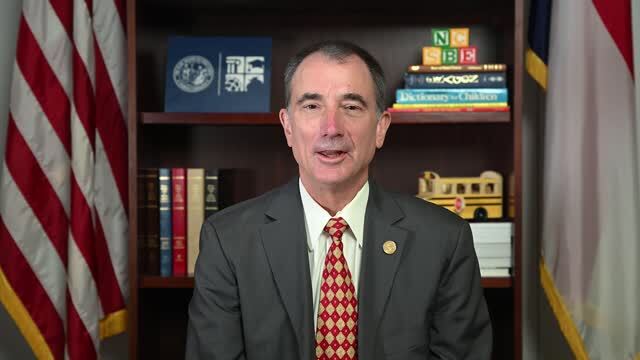 The following is an excerpt from Chair Eric Davis's opening remarks at the February 4, 2026 meeting of the State Board of Education:
Before we begin today’s agenda, I want to ground our work in the significance of this month. February. Black History Month. And for those of us charged with stewarding public education in North Carolina, this is not an abstract observance. Our system of public schools exists, in large measure, because during Reconstruction former enslaved people and the state’s first Black legislators demanded the right to education be written into our state’s Constitution. And so it is. Public education in this state was not created as a convenience, it was created as a moral commitment. And a democratic necessity, born out of struggle and hope. Black History Month is often misunderstood as a time to compress African-American history into four short weeks and in truth, it’s an invitation to do the opposite.
To recognize that Black history is foundational to our shared history. And should be reflected in what students learn in every month of the year. It’s also a moment to be honest, about where we have made progress, and where more progress is needed. Research shows that while our student population has grown more diverse, North Carolina schools today are more racially segregated than they were in the late 1980s. With increasing concentrations of poverty and isolation, that directly affect opportunity and outcomes for students.
That reality reminds us that access to education has always been contested, and that justice requires constant and deliberate progress. That history brings us directly to the moment we’re in today. The challenge before us is not whether education matters, we know it does. But whether we’re willing to dedicate the resources at the level our students, educators and school leaders need, for the benefit of every North Carolinian and in a rapidly changing landscape. Our public schools are educating students with more complex academic, social and mental health needs, while our economy and society are placing increasing demands and expectations upon all of our students. While operating in a state that continues to underinvest relative to the scale of these demands.
Against that backdrop, the legislative priorities that our state’s superintendent will present today are not simply requests for funding or policy changes. They’re opportunities for the General Assembly to partner with this Board and the State Superintendent, in fulfilling our shared constitutional responsibilities to all North Carolinians. Our partnership opportunities are grounded in research, and successfully proven student-centered strategies. Investments in educator pay and advanced teaching roles directly increase, especially in high poverty and hard to staff schools, student access to experienced and effective teachers. Expanding literacy supports and math screeners strengthens early and sustained academic foundations. Funding for school health personnel, mental health supports and nutrition ensures that students are ready to learn as they come through our doors.
And addressing school construction and technology needs recognizes that safe, modern learning environments are not luxuries. They are prerequisites for student success. Each priority reflects a simple truth: when we support our educators and school leaders, students benefit, in fact, we all benefit from these investments. Black History Month reminds us that public education in North Carolina has always been about more than systems and budgets.
It’s about dignity, opportunity. And the belief that each and every child’s future matters to every one of us. The leaders who fought to establish public education did so with limited resources, but with a limitless vision. They probably even dared to be the best in the United States by 2030. Today, our responsibility is to match that vision with action, and as we consider today’s agenda, including our legislative priorities, I trust that we will do so in the spirit of partnership and purpose, committed to strengthening the terrific public schools that remain one of the most powerful engines of opportunity in the state that we all love.
|
|
 CTE Credentials Are Launching Life-Ready Graduates Across North Carolina
Career and Technical Education should always start with the emphasis on career—because the mission is simple: every student deserves the chance to explore learning aligned to a future they can see themselves in. And while some people still ask what happened to “shop class” or “home ec,” the truth is better than nostalgia. Those opportunities didn’t disappear. They’ve been reimagined and upgraded to meet the demands of today’s world of work, so students graduate with real skills, real options, and real momentum.
This year’s report underscores just how far North Carolina has come. The state now ranks third nationally in student participation in Career and Technical Education courses, with more than 550,000 students participating in a single year. When participation is measured relative to overall K–12 enrollment, North Carolina ranks second in the nation, with more than one-third of all students taking at least one CTE course. That reach matters because it signals that career-connected learning is no longer an “extra.” It is becoming a core part of the student experience across the state.
WATCH THE FULL PRESS CONFERENCE HERE
Under the federal Perkins framework, North Carolina’s CTE system is intentionally designed to strengthen academic knowledge alongside technical and employability skills, while building a continuum of career awareness, exploration, and development. That work shows up at scale: 14 career clusters, more than 70 career pathways, approximately 7,000 CTE educators, and close to 900,000 student course enrollments each year. It also shows up in outcomes, with more than 98 percent of CTE concentrators graduating on time—clear evidence that strong career preparation and strong graduation outcomes reinforce one another.
The credentialing data tell an equally compelling story. In today’s labor market, credentials are no longer optional; a significant share of jobs now require them. North Carolina is responding by ensuring students leave high school with more than a diploma. Last year, students earned nearly 383,000 individual credentials, and nearly three-quarters of CTE concentrator graduates earned at least one industry-recognized credential. Tens of thousands of those credentials align directly with workforce-recognized standards, creating a clear bridge between classrooms and careers.
Behind the numbers are powerful local stories. Districts like Randolph County, Pender County, and Lexington City Schools demonstrate what is possible when vision, relationships, and systems align. From early career exposure in elementary school, to intentional middle school planning, to internships, apprenticeships, and credential-focused instruction in high school, these districts show that CTE success is built over time. Leaders emphasized that credentials are not just statistics—they represent life-changing opportunities for students and families, reinforced through clear goals, data-driven supports, and celebration of student achievement.
The report also closes with honesty about the work that remains. While progress is strong statewide, gaps persist in access to and attainment of higher-value credentials for some student groups. Naming those gaps is essential, because it allows the state and districts to focus on improving credential approval processes, strengthening implementation, using data more effectively, and ensuring equitable access to high-quality pathways. The goal remains constant: to make sure every student, in every community, has the opportunity to graduate prepared for college, career, and whatever comes next.
|
|
|
As North Carolina’s General Assembly prepares to convene its 2026 short session, the State Board of Education and the Department of Public Instruction are advancing a focused set of legislative priorities designed to strengthen public schools statewide. With key legislative dates approaching and the short session scheduled to begin April 21, this agenda is intended to sharpen alignment, clarify shared goals, and invite partnership around the practical needs schools face every day.
At the center is a straightforward message: public schools are North Carolina’s most vital public service, and meeting today’s expectations requires sustainable investment in the people and systems that make learning possible. The recommended overall priorities include investing in pay for all public school employees—teachers, administrators, and all certified and noncertified staff—while restoring master’s pay for educators, reforming the principal pay plan, addressing the roughly $13 billion in school construction needs, and placing a moratorium on expansion of the Opportunity Scholarship program beginning in 2026–27 while redirecting new scholarship dollars to public school needs.
The short session priority requests concentrate on a dozen high-impact items that directly touch classrooms and student supports. These requests include expanding literacy diagnostics and professional development across additional grades, implementing the Exceptional Children weighted funding formula, supporting advanced teaching roles through salary supplements and grant expansion, and increasing the School Health Personnel allotment to help districts add nurses, counselors, social workers, and psychologists. Together, these priorities reflect a commitment to both academic acceleration and the conditions students need to be ready to learn.
The priorities also recognize that modern learning depends on modern infrastructure. Requests include additional state support for the federal E-Rate match to sustain connectivity, investments in beginning teacher support, a small hold-harmless amount to implement a revised Limited English Proficient funding formula, and added support for two facilities programs that help districts repair and renovate buildings and pursue high-need construction projects. While none of these alone solves the scale of statewide need, each represents a practical lever that can translate quickly into better learning environments and stronger service delivery.
Beyond budget requests, the Board and DPI also highlighted non-budget policy priorities—some carried forward from prior work and others newly recommended. These include efforts such as school calendar flexibility, removing barriers in educator preparation and licensure pathways, improving nutrition program flexibility to help schools procure more local agricultural products, establishing consistent rules for carryforward funds, and supporting expanded access to advanced coursework through auto-enrollment in advanced English Language Arts. The common thread is reducing friction in the system so schools can focus more time and resources on teaching and learning.
Finally, the agenda frames these requests as an invitation to shared responsibility. The short session is a moment for the General Assembly, the State Board, and DPI to align around a pragmatic strategy: strengthen public schools by investing in the workforce, supporting students’ academic and health needs, upgrading technology and facilities, and refining policies that remove unnecessary barriers. North Carolina’s students—and the educators and school leaders who serve them—benefit most when the state approaches public education as a partnership project with clear priorities and measurable impact.
 |
North Carolina’s annual report on discipline, alternative learning placement, and dropouts offers a clear post-pandemic picture: serious incidents remain uncommon, and most trends are moving in the right direction. Out of roughly 1.5 million students statewide, about 0.66% were involved in a violent or reportable offense during the school year—meaning more than 99% were not involved in any such incident. Most schools report few or no incidents, and the distribution shows concentration in a smaller subset of schools rather than a broad, systemwide pattern.
The details matter. Most reported “crime and violence” incidents are possession-related, especially controlled substances, while severe violence represents a very small share of reports. Rates rise through the middle grades and peak in early high school, with grade 9 standing out as a consistent pressure point. Across student groups, higher rates appear among some of the same populations that face higher risk across other outcomes as well, reinforcing that discipline is not an isolated issue—it intersects with attendance, academics, and student supports. At the same time, many subgroup rates have declined over the past two years, showing meaningful progress alongside persistent disparities.
Across discipline actions, several indicators are trending down. There were zero reported acts of corporal punishment for the seventh consecutive year. In-school suspensions and disciplinary alternative learning placements both declined in rate and count, and most public school units reported rates below the statewide average (with many reporting zero for alternative learning placements as a disciplinary action). Short-term suspensions also decreased in both rate and number, and most were 1–3 days in length. Long-term suspensions remain rare, but trends are more mixed by subgroup. When long-term suspensions are combined with alternative placements used in lieu of long-term suspension, total long-term removals from a student’s home school increased.
Dropout rates continue to decline at the high school level, but the report underscores grade 9 as the primary risk point. In total, 10,478 students in grades 1–13 were reported as dropouts, and the leading reasons were tied to attendance and “unknown” statuses (including students who moved but whose enrollment destination could not be confirmed), which together accounted for the large majority of reported reasons. Notably, nearly half of ninth-grade dropouts had been retained at least once before leaving school, further highlighting the importance of early warning indicators and timely supports.
The report’s recommendations focus on acting where the data repeatedly point:
-
Launch a targeted middle-to-high school transition initiative focused on grades 6–9, with grade 9 as a key leverage point for coordinated academic, behavioral, and attendance supports.
-
Strengthen future reporting with deeper analyses over time (including cohort and longitudinal views) and closer examination of how discipline, placement, and dropout patterns intersect.
-
Expand training and support for local data literacy and consistent reporting practices, especially as districts continue using updated student information system tools.
Exceptional Children Division launches targeted competitive grants to strengthen services statewide
DPI’s Exceptional Children Division brought forward a set of competitive, state-level targeted assistance grants designed to deliver time-limited resources where public school units identified clear needs and strong plans. The goal is straightforward: use available funds strategically to accelerate improvement for students with disabilities through better staffing, stronger service delivery, and more effective instructional supports.
Applications were evaluated using a rubric that emphasized local need and readiness to execute, including baseline and student outcome data, a clear action plan and budget, and documented support from local leaders. To prioritize need, the scoring also considered school improvement designations and each public school unit’s Exceptional Children determination status.
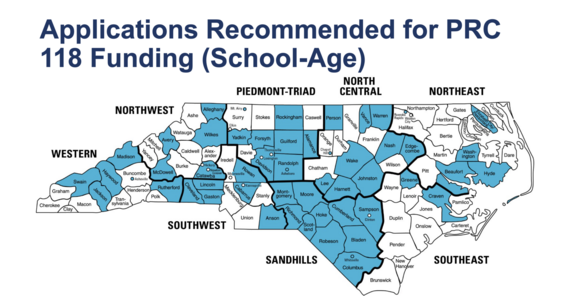 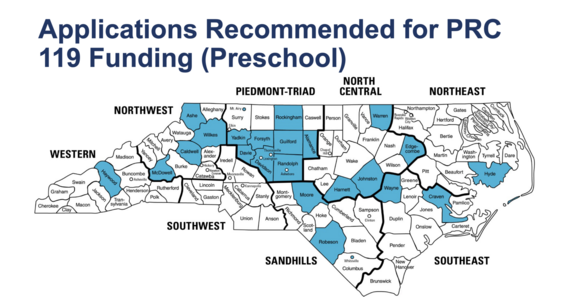 Demand for the grants was significant. Public school units submitted 226 applications, many proposing multiple initiatives. Most focused on four improvement strategies: recruiting and retaining exceptional children personnel, strengthening service delivery, expanding professional learning for instructional and support staff, and investing in instructional materials aligned to student needs.
Ultimately, 59% of public school units that applied were recommended for funding. Because requests exceeded available dollars, awards were scaled based on application quality, allowing the state to direct limited resources to the highest-impact proposals. Several grants also demonstrated the power of regional collaboration, showing how districts can pool expertise and costs to improve outcomes for students with disabilities across multiple communities.
|
|
Strategic Plan Quarterly Update:
From vision to action across North Carolina’s public schools
North Carolina’s 2025–2030 Strategic Plan is no longer just a roadmap—it is actively shaping work across the state. At the February quarterly update, DPI shared progress on actions launched since November, highlighting how the plan’s eight pillars are translating into concrete initiatives that support students, educators, families, and school systems. As of this quarter, 26 of the plan’s 110 actions are underway, including 19 launched in just the last few months, signaling steady momentum toward the state’s goal of becoming the best public school system in the nation by 2030.
Several newly launched actions focus squarely on preparing students for what comes next. These include expanding high-quality pre-K and strengthening kindergarten readiness through cross-agency partnerships, and supporting districts as they implement career development plans so every student graduates with a purposeful postsecondary plan. At the same time, the State Board was asked to establish an Educator Licensure and Advancement Task Force—an important step toward modernizing licensure, removing barriers to entry and advancement, and creating pathways that value expertise and keep excellent educators in the classroom.
Other updates underscored work to ensure healthy, safe, and secure learning environments. New statewide efforts are addressing digital balance and responsible technology use, strengthening secure online learning, and launching a comprehensive initiative to reduce chronic absenteeism. Together, these actions recognize that student success depends not only on academics, but also on well-being, engagement, and consistent access to learning—especially during critical transition years.
The update also highlighted progress on internal systems and statewide engagement. DPI is advancing work to improve operational consistency, accessibility, and communication with districts, while also launching efforts to surface and scale promising practices through a new cross-sector Innovation Leadership Council. At the same time, new public-facing initiatives are amplifying pride in public education, aligning voices across the state, and inviting families and communities to engage—culminating in the upcoming 10 Million Books challenge, designed to spark a shared culture of reading and learning across North Carolina.
Together, these updates reflect a strategic plan moving from aspiration to action—one that is building capacity, strengthening partnerships, and keeping students at the center as North Carolina’s public schools move forward.
|
|
|
The State Board of Education is the only board created by the North Carolina Constitution. Its purpose is to administer and supervise our state's public education system. This newsletter highlights the Board’s activities on behalf of our 1.5 million students and more than 100,000 educators. You may view all State Board member and advisor information online. Current and archived versions of this newsletter are on the State Board website.
SBE Highlights: A checklist of Board actions is posted every month at the conclusion of the meeting. The State Board of Education’s next meeting will be held Nov. 4-6 at the Education Building, 301 N. Wilmington Street, Raleigh, NC. Board materials will be available online by clicking on the Meetings tab.
|
|
|
|
|