State Accountability Report Released
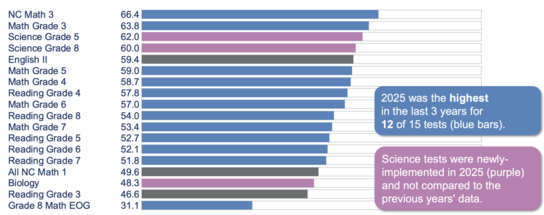
North Carolina students achieved a three-year high in most standardized tests at the end of the 2024-25 academic year, according to the annually released test data that was presented to the State Board of Education today.
Students scored higher in 12 of 15 math and reading assessments, with only third-grade reading, English II and NC Math I trailing the 2023-24 results. The average composite score for 11th graders taking the ACT, a college readiness test, rebounded to 18.2 in 2024-25 from a slight dip of 18.1 the previous year.
Demonstrating alignment to Pillar I of the Strategic Plan, Prepare Each Student for Their Next Phase in Life, new data shows that the four-year cohort graduation rate has also risen to 87.7%, up from 87.0% in 2023-24, and is the highest in the past 10 years.
State Superintendent Maurice “Mo” Green said these scores are a baseline for what’s to come.
“I’m proud of our students and educators who have worked hard to improve these metrics even as we acknowledge that our students are more than test scores,” he said. “While the progress and growth shown in these reports deserves praise, we must continue our work to promote excellence for all students. Our plan is to Achieve Educational Excellence – for every child in North Carolina and to have the best public schools in the nation. I am eager to see this data continue to improve as we work to implement our strategic plan.”
Outlined in the Strategic Plan, Pillar I’s focus area is to promote excellence for all with three measures specifically tied to the accountability data release.
- Increase the percentage of students scoring levels 3, 4 or 5 on the End of Grade/End of Course (EOG/EOC) test scores. [P1.M5]
- Increase the average ACT composite score to 20 by 2030. [P1.M6]
- Increase the adjusted four-year cohort high school graduation rate to 92% by 2030. [P1.M7]
Green stressed the importance of benchmarking the 2024-25 accountability results to build and improve upon in order to make North Carolina public schools the standard of excellence.
“The goal of the Strategic Plan is that North Carolina’s public schools will be the best in the nation by 2030,” Green shared. “The measures and actions in our joint strategic plan with the State Board of Education provide us with the roadmap to build on the incredible hard work and diligence of students and educators across the state identified in these results.”
|
Strengthening Standards and Teaching: Updates from the State Board of Education
At its September 2025 meeting, the North Carolina State Board of Education reviewed important updates to Policy SCOS-012 and the Internal Procedures Manual, both of which guide how our state develops and implements academic standards for all public school students.
Why This Matters
Clear, rigorous, and coherent standards are the foundation for high-quality teaching and learning. They ensure that every student — from Pre-K through grade 12 — has access to consistent, challenging, and supportive instruction, no matter where they attend school.
Key Updates to SCOS-012
-
Longer Review Cycle: Standards will now follow an 8- to 10-year review timeline (up from 5–7 years). This allows more time for deep implementation before revising again.
-
Career and Technical Education Alignment: Language was updated to reflect today’s CTE courses.
-
Grade Bands: Some subject areas, like physical education, will now use grade-band standards.
-
Instructional Materials: Emphasis shifted to the use of high-quality instructional materials aligned with agency priorities.
-
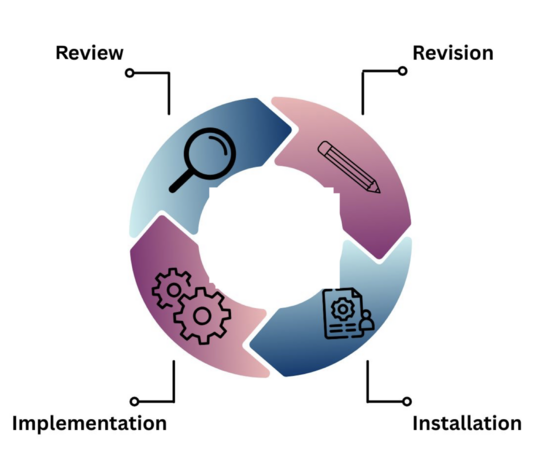
Four Phases Instead of Three: The standards process is now clearer, moving through Review, Revision, Installation, and Full Implementation.
Updates to English Language Arts and Math Standards
The Board also reviewed updated timelines for both ELA and Math standards, which will follow the new review and installation phases to ensure educators and students are fully supported before statewide implementation. The ELA Standards review will happen next. Draft 3 of the revised ELA standards is tentatively scheduled to be released for field feedback from September 5 through October 1, 2025. Input will be gathered through a statewide survey and focus groups. The data collected will be analyzed beginning October 13, 2025, and used to inform the next phase of revisions. The updated draft (Draft 4) is tentatively planned for presentation and discussion at the State Board of Education meeting on December 3–4, 2025.
Internal Procedures Manual Enhancements
The Internal Procedures Manual was revised to give districts and educators more clarity and tools, including:
- A month-by-month installation calendar over two years.
- Clear explanations of the difference between standards, curriculum, and instruction.
- Guidance on taxonomies and frameworks and why they matter.
- A focus on aligning standards with high-quality instructional materials rather than just textbooks.
Looking Ahead
Beginning with the 2025-26 school year, North Carolina will move into this new 10-year standards cycle, with social studies, science, world languages, arts, English language arts, and math scheduled for review, revision, and installation in sequence.
The Board remains committed to ensuring that every child in North Carolina experiences rigorous and engaging learning, backed by clear standards and strong supports for teachers.
|
New State Board Policy Strengthens Early College and Cooperative Innovative High Schools
The State Board discussed a new policy to guide the state’s Cooperative Innovative High Schools (CIHS), often known as early colleges. These schools provide students with the opportunity to earn college credits while completing high school — giving them a strong start toward future success.
Why a New Policy?
The new policy, CACP-001, would establish a clear framework for the management and implementation of CIHS programs. It brings together existing practices, legislative intent, and best practices to ensure that these schools remain focused on their mission: serving students who benefit most from early college opportunities.
Who Are the Target Students?
CIHS programs are designed to serve students who:
- Are at risk of dropping out before completing high school.
- Come from families where parents did not pursue education beyond high school.
- Would benefit from accelerated academic instruction.
By focusing on these groups, the policy reinforces the State Board’s commitment to equity, access, and academic opportunity.
Policy Highlights
The new framework provides clarity and consistency in several key areas:
-
Program Overview: Defines expectations for program design, student populations, and college-going culture, including in-person instruction for at least 50% of college classes.
-
Application Process: Outlines the legislated process and additional steps, including Letters of Intent, with final approval and funding provided by the General Assembly.
-
Annual Reports: Requires regular reports to track program success and inform legislative updates.
-
Program Updates: Establishes procedures for existing schools, including requests to change higher education partners when necessary.
-
Renewal Agreements: Requires schools to outline their target populations for the next five years and describe efforts to recruit and serve those students.
Looking Ahead
The State Board is scheduled to take action on this item at its October 2025 meeting. The aim is to ensure that Cooperative Innovative High Schools remain true to their purpose: expanding opportunity, reducing barriers, and preparing students for brighter futures.
|
Strengthening the Restart School Reform Model
At its September 2025 meeting, the North Carolina State Board of Education reviewed important updates to the Restart School Reform Model (Policy DSTR-040), which supports schools designated as continually low-performing. The updates are designed to give schools clearer expectations, fairer accountability, and stronger pathways to improvement.
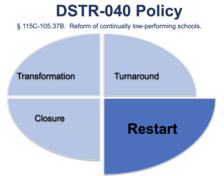
What is the Restart Model?
The Restart Model gives struggling schools charter-like flexibility while keeping them under the authority of their local school board. This allows schools to customize staffing, curriculum, and operations to better meet student needs — while receiving direct support from the Office of District and School Support Services.
Support services include:
-
NCSTAR for school improvement planning.
-
Comprehensive Needs Assessments (CNA) to uncover strengths and challenges.
-
Instructional Leadership and Curriculum Coaching to build capacity in districts.
-
Integrated Academic and Behavior Supports (MTSS) for whole-child development.
-
Regional Support Teams and Golden LEAF initiatives that strengthen leadership, instruction, and culture.
Why Update the Policy?
The Board recognized that the existing rules placed unnecessary reapplication requirements on schools that were showing improvement, while others that were struggling could continue without new oversight.
Under the updated policy, schools must now demonstrate academic gain in at least two of the three years (Years 2–4) of their Restart cycle. If they do not, they must submit an application for continued authorization by February of Year 5.
This ensures that:
- Multiple measures and trends are considered, not just one year’s results.
- Schools that consistently improve can continue without interruption.
- Schools that fail to show progress face renewed scrutiny and must reapply.
Projected Outcomes
If applied to current cohorts, the updated policy would reduce unnecessary paperwork for schools that are improving while focusing attention on schools that need stronger intervention. For example:
- Under the old policy, all 44 schools in one cohort might have had to reapply.
- Under the new policy, only 3 schools must reapply, 17 may need to reapply, and 24 would continue without reapplying.
Next Steps
The State Board is recommending that the proposed rules be published for public comment, with final adoption anticipated in December 2025 and an effective date of February 1, 2026 (pending approval).
|
New Grant Program to Support Exceptional Children in North Carolina Schools
The State Board reviewed plans for an exciting new Exceptional Children (EC) Competitive Grant Program, which would provide short-term, targeted funding to strengthen services for students with disabilities across the state.
Purpose of the Grant
The program is designed to make a focused, time-limited investment in areas that have the greatest impact on students with exceptional needs, including:
-
Recruiting and retaining EC personnel such as teachers, therapists, and interpreters.
-
Improving instructional practices and providing professional learning.
-
Purchasing specialized materials and supplies to increase accessibility.
-
Supporting alternative learning programs that serve EC students.
-
Offering fiscal incentives to help retain licensed EC professionals.
Funding Sources
The grant is funded through federal Individuals with Disabilities Education Act (IDEA) dollars that are reserved for state-level activities. By repurposing and expanding unspent funds, the Department will invest in:
-
Autism problem-solving teams (~$500,000 awarded to PSUs).
-
Recruitment, retention, and professional learning initiatives (~$1.6 million distributed at a flat rate to all PSUs).
-
Additional support (~$2 million) from renegotiated contracts and regional staff focused on professional learning and technical assistance.
Application Process and Priorities
Public school units (PSUs) will apply for grants by outlining how funds will be used in areas such as:
- Alternative programming, assistive technology, and instructional materials.
- Positive behavior support and transition programs.
- Recruitment and retention of EC personnel.
- Professional learning for both administrators and instructional staff.
Applications will be evaluated based on:
- The percentage of schools identified as low-performing, continually low-performing, or in targeted/comprehensive support status.
- Each PSU’s EC annual determination.
- Baseline and student outcome data.
- A clear action plan, projected expenses, and leadership assurances.
Accountability and Reporting
Awarded districts must submit reports on expenditures, measurable outcomes compared to baseline data, and plans to sustain progress. A final report template will be provided to ensure consistency and transparency.
Looking Ahead
By directing competitive grants where they are most needed, North Carolina is taking another step toward preparing each student — including those with exceptional needs — for success in their next phase of life. The State Board is scheduled to take action on this item at its October 2025 meeting.
|
Moving Forward Together: Updates on North Carolina’s Strategic Education Plan
At its September 2025 meeting, the State Board of Education reviewed progress on the implementation of the 2025–2030 Strategic Plan for North Carolina Public Schools. The discussion focused on accountability, coordination, and — most importantly — how to engage educators, families, and communities as partners in bringing the plan to life.
Strengthening Oversight and Accountability
The Board has established a Strategic Plan Monitoring and Accountability Committee (SPAC), composed of senior NCDPI leaders. The SPAC will:
- Ensure timely project planning and documentation.
- Hold teams accountable for progress on actions.
- Review and approve project plans before they move forward
To support this work, a new Office of Strategic Planning has been created and will sit within the Office of Government Affairs and Strategy. This office will manage the day-to-day aspects of implementation, provide technical assistance to project teams, and maintain a public-facing dashboard so stakeholders can track progress.
Engaging Communities Across the State
Beginning this fall, Board and DPI leaders will host a series of regional engagement events. These gatherings will include:
-
School visits to highlight local successes and bright spots.
-
Community events to convene partners in support of public schools.
-
Public forums to present the strategic plan and invite community commitments
|
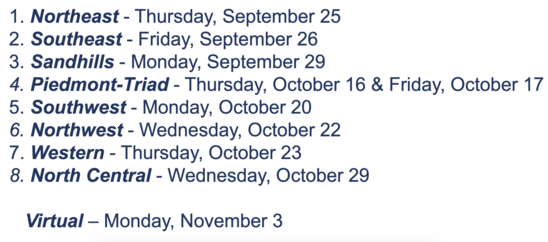
Events are planned across all regions of the state — from the Northeast and Sandhills to the Western mountains — with a virtual option available in November.
Five Ways to Get Involved
The plan’s success depends on broad and active participation. Community members and organizations can engage in five key roles:
-
Champions – Individuals who publicly advocate for and uplift public schools.
-
Mission Partners – Nonprofit organizations that lend expertise and collaborate on messaging.
-
Implementation Network Members – School districts or charter schools that pilot strategies and provide feedback.
-
Service Contributors – Stakeholders who donate time, skills, or services, such as video production or communications support.
-
Funders/Investors – Organizations or individuals willing to financially support initiatives
Celebrating Public Education
Much of this work ties directly to Pillar 7 of the Strategic Plan: Celebrate the Excellence in Public Education. Efforts will include statewide communication campaigns, success stories, social media initiatives (like #ncpublicschoolchampion), and toolkits for schools and partners. The goal is to ensure the narrative around North Carolina’s public schools reflects the excellence happening in classrooms every day.
Looking Ahead
With stronger structures for accountability and clear opportunities for community engagement, the Board and Department are committed to ensuring that the Strategic Plan becomes more than words on paper — it becomes a shared roadmap to excellence for every student, educator, and community in North Carolina.
|
State Board of Education Takes Action to Support Accountability in Winston-Salem/Forsyth County Schools
On September 4, 2025, meeting, the State Board of Education took two important actions concerning Winston-Salem/Forsyth County Schools. Both actions reflect our commitment to ensuring sound fiscal management, transparency, and accountability across all school districts — always with the priority of minimizing negative impacts on students.
Debt Repayment and Penalty Adjustment
The Board heard Winston-Salem/Forsyth County Schools’ appeal of the Department of Public Instruction’s decision to assess a 1% monthly penalty on unresolved overdrafts from the Public School Fund. Recognizing the urgency of the situation but also the need to protect students from further disruption, the Board voted 5–4 to amend the original penalty terms with the following conditions:
- Interest on the district’s more than $3.4 million debt will accrue at a reduced rate of 0.4% per month, beginning October 1, 2025.
- The district’s board must present a good faith repayment plan when it meets with the State Board’s BSOP Appeal Panel on November 4, 2025.
- Repayments must begin no later than January 20, 2026.
The Board expects the district’s annual financial audit to be completed in time for this November meeting, where a clear repayment plan will be required.
Independent Review of Internal Controls
In addition, the Board reviewed the Special Report from the State Auditor, which identified serious management failures within the district. After careful consultation, the Board voted to initiate a review of the district’s internal controls under state law NCGS 115C-447(b).
The Board has directed the Department of Public Instruction to work with the Local Government Commission to select an external audit firm to conduct this review. The Board will consider the proposed firm and its engagement letter at its October 2025 meeting. It is the Board's intention for the review to begin following the completion of the district’s annual audit -- projected to be completed in October.
Commitment to Accountability and Students
The State Board of Education’s role is clear: to ensure fiscal responsibility and sound management in every North Carolina school district. These actions are not taken lightly, but the Board deems them necessary to safeguard resources that belong to students and the public.
|
|