State Board’s Equity Efforts Endorsed by Veteran School Desegregation Leader

As the State Board of Education continues to focus on equity issues in the state’s public schools, a former champion of early desegregation in schools across North Carolina praised the board’s recent resolution underscoring its commitment to ensuring all students an equitable opportunity to succeed.
Dudley Flood, who with the late education leader Gene Causby, crisscrossed North Carolina from 1969 to 1973 to assist communities in desegregating their schools, told board members at their meeting this month that the struggle continues to overcome hurdles and raise expectations and opportunities for all students.
“We tried to help people understand that it isn’t a matter of capability,” Flood said of the efforts he and Causby pursued on behalf of the N.C. Department of Public Instruction. “It’s a matter of commitment that drives us to want every child to have whatever the best opportunity we can generate for him or her – and then to inculcate through every resource we can within that child the realization that if you follow and maximize this opportunity, there are few limitations that you’ll encounter later in life.”
Flood commended the board for its continued and renewed focus on equity.
“I was so impressed,” Flood said. “Your resolution to support equity in education in and of itself is a generator of enthusiasm and a belief in the fact that some important body believes this is worth doing. This has to be a continuing process.”
|

NC Schools Continue to Strengthen Social and Emotional Learning, Board Told
In an update on statewide efforts to provide all students with social and emotional learning and support, board members were told that the approach is an effective lever for achieving equity.
“The reason we see social emotional learning as a lever is because it does tackle this issue systematically with both adults in school buildings and with students,” said Matt Hoskins, assistant director of the Exceptional Children’s division. “The competencies [within social emotional learning] apply to all students regardless of race or ethnicity, class, religion or gender.”
Social and emotional learning is the process through which children and adults understand and manage emotions, set and achieve positive goals, feel and show empathy for others, establish and maintain positive relationships, and make responsible decisions.
Board members heard about one initiative underway in Cleveland County, one of three districts in the North Carolina benefitting from Project AWARE (Advancing Wellness and Resiliency in Education), a five-year, federally grant-funded program to increase awareness of mental health issues among school-aged youth, provide training for school personnel and other adults who interact with school-aged youth to detect and respond to mental health issues and connect school-aged youth, who may have behavioral health issues, to needed services.
“Everybody in education is aware that schools have to have a supportive school climate for any academic success to happen,” said Teri Putnam, director of the Cleveland County program. “This work that we’re doing is to try to create a supportive school climate both for adults in the building and for students.”
She told the board that the program has helped provide mental health staff for schools in the district and to develop partnerships with local mental health providers to support school-based services for students.
“When COVID-19 hit, it was so important we had these systems in place,” Putnam said. “We were able to assist our local mental health school-based providers to transition into teletherapy.”
She said that 183 students had been served with teletherapy over 918 sessions.
“When we talk about equity, we have to have systems in place that will meet the needs of all students,” Putnam said. “We’ve done a lot of staff training about what poverty does to children, what mental health does, what substance abuse does.”
|

Board Approves COVID-19 Adjustments to State Testing for 2020-21
The State Board approved a temporary change in state testing requirements for provide flexibility to local school districts and charter schools in administering assessments required by federal and state law.
To date, the U.S. Department of Education has not indicated it will grant any waivers from federal testing requirements as it did for testing this past spring. As a result, the N.C. Department of Public Instruction plans for schools to administer annual exams that are required each year, including the Beginning-of-Grade 3 reading exam, End-of-Grade tests in reading and math for grades 3 through 8, science for grades 5 and 8, and End-of-Course exams in NC Math 1, NC Math 3, Biology, and English II.
But under changes approved by the board for this year, schools would not be required to administer the exams until students were in school for face-to-face instruction or unless students being taught remotely returned for testing at a school-sanction site that meets the North Carolina Department of Health and Human Services guidelines for COVID-19.
“We’re not certain that there will be a waiver. We’re not certain that there will not be a waiver,” DPI Accountability Director Tammy Howard told the board. “But the indications are that there won’t be a waiver,” she said.
“We have to proceed with the best proposal that we can with this year that has so very much uncertainty,” Howard said.
The board also approved a proposal from the Department of Public Instruction to allow districts and schools to use, strictly for informational purposes, the unused 2019-20 end-of-grade assessments (where possible) for administration in fall 2020 to provide educators and parents with information on a student’s performance on the previous grade-level content standards. The results from these tests will not be used for accountability or any comparison of public school units and will be available both at schools and for remote access.
|
Board Approves State’s First K-12 Computer Science Standards
The State Board of Education added North Carolina to a list of 34 other states that have adopted teaching standards in computer science across all grades, kindergarten through 12thgrade.
In approving the standards, the board concluded an 18-month process that has drawn on the expertise of educators in the field, industry professionals, higher education and non-profit organizations.
Mary Hemphill, director of K-12 Computer Science & Technology Education, told the board that the standards reflect two key goals: that students will be creating and contributing in the field, not just using and consuming computer science in the digital economy, and making sure that students will be equipped to be actively engaged as informed citizens in a complex, technology-driven world.
“We want to be sure that when we graduate students using these K-12 standards that they’re ready to be employed,” Hemphill said, “that they’re problem solvers and solution seekers who can make North Carolina better.”
Hemphill said that the COVID-19 pandemic have only underscored the importance of computer science in education.
“We have truly seen the impact … throughout this pandemic as countries and out state have tried to respond to the need of having workers who are adept at computer science and have the computational and thinking skills to the employed, but also how can we create career pathways with computer science to move them forward.”
The standards will be implemented in schools across the state beginning in the 2021-22 school year.
Board Welcomes 2020 Teacher of the Year Maureen Stover to Advisory Role; Memorializes Halifax Principal of the Year Teicher Patterson
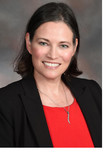
The State Board of Education this month welcomed 2020 Burroughs Wellcome Fund Teacher of the Year Maureen Stover to her advisory role on the board, which she will hold for the next two years. Stover is a science teacher at Cumberland International Early College High School in Cumberland County.
Board members also recognized the contributions of Halifax County principal Teicher Patterson, who died last month from COVID-19, with a resolution honoring his life. Patterson, who dedicated his life to serving students in poor, rural communities, was principal of Enfield Middle STEAM Academy.
|
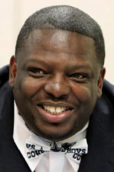
Matthew Bristow-Smith, a board advisor as the state’s 2019 Wells Fargo Principal of the Year, read the board’s resolution.
“The State Board of Education appreciates Mr. Patterson’s personal integrity, courage, and commitment to equity always putting students first and strategic use of resources to provide a quality education and community always seeking to do more to build a better tomorrow for everyone he encountered,” Bristow-Smith read from the resolution, in part.
“And the board acknowledges that Mr. Teicher Patterson was a rare and singular individual who gave much to his family, friends, community, and continuing to serve despite coronavirus as he believed in the power of being visible and being the lighthouse to guide the way even through this pandemic.”
|
Board Discusses Challenges Facing DPI’s School
Turnaround Efforts
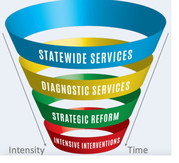
Faced with sharp staff reductions in recent years, the Department of Public Instruction’s District and Regional Support division has sought to sharpen its focus on those low-performing schools that face the greatest challenges.
“We have identified a hole that exists in our providing services to low-performing schools and districts,” said Cynthia Martin, director of the District and Regional Support division. “If we could develop an immediate remedy that could plug in to the resources of our division and then the resources of the regional support structure with the sole purpose of serving this need we could possibly replicate the success of past turnaround models.”
Martin presented the board data showing that staffing levels for the department’s turnaround efforts have dropped from 193 during Race to the Top several years ago to just 32 this year.
Board member Amy White asked how the department’s staff can handle the demands from all the schools in need. In addition to 61 chronically low-performing schools in eight low-performing districts, nearly 500 schools considered low performing after the 2018-19 school year.
“When I see the mountain of work ahead of you, what strategies will you use to for the 32 personnel?” White asked. “I’m having a hard time making the connection of how only 32 people are going to accomplish this critical, important, necessary work.”
CARES Act funding of about $4.5 million for regional support will help add 12 instructional coaches to provide support to 61 recurring low-performing schools in eight low-performing districts.
Board Chairman Eric Davis said the state is falling short of its duty to provide educational opportunities for all students.
“Thousands of North Carolina students are not getting the education that we are obligated to deliver to them,” Davis said. “We’re grateful for the CARES Act funding, but on the whole, the resources fall far below the need, and continue to fall below the need, and it’s incumbent upon our state, and this board and this agency to rise to the occasion and deliver the resources needed.”
Davis said that while much of the state’s turnaround approach relies on a “restart” model that provides low-performing schools with charter-like flexibility, local education leaders face daunting challenges.
“I worry every day about the challenges they face and the thousands of students who are not getting what we are obligated to delivery,” Davis said.
One step in the right direction, he said, is to assign Deputy Superintendent Bev Emory to a new position, under the direction of the State Board of Education, to facilitate the seven priorities outlined in the state’s response to the Leandro court ruling requiring the state to provide a “sound, basic education” for all students.
Davis thanked State Superintendent Mark Johnson for making the recommendation for the new position.
|
|