Don't Forget to Scroll Down for More Great Information!!
This update contains the latest announcements and current news impacting K-12 Social Studies in North Carolina public schools. As always, we encourage those of you who receive the updates to please share this issue with others who are not currently subscribed to our listserv. To receive Social Studies Updates please sign up using the following link: Social Studies Listerv Update and Remind or follow us on Facebook and Twitter .
If you would like to share any upcoming events, professional learning opportunities, instructional resources, or award/grant opportunities with the NCDPI Social Studies Listserv, please send a brief explanation or description, image, and any pertinent additional information by the 4th of each month to
Phylisha.Sanders@dpi.nc.gov
Don't Forget to Scroll Down for More Great Information!!
PROFESSIONAL LEARNING

Financial Literacy Webinars
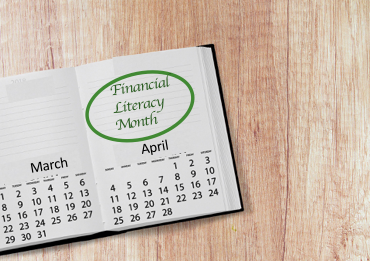
April is Financial Literacy Month. This month, NCDPI partnered with the North Carolina Council on Economic Education (NCCEE) and EVERFI to conduct webinars on Financial Literacy. The webinars are ways for us to provide support regarding North Carolina’s legislative requirement that states that “instruction shall be provided in personal financial literacy for all students”.
The webinars provide an overview of financial literacy in North Carolina schools. In addition, our partners provided information about the organization they represent, the services that are offered, and the variety of resources and curricula, including professional development opportunities, lesson plans, simulations, videos, games, etc. that are provided for K-12 educators and students.
View the 2020 Proclamation of Financial Literacy Month from Governor Roy Cooper
NCDPI and NCCEE: Economics and Personal Finance in North Carolina
NCDPI and EVERFI: Do I Need That? Fostering Financial Literacy in Elementary & Middle School
NCDPI and EVERFI: Checkbook? Is that an App? Translating 21st Century Financial Literacy for High School
|
Addressing our times in Virtual Spaces
It’s never too early to teach students economics and personal finance. During these challenging times and school instruction happening in the home, the Richmond Fed has explored ways to reach and support your virtual classrooms; offering webinars to educators and students. Learn more now about the webinars the Federal Reserve Bank of Richmond will be hosting and register using the links below.
|
Don't Forget to Scroll Down for More Great Information!!
INSTRUCTIONAL RESOURCES
CFNC Program: Financial Basics for High School and Beyond
Financial Basics for High School and Beyond, is provided through the collaborative effort of College Foundation of North Carolina (CFNC) and Decision Partners LLC, and is a FREE financial education program available online at CFNC.org. Designed to complement North Carolina curriculum standards for Personal Finance and Social Studies courses, this new program will engage students in a blended learning experience.
Highlights of the Financial Basics program include:
- There are fifteen (15) graded mini-courses that can be assigned in any order. Ideal for use in the classroom, as homework, or as extra credit assignments. (These mini-courses have been cross walked to NC curriculum standards for easy reference.)
- A complete financial aid video library clarifies the college financial aid process.
- Curriculum maps offer ideas for using the program in your classroom, particularly for Social Studies and CTE courses. For tips, visit https://basics.financialliteracy101.org/curricula.cfm
- Classroom-based student and assignment tracking, including exportable Excel reports
- Setting up a virtual classroom is simple. To get started, visit https://basics.financialliteracy101.org. If you need help, we’re just a click away because a great teacher experience is our top priority! (Guide is attached)
Check out additional CFNC resources like Reality Check and resources for financial literacy, planning a career, and planning for college.
|

EVERFI
EVERFI provides digital, self-guided financial literacy, African American history, and character education resources for Social Studies educators and their students. Through public and private funding, EVERFI resources are always provided to educators at no-cost. Please find instructions for access via the linked page.
To learn more, visit http://get.everfi.com/teacher-remote-learning/
|
Don't Forget to Scroll Down for More Great Information!!
NCCEE Professional Development
Virtual EPF Preview
Since Covid-19 forced the cancellation of multiple, single-day, EPF Preview PD sessions throughout NC, the North Carolina Council on Economic Education, in partnership with Fidelity Investments, has transitioned the face-to-face session to virtual professional development.
- 10-hour course in Google Classroom
- The course may be completed at your convenience
- Teachers who successfully complete the PD will earn a certificate for 10 hours of PD, for which your LEA may grant 1 CEU
- There is no cost to attend
- No limit on the number of teachers who may attend
*Please note this is not a substitute for the 40-hour summer institutes. Registration for the summer institutes will open May 1 at 12:00p.m.*
Register Here
Virtual professional development sessions are also available through NextGen Personal Finance and the Council for Economic Education's webinar series.
Virtual Speakers
Covid-19 has made it impossible for NCCEE to provide guest speakers in classrooms as was originally planned. However, NCCEE is able to provide virtual guest speakers to discuss personal finance with your students. If you are interested in scheduling a virtual visit, please contact Stephanie Cales and she will work with their partners to identify volunteers. Please note that flexibility with schedules is appreciated.
Professional Development for
Economics and Personal Finance (EPF) Course
- 40 hours of professional development
- Lodging and meals are provided at no cost to attendees
- All materials
- $500 stipend for attending teachers OR up to $500 in sub pay reimbursement to LEA or school
- An opportunity to apply for the Master EPF Teacher Program qualifying you to present PD on behalf of NCCEE.
Dates of the Summer Institutes
- July 6-10 at East Carolina University
- July 13-17 at Campbell University
- July 27-31 at NCCAT in Cullowhee
- August 3-7 at the Federal Reserve Bank of Richmond, Charlotte Branch
For more information, contact Sandy Wheat or visit the NCCEE’s website about the EPF Summer Institutes and the EPF Master Teachers Masters Program .
|
Don't Forget to Scroll Down for More Great Information!!

Great Books about Financial Literacy
Berenstain Bears: Trouble With Money
First Grade thru Third Grade students hear a story about two little bears whose parents use several figures of speech relating to money. Students draw a picture of a bank and write a caption explaining their illustration. Students follow along with the story by listening for additional figures of speech and how they relate to the concepts of banks and interest. The students also construct a story map of an event in the story relating to why people choose to keep their money in banks.
There is even a lesson plan ready to go from the Federal Reserve Bank of St. Louis!
https://www.stlouisfed.org/education/the-berenstain-bears-trouble-with-money
Uncle Jed's Barbershop
Sarah Jean's Uncle Jed was the only black barber in the county. He had a kind heart and a warm smile. And he had a dream. Living in the segregated South of the 1920's, where most people were sharecroppers. Uncle Jed had to travel all over the county to cut his customers' hair. He lived for the day when he could open his very own barbershop. But it was a long time, and many setbacks, from five-year-old Sarah Jean's emergency operation to the bank failures of the Great Depression, before the joyful day when Uncle Jed opened his shiny new shop — and twirled a now grown-up Sarah Jean around in the barber chair. With James Ransome's richly colored paintings brimming with life, this is a stirring story of dreams long deferred and finally realized.
Here is a great lesson plan to support the book!
https://www.philadelphiafed.org/-/media/education/teachers/lesson-plans/UncleJedsBarbershop.pdf
A Chair for My Mother
Students read A Chair for My Mother, about a little girl and her family who save money to buy a chair after their furniture is destroyed in a fire. Students learn that characters in the book are human resources who save part of the income they earn. Students identify other human resources, discuss how their work allows them to earn income and name strategies that will help them reach a savings goal.
Here is a lesson plan to support this book!
https://www.stlouisfed.org/education/a-chair-for-my-mother
Additional Elementary Resources
Photo Essay of MaggieL. Walker: illustrates the life of a visionary leader in the African-American community
My Money: Explore lessons such as What Is Money?, Money Equivalents, and Jobs, Money, Goods and Services in this educational package for elementary school students.
Lemonade for Sale: Use the book Lemonade for Sale to discuss and classify productive resources. Hands on activities are a key part of this lesson and extension activities integrate mathematics and language arts into the exercise.
To access more resources and information,
please visit: https://www.richmondfed.org/education
|
Don't Forget to Scroll Down for More Great Information!!

Resources for Middle and High from The Federal Reserve Bank
Invest in What’s Next: Life After High School: Help your students navigate their first major financial decision – what path to pursue after high school. Through online, self-directed lessons, students build personal finance knowledge and skills to help implement a plan that’s right for them.
Photo Essay of MaggieL. Walker: illustrates the life of a visionary leader in the African-American community
Dollars and Sense: Dollars and Sense is a budgeting game for middle and high school students. Students select a lifestyle and budget for expenses and unexpected events.
PSAs in the Classroom: Engage your students with short PSA videos, paired with easy-to-implement classroom activities, to demonstrate economic and personal finance concepts.
Fed Centennial Lessons Combined: Conduct a readers' theater, interactive card sort, human timeline activity, and more to learn about the Fed’s history and functions, and how its role has evolved over the last 100 years.
The Monetary and Fiscal Policy Two Step: Interested in an activity designed for middle and high school to help students identify and examine the differences between monetary and fiscal policy? Check out the Monetary and Fiscal Policy Two Step, an activity for civics and economics classes!
To access more resources and information,
please visit: https://www.richmondfed.org/education
|
Follow NCDPI K-12 Social Studies on Social Media
Facebook and Twitter
AND visit
K-12 Social Studies: Google Sites
Google Sites now serves as a central hub for Social Studies educators, administrators, institutions of higher education, and other interested parties. This hub houses the repositories, communications, and recommended resources related to the implementation of the North Carolina Social Studies Standard Course of Study (SCoS). Social Studies educators are encouraged to browse, reference, download, share, discuss, and adapt resources. Use the navigation menu to access information and resources.
REMEMBER, K-12 Social Studies resources and information can also be found on the shelves of our current LiveBinders. Click this K-12 SS LiveBinders hyperlink to access all social studies materials.
|