NCVPS Flex Learning Option
 By Ellen Hart, Instructional Director (CTE, Success 101, Arts Education, Flex Learning, Peer Tutoring, and World Languages)
North Carolina Virtual Public School (NCVPS) offers solutions for students who need to take courses outside of the regularly scheduled class periods or windows during a school year. The Flex Learning enrollment option allows NCVPS to become an intervention strategy for schools with difficult situations or students with unique scheduling challenges. The start date of a Flex Learning course is not time-bound while the end date must be before the end of the Spring semester.
NCVPS hires NC-certified teachers to work with all students, and, in a Flex Learning course, students work at their own pace with their NCVPS teacher. The expectations for NCVPS teachers remain the same for teacher grading, communication, and teaching. The NCVPS teacher keeps parents and students informed of student progress with weekly updates, and NCVPS is working with the flexible learning concept that has an organic element. For example, a student may come to the course with knowledge and our teachers can assess where that student is and only require assignments for units that present new learning. This is especially important for students who have already started the course but need to move to the Flex Learning option.
Flex Learning Scenarios:
-
A student needs to complete both Spanish I and Spanish II during the Fall semester. The student starts Spanish I in August and finishes coursework mid-semester, then begins Spanish II and completes it successfully by December. The student is able to earn both Spanish I and II full course credits within one semester by working one-on-one with an NCVPS teacher.
- A student can no longer attend school due to medical issues and the semester has already started. The student switches their course schedule to online and is able to continue learning with NCVPS courses and teachers.
NCVPS provides schools with many enrollment options. Flex Learning is yet another option so students don’t fall through the “enrollment window cracks.” Click on the links above to learn more or contact Ellen Hart, NCVPS Instructional Director, at ellen.hart@ncpublicschools.gov .
|
 Growth & Firsts for DL/I
By Donna Podgorny, DL/I Instructional Coach
The growth in quantity and age of dual
language/immersion (DL/I) programs across the nation is impressive.
Union County Public Schools (UCPS) is excited about growth and a number
of ‘firsts’ in their DLI/I Program.
UCPS promoted their first three cohorts of K - 5 students in June 2018 and they have just begun the UCPS DL/I Continuation Program. Marvin Elementary promoted the district’s first Mandarin Immersion cohort to Marvin Ridge
Middle School. Shiloh and Sun Valley Elementary Schools promoted the district’s
first Spanish Immersion cohorts to Sun Valley Middle School. Currently, the UCPS DL/I K - 12 Immersion sequence includes content instruction in the target language in Grades 6 and 7, then the target language Heritage II course in Grade 8. Students will complete the Credit by Demonstrated Mastery (CDM) process in Grades 6 and 7 permitting them to finish middle school with 3 levels of world language courses and enter Level IV in Grade 9.
|
 |
|
In addition to the Mandarin and Spanish one-way immersion programs’ growth to middle school, under the leadership of UCPS Superintendent Dr. Andrew Houlihan, the district has expanded to include two-way immersion programs at three schools: East, Marshville, and Walter Bickett Elementary Schools. For the first time, UCPS is offering DL/I programs in all nine high school feeder patterns in the county. Each year, an increasing number of students transfer to UCPS DL/I programs when relocating to Union County in order to enroll in DL/I programs that will lead to them becoming bilingual, biliterate and bicultural. |
Professional Development & Partnerships
Growth in DL/I programs around the Charlotte area has permitted DL/I leaders and teachers to participate in site visits to DL/I programs in Cabarrus County Schools and Charlotte-Mecklenburg Schools (CMS) in North Carolina, as well as in Rock Hill Schools across the border in South Carolina. These 4 districts, plus Socrates Charter Academy with its Greek DL/I program, will all be destinations for the site visits that are part of the 7th International Conference on Immersion and Dual Language Education to be held in Charlotte in February 2019.
Based on learning at the La Cosecha Conference, UCPS did a book study on Teaching for Biliteracy and held Glimpse of GLAD training with Title III funding to support English Learners (ELs) in Spanish DL/I Programs.
As UCPS heads into Year 10 as a Confucius Classroom with Asia Society, educators continue to draw on the videos of Mandarin Immersion instruction from the Asia Society’s TEQ Instructional Videos for Chinese Language Teaching page. The annual National Chinese Language Conference (NCLC) provides tremendous training, resources, expertise and networking, and, thanks to Confucius Classroom funding, UCPS has an outside consultant for Mandarin language arts support. The UCPS DL/I programs also rely on their partnership with Participate for teacher hiring and training as well as program development and support.
The district now has two DL/I Instructional Coaches (IC). One DL/I IC shared that her participation in East Carolina University’s DL/I Administration Certificate Program was THE most empowering resource for her role as a DL/I IC.
Follow UCPS DL/I @UCPSInnovate on Twitter!
DL/I Program Evaluation & Action Plans
By Helga Fasciano, Special Assistant for Global Education
With the start of a new school year, remember to implement
goals and objectives to evaluate your DL/I program outcomes. In April, Dr. Emily Bivins, Principal at Frank Porter Graham Bilingue School in
Chapel Hill-Carrboro City Schools, was the Spotlight presenter for the NCDPI
Quarterly Update webinar on DL/I Program
Evaluation. Dr. Bivins shared the
following tips on planning for evaluation and using that data to inform next
steps:
-
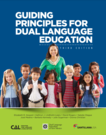
Download the rubric from the Guiding Principles for Dual Language Education, 3rd edition from the Center
for Applied Linguistics (CAL). It provides a comprehensive guide on evaluation and is
free! From this resource Dr. Bivins developed a leadership team survey to rate
the school and described how this led to an action plan.
- Compile student achievement data and
triangulate that data to inform next steps for action.
- Involve teachers in focus groups or surveys to
provide information regarding climate, communication, professional development,
units of study, etc. This information will provide insight on possible barriers
and what can be done to improve teacher satisfaction and classroom
outcomes.
- Invite parents who are representative of the student
population to give input in focus groups or on surveys for the same questions asked of the
teachers to triangulate and possibly discover other areas of challenge or
success not revealed in school staff surveys.
Dr. Bivins provided examples of how this information was
utilized to inform her school's improvement plan. All of the resources she shared and the
archived presentation can be found on the DL/I Events page of the wiki in the 2017 - 2018 section.
|
Reminders & Updates
Upcoming professional development opportunities, including the ones below, are listed on the DL/I Events page of the wiki with links to more information and registration.
Also, registration is now open (and available at a discounted rate until October 1) for the 7th International Conference on Immersion & Dual Language Education, which will be held February 6 - 9, 2019, in Charlotte, NC.
|