|
|
Following are information items
from across NCDPI’s departments and divisions of interest to North Carolina
public school teachers.
State Board of
Education
Meeting Highlights
At last Thursday’s State Board of Education meeting, members approved the English Language Arts draft standards
revision; restart school applications for Bertie County, Weldon City, Johnston
County, Northampton County, Iredell-Statesville, Halifax County and Cleveland
County Schools; a School-Based Mental Health Initiative policy; and Career and
Technical Education (CTE) incentive grants for CTE programs.
Board members discussed the READY
Accountability Annual Performance Standards policy; State Advisory Council on
Indian Education Annual Report; restart school applications for a number of
districts; and alternative growth measures for CTE teachers.
The complete list of this month’s Board actions
is available on the Board’s website. The Board’s April
agendas as well as supporting executive summaries also are available online by clicking on the SBE Meetings tab.
|
 NC Check-Ins Approval
and Expansion
At its April meeting,
the State Board of Education (SBE) approved the continuation of the NC
Check-Ins.
Beginning in the 2017-18 school year, school participation in the NC
Check-Ins will be on a voluntary basis. Schools can elect to participate in
English/language arts and/or mathematics. The grade level and subject expansion
plan includes:
- Grades 5 – 7: English Language Arts/Reading
- Grades 4 – 6: Mathematics
NC Check-Ins will be
available in paper-and-pencil and online formats. The North Carolina Testing
Program recommends that schools not administer any local benchmark assessments
in the same subject as the NC Check-In in which students are participating.
For the 2018-19 school
year, the expansion plan will include:
- Grades 4 – 8: English Language Arts/Reading
- Grades 3 – 7: Mathematics
Additional information
about the NC Check-Ins, including the procedures for participation requests,
will be forthcoming. Questions may
be directed to NCDPI Testing Policy & Operations Consultant Jaime Kelley.
|
Onslow County Teacher Wins
NC’s Top Honors
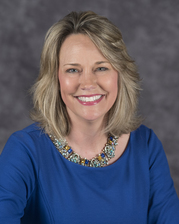
Congratulations to Dixon Elementary School
(Onslow County Schools) kindergarten teacher Lisa Godwin who was recently named
the 2017 Burroughs Wellcome Fund North Carolina Teacher of the Year.
As Burroughs Wellcome Fund North Carolina Teacher
of the Year, Godwin will spend the next school year traveling the state as an
ambassador for the teaching profession. She will receive the use during the
year of a state vehicle, leased from Flow Automotive, LLC, the opportunity to
attend a seminar at the NC Center for the Advancement of Teaching (NCCAT), a
mobile device from Lenovo valued at approximately $1,600, an engraved vase, a
one-time cash award of $7,500, a trip to the National Teacher of the Year
Conference and International Space Camp, and the opportunity to travel abroad
through an endowment sponsored by Go Global NC.
Godwin also will serve as an advisor to the State
Board of Education for two years and as a board member for the NC Public School
Forum for one year.
The other regional finalists were:
- Northeast: Amy Parker, Hertford Grammar (Perquimans County
Schools);
- North Central: Miles Macleod, Heritage High (Wake County
Schools);
- Sandhills: Juandalynn Ray, Sampson Middle (Clinton City
Schools);
- Piedmont-Triad: Adam Reeder, Asheboro High (Asheboro City
Schools);
- Southwest: Anthony Johnson, Jr., Isenberg Elementary
(Rowan-Salisbury Schools);
- Northwest: Carrie Franklin, Glenwood Elementary (McDowell
County Schools);
- Western: Leslie Schoof, Madison Early College High (Madison
County Schools); and
- Charter Schools: Deborah Brown, Research Triangle High
(Research Triangle Park).
Godwin succeeds last year’s recipient, Bobbie
Cavnar, an English and journalism teacher at South Point High School (Gaston
County Schools).
Profile Videos for 2017 NC
Teacher of the Year and Regional/Charter Finalists Online
Profile videos for North
Carolina’s 2017 Burroughs Wellcome Fund NC Teacher of the Year Lisa Godwin and
the regional and charter school finalists are available on the North Carolina
Department of Public Instruction YouTube channel. Select the “Top Notch Educators, Schools and
Students” playlist to learn more about the state’s newest Teacher of the Year
and regional and charter finalists.
|
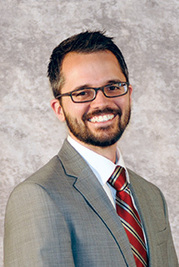 Farewell Message from 2016 Burroughs Wellcome Fund North Carolina Teacher of the Year Bobbie Cavnar
In my year
of service as North Carolina’s Teacher of the Year, I have travelled thousands
of miles around the state and around the country. I have met superintendents,
governors, legislators, two nobel prize winners, and an Oscar-winning actress.
But by far
the most rewarding aspect was hearing hundreds of stories of classroom teachers
transforming children. I heard stories about a child in need, a child in
mourning, a child suffering, and the way a community came together to help. These
are the stories that abound in public education. We have all heard them a
thousand times. And that is because they have happened a thousand times over in
every one of the 2,524 public schools in North Carolina.
Think
about that number. There are 2,524 public schools in North Carolina, serving
1.5 million children every day, and in each one of these schools there are
stories every year and from every teacher. There are stories of children whose
parents could not afford needed medication and the teachers who stepped up to
find them help, and stories of teachers guiding and supporting the children in
their class after one of their friends passed away. There are stories of
connections teachers made with children that have lasted all of their lives,
and how they inspired young people to reach beyond the limits put on them by
their environment. There are stories of overcoming suffering, overcoming
poverty, overcoming prejudice, stories of overcoming all made possible because
of the gift, given freely to all Americans, of a free and equal public
education.
Life is
not fair. It is not equal. As teachers, we cannot fix their home life or their
parents or where they were born or what they were born with, but there is one
thing we can do. We can provide every child with a free, equal, public
education. That can be the one thing that is equal and fair in a child’s life.
In article
IX of the North Carolina Constitution it states that we will provide “a general
and uniform system of free public schools… wherein equal opportunities shall be
provided for all students.” Dreamed of in the declaration of our nation, and
guaranteed by the framers of our constitution, the promise of opportunity is
handed to schools and to teachers to enact and uphold. As educators, we
are the equalizers; we are the keepers of America’s promise.
We in
education have the power to guide parents, students and community leaders to
create a new model for education in our state, one that recognizes the humanity
and individuality of children. One that treats them not as points on a graph,
or dollars to be made, but as unique young people, with goals and dreams that
are as varied as they themselves are. As a teacher, I know you can feel like a
grain of sand in a machine, but I also know that by putting enough grains of
sand in a machine, we can bring it to a grinding halt.
So, to
every teacher reading this who still believes in the promise of American
opportunity, I urge you to tell your stories. Write them down and share them in
any way you can. Write a Facebook post, add them to your blog, tell them at
your next community meeting, put them in a letter to your leaders, your
superintendents, county commissioners, or legislators. Tell your stories. It is
time to unite our voices and let our state know that we still believe.
We still believe in the transformative power of education to
reach beyond the limits of our environment. It was education that allowed our
nation to reach beyond the belief that one’s destiny was decided by birth, so
it was education that allowed our nation to dream beyond the limits of our
planet and explore the stars. It has always been education that has made the
dreams of our nation possible.
It is time for all of us to stand together, to
tell our stories, and to let the nation know that we still believe. – Bobbie Cavnar, 2016 Burroughs Wellcome Fund North Carolina
Teacher of the Year and South Point High School (Gaston County Schools) English
and Journalism teacher.
|
 Durham PE Teacher Receives National Award
Congratulations to Lowes Grove Middle School
(Durham Public Schools) Physical Education teacher Lara Brickhouse for recently
being named the national Adapted PE Teacher of the Year by SHAPE (Society of
Health and Physical Educators) America.
She will receive a $1,000 stipend and
travel the country at no cost to present on adapted PE during the next year.
Brickhouse is one of four adapted PE teachers in Durham Public Schools and
assists students with varying degrees of need from autism to severe physical limitations.
|

Notice of Public Comment:
NC Extended Content Standards for
English
Language Arts
NCDPI’s Exceptional Children Division is
accepting public comments on the proposed changes to the North Carolina Extended Content Standards for English Language Arts
(ELA).
Per federal guidelines and regulation on the Alternate Achievement Standards for Students
with the Most Significant Cognitive Disabilities (2007), students must be
provided access to state standards by aligning instruction and assessments.
Currently, NCDPI K-12 Curriculum and Instruction is in the process of revising
ELA K-12 standards. The Exceptional Children Division will revise the current
standards to align with the newly proposed ELA revisions.
These documents can be viewed in person at the
North Carolina Department of Public Instruction, Exceptional Children Division,
Education Building, 301 N. Wilmington Street, Raleigh, and on the web (under Hot Topics).
Interested citizens and school personnel are
invited to review the proposed changes and submit any comments by April 30. In making comments, please
indicate the section(s) on which you are commenting (e.g., NC.RLK.1; NC-RL 6.3
a), and provide comments in the form of statements. Comments may be submitted
via email or mailed to: North
Carolina Department of Public Instruction, Exceptional Children Division, ATTN:
Dreama McCoy or Ronda Layman, 6356 Mail Service Center, Raleigh, NC 27699-6356.
|
Multi-Tiered System of Support:
Using Positive Acknowledgement Within Core
Instruction
The Core (Tier I) environment includes
expectations for all students and staff across the school and classroom
settings. This includes climate, management, scheduling and the instructional
grouping used to serve all students. In addition to behavioral expectations
being clearly defined across settings, teachers should also receive support to
define appropriate responses to problem behavior, standards for student
engagement, the agreed upon acknowledgement system and other procedures used
with all students.
A large portion of developing this positive
environment is ensuring that a system for acknowledgement of desired behaviors
is developed. Positive acknowledgement is most simply defined as the
presentation of something pleasant or rewarding following a desired behavior
(this can be tangible or intangible). When used correctly and appropriately,
positive acknowledgement can achieve the following goals:
- increase the likelihood that desired
behaviors will be repeated;
- focus staff and student attention on desired
behaviors;
- foster a positive school climate;
- reduce the need for engaging in time
consuming punitive disciplinary measures;
- create a learning environment where students
are engaged and successful;
- teach, support and encourage students to be
“self-managers;” and
- help students generalize the skills they
learn in school to life experiences beyond school.
For more information on positive acknowledgement,
click
here. If you have
additional questions about MTSS, please contact Amy Jablonski, director of
Integrated Academic and Behavior Systems for NCDPI.
|
 NCEES Webinars
Please check out the NCEES Wiki for all
of the NCEES webinars scheduled for the school year. Staff encourage teachers to
register and learn more about NCEES.
The NCEES webinars and office hours are held Tuesday
afternoons from 4-5 p.m. Below are April’s offerings:
|
 Fourth
Circuit Essay Contest
The U.S.
Court of Appeals for the Fourth Circuit is sponsoring an essay contest for high
school students in the five states (Maryland, Virginia, West Virginia, North
Carolina and South Carolina) within the circuit. The contest offers students an
opportunity to learn about the Constitution and Bill of Rights along with a
chance to win case prizes ($2,000 first place, $1,500 second, and $1,000 third).
The
contest theme, Access to Justice, asks students to consider and share their
thoughts on “What does access to justice mean to you and how do the
Constitution and Bills of Rights enable this access?”
The
submission deadline is Friday, June 16.
Contest rules and entry form are available online.
|
|
|
|
|
|
|