|
Burn Ban, Drought and Extreme Fire Danger: Situational Snapshot
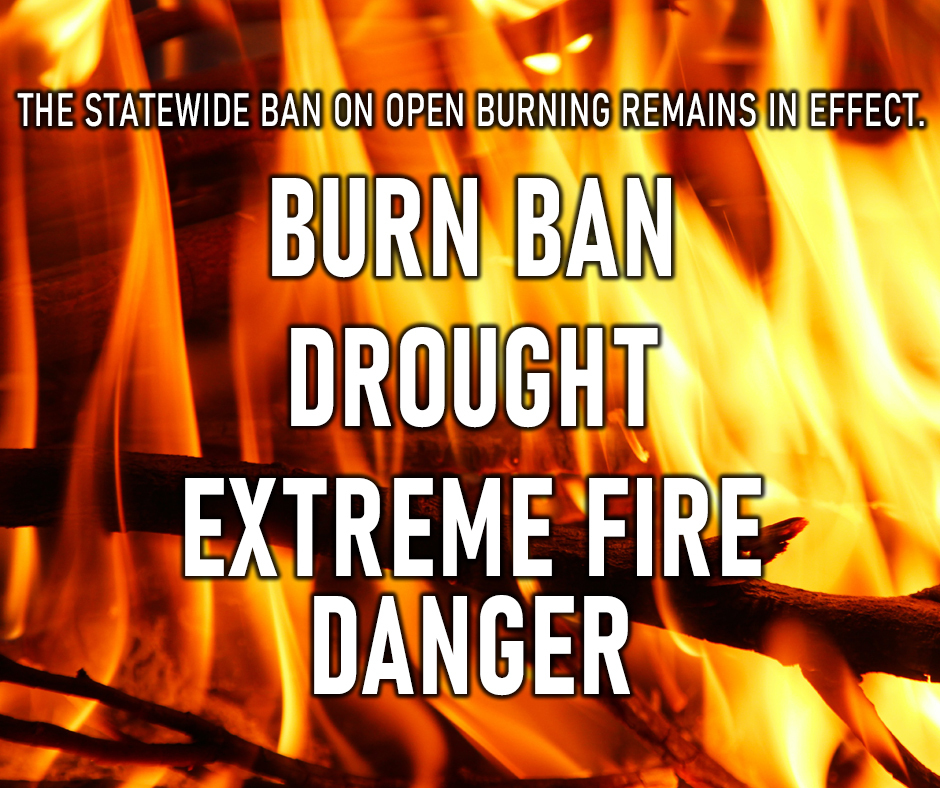
As of April 24, 2026, the state-issued ban on open burning remains in effect for all 100 counties.
Under North Carolina law, the ban prohibits all open burning statewide, regardless of whether a permit was previously issued. The issuance of any new permits has also been suspended until the ban is lifted.
The burn ban does not apply to fires started within 100 feet of an occupied dwelling. The local fire marshal has authority to issue a burn ban within those 100 feet, and many local jurisdictions have done just that. In addition to state and local bans, the USDA Forest Service has implemented fire restrictions across all four national forests in North Carolina.
A Southeastern U.S. Fuels & Fire Behavior Advisory has been issued for the region. Advisories like this one are issued by the Southern Area Coordination Center with support from state and federal agencies. These advisories are helpful in identifying key considerations that can impact fuels and fire behavior over an extended period.
From that advisory, here are some key considerations to keep in mind for North Carolina:
- Persistent dry weather and intensifying drought are resulting in historically dry fuels from the southern Appalachians and adjacent areas into the coastal Southeast.
- Dry weather is expected to persist in the short-term but will be followed by a pattern change later in April that could result in an increase in lightning fires across the Southeast along with only temporary relist from the long-term drought.
- Green-up and leaf-out are progressing normally as far as timing, but low soil moisture, dry surface fuels, low water levels in coastal areas and persistent low humidity are contributing to unusual fire activity. Do not be fooled by fuels that appear to be green – fire will spread readily in current conditions.
-
Precipitation deficits since the 2025 hurricane season are more than 10 inches across most of the area and near 2 feet in the temperate rainforests of the southern Appalachians. In addition to extreme fire behavior and increased resistance to control in the coastal plain and Appalachians, the drought has resulted in historically low streamflow and water levels for this time of year. Persistent dry air in the short term will result in some of the driest fuels experienced in the region in at least 20 years.
- Helene fuels will be much more available now than last spring or fall.
- Ground fire will likely be a long-term issue that can hinder fire control.
- Recent fuel-driven fires in coastal plain areas have produced explosive fire behavior that may outpace control efforts, even with little or no wind.
-
Extended attack and mop-up efforts will be taxing and long-winded until drought conditions improve. This requires substantial personnel and equipment resources.
- Members of the public should stay informed of fire activity near their location and should heed evacuation notices immediately. Stay ready.
-
Remember, wildfires are a no-drone zone. When a wildfire runs and spreads rapidly, every minute counts. Drones can pose a serious threat to pilot and public safety. Firefighting aircraft that respond to wildfires fly low in support of ground personnel. A drone that disrupts air operations also puts firefighters, residents and property at risk of loss to wildfire. Learn more about drones and wildfire on our website.
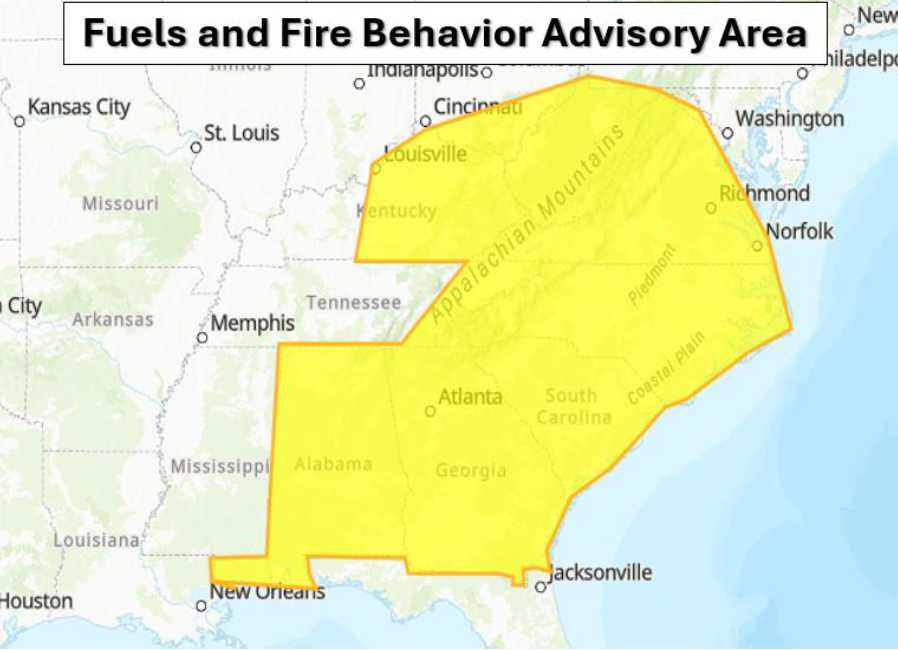 |
You can read the complete Southeastern U.S. Fuels & Fire Behavior Advisory online.
|
|
Being prepared for wildfire is more important than ever.
Take the time to harden your home and create defensible space in the home ignition zone in as little time as a few days.
-
Clear away all pine needles, dead leaves and sticks from your roof, porch, gutters, deck, patio and fence lines so falling embers will have nothing to burn.
-
Clear away all dead vegetation and flammable items within 30 feet of structures and propane tanks.
-
Store away furniture cushions, rattan mats, potted plants and other décor from your decks, porches and patios.
-
Trim overhanging branches away from your home, patios and outbuildings.
|
|
|
The N.C. Forest Service is a division of the N.C. Department of Agriculture and Consumer Services. Steve Troxler, Commissioner
|
|
|
|