What’s new with the North Carolina Flood Resiliency Blueprint?
The North Carolina Flood Resiliency Blueprint program is working to make North Carolina more resilient to flooding. DEQ is building on our previous work as we develop Action Strategies for the Cape Fear, French Broad, Lumber, Tar-Pamlico and White Oak river basins.
The Blueprint is also refining the Blueprint Tool to support communities with tailored flood mitigation planning assistance. In parallel, we’ve partnered with state agencies and local governments to identify and fund shovel-ready projects across North Carolina.
Outreach continues to be vital to the Blueprint. Team members are actively meeting with municipal officials, interested stakeholders and subject matter experts to identify priority actions in each pilot basin.
River Basin Action Strategy Progress
In Spring 2025, the Blueprint’s River Basin Advisory Groups, which include basin-specific subject matter experts, began meeting to develop River Basin Action Strategies. Once developed, River Basin Action Strategies will recommend projects and strategies within each of the state’s six basins the Blueprint is authorized to work in, based on their unique conditions and needs. The Blueprint’s outreach will inform the action strategies with basin-specific flood concerns, flood resilience planning and priority actions. Since Spring 2025, the Blueprint has held eight meetings with river basin advisory groups.
The Blueprint is also engaging community leaders who want to learn to use the Tool to assess vulnerability, plan flood mitigation projects and help others do the same. Blueprint Partners in Cape Fear, Lumber, Tar-Pamlico and White Oak river basins have met six times since Spring 2025.
Outreach and Engagement as of August 2025
20+
Stakeholder meetings held throughout NC communities
|
5
River basins engaged in action strategy development
|
300+
Advisory group members and Blueprint partners
|
|
|
|
Principal Advisory Group Method Review
|
|
Cape Fear River Basin Advisory Group
|
|
White Oak River Basin Advisory Group
|
|
Tar-Pamlico River Basin Advisory Group
|
|
Lumber River Basin Advisory Group
|
|
Principal Advisory Group Tool Workshop at NC Association of Flood Plain Managers Conference
|
|
White Oak and Cape Fear Blueprint Partners
|
|
Tar-Pamlico River Basin Advisory Group
|
|
White Oak River Basin Advisory Group
|
|
Cape Fear River Basin Advisory Group
|
|
Lumber River Basin Advisory Group
|
|
Tool Walkthrough for PAG and Partners
|
|
Lumber Blueprint Partners
|
|
Lumber Blueprint Partners
|
|
Tar-Pamlico Blueprint Partners
|
|
Tar-Pamlico Blueprint Partners
|
|
Detention Evaluator Review for Technical Advisory Group and Principal Advisory Group
|
|
White and Cape Fear Blueprint Partners
|
|
Blueprint Team on the Ground in the French Broad River Basin
Western North Carolina is now nearly a year into the recovery process from Hurricane Helene. While many signs of the storm’s impact remain, significant progress is being made each day to restore infrastructure and bring renewed vibrancy to the area.
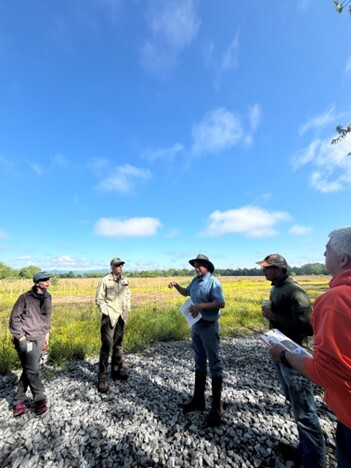
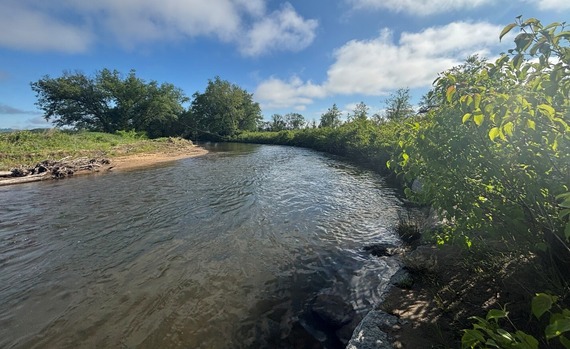
Melanie Lander, the Blueprint’s French Broad River Basin Program Consultant, toured several nature-based infrastructure projects in Henderson County that withstood the historic flooding caused by Helene. The projects were made possible through diverse partnerships, including federal and state agencies, counties and towns, landscape architecture, construction and engineering firms, and non-profit partners. These projects, including streambank stabilization and wetland restoration, played a critical role in erosion control and floodwater storage. They directly protected community assets including Mills River Park, local farms and the City of Asheville’s potable water intake while also supporting the region’s rich ecosystems, home to species like the Eastern Hellbender salamander and muskellunge (muskie).
Project Partners include Mills River Partnership, Conserving Carolina, Resource Institute, Town of Mills River, NC Wildlife Resources Commission, Henderson County, USDA NRCS, Stone & Spade, Baker Grading, Wright Contracting, North State Environmental and Jennings Environmental.
Wetland and backwater slough restoration at a former sod farm (Melanie Lander)
Wood toe revetments stabilize the streambank at Mills River Park (Melanie Lander)
 |
|
Melanie Lander is the newest Program Consultant for the Flood Resiliency Blueprint, serving Western North Carolina’s French Broad River Basin. She holds a degree in Geography from the University of Florida and a Master’s in City and Regional Planning from Georgia Tech. Before joining DEQ, Melanie worked as a Planner and Extension Agent, where she focused on flood mitigation, stormwater pollution, and the impacts of wastewater on public and environmental health. She began her career as a wetland ecologist. Outside of work, Melanie enjoys exploring nature with her family. |
Blueprint Tool Training Opportunities
Flood Resiliency Blueprint Tool, currently under development, is available for limited use. It was created to serve local governments and organizations by sharing the best available flood-risk data and providing mitigative options to support planning and project implementation.
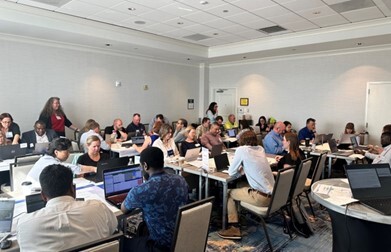
In April, the first tool training was held during a workshop at the Joint North and South Carolina Association of Floodplain Managers (AFPM) Annual Conference. As updated 2D modeling from NC Emergency Management is integrated into the tool for each river basin, in-person workshops and online trainings will be planned to provide local communities with the skills they need to explore vulnerability and submit project ideas through the tool.
Blueprint Tool training videos are available on the North Carolina Department of Environmental Quality YouTube page for planners, floodplain managers and partners to learn to use the tool at their own pace
Blueprint Tool training workshop at the Joint North and South Carolina Association of Floodplain Managers (AFPM) Annual Conference.
Spring 2025 Update Report
|