|
Dare County's Place in America's Story |
|
Explore the sites that define Dare County as the “Land of Beginnings.”
As our nation commemorates the 250th anniversary of the signing of the Declaration of Independence, the America 250 NC initiative encourages communities across the state to explore the people, places and events that helped define our nation. More than a milestone anniversary, the United States of America's 250th anniversary is a time to encourage a deeper appreciation for our collective history.
For Dare County, this celebration carries special significance. Known as the "Land of Beginnings," our community is home to many of the nation's most remarkable firsts—from the site of the first English settlement on Roanoke Island and the birth of Virginia Dare, the first English child born in America, to the Wright brothers' first powered flight that forever changed the world.
Our coastline also tells the stories of lifesaving stations, maritime heritage, conservation, and generations of resilient communities that have helped shape the American experience. Through the Dare A250 Passport Program, we invite residents and visitors to discover the people, places and stories that make Dare County an enduring and essential chapter in America's 250-year journey.
|
|
|
Dare A250 Passport Program Highlight |
|
Dare A250 Passport Stop #12
Chicamacomico Life-Saving Station
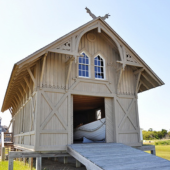
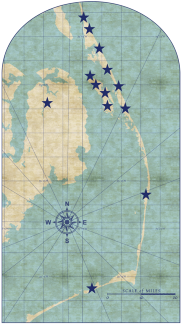
The coast of North Carolina once hosted a chain of twenty-nine United States Life-Saving Service (USLSS) lifesaving stations located five to seven miles apart with each station managed by a keeper and six surfmen.
One can travel back in time to visit the lifesaving service by visiting the Chicamacomico Life-Saving Station Museum in Rodanthe, NC. With its two stations and five outbuildings, Chicamacomico Life-Saving Station (pronounced chi-ka-ma-COM-i-co) is the most complete site of all remaining life-saving stations in North Carolina and one of the most complete sites in the nation.
Chicamacomico Life-Saving Station features two original USLSS station buildings and their accompanying structures, such as cook houses, stable, water towers, a potable water beehive cistern, and assorted period rescue equipment. The unique historic site is carefully preserved and protected by the Chicamacomico Historical Association with help of dedicated local volunteers and generous contributors.
The US Coast Guard recognizes the 1918 “Mirlo” rescue by the Chicamacomico station as one of the top rescues in maritime service’s history. Late in World War I, daring, well-trained Chicamacomico surfmen, led by the station’s Keeper John Allen Midgett, saved 42 sailors of the British tanker Mirlo from a fiery Atlantic after the ship was struck by a torpedo from German U-boat 117. The actual surfboat No. 1046 used in the Mirlo rescue—along with photos, interviews, period and replica equipment which would have been used by these heroes—can be found at the Chicamacomico Life-Saving Station Museum.
Location:
This site is located on Hatteras Island, at 23645 N.C. Highway 12 in Rodanthe, NC. There are multiple Dare A250 Passport Program QR code signs on the property, located in a window of the visitor center, on the fence in the parking lot, on the restrooms entrance and the door of the lifesaving station.
The Dare A250 Passport Program features 13 historic stops located throughout Dare County, each offering a meaningful introduction to local history through museums, cultural sites and natural landmarks. At each site, visitors can scan a QR code to collect a virtual stamp and submit their name and email through the digital form. As participants build their collection, they will become eligible to receive a certificate recognizing their engagement with Dare County’s historic landscape during the A250 celebration. The program is open through November 18, 2026.
|
|
|
Of the People, By the Sea |
|
This Month's Historic Highlight:
Hargraves’ Beach
During the 1920s and 1930s, the Outer Banks of North Carolina emerged as a national coastal resort. New roads and bridges, along with the marketing efforts of local boosters and recently arrived developers, encouraged tourists by the thousands to visit the area and take in attractions such as the Wright Brothers National Memorial in Kill Devil Hills, The Lost Colony outdoor drama on Roanoke Island, and the miles of uncrowded beaches.
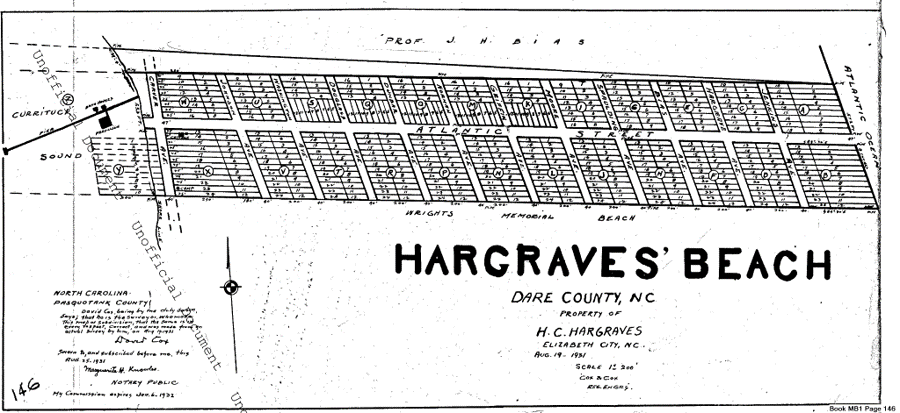 Hargraves' Beach Plat 1931 - Dare County Register of Deeds
But not everyone was welcome. For African Americans, Jim Crow segregation was the order of the day. Frequently allowed only in domestic roles at resorts like Nags Head or at separate events, they had to create their own places for recreation. Hargraves’ Beach was one of these locations. Located just south of Duck, North Carolina, it was established in 1931 by Henry Hargraves, an entrepreneur from nearby Elizabeth City, North Carolina. This development was part of a larger tract, running from the Atlantic Ocean to Currituck Sound, originally purchased in 1929 with two other Elizabeth City residents, John Henry Bias and Charles Jenkins. Realizing both economic opportunity and the need for relaxation and recreation among African Americans, Hargraves turned his portion into an oceanfront resort.
Hargraves constructed a cottage for himself, along with two bath houses, a seven-hundred-foot pier, and a dance pavilion along Currituck Sound on his thirty-seven acre resort. Based on the immediate popularity, he quickly began developing plans to convert the existing pavilion into a fourteen-bedroom boarding house, construct a larger dance hall, and add amusements. By the next year, a hotel (most likely, the converted pavilion) and dining room specializing in seafood were in place and the beach was recognized as becoming a “choice watering hole.” He also desired to build a community through the selling of lots to African Americans.
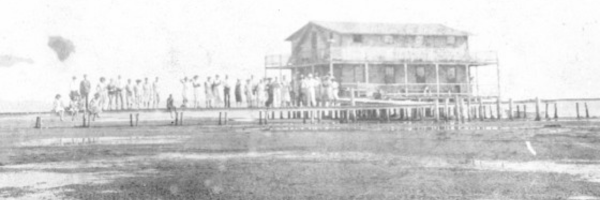 Possibly Hargraves' Beach Pavilion, 1930s - Elizabeth City State University Archives
According to tradition, the resort mysteriously burned in the late 1930s. Some suspected arson. With more construction occurring in the early 1950s, the resort’s popularity continued, especially for dancing and music. Upon Hargraves' death in 1967, the remaining land was sold to a corporation for further development.
The Bias and Jenkins families continued enjoying their sections of the original purchase as private beaches for several decades. While the Jenkins family began to sell their property as early as the 1960s, the Bias family retained theirs until developing the Bias Shores subdivision in the 1980s, just north of where Hargraves’ Beach had been.
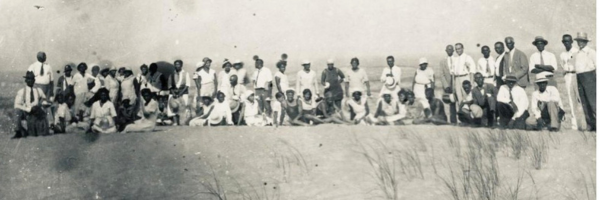 Visitors Presumably at Hargraves' Beach - Elizabeth City State University Archives.
|
|
Highlighting A250 Educational Initiatives |
|
American History in 60: A special presentation of the Theatre of Dare's StageWave Drama Camp
Designed for dedicated young performers, the Theatre of Dare's StageWave Drama Camp will take students through the full production process of a professionally staged show—from first read-through to final curtain call.
The camp will conclude with multiple public performances of American History in 60, a professionally procured production, giving students an unforgettable taste of what it means to create bold, unforgettable theatre.
American History In 60 is a lightning-fast, laugh-out-loud comedy that takes audiences on a madcap journey through the story of America. Led by the pompous Professor Bartholomew T. Featherstone and a ragtag group of “historians,” the show races through Columbus, Pilgrims, Founding Fathers, the Revolution, the Civil War, the Great Depression, and beyond—all before the clock runs out. With pop culture mash-ups, game show parodies, and sportscaster-style Revolutionary War commentary, history has never been told quite like this.
|
|
|
Featured Video: Dare A250 Storytelling
The Families Who Stayed: Generational Memory and Cultural Continuity with Robin Daniels Holt
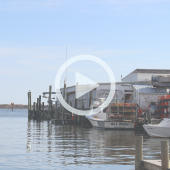
Long before tourism reshaped the economy and long before bridges connected the islands, there were families who remained. This conversation with Wanchese, NC native Robin Daniels Holt explores what it means to stay through war, storm, economic uncertainty, and cultural change. Robin Daniels Holt covers how multi-generational families shaped the character of Dare County, what values endured, what stories were preserved and passed down, and the role women played in sustaining households and communities. Drawing from her work writing about the Outer Banks’ unsung heroines, Robin Daniels Holt reflects on how family memory becomes regional identity.
This video was produced by CurrentTV during the Dare A250 Faire on April 18, 2026.
|
|
|
|
|
|