|
 Healthy Together Statewide rollout is February 10th, 2026. With this roll out the State Office will be available for support, but we expect a large influx of emails and phone calls.
We encourage utilizing the following emails to ensure timely replies:
wichelp@mt.gov - email for IT issues
montanawicprogram@mt.gov - email for general questions, concerns and orders
wicvendor@mt.gov - email for vendor specific questions, eFMNP, vendor concerns
Please reach out if you need assistance during this transition.
Resources:
Q & A document available in eLearn
Training manuals and video links were sent via email. If you need a copy please send a request to montanawicprogram@mt.gov
Support During Rollout:
IT: wichelp@mt.gov 1-800-433-4298, option 1
Daily “office hours” from 11:00-1:00 - zoom link will be emailed
|
|
|
Staff will receive access to the portal on Monday, February 9th.
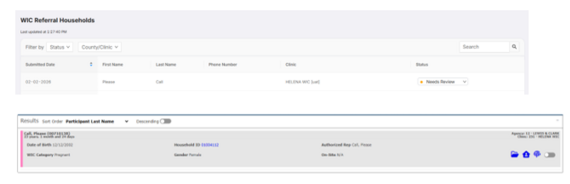
Admin Portal Tip of the Week: Current WIC participants may accidentally submit a “referral” instead of connecting to their accounts. Staff should verify in SWEB if a referral is a current participant.
|
|
|
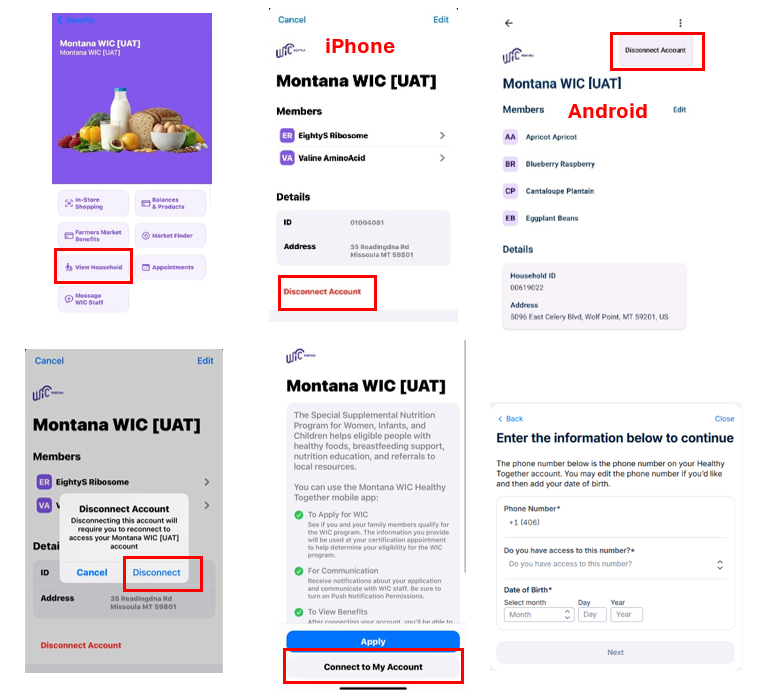
Participant Portal Tip of the Week: Foster families can access multiple children’s account. They must “disconnect” from the current account then “reconnect” to the other account. They will use their own phone number but the foster children’s DOB to connect. A foster family step by step handout is available in eLearn.
|
|
|
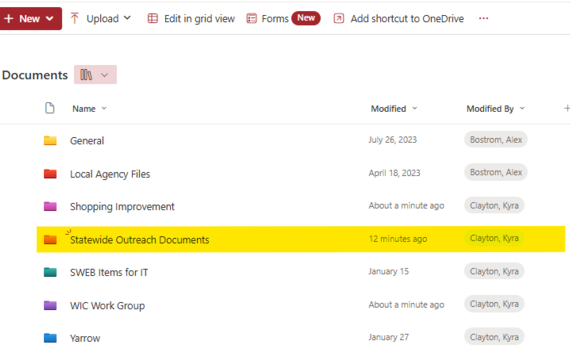
To consolidate Outreach Materials into one place for ease of access please reference the SharePoint folder highlighted below. This folder will allow the State Office to upload outreach materials that are statewide items. Items in this folder have been reviewed and approved by the state office.
If you do not have SharePoint access please email: kyra.clayton@mt.gov to get a copy of the materials sent to you directly.
REMINDER: All outreach materials that created must be sent to the state office for review prior to sharing publicly. (Social Media, Newspaper Ads, Billboards etc.)
|
|
|
Risk Code 428 – Dietary Risk Associated with Complementary Feeding Practices
Defined as: An infant or child who has begun to or is expected to begin to 1) consume complementary foods and beverages, 2) eat independently, 3) be weaned from breast milk or infant formula, or 4) transition from a diet based on infant/toddler foods to one based on the Dietary Guidelines for Americans, is at risk of inappropriate complementary feeding.
A complete nutrition assessment, including for risk #411, Inappropriate Nutrition Practices for Infants, or #425, Inappropriate Nutrition Practices for Children, must be completed prior to assigning this risk.
What WIC Can Do:
Caregivers can be guided and supported in managing common toddler feeding problems. Feeding practices that caregivers can use to facilitate a successful transition to a food group-based diet include:
- Offering a variety of developmentally appropriate nutritious foods.
- Reducing exposure to foods and beverages containing high levels of salt and sugar.
- Preparing meals that are pleasing to the eye and include a variety of colors and textures, setting a good example by eating a variety of foods.
- Offering only whole milk from age 1-2 years; (lower fat milk can be introduced after that age).
- Providing structure by scheduling regular meals and snack times.
- Allowing the child to decide how much or whether to eat.
- Allowing the child to develop eating/self-feeding skills.
- Eating with the child in a pleasant mealtime environment without coercion.
|
|
|
|