|
Montana Laboratory Sentinel
Updates from the MT Laboratory Services Bureau
Phone: 800-821-7284 Fax: 406-444-1802
Lab Website
Lab Manual
(Please reference this for testing or submission questions.)
|
|
Employee Highlight
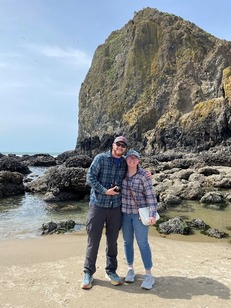
Michaela Rau works in the laboratory business office as the Billing Specialist. She has been with the laboratory business office for the past 3 years and has worked in medical administration for 7 years.
Originally from Alaska, Michaela moved to Montana 5 years ago after graduating college in Idaho and settled down in the Helena area after meeting her husband. Michaela enjoys spending time with her family and in-laws, reading by the lake while her husband fishes, and going to the farmer’s market with her friends.
|
|
|
News and Updates
Specimen Transport
-
Urgent: Specimen Transport Temperatures
-
The Montana Public Health Laboratory has processes in place to help ensure that specimen integrity is not compromised during transport. This includes recording temperatures inside coolers upon receipt. If a specimen(s) is not shipped appropriately and/or a temperature is found to be out of range upon receipt, the specimen(s) will be rejected.
-
Please ensure your cold packs are thoroughly frozen before packaging. Especially during the summer months when outside temperatures are warmer.
-
Take time to ensure your specimens are being packaged and transported under appropriate conditions to avoid rejection. This may include adding extra ice packs in the warmer months and/or “sandwiching” specimens between ice packs.
-
Please help us with this process. Like you, we don't like to reject samples, but we must comply with regulatory requirements.
-
You can place an order online if you need extra transport supplies (coolers, cold packs, specimen transport bags) to help meet this request.
-
Acceptable transport temperatures for specimens can be found in the Public Health Laboratory Services manual. Montana Public Health Laboratory Services Manual (http://mt.gov).
-
Temperature Ranges:
Newborn
-
Newborn Screening Advisory Committee
-
The Montana Newborn Screening Advisory Committee is seeking new members to begin in the Fall of 2025. The composition of the committee is set forth under section 50-19-205, MCA, and consists of 12 members appointed by the Director of the Department of Public Health and Human Services and comprises various qualifications.
-
We are currently seeking members for the following position:
-
Voting members of the committee are appointed by the Director of the Montana Department of Public Health and Human Services (MT DPHHS) for a three-year term. They are expected to attend at least two 3-hour meetings annually. You can learn more about the committee on the Montana Newborn Screening Committee website.
-
Application review will continue until the position is filled.
-
If you know someone who meets the above criteria and would like to apply, they can do so by following this link to the Committee Application. If you have questions or would like to learn more, please get in touch with the Montana NBS Committee at HHSNewbornAdvisoryCommittee@mt.gov.
Serology
-
QuantiFERON Clinical Information Questions
TB
-
AFB Specimen Source
-
Some mycobacteria have lower temperature needs and grow best at 25 - 33°C. When a specimen is from an area of the body that has a lower temperature than core temperature, two sets of media are inoculated – one incubated at 35-37°C and one incubated at 30°C.
-
Selecting the “Primary – Lymph Node, Joint, or Extremity” option, triggers our LIMS to order the additional media. If the specimen source is from any extremity (shoulder/arm/hand or hip/leg/foot), any joint, or skin/body surface, please choose this option.
-
“Primary – Other” specimen cultures are only incubated at 35-37°C.
Microbiology
-
CDC'S AR Lab Network
-
CDC’s AR Lab Network tracks changes in antibiotic resistance in humans and helps disease detectives identify and respond to outbreaks faster.
-
We need your help. Please send isolates to us!
-
Please send Enterobacterales including E coli, Klebsiella oxytoca, Klebsiella aerogenes, Klebsiella pneumoniae, Enterobacter spp and Providencia, Proteus, Morganella, Citrobacter and Serratia that have antimicrobial resistance patterns of the following: MIC: ≥4 µg/ml imipenem or ≥4µg/ml meropenem or ≥ 2µg/ml ertapenem.
-
We will perform CRE testing including ASTs and Carba R if needed. Then we will forward your isolate to our Regional Lab if additional testing is needed. Please include your antimicrobial sensitivities with the submitted isolate. There is no charge to you for sending these samples to us. For more information on isolates of interest.
IT Corner
-
Ordering Tests on the Correct Patient
-
When ordering tests for existing patients (such as repeat newborn screens), please make sure you have selected the correct patient. We have had several instances where an order was placed on a parent or sibling patient record, or on a different patient with the same name.
-
To ensure you have selected the correct patient, double-check the birth date and the MRN. When entering a newborn screen, if the patient’s birth date is more than three months in the past, a warning message will appear. Please pay attention to any warning messages that appear.
-
When entering an order, you may use the MRN or DOB (DD/MM/YYYY) in the patient search field rather than the name, which can help to ensure you are selecting the correct patient.
-
An alternative is to look for the patient first using the global search at the top of the screen, and when the patient is found, go to the demographics screen to verify ALL the patient information (such as mother’s name/birth weight/birth order for newborn sceens), then use the options menu and click “New Order.” This will start a new order with that patient’s information populated.
-
If you are in doubt, create a new patient record. It is much easier for us to merge duplicate patients than to fix the situation when an order is placed on the wrong patient. This also puts the sample at risk of being rejected.
Training Events are coming soon
-
Biosafety and Risk Assessment
-
This intermediate-level course will be held virtually September 25th from 1:00 PM to 3:00 PM. This course is worth 2 P.A.C.E®. continuing education credits through ASCLS-MT*
-
Description of Session: The possibility of exposure to dangerous pathogens is very real in the laboratory, and creating a safety culture is essential. No matter a person's position or authority, all laboratory employees must adhere to policies and procedures to protect themselves, each other, and those outside this working environment.
-
If you are interested in attending, please fill out the short form found here, no later than Monday, September 22nd: https://forms.office.com/g/4KTMC8swYj.
-
Packaging and Shipping Training
-
This intermediate-level course will be held virtually September 24th from 9:00 AM to 4:00 PM. This course is worth 5.5 P.A.C.E. ® continuing education credits through ASCSL-MT*
-
Description of Session: Through several facilitated learning activities, participants will mark, label, package, and complete documentation for various infectious substance shipments (Category A, Category B, Exempt Human Specimens). To demonstrate competency, participants will complete an online exam and practical exercises. This course provides a certificate of completion but does not certify individuals in the packing and shipping of dangerous goods. Individuals can be certified by their employer after all training requirements have been met.
-
If you are interested in attending, please fill out the following form no later than September 17th: https://forms.office.com/g/6ZEJkXV7fa
-
*ASCLS-MT is approved as a provider of continuing education programs in the clinical laboratory sciences by the ASCLS P.A.C.E.® Program.
-
Please be advised that if you have taken either of these courses in the past year, you will not be eligible to file for P.A.C.E.® credit again.
Montana Laboratory Forum
-
Forum Follow-up
-
On July 17th, the MT Laboratory Services Bureau hosted a virtual event to reconvene the MT Laboratory Forum.
-
If you attended, we emailed you a survey link to help us assess how useful the event was to you. If you have not had a chance to complete the survey, here is the link: https://forms.office.com/g/Yf3gRkbFsn. Please complete the survey by September 5th.
-
To those who did attend, I have asked a question in both the AM and PM chat rooms to foster discussion now and for the future. Please feel free to use this resource, even to talk amongst yourselves. If you have any problems accessing the chat, please let Crystal know cfortune@mt.gov.
-
One of the questions in the chat was to solicit questions for Dear Labbey. We do want to make sure you feel free and comfortable to ask anything you would like to. Questions, with the exceptions of those emailed, and subsequent posts are completely anonymous. Please share with others who may be interested. Questions can be forwarded to Crystal Fortune, cfortune@mt.gov.
Preparedness
-
Brucellosis-causing Brucella spp. (BBS) SOP Update
-
The Association of Public Health Laboratories (APHL), in collaboration with the American Society for Microbiology (ASM), has updated the Sentinel Level Clinical Laboratory Guideline for Brucellosis-causing Brucella spp. The new SOP can be accessed with this link: Brucellosis-Causing Brucella Species (BBS) | ASM.org. Please print this updated procedure and put it in your Biothreat Agent procedure notebook.
-
A summary of the significant changes.
-
The Sentinel Laboratory is required to be able to perform five key tests to follow the new BBS Rule-Out Flowchart. These tests are colonial growth/morphology/satellitism, Gram stain, catalase, oxidase, and urease.
- APHL and ASM are reviewing and updating the existing Sentinel Level Clinical Laboratory Guidelines.

Dear Labbey,
Why is influenza surveillance important?
Dear Reader,
Thank you for your inquiry! We aim to cover this topic at least once a year, just before Influenza season, so your timing is perfect. October 1st marks the official start of Influenza season.
As more clinical laboratories gain molecular testing capabilities, the role of sentinel laboratories in surveillance becomes increasingly vital. The Montana Public Health Laboratory (MTPHL) and the Communicable Disease Epidemiology (CDEpi) program at the Department of Public Health and Human Services (DPHHS) engage in year-round surveillance activities that depend heavily on timely and accurate disease reporting, along with prompt specimen submission. MTPHL is not merely “confirming” the work you have already performed; we are interested in obtaining these specimens for further surveillance testing and epidemiological studies. In addition, a representative number of specimens are referred to and requested by the Centers for Disease Control and Prevention (CDC) for national surveillance activities.
For instance, positive influenza specimens requested by MTPHL contribute valuable data regarding the subtypes and genotypes of influenza circulating in our communities. MTPHL is also interested in any unsubtypable influenza specimens, as they can help identify novel strains that may pose greater threats to our communities. Furthermore, public health laboratories provide a representative sample of influenza specimens to the CDC for vaccine development and further characterization, as well as antiviral resistance testing.
Public health relies on clinical laboratorians to act as sentinels for new and emerging diseases and to support public health surveillance activities, not only in our state but across the nation. Thank you in advance for your assistance with our surveillance program!
|
|
|
Reminders:
-
Dear Labbey
- Please send in your dear Labbey questions to cfortune@mt.gov. We would love to help answer any questions you have.
-
Careers
- Interested in a Public Health Laboratory career? Click here to see current vacancies: https://statecareers.mt.gov/. Search “lab” in the keywords to find vacancies.
-
Lab Portal Information
-
All of our lab portal procedures and access paperwork can be found on our website. Here is the link to the direct page with all of our forms and procedures: https://dphhs.mt.gov/publichealth/LaboratoryServices/onlineorderingandresults.
-
There is also a link in our lab portal that will take you directly to this page. This link can be found under quick links. "MT PHL Lab Portal Procedures and Forms".
-
Courier
-
Previous Laboratory Sentinels
- All previous Laboratory Sentinels can be found on our website on the column on the left hand side by selecting "Public Health Laboratory Newsletter". Here is a link to all our previous Laboratory Sentinels.
|
|
|
|
|