|
Montana Laboratory Sentinel
Updates from the MT Laboratory Services Bureau
Phone: 800-821-7284 Fax: 406-444-1802
Lab Website
Lab Manual
(Please reference this for testing or submission questions.)
|
|

MT PHL Employee Highlight:
Jeanne Lee is the Newborn Screening/Serology Supervisor. She started at the laboratory in 2007 as a scientist in Serology, then moved into the STD, Virology, Molecular Diagnostics, and Newborn Screening testing sections of the laboratory.
Jeanne enjoys xeriscape gardening, sewing, and reading in her spare time. She and her husband, Chad, also chase their teenage daughters around to their various activities.
|
News and Updates
Specimen Transport
-
URGENT: Specimen Transport Temperatures
-
Following national regulatory requirements, the Montana Public Health Laboratory is implementing a more stringent process for verifying specimen integrity. To help ensure that specimen integrity is not compromised during transport, we will be recording temperatures inside coolers upon receipt. If a specimen(s) is not shipped appropriately and/or a temperature is found to be out of range upon receipt, the specimen(s) will be rejected.
-
Please ensure your cold packs are thoroughly frozen before packaging. Many cold packs are arriving thawed, which should not happen in overnight transport if they are properly frozen.
-
Take time to ensure your specimens are being packaged and transported under appropriate conditions to avoid rejection. This may include adding extra ice packs in the warmer months.
-
Please help us with this process. We do not want to reject specimens any more than you want them rejected, but we must follow the regulatory requirements.
-
You can place an order online if you need extra transport supplies (coolers, cold packs, specimen transport bags) to help comply with this request.
-
Acceptable transport temperatures for specimens can be found in the Public Health Laboratory Services manual. Montana Public Health Laboratory Services Manual (mt.gov)
Supply Ordering
-
Supply Ordering
- When ordering supplies, please allow us adequate time to fulfill your orders. For urgent orders, please call us. While all supply tickets are addressed as soon as possible, they may not be seen immediately. Our mailing has a cut-off time, so same-day fulfillment may not always be possible.
IT Corner
-
Newborn Screening Transitioning to new LIS
-
The next section to be moving to the new LIS will be newborn screening. We have opted to move newborn ahead of molecular and the rest of the microbiology sections. We expect to transition newborn by the end of the month and will put out messaging in the portal when that happens.
-
Changes you can expect for this transition:
- The report format will stay largely the same, but some sample information will be in a different place. See a side-by-side comparison.
- You may see new messages asking for information confirmation, as order entry rules move from our existing LIS to the portal where you enter orders. For example, if you enter a newborn screen collected within 24 hours of birth and don't indicate the baby is in the NICU, you will be prompted to verify the information.
- We will start using the NBS Card Number as the Order ID. So, it will be even more important this number gets entered in the portal correctly when submitting an order.
- Our Sample ID format will be changing. This will allow our sample ID to match the sample ID used by our reference lab that performs Panel 2.
- The NBS required fields on the order patient samples screen will be changed from buttons to data entry fields that should help with ease of data entry.
- Some of these items may be implemented before testing goes live in the new LIS. We will provide messaging in the portal when any changes are made.
Newborn
-
Newborn Bloodspot Screening: More Than a PKU Test
-
Newborn screening (NBS) began in the 1960s with a screen for Phenylketonuria (PKU), but over the years, NBS has expanded to screen babies for many conditions. Despite this growth, many healthcare professionals still use the term “PKU test”. With more conditions added to newborn screening panels, this term is no longer accurate and is confusing for parents and clinicians.
-
Your words matter when communicating results to families and providers. To read more about the importance of clear communication, click here.
Microbiology
-
ARLN
-
CDC’s AR Lab Network tracks changes in antibiotic resistance in humans and helps disease detectives identify and respond to outbreaks faster.
-
We need your help. Please send isolates to us!
-
Please send Acinetobacter baumanii that have antimicrobial resistance patterns of the following: MIC: ≥8 µg/ml doripenem or ≥8 µg/ml imipenem or ≥8 µg/ml meropenem.
-
We will perform CRAB testing including ASTs and Carba R if needed. Then we will forward your isolate to our Regional Lab if additional testing is needed. Please include your antimicrobial sensitivities with the submitted isolate. There is no charge to you for sending these samples to us. For more information on isolates of interest click here.
-
Sending in a Surveillance Specimen and you don’t know quite what to order?
- If you cannot find the specific test, please choose “Hold For Surveillance,” then choose the appropriate option when answering the clinical info question “Reason for Hold”. Select “Other” and type the reason if it isn’t listed. This is our generic order for microbiology samples sent for miscellaneous surveillance purposes. Please choose this for Group A Strep Isolates, Multidrug resistant organisms and other types of surveillance Micro Specimens. Please put additional details about the organism or test under Additional Order Information. You can use “Hold For Surveillance” for Norovirus and Food Outbreak Specimens as well.
Molecular
-
Highly Pathogenic Avian Influenza
-
As most of you probably already know, the two most recent human cases of Highly Pathogenic Avian Influenza (HPAI) presented as conjunctivitis, not a respiratory illness. FDA recently granted enforcement discretion for the use of conjunctival swabs for Influenza A/H5 testing using CDC’s Human Influenza Virus Real-Time RT-PCR Diagnostic Panel. The caveat is conjunctival swabs must be tested in combination with nasopharyngeal swabs.
-
If you have a high suspect case, please call MTPHL for pre-approval of testing. You will need to collect both a conjunctival swab and a nasopharyngeal swab. The swabs should be collected into separate vials of viral transport media (not universal transport media) and stored and transported in cold condition.
-
To order, select Influenza PCR Surveillance on our online portal and put “HPAI exposure” under Additional Order Information. Select nasopharyngeal swab as the specimen source and type conjuctival swab in the additional note portion of the specimen source question.
-
Please give Michelle Mozer (molecular supervisor) a call if have any questions. 406-444-5526.
Serology
-
Fungal Serology
- The fungal serology test has been discontinued at CDC.
-
Syphilis Testing at MTPHL
-
On May 13, 2024, a DPHHS HAN advisory was issued for Syphilis Screening Recommendations. MTPHL has tried to be accommodating to our partners for treponemal and non-treponemal testing, however, we have learned that syphilis testing algorithms were not properly being followed and syphilis cases were falling through the cracks. To address this concern, MTPHL will be following the full reverse algorithm for all samples submitted, regardless of previous testing. Beginning on June 1, 2024, the only order choice available for serum screening will be the Syphilis (T. pallidum) Total Antibody, CPT code 86780A. Laboratories will no longer be able to order the Syphilis VDRL Titer Monitor or the Treponema pallidum by Particle Agglutination tests. When samples tested at MTPHL are positive for the total antibody, reflex testing for VDRL will be performed as well as TP-PA as needed. Syphilis Serology on CSF will still be available, CPT code 86592. If you have questions, please contact Jeanne Lee at jlee@mt.gov or 406-444-3040.
Preparedness
-
Focus on Bacillus anthracis and B. cereus biovar anthracis Identification
-
Historically, Bacillus anthracis was considered the only causative agent of anthrax. However, in 2015, B. cereus biovar anthracis was isolated as the causative agent of anthrax-like infections in primates in Cameroon and Cote D’Ivoire. As of 2022, human infections due to B. cereus biovar anthracis have not been noted.
-
B. cereus biovar anthracis has ALL the virulence determinants and biothreat potential of B. anthracis and is considered a Tier 1 Select Agent by the US Department of Health and Human Services.
-
B. anthracis is typically differentiated from B. cereus by being non-hemolytic, non-motile, and produces a capsule in vitro.
-
B. cereus biovar anthracis is non-hemolytic and produces a capsule like B. anthracis but is variable in its motility (similar to B. cereus which is motile).
-
Click here for colonial growth and gram stain morphology comparison between B. anthracis and B. cereus.
-
CDC and APHL are currently working to develop testing algorithms for B. cereus biovar anthracis. Until then, if a suspect isolate is from a sterile site or wound and the patient has an anthrax-like clinical syndrome, regardless of motility, please notify the MTLSB for consultation. A travel history should be obtained.
-
REMINDER: If an organism cannot be ruled out as a Biothreat Agent, it must be referred to the MTLSB as a Category A organism. It is essential to call the Microbiology Supervisor prior to sending the organism, Michelle Mozer (406-444-5251).
-
Call Kim Newman, Laboratory Preparedness Specialist with any questions concerning Biothreat Agents (406-444-3068).
|
|
MT PHL Employee Highlight
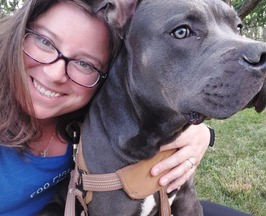
Elizabeth Reynolds is a clinical laboratory scientist working in Newborn Screening, Serology, Panther, and Blood Lead sections. She has worked for the Montana Public Health Lab since 2019. She is eagerly waiting her girls' trip with her mom and sister to Ireland in June. Elizabeth enjoys spending time with loved ones, reading, cuddling with her cat-Joker, riding her horse-Stormy, and hiking with her American Bully-Huck.
|
|
|
Reminders:
-
Lab Portal Information
-
All of our lab portal procedures and access paperwork can be found on our website. Here is the link to the direct page with all of our forms and procedures: https://dphhs.mt.gov/publichealth/LaboratoryServices/onlineorderingandresults.
-
There is also a link in our lab portal that will take you directly to this page. This link can be found under quick links. "MT PHL Lab Portal Procedures and Forms".
-
Courier
-
Previous Laboratory Sentinels
- All previous Laboratory Sentinels can be found on our website on the column on the left hand side by selecting "Public Health Laboratory Newsletter". Here is a link to all our previous Laboratory Sentinels.
|
|
|
|
|