|
MISC Seeks Applicants for Open Seats |
|
Applications Due June 30, 2025
HELENA, Mont. – The Montana Invasive Species Council (MISC) encourages eligible Montanans to apply for open positions to serve a four-year term on the council. The council provides guidance on a science-based, comprehensive program to identify, prevent, eliminate, reduce, and mitigate invasive species in Montana. MISC coordinates with public and private partners to develop and implement statewide invasive species strategic plans.
The following council terms are open:
- Blackfeet Nation Representative
- County Weed Districts Representative
- Little Shell Tribal Government Representative
- Northern Cheyenne Government Representative
Advisory council members are appointed by the Governor and the council is attached to the Montana Department of Natural Resources and Conservation (DNRC).
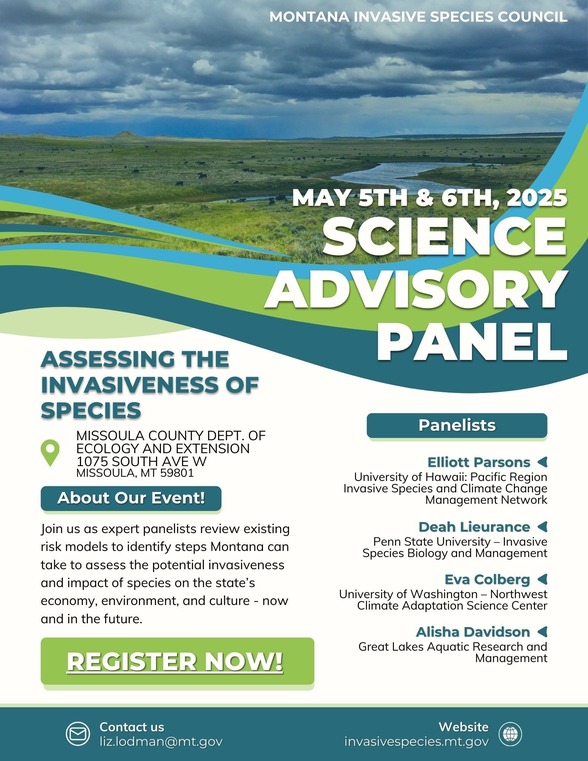
Deadline to register for Science Advisory Panel is May 1st
 New Biocontrol for Hoary Cress - a Mighty Mite?
The hoary cresses are regarded as a complex of three species of which Lepidium draba (hoary cress, whitetop, or heart-pod hoary cress), and L. chalepense (lens-podded hoary cress) are most widespread in Montana. Hoary cress is considered one of the worst weeds of agriculture in several parts of the world, including Argentina, Australia, New Zealand, parts of Africa, and western Europe. Hoary cress displaces native plant species, alters natural food webs, and may increase streamside soil erosion.
Biological control of the hoary cresses was initiated in 2001, with the formation of a consortium group to fund the screening of potential agents. Although most agents were or are being screened by CABI-Switzerland, sometimes in cooperation with the USDA-ARS France; one agent, a gall mite, Aceria drabae (Eriophyidae), was screened at MSU (with help from USDA-ARS Greece and BBCA, Italy). This is the only agent currently approved for release in the United States.
|
|
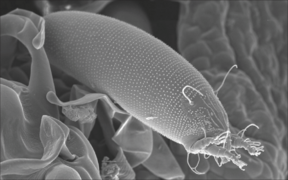 Scanning electron microscope image of Aceria drabae (Annie de Meij, Montana State University)
|
|
 Watercraft inspection stations to open
HELENA – A handful of watercraft inspection stations begin operation on March 8 to check snowbird boat traffic returning from mussel-positive areas such as the lower Colorado River, including lakes Mead, Havasu, Pleasant, Powell and Mohave. Boat owners coming to Montana must have their vessel inspected for aquatic invasive species (AIS) at a Montana watercraft inspection station prior to launch.
AIS are plants, animals or pathogens that are not native to Montana and can cause harm to our environment and economy. AIS are often introduced accidentally.
Continue Reading...
FWP AIS Boat Inspection Dashboard - 2 mussel fouled boats intercepted in 2025
More News
|
|

NAISMA: Spotted Lanternfly in North America: Insights, Impacts, and Preparing for the Future
April 16, 2025
|
|
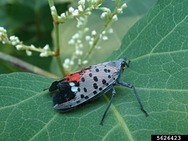 |
Join NAISMA for an insightful webinar featuring a panel of experts discussing the spotted lanternfly invasion in North America. Learn about the biology and management of this invasive pest, debunk common myths, and gain updates on how human-mediated transport is driving its spread. Experts will also share the latest findings on cold tolerance thresholds and their role in assessing the risk of northward expansion. Additionally, discover how Washington is preparing for the spotted lanternfly invasion and its potential impacts, including threats to cultural resources.
Cultivating Healthy Plants Webinar - Spring Weeds, Get a Jump on Weeds Before They Get a Jump on You
April 17, 2025
This webinar will discuss spring weed control issues and the effectiveness of different weed control tools on those weeds based on their life cycle. It will also cover identification of many of the common spring weeds in the Intermountain West
NAISMA: Beyond Buckthorn: Innovative Strategies for Invasive Control and Habitat Restoration
May 21,2025
Invasive buckthorn continues to threaten native ecosystems, but new and creative management approaches are showing promising results.
|
|
 |
This webinar will explore cutting-edge strategies to control and replace buckthorn, including the Cover It Up program, which utilizes native plantings to suppress regrowth, targeted goat grazing, and the use of fungal pathogens to weaken buckthorn populations. Join experts as they share research-backed insights, real-world applications, and success stories from the field. Whether you’re a land manager, conservationist, or homeowner, this session will equip you with practical tools to restore habitat and reclaim invaded landscapes.
|
|
Certified Weed Free Products Inspector Training Course
The Certified Weed Free Products Inspector Training Course is now live! This comprehensive course is designed to equip inspectors with the knowledge and skills necessary to certify weed-free forage, gravel, mulch, and other products according to NAISMA’s industry-leading standards.
By completing this training, you will:
- Gain expertise in identifying and preventing the spread of invasive species.
- Learn the latest certification requirements and inspection techniques.
- Help ensure that certified products meet national standards to protect our lands and waterways.
|
|
|
|
|