 |
|
68th Montana Legislative Session
January 2nd kicked off Montana's 68th Legislative Session. One can find information on the session, committee hearings, bills and so much more here or on the Montana Legislature Services Web page.
|
Leopold Conservation Award
seeks 2023 nominees
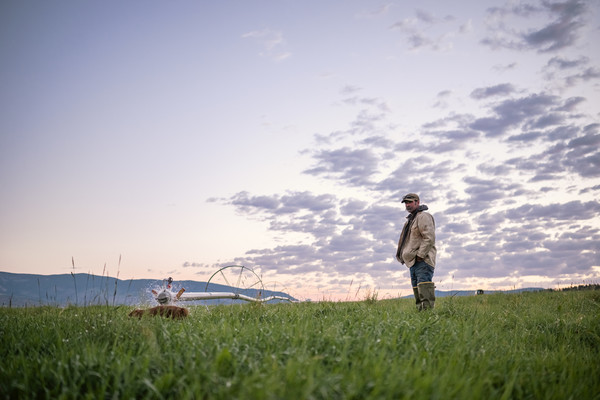 Know a Montana rancher, farmer or forestland owner who goes above and beyond in the stewardship and management of natural resources? Nominate them for the 2023 Montana Leopold Conservation Award®.
Nominations may be submitted on behalf of a landowner, or landowners may nominate themselves. The application deadline is March 15, 2023; applications can be emailed to sbarta@mt.gov or postmarked by March 15, 2023, and mailed to:
Leopold Conservation Award
c/o Rangeland Resources Program Coordinator
Dept. of Natural Resources & Conservation
P.O. Box 414
Clyde Park, MT 59018
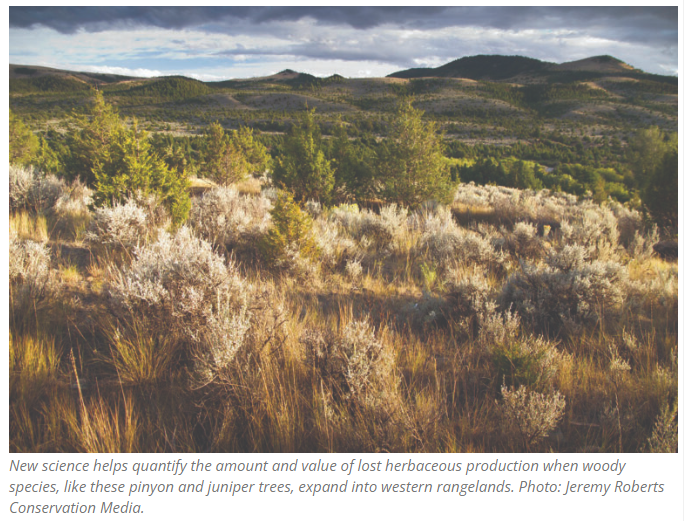
Herbaceous production lost to tree encroachment in United States rangelands
Article from: Sage Grouse Initiative website | Jan. 25, 2023
The ecological impacts of woody plants expanding onto U.S. rangelands are well documented. When trees move in, grassland wildlife move out, herbaceous plants are displaced, water supplies and soil moisture decline, forage production (grasses and forbs) for livestock and wildlife drops, and the risk of severe wildfires increases. These impacts affect western sagebrush-steppe rangelands and the Great Plains grasslands alike, where much of the landscape is privately owned and used for ranching.
New research from University of Montana researchers affiliated with Working Lands for Wildlife (WLFW) quantifies the economic impacts of lost herbaceous production throughout the American west. This research was supported by the USDA’s Natural Resources Conservation Service’s (NRCS) Conservation Effects Assessment Project – Wildlife Component, the Arkansas Game and Fish Commission, and the Bureau of Land Management. Full article here.
Use calving pasture rotation to prevent disease spread
Lisa Moser, Beef Magazine | Jan. 12, 2023
The old saying that “an ounce of prevention is worth a pound of cure” is one that commonly refers to the importance of reducing the risk for disease spread.
And in the case of beef cattle scours, where cows calve has a lot to do with how well the newborns can stay healthy in the first few weeks of life, say the experts at Kansas State University’s Beef Cattle Institute.
Speaking on a "Cattle Chat" podcast, veterinary experts outlined how calf diarrhea, also known as scours, can be a serious issue in newborn calves — but one that can be minimized by rotating the pastures where the cows calve. Scours can lead to dehydration and death in newborn calves, says Bob Larson, K-State veterinarian. “A newborn calf’s worst enemy from a germ standpoint is a calf that is a few weeks old, because those older calves shed more germs that cause scours,” Larson says. Full article.
The secret's in the soil
Maggie Slepian, The Collegian 2022,
Montana State University Alumnus Foundation, pg. 38-39 | Jan. 25, 2023
A Montana cattle ranch might not be the first place you'd look for climate change mitigation initiatives, but for the Obrecht's multi-generational cow/calf operation would prove you wrong. Sam Obrecht and his son Ty are actively involved in strategic grazing and land management to help aid carbon sequestration, a relatively new player in the fight against climate change.
Sam was the first in his family to attend Montana State University, majoring in agriculture business. When he graduated from the program in the early '80's, it wouldn't have occurred to him that his ranch would someday participate in a progressive environmental program. But in 2017, Ty was introduced to the idea at a holistic ranch management seminar. At the seminar, Ty learned about the benefits of more frequent rotations on smaller pastures, forcing the cattle to graze throughout the winter and consume all varieties of grass. He brought these ideas back to the ranch, then worked with a consulting firm to smooth out the logistics of the updated grazing plan. Read on to learn more about what the Obrecht's are doing on their ranch.
Feed calculators & creating a supplemental feeding program
Article from: Good Grazing Makes Cent$, January 2023 newsletter
As supplement costs continue to rise, maintaining proper nutrition throughout the winter months can prove challenging and requires specific attention to the body condition of your herd and the total digestible nutrients being provided.
With feed costs being about 40-70 percent of annual cow costs, carefully managing that expense is critical. Which supplements would provide needed energy and protein at the lowest price per head? Evaluating multiple supplement and forage options to determine the best bang for your buck is an important step in wise management decisions. Read on.
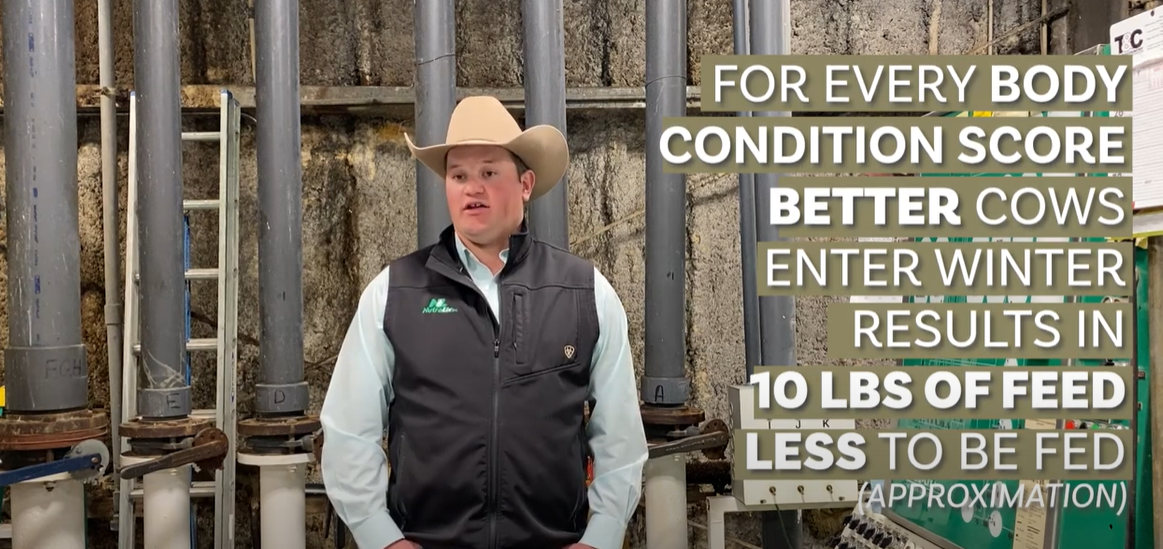 Checkout the Good Grazing Makes Cent$ Supplemental Feeds video to learn more about choosing the right supplements to fit your needs.
MSU researchers, collaborators launch projects to help combat stress for farmers and ranchers
Anne Cantrell, MSU News Service | Jan. 19, 2023
Survey results have shown Montana State University researchers that farmers and ranchers throughout Montana and the West experience, on average, a medium level of stress, which could impact their sleep, physical health, mental health and/or relationships, according to Michelle Grocke, health and wellness specialist with MSU Extension and assistant professor in the MSU Department of Health and Human Development.
Agricultural stress can be caused by a range of issues, she said, including commodity prices, weather, crop yield, debt, passing a farm or ranch to the next generation, family issues, injuries and illness. She added that it can lead to mental illness, increased risk of suicide and other health issues.
Grocke and her collaborators have launched several projects to help combat this stress. These efforts include a website that provides resources, a program that provides mini-grants for people across the Western U.S. who want to improve the mental wellness of those in their agricultural communities and a project that provides free telehealth counseling services to any Montanan working in agriculture. Click here to read the full article.

 |
|
Presenting Season Two of The Ranchers' Voice Podcast!
Krista Lee Evans of Blake Creek Consulting, and Holly Franz, a retired water attorney. The group takes a deep dive on the comprehensive water review process that the Department of Natural Resources and Conservation (DNRC) has been a part of along with the legislation we're seeing on this topic and how this might impact senior water rights holders. Listen to the episode here.
|

Western Sustainability Exhange to launch new Land Health DashboardTM
Article from: Western Sustainability Exchange website | Jan. 25, 2023
Have you been looking for a map-based web application tool designed to display grazing activity as it happens while tracking long-term soil health change over time? If so, checkout the Land Health DashboardTM a new map/GIS based application developed by the Western Sustainability Exchange (WSE) to help you visualize data for on-ranch planning and forecasting. This program enables you to track grazing data, project trends and forecast management decisions. To view a demo of this soon-to-be released grazing tool, stop by the WSE booth at the Soil Health Symposium in Billings, February 7-9, or click here to get on the program's waitlist!
 |
 |


Public hearing scheduled for proposed amendment to rules regarding Public Access Lands Agreements
HELENA – Montana Fish, Wildlife & Parks will hold a public hearing on Feb. 10 to consider an amendment to Public Access Lands Agreements. The meeting will begin at 2 p.m. and will be held through Zoom.
The Administrative Rules of Montana addressed in the proposed amendment are ARM 12.2.605, 12.2.606, 12.2.607 and 12.2.608. To review the amendment, click here:
Notice of Public Hearing in the matter of the amendment of ARM 12.2.605, 12.2.606, 12.2.607, and 12.2.608 pertaining to public access land agreements (PDF)
To join the Zoom meeting:
The deadline for public comment is Feb. 13 at 5 p.m. Comments can be emailed to lndsportrelations@mt.gov with the subject line “PALA Rules.” Comments can also be mailed to PALA Rules, Department of Fish, Wildlife & Parks, P.O. Box 200701, Helena, Montana, 59601-0701.
| |
Landowners have until March 15 to apply for FWP public access to public lands programs
HELENA – Landowners have until March 15 to submit applications to Montana Fish, Wildlife & Parks for enrollment in the Unlocking Public Lands (UPL) Program or the Public Access Land Agreement (PALA) Program.
These programs are designed to provide recreational public access to state (Montana Department of Natural Resources and Conservation) or federal (Bureau of Land Management or United States Forest Service) land where no or limited legal public access currently exists.
For enrollment in UPL, landowners will receive a tax credit in the amount of $750 per agreement and up to a maximum of $3,000 in tax credits in exchange for allowing access across the private lands, roads or trails to reach inaccessible public land. Landowners must hold the public land lease and decide how the public may cross their private property for all recreations.
For enrollment in PALA, landowners will receive monetary compensation, including possible infrastructure reimbursements (e.g., gravel, culverts, cattle guards, etc.) to facilitate public access to inaccessible public lands. Landowners must hold the public land lease. Compensation amounts vary based on a variety of factors, with one landowner possibly holding multiple agreements. The governor-appointed Private Land/Public Wildlife (PL/PW) Advisory Committee will review complete applications and make a recommendation to the FWP director on whether to extend an agreement.
“Offering a tax credit or payment in exchange for public access to inaccessible public land is a unique and innovative way to respect private property rights and increase public access,” said Jason Kool, FWP hunting access program manager. “We hope these opportunities and incentives appeal to many landowners throughout the state.”
While Montana contains millions of acres of public land, much of this land is inaccessible to the public and requires landowner permission for access.
More information about these two programs, including enrollment criteria, application forms, and fact sheets describing these FWP public access programs, can be found at: fwp.mt.gov/landowner.
|
|
|
|
|
|
|
|
|

National Water and Climate Center
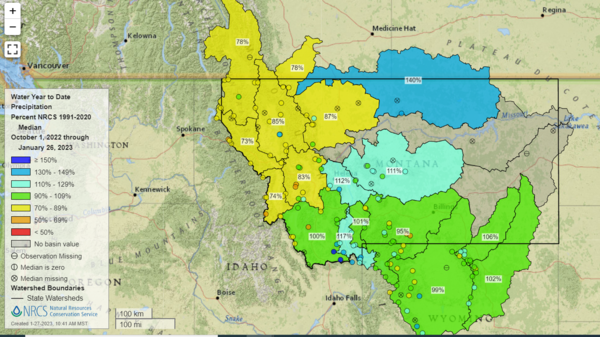
Curious how much precipitation Montana has received or wondering what current stream flows are? To find answers to those questions, checkout the USDA the National Water and Climate Center for conditions including snow water equivalent, precipitation and streamflow.

Wildland Fire Trends Tool
The Wildland Fire Trends Tool (WFTT) is a data visualization and analysis tool that calculates and displays wildfire trends and patterns for the western U.S. based on user-defined regions of interest, time periods, and ecosystem types. Users can use the tool to easily generate a variety of maps, graphs, and tabular data products that are informative for all levels of expertise. The WFTT provides information that can be used for a wide range of purposes, from helping to set agency fire management objectives to providing useful information to scientists, interested public, and the media. Access the tool here.
The last week of December, DNRC's website migrated to a new platform. The new link is listed below, please be patient as we work through the bugs and hopefully, we will have a much better and more fluid website.
Funding Available!
Dear Partners and Stakeholders,
DNRC has several funding opportunities open now for natural resource projects.
RDGP Planning Grants
DNRC Reclamation and Development Grants Program (RDGP) is now accepting applications for RDGP Planning Grants. Grants up to $50,000 are available to any city, county, Tribe, conservation district or other political subdivision in Montana. For additional information visit the RDG Planning Grants page.
Applications due: Thursday February 23 by 5:00 pm
The RDG Program funds planning for the following project types:
1. Mineral Development: Projects that repair, reclaim, and/or mitigate environmental damage to public resources from non-renewable resource extraction (mining, hazardous waste, and oil and gas)
and/or
2. Crucial State Need: Projects that identify clear measurable benefits to natural resources across a watershed or region of the state. The primary goal of the project must be to improve natural resources in the State. Eligible project types include:
Drought Mitigation – Projects that identify and mitigate drought and develop management plans in line with the State Water Plan. The primary purpose of the project must be to address drought and have a benefit to natural resources across a watershed or region of the state. Examples include development of drought plans that lead to project implementation and address drought management or mitigation and planning for specific projects that address drought across a watershed or region of the State, as the main purpose of the project, and have been identified in an approved planning document to improve issues related to drought.
Flood Assessment and Mitigation – Projects addressing natural resource impacts to a watershed or region of the State. Examples include planning for large-scale flood assessment and mitigation projects that identify clear benefits to natural resources across a watershed.
Other projects that meet a crucial State need to protect Montana's resources.
Irrigation Development Grants
Applications are due Friday, February 24, 2023 at 5:00 PM
The irrigation development grant program purpose is to increase the value of irrigated crops while preserving natural resources and the environment for future generations. Irrigation development grants range from $300 to $30,000 and are available to private for profit, private nonprofit, governmental and Tribal entities and individual and groups in Montana. For additional information visit the Irrigation Development Grants Program Page.
PROJECT ELIGIBILITY: The project must (1) address development or sustainment of Montana's irrigated agriculture, and (2) initiate or increase the sponsor's water conservation or measurement efforts. Projects may include equipment replacement (excepting private wells and sprinkler systems such as wheel lines and pivots and pumps), infrastructure repair, investigations, and planning.
Projects resulting in adverse effects to renewable resources are ineligible.
FUNDING LIMITS: Grants may be awarded up to $30,000 for most projects depending on available funding, the intended activities, and based upon a budget that is supported by a clear scope of work. Projects of state-wide significance may be considered for funding above this level.
- Projects or work completed prior to the execution of a contract are ineligible for reimbursement.
- Project sponsors must ensure applicable local, state and federal procurement requirements are followed.
Find these applications and more at grants.dnrc.mt.gov. Look below for more funding opportunities from the Conservation and Resource Development Division.
Please contact us with any questions on the project grants and application process.
Thank you for your interest. Take care everyone.
Sincerely,
Jorri Dyer, RDG Program Manager Department of Natural Resources and Conservation P.O. Box 201601 Helena, MT 59620-1601 (406) 444-6839 jorri.dyer2@mt.gov
Linsday Volpe, RRGL Program Manager Department of Natural Resources and Conservation P.O. Box 201601 Helena, MT 59620-1601 (406) 444-9766 lmvolpe@mt.gov
|
|
|
|
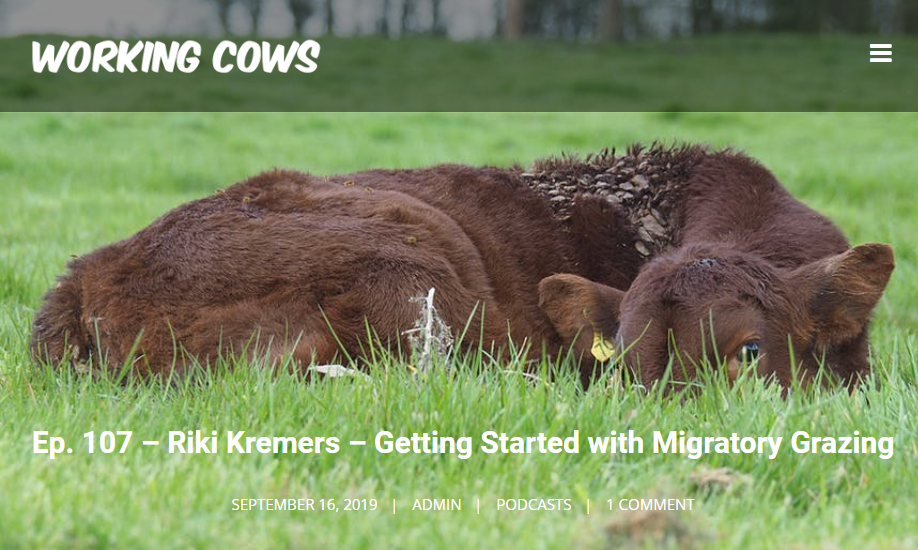
Want to learn how to graze cattle without fences? Checkout this Working Cows Podcast, "Getting Started with Migratory Grazing" to learn more.
Montana State University:
Animal & Range Science
MSU Extension:
Updated MontGuides
University of Montana:
Rangeland Analysis Platform
Reversing Tree Encroachment Increases Usable Space for Sage-Grouse during the Breeding Season
USDA-Agricultural Research Service
Scientific Discoveries 2022
Rangeland Resources & Systems Research, Fort Collins, CO:
Livestock and Range Research Laboratory, Miles City, MT:
Pest Management Research, Sidney, MT:
USDA- Wildlife Services:
US Forest Service Research & Development:
Research topic: Fire
Research topic: Water, Air, & Soil
February
March
April
June
- 6-8 406 Grazing Academy (Anaconda, MT)
Details TBA
July
- 6 - Montana Range Tour- Featuring Barney Creek Livestock (Livingston, MT)
Details TBA
Stacey Barta, State Coordinator for Rangelands
(406) 594-8481
Shantell Martin, Program Specialist
406-531-4584
Rangeland Resources Committee:
Diane Ahlgren, Chair
John Hollenback, Vice Chair
Sigurd Jensen
Jim Anderson
Leah Lewis
Ron Devlin
|