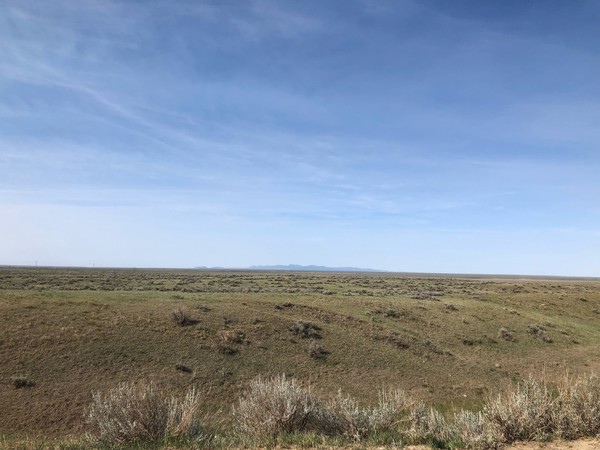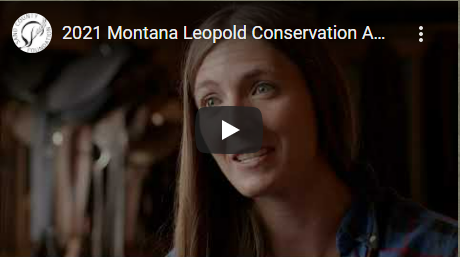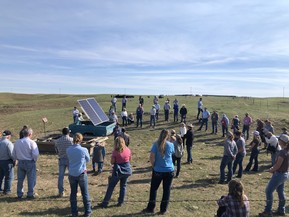
Thank you to everyone who attended this year’s Montana Range Tour in Malta; it was a fantastic two-day event celebrating the leaders in rangeland conservation, learning new grazing technology, and making new connections (oh, and who can forget the phenomenal locally produced food)!
The Montana Range Tour was started in 1992 in collaboration with Conservation Districts, Federal and State agency personnel, and generous landowners of Montana's rangelands. The Montana Range Tour showcases ranches that exemplify conservation improvement projects such as watering systems, cutting edge grazing systems, stream restoration, conservation easements, cover crops, innovative fencing, wildlife habitat improvements, and so much more.
This year, attendees had the opportunity to tour the French Ranch and learn about restorative conservation practices, including innovative solar livestock watering stations, the benefits of intensive grazing, the importance of soil health, how to identify dung beetle populations, and efficient drone use for rangeland management. Attendees also had the exciting opportunity to visit the Barthelmess Ranch and learn about the latest e-collar virtual grazing technology and how it can increase productivity of rangelands and improve wildlife migration.
The 2021 Montana Range Tour would like to offer our gratitude to the following speakers for taking the time to share new and exciting ideas with tour participants:
-
Dr. Brady Allred, an Associate Professor of Rangeland Ecology of the University of Montana who gave the Keynote presentation highlighting the Rangeland Analysis Platform and current threats to Montana's Rangeland; and
-
Dr. Julia Haggerty, an Associate Professor of Resource Geography, Rural Geography, and Resilience of Montana State University who presented about Rural Socioeconomics.
A huge thank you to everyone who made the tour possible. All of the knowledgeable presenters who provided thought provoking presentations, the Montana Cattlewomen and the Malta FFA for providing attendees with wonderful lunch and breakfast, and, a special thank you to the Phillips Conservation District planning committee and Jenifer Anderson for organizing the 2021 tour!
Congratulations again to our 2020 and 2021 Leopold Conservation Award winners, Conni & Craig French with C Lazy J Livestock (2020), and Kelly & Jill Flynn with the Hidden Hollow Hideaway Cattle and Guest Ranch (2021), as well as Bill & Corky French on their Phillips Conservation District Conservationist of the Year Award!
We cannot wait to see you all at next year’s tour in Great falls, August 30th & 31st, 2022!
|
 |
|
MISC recently released a feral swine video as an extension of its outreach efforts. The video highlights the adverse impacts of feral swine and the importance of reporting suspected feral swine or feral swine damage in order to prevent them from establishing.
Watch the video here !!!
Click here for more feral swine information and resources.
|
Drought Monitoring Group Seeking Input
Montana drought monitoring group will meet online Thurs, Sept. 30 at 10:00a to gather local input about moisture conditions and drought. These meetings are open to everyone interested– field staff, weather experts/observers, ranchers, farmers, property owners, outdoor enthusiasts, and wildland firefighters This is an opportunity to share what moisture conditions and drought impacts are like in your area. This meeting will be the last of the Water Year and serve as a summary of the past year and an outlook on conditions headed into the fall.
Sep 30, 2021 10:00 AM Mountain Time (US and Canada)
Agenda:
- Brief overview of current drought conditions
- Open mic – we’ll go around the state asking for local observations of moisture conditions and drought impacts
Zoom Meeting Link
https://mt-gov.zoom.us/j/87206713182?pwd=RmlXUlhMQmhHZHFRdm0ycFNDeDA5Zz09
Meeting ID: 872 0671 3182
Password: 023681
Dial by Telephone
+1 646 558 8656 or +1 406 444 9999
Meeting ID: 872 0671 3182
Password: 023681
Drought impact reports may be submitted any time:
Submit a Drought Impact Report: https://nris.mt.gov/droughtsurvey
View Drought Impact Reports: https://nris.mt.gov/droughtimpacts
Is the Grass Always Greener?
Land surface phenology reveals differences in peak and season-long vegetation productivity responses to climate and management.
Vegetation phenology—the seasonal timing and duration of vegetative phases—is controlled by variable contributions of climatic and environmental factors. To examine this variability in vegetation productivity and phenological dates researchers compared six satellite derived land surface phenology measures across seven vegetation community types across the U.S. Northwestern Plains ecoregion. In this area, communities range from semi-arid shrublands (sagebrush dominated) and grasslands to deciduous and evergreen forests, with pockets converted to agriculture.
Researchers first analyzed interannual trends as a baseline and then demonstrated how including annual-resolution predictors can provide more-nuanced insights into measures of phenology between plant communities. The relationships between climate and phenology varied across the region, did not covary with drivers, and non-climatic dynamics can decouple phenology from climate. Peak- and season-long productivity responses were not synchronous with climate, higher mean annual temperatures tended to increase peak productivity but for the majority of the study area decreased season-long productivity.
Investigating multiple aspects of phenology to describe growing-season dynamics provides a richer understanding of spatiotemporal patterns that can be used for predicting ecosystem responses to future climates and land-use change. Such understanding allows for more specific connections to management, for example being able to consider consequences of mismatches between vegetation seasonality and critical life history events (for example, brood rearing), as well as season long vegetation conditions that may indicate overall wildlife conditions (for example, body weight).
Source
For more information, please contact David Wood, researcher at the Northern Rocky Mountain Science Center.
Prussic Acid Poisoning
How to avoid it, and other concerns during fall grazing!
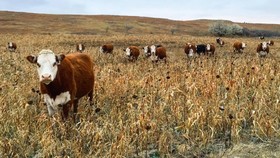
As we come to the end of the growing season, in this year of severe drought in Montana, it may have you changing your plans from grazing this winter to needing the forage now. Drought can increase the risks of prussic acid poisoning (if you have sorghum or sorghum sudangrass) or nitrate toxicity in the forages, as they tend to concentrate in dry growing conditions.
Prussic acid is tricky to test for because it is volatile and if not sampled correctly, can test as safe from the lab when it is not safe. To test for prussic acid toxicity;
- Sample the youngest leaves from 20 plants across the field.
- Gently fold leaves and place into a zip lock bag. (Take extra caution not to damage the leaves, if the leaves are damages it opens up the plant for the prussic acid to volatize before it gets to the lab, giving it a false safe result).
- Overnight your sample so it arrives at the lab Monday-Thursday (this ensures it can be sampled right away for the best results).
If the sample comes back marginal or unsafe, you can still utilize the forage. Wait 7-10 days after a killing frost or swathing before it is safe to graze. This gives time for the prussic acid to volatize off.
Read full article and view video HERE
|
 Hidden Hollow Hideaway Cattle & Guest Ranch Recipient of Montana Leopold Conservation Award
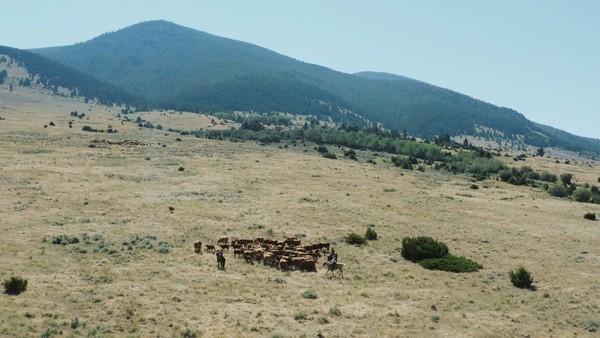
On Wednesday, September 8th, 2021 at the Tin Cup in Malta, Montana, Hidden Hollow Hideaway Cattle & Guest Ranch was awarded the 2021 Montana Leopold Conservation Award®.
Given in honor of renowned conservationist Aldo Leopold, the prestigious award recognizes farmers, ranchers and forestland owners who inspire others with their dedication to land, water and wildlife habitat management on private, working land.
Hidden Hollow Hideaway Cattle & Guest Ranch, located near Townsend in Broadwater County, is owned by the Flynn family. The late Kelly Flynn, who served in the Montana Legislature from 2010 to 2018, passed away earlier this year. The ranch is operated by his wife Jill Flynn and the families of their daughters, Shannon and Siobhan.
Kelly Flynn practiced conservation tirelessly with land ethics that were passed down from relatives who carved a living from the land since the 1860s. He recalled his aging parents pulling weeds on hot days. With those values etched in his mind, he spent a life caring for livestock, wildlife, and 6,000 acres of meadows, creeks and forests.
Congratulations to the Flynn Family of Hidden Hollow Hideaway Cattle & Guest Ranch!
To view the full story, click here!
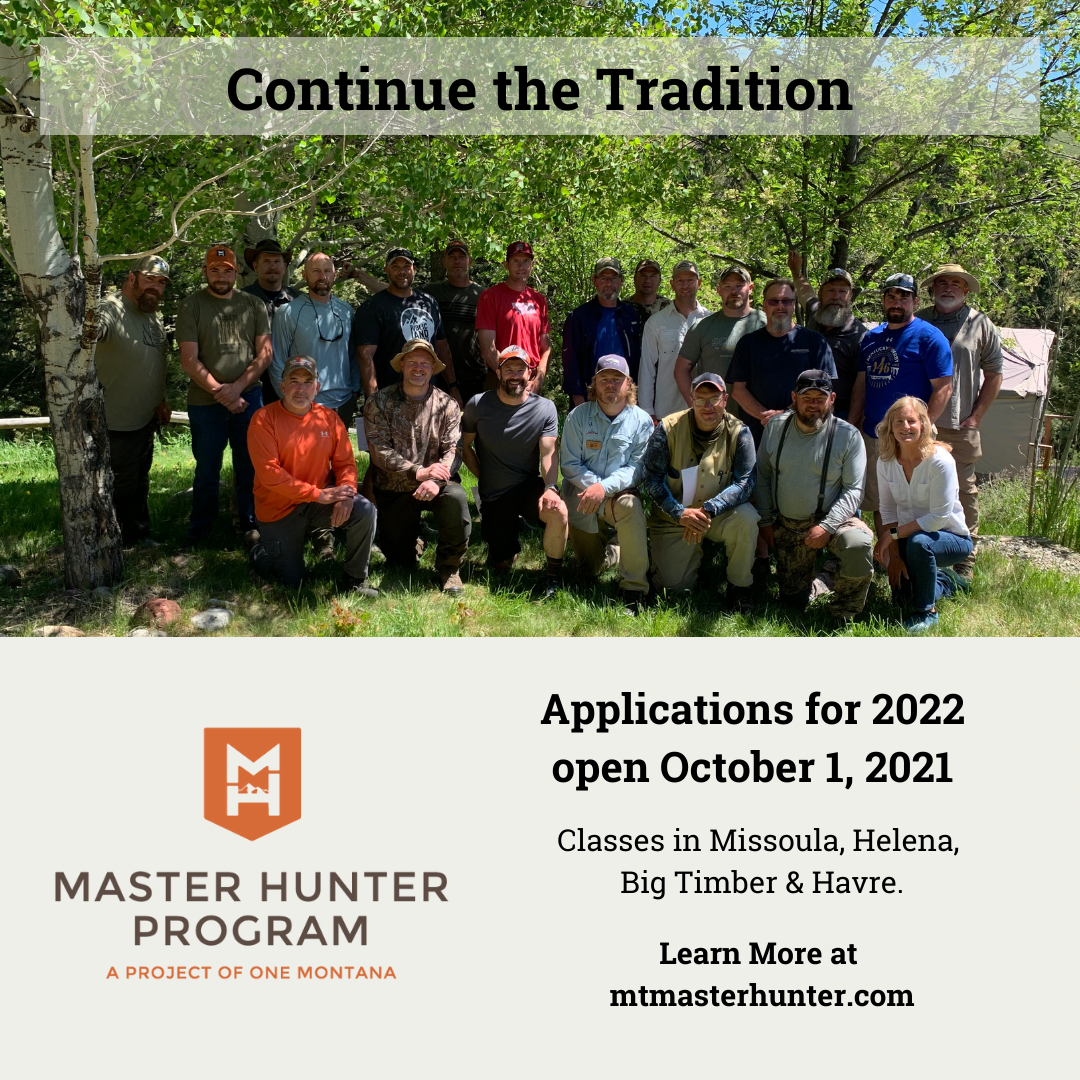 The Master Hunter Program (MHP) is an advanced education program for hunters who want to continue to add to their knowledge and skills. A primary goal of the program is to build trust and relationships between landowners and sportsmen and women. Secondly, the program seeks to help landowners and the state with their wildlife management goals. By creating opportunities for landowners and sportsmen to connect to each other, the MHP allows for discussion that leads to better understanding and collective solutions. By working with landowners, the MHP also helps to change false perceptions about both hunting and agriculture, and ultimately works to increase access opportunities for future generations. For more information on the Master Hunter Program visit the website https://www.mtmasterhunter.com/.
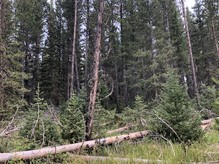
Forest Health- a report and perspective - Pt. 2
By: Gillian Rowe
In my last report I discussed how the U.S Forest Service was first established and how their responsibilities shifted over time to include rangeland management. This transition is particularly prevalent in the state of Montana. The Forest Service manages 17 million acres of national forest system lands in the state, which makes up over half of the states forested landscape making the Forest Service Montana’s largest land management agency. In the last 25 years, the pace and scale of active forest management, particularly timber harvest, has declined dramatically.
In fact, forest management is declining all across the U.S. Over the past couple decades, environmental groups have halted permitted timber harvest by obtaining federal court injunctions to protect wildlife habitat. Here in the West organizations like WildEarth Guardians, the Swan View Coalition and other groups have filed lawsuits against U.S. Fish and Wildlife Service and the Forest Service to stop practices they believe to be damaging to the land.
Many environmental groups are successful in their pursuit to sue federal agencies due to the use of the Equal Access to Justice Act (EAJA). The EAJA was passed in 1980 to allow individuals, small businesses and public interest groups to obtain representation in cases against the federal government and not be held to attorney fees in the event that they are successful. The intent of the Act was to give ordinary citizens a means to access the judicial system if it does not have the financial means to do so on thier own.
To learn more on EAJA, how this impacts logging, grazing, and wildfires and what a particular MT conservation district is doing to mitigate fuel loads HERE.
|
 |
|
Montana FWP Updates |
Future Fisheries projects approved
Instream flow will improve in the Big Hole River when an irrigation diversion is upgraded to allow better control of diverted water. Westslope cutthroat trout populations will be reconnected in Lick Creek (East Fork Bitterroot River drainage) when two undersized culverts blocking fish passage are replaced with larger, functional culverts. These projects are two of 14 that recently received funding by the Montana Fish and Wildlife Commission through the Future Fisheries Improvement Program (FFIP). Nearly $417,000 in funding was approved to improve Montana fisheries.
The fisheries improvements include restoration of streams to a natural condition, improving fish passage, adding habitat to a reservoir, creating stream habitat, restoring streambanks, improving water management and instream flow, protecting fish populations with barriers, keeping fish out of irrigation ditches, and more. Projects will help both native and non-native fish, including Arctic grayling, bull trout, westslope and Yellowstone cutthroat trout, brook trout, brown trout, rainbow trout, mountain whitefish, northern pikeminnow, bluegill, crappie, yellow perch, channel catfish and bass.
Read more here.
Wildlife Habitat Improvement Program (WHIP) Grant Application Period Opens
The annual application period is open for the Wildlife Habitat Improvement Program (WHIP), a grant funding program administered by Montana Fish, Wildlife & Parks. The purpose of WHIP is to accomplish large-scale restoration of private and publicly owned high priority wildlife habitats through noxious weed management.
WHIP is accepting grant applications in the new grant software system, AmpliFund. Applicants can visit and review the AmpliFund Resources webpage on FWP’s Grant Programs page here.
WHIP applications must be submitted by 5 p.m. on Nov. 23, to be considered for funding in 2022. If you have questions about applying for a WHIP grant or accessing the application forms, contact Kim Antonick, WHIP coordinator, at kim.antonick@mt.gov or 406-444-7291

Livestock producers in 53 Montana counties are eligible to apply for 2021 Livestock Forage Disaster Program (LFP) benefits on small grain, native pasture, improved pasture, annual ryegrass, and forage sorghum.
LFP provides compensation if you suffer grazing losses for covered livestock due to drought on privately owned or leased land or fire on federally managed land.
Producers must complete and submit a CCC-853 with the required supporting documentation no later than January 31, 2022, for 2021 losses.
For additional information about LFP, including eligible livestock and fire criteria, contact the local USDA Service Center and/or visit www.farmers.gov and/or fsa.usda.gov/mt.
October 2021:
November 2021:
Stacey Barta, State Coordinator for Rangelands
220 W. Lamme, Suite 1A
Bozeman, MT 59715
(406) 594-8481
SBarta@mt.gov
Rangeland Resources Committee:
Diane Ahlgren, Chair
John Hollenback, Vice Chair
Sigurd Jensen
Jim Anderson
Leah Lewis
Ron Devlin
|