Grass-Cast: Grassland Productivity Forecast
Every spring, ranchers face the same difficult challenge – trying to guess how much grass will be available for livestock to graze during the upcoming summer. An innovative Grassland Productivity Forecast or “Grass-Cast” is now helping producers in the Great Plains and Southwest regions reduce this economically important source of uncertainty.
Grass-Cast indicates for ranchers and other grassland managers whether productivity (pounds per acre) is likely to be above-normal, near-normal, or below-normal in the upcoming growing season relative to the 30+ year history of their local area (individual 6-mile x 6-mile grid cells). Grass-Cast is first published in the spring (typically beginning in late April) and then updated every two weeks with newly observed weather data. It therefore becomes more accurate as the growing season unfolds and should be consulted throughout the growing season.
Ranchers and rangeland managers will need to combine the information from Grass-Cast with their knowledge of local soils, plant communities, topography, grazing history, and other conditions as part of their decision-making process. Similarly, public land managers should not use Grass-Cast as a sole source of information for setting stocking rates, turnout dates, or other aspects of lease agreements, allotments, or permits. More information on USDA Climate Hub Grass-cast.
|
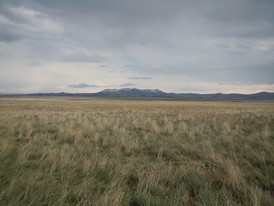
Expiring CRP
During Rancher's Stewardship's January 19th webinar, Dr. Dave Naugle shared key tools and ideas around the scientific basis for investing in grazing communities to conserve wildlife, introduced exciting new technological innovations in rangeland monitoring, and communicated the potential benefits of transforming expired CRP acres into valued assets of your grazing operation.
If you missed the live webinar, the recording is now available on our YouTube page. Registration is still open for future webinars.
One topic that surfaced many times in the webinar chat box and in the discussion following Dr. Naugle's presentation was the challenge grazers face in rejuvenating or adding diversity to established stands of crested wheatgrass.
In the post-event survey, we asked our ranching participants to share their experiences and experiments with grazing old crested wheatgrass. Here, we're sharing their responses in hope that it sparks ideas if you're seeking, and creates space for you to comment with your own successes or failures. The survey responses were shared anonymously.Improving productivity, diversity in old crested wheatgrass stands - Rancher's Stewardship Alliance (ranchstewards.org)
|

Rangeland Analysis Platform: Integrating production and economics into area-wide planning
Rangelands produce ecosystem services that not only support biodiversity and wildlife, but also sustain livestock operations and rural economies. Woody encroachment is a threat to rangeland productivity, but its impact is often overlooked due to its slow pace and the positive public perception of trees. The Rangeland Analysis Platform (RAP) is an innovative online tool that combines current and historical satellite imagery with thousands of on-the-ground vegetation measurements to facilitate an exploration of trends in western vegetation over time. Using RAP’s recently developed remotely sensed products of rangeland production, we quantify the amount of forage lost to woody encroachment across western rangelands over the past three decades. Translating these losses into dollars, we demonstrate how this knowledge can be integrated into area-wide planning to stop further economic loss and prevent wholescale ecosystem transitions. Rangeland Analysis Platform (rangelands.app)
|
The Hidden Dangers of Processed Plant Proteins
Sara Keough MS, CNS, LDN- Integrative Eco-Nutritionist
Understanding Ag, LLC Technical Advisor
While animal products have been routinely vilified and branded as promoting heart disease, cancer, and other chronic diseases, it turns out there is no solid evidence to support these claims. Yet, mainstream restaurants and supermarkets continue to make room for alternative meat items on their menus and shelves based largely on the perception that they’re healthier alternatives to meat. But these highly processed, plant-based meats come with real dangers that belie their “healthier” billing.
In Part 2 of this “Artificial Animals” series, we’ll sort fact from fiction and creative marketing from solid science, to challenge the assertion that “plant-based meats are a healthy alternative.”
The Hidden Dangers of Processed Plant Proteins
|
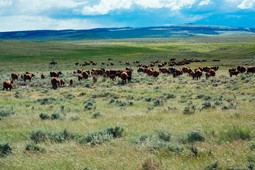
ARS Fort Keogh Livestock and Range Research Laboratory Update
Although the COVID-19 situation has restricted field days, public meetings, and travel, the ARS Fort Keogh Livestock and Range Research Laboratory (LARRL) has remained busy, keeping their experiments going and continuing important data collection. A new feed mill was completed in Spring 2020. The feed mill will provide more efficient feed production and more storage capacity to support feedlot operations and supplemental feeding. The farm irrigation system at the location is in the process of being upgraded. In 2020, a stretch of open irrigation ditch was converted pipeline to increase efficiency and reduce water loss. Another portion of the line is scheduled to be completed in 2021, along with irrigation pump replacement.
During the past year, vacant positions that had been on hold due to a hiring freeze were filled, and the location is now fully staffed with 9 research scientists working at the lab. In late August 2020, Dr. Jay Angerer was hired as the new Research Leader at Fort Keogh. Dr. Angerer was previously with Texas A&M University where he conducted research on drought early warning systems, livestock nutrition management, and use of remote sensing to evaluate rangeland conditions. He has been actively engaged in the development of tools and information systems for assisting producers in adaptive management decision making. He has extensive international experience, having led or collaborated on livestock and rangeland studies in 14 countries. In addition to his research leader duties, he will be initiating studies for drought early warning and monitoring for Montana and Great Plains rangelands. In January 2021, Devan McGranahan joined Fort Keogh as a Research Rangeland Management Specialist. Dr. McGranahan previously worked as an Associate Professor of Range Science at North Dakota State University (NDSU) where his research focused on wildland fire and interactions with grazing. He led the NDSU Wildland Fire prescribed burning program, in addition to developing open-source technologies for measuring fire behavior and tracking livestock responses with GPS collars. He was named as Outstanding Young Range Professional by the Society for Range Management in 2020.
|
Deadline for public comment extended until April 17, 2021 |
|
 |
The Forest Service Rangeland Management proposed directives were drafted in a good faith effort to provide greater management flexibility and enhance the clarity of policies and procedures applicable to the rangeland management program. To ensure that all members of the public who have an interest in rangeland management have the opportunity to provide comment, we are extending the comment period on the proposed directive to April 17, 2021.
The proposed directives and additional information on the proposed directives can be found at https://www.fs.fed.us/rangeland-management/directives.shtml. The additional information describes the purpose of the directives and why they are being updated and includes documents that will assist with review of the proposed directives and a schedule of informational webinars on the proposed directives.
After the public comment period closes, the Forest Service will consider timely and relevant comments in the development of the final directives. A notice of the final directives, including a response to timely and relevant comments, will be posted on the Forest Service's web page at https://www.fs.fed.us/about-agency/regulations-policies/comment-on-directives.
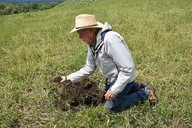
USDA Grants Available to Spur Innovation Technologies in Montana
BOZEMAN, Mont., Feb. 23, 2020 – USDA’s Natural Resources Conservation Service (NRCS) is accepting applications for grants until April 23, 2021, to fund Montana projects that could stimulate the development and adoption of innovative conservation approaches and technologies. Conservation Innovation Grants (CIG) generally fund pilot projects, field demonstrations and on-farm conservation research.
Tom Watson, NRCS state conservationist for Montana, said $225,000 is available for the state-component CIG this year. He said applicants can request up to $75,000 for projects lasting one to three years. Watson said projects should address one or more of the three resource concerns identified for this program: soil health, water quality and quantity, and range health.
Read the full story. [lnks.gd]
Learn more about Conservation Innovation Grants. [lnks.gd]
|
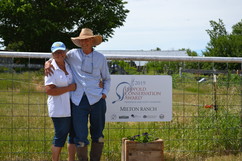
2021 Montana Leopold Conservation Award- Call for nominations
The Rangeland Resources Program is now accepting applications or nominations for the 2021 Leopold Conservation Award. The award recognizes those doing exceptional conservation and stewardship work on private lands. Montana is almost 70% rangeland, and over 60% of that, is privately owned. Montana's ecological and economic heath depend greatly on those who are providing stewardship on private lands. Winner videos are well worth the few minutes, and will make you smile. The application can be found here, for more information visit Rangeland Resources http://dnrc.mt.gov/divisions/cardd/rangeland-resource-program. Applications are due March 15, 2021.
|
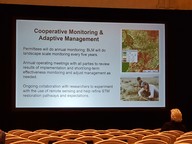
Society for Range Management - Partners Meeting
The 2021 Society For Range Management Annual Conference was virtually and with record attendance. A couple of years ago the Society started having partnership meetings during the annual conference. This year's Partners meeting had some very worthwhile precentors on successful collaboration across the nation. The meeting can be viewed at https://www.youtube.com/watch?v=SJx23uNeO5c [youtube.com].
Among the presentations were a couple that are also note worthy, below from the WGA and the Central Grasslands Roadmap.
Western Governors’ Association:
The WGA Invasive Species Data Mobilization Campaign [westgov.org]
The WGA Toolkit [westgov.org] for Invasive Annual Grasses
The Working Lands, Working Communities Initiative [westgov.org]
Central Grasslands Roadmap:
Website: www.grasslandsroadmap.org [grasslandsroadmap.org]
|
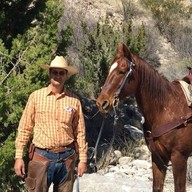
Alejandro Carrillo- After a successful career as an IT consultant in the US and other countries in the Americas and Europe, Alejandro joined his family ranch back in 2004. Tired of the constant drought and suffering that comes with traditional ranching in the Chihuahuan desert, he searched for better ways to do things.
Since 2006, he adapted the principles of Holistic Planed Grazing Management to his ranch. The change from continuous grazing to planned grazing brought many challenges as well as positive results, such as being able to increase his carrying capacity 3 times while lowering his inputs.
GFE 2019 - Alejandro Carrillo (April 5th, 2019) - YouTube
|
Weedy Wednesdays -Montana State University and Montana Weed Control Association
Rancher's Voice - Montana Stockgrowers weekly podcast
Rural Resiliency Rancher Stewardship Alliance
Natural Resource Public Policy Series- Dan Scott Ranch Management October Natural Resource Policy Seminar Series
Rangeland Podcasts- The Art of Range podcast provides education through conversation with some of the brightest minds in rangeland management.
 |
|
State Coordinator Corner |
This past month has been full of more that my fair share of Zoom conferences, webinars and meetings, and given the arctic blast that came through, I was grateful not to travel. I came across this YouTube video that should bring a smile and a giggle. There are times we all need a little filter, but this poor guy was Zooming a District Court hearing, and well see for yourself, Kitten Zoom Filter Mishap - YouTube.
Check out Save the Date, this will be filling up the next few issues with summer learning and sharing opportunities.
March 2021
March 8, 2021 - March 9, 2021 Soil Health Innovations Conference [lnks.gd]
March 17, 2021 Beneficial Invertebrates in Our Soil Webinar [lnks.gd]
March 31, 2021 Wetlands and Pollinators: How Water Quality Practices Can Benefit Pollinators [lnks.gd]
May 2021
406 Rangelands and Livestock Forum May 25th & 26th - Billings MT
NRCS Events. Calendar of conservation workshops and training
Natural Resource & Policy Series- Dan Scott Ranch Management Program
Stacey Barta, State Coordinator for Rangelands
220 W. Lamme, Suite 1A
Bozeman, MT 59715
(406) 594-8481
SBarta@mt.gov
Rangeland Resources Committee:
John Hollenback, Chairman
Steve Hedstrom, Vice Chairman
Diane Ahlgren
Noel Keogh
Connie Iversen
Sigurd Jensen
|