|
KALISPELL, Mont — The Flathead Basin Commission (FBC) was created in 1983 by the Montana Legislature to monitor and protect water quality and the natural resources in the Flathead Basin. The FBC is a uniquely structured non-regulatory organization that works to accomplish its mandate in a consensus-building manner, stressing education, cooperation, broad based community involvement, partnerships with agencies and nonprofit groups, and the voluntary participation of Basin residents.
The Flathead Basin Commission would like to extend our best wishes to you and your families during this global health and economic crisis. We are grateful for the resilience of our state, the perseverance of our communities and the strength of our essential workers.
Photo: Montana Disaster and Emergency Services
During these strange and unprecedented times, FBC is adapting and staying dedicated to the mission of protecting our natural resources and the aquatic environment of the Flathead Basin. Our staff is working remotely, our executive committee continues to meet bi-weekly and our upcoming meetings will be going virtual!
Our summer meeting will be held virtually via 'Zoom' on July 8th, 2020. Agenda to come but items likely to include: Onsite Wastewater Treatment Committee updates, approval of FY21 budget, creation of an outreach committee, and updates on our stormwater project.
The FBC Onsite Wastewater Treatment Committee will meet May 19th (via Zoom). Some exciting maps to share and recommendations/report are in development.
Contact us for information on our upcoming virtual meetings, which are all open to partners and the public to attend.
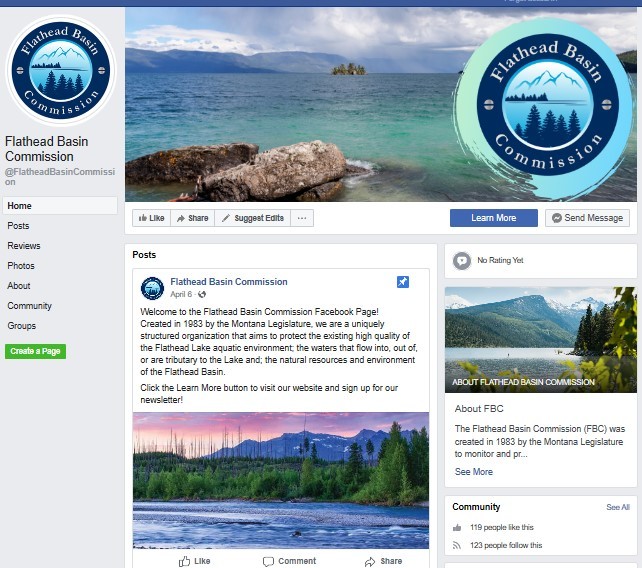
The Flathead Basin Commission has entered the world of social media. We will be posting commission updates, sharing water quality news and connecting with our community.
Please like and follow us @FlatheadBasinCommission Don't forget to share our page with your family and friends!
The Flathead Basin Commission is officially the recipient of a $51,000 EPA Multipurpose grant to address nonpoint source pollution, with a focus on stormwater mitigation within the Flathead Basin. The projects are a collaboration between the Commission and the City of Kalispell, which will enable both entities to leverage additional resources, including a $6,000 cost share from the Montana Watershed Coordination Council's 319 Non-Point Source Grant.
The projects provide vast benefits to the Basin, including but not limited to the acquisition of critical data to support enhanced water quality monitoring in the Basin, increasing coordination and relationships with watershed groups and stakeholders, and building on existing knowledge of priority sites at highest risk of nonpoint source pollution to Flathead Lake and its tributaries.
Stormwater Project Updates
The City of Kalispell and the FBC have utilized the Big Sky Watershed Corps (BSWC) Program for the project. The selected AmeriCorps Member, Emilie Henry, has made great progress in the past few months, despite the challenges the COVID19 pandemic has presented. She has developed a criterion for ranking outfalls in the basin based on their potential for both surface and groundwater contamination and is working to locate and map culverts, storm gravity lines, outfalls and detention basins. Moving forward, Emilie will be conducting stormwater sampling at four different outfalls in Columbia Falls, Whitefish, Kalispell, and Evergreen.
The project will be basin-wide and create a cohesive and comprehensive stormwater inventory which includes an evaluation of the needs and issues within the basin. The project will build a solid foundation that can be expanded upon in subsequent years.
Flathead Rain Garden Initiative
Emilie has also been providing support for Flathead Rain Garden Initiative (collaborative public program between Flathead Conservation District, Flathead Basin Commission and the City of Kalispell). She has been working with the conservation district's BSWC member to create and add a number of materials to the Flathead Rain Garden Initiative website, including three theoretical rain garden designs, a Montana Native Plants List, a DIY workbook and a Homeowner Incentive Agreement that outlines the conditions of the program.

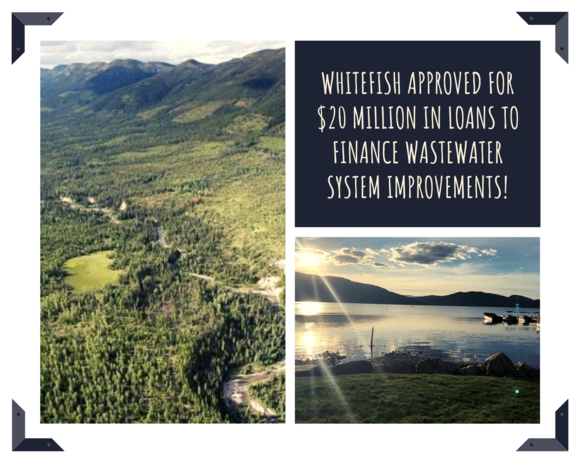
WHITEFISH, Mont. – Governor Steve Bullock recently announced that the City of Whitefish has been approved for three State Revolving Fund loans worth a total of $20 million for a new wastewater treatment system.
“Communities that invest in modern infrastructure, including drinking water and wastewater treatment systems, benefit now and for generations to come,” said Governor Bullock. “These projects not only create good-paying jobs for Montana workers, they better prepare our communities for new growth and development enhance the health and well-being of our citizens, and protect our soil, groundwater and surface water.”
The city has a complex wastewater collection system with more than 58 miles of sewer main and 16 lift stations; portions of the system are more than 100 years old. In its current form the system cannot consistently meet new limitations for discharged ammonia and will have difficulty meeting nitrogen limits as growth continues. Between 2010 and 2017 the city received a number of citations for exceeding discharge limits for ammonia, phosphorous and other elements.
The Montana Department of Environmental Quality (DEQ) will oversee implementation of the project while DNRC administers the loans.
5.8.20, Columbia Basin Bulletin, IDFG Netting Lake Trout In Upper Priest Lake To Reduce Predation On Bull Trout, Cutthroat
5.8.20, Columbia Basin Bulletin, WDOE Issues Water Quality Certifications For Columbia/Snake River Dams With Conditions Requiring Water Temperatures Be Addressed
5.8.20, Columbia Basin Bulletin, NOAA Launches Wide-Ranging Research Effort Exploring COVID-19 Impact On Environment; Reduced Traffic, Air Travel, Shipping
5.7.20, Char-Koosta News, New 2020 Rules and Regulations for Non-Resident Boaters and Anglers
5.4.20, NBC Montana, Whitefish Water Treatment Plant to be Expanded
5.4.20, NBC Montana, Montana’s Air, Already Good, Hasn’t Improved During Closures
5.1.20, The Western News, Resisting Status as ‘Canada’s Settling Pond'
5.1.20, Columbia Basin Bulletin, Montana Finds Mussels on Sailboat Coming from AZ, Headed for ID
4.28.20, Bozeman Daily Chronicle, Local Groups Say Big Sky Sewage Pond Leaking into River
4.28.20, Billings Gazette, Montana Fishing Report
4.24.20, Flathead Beacon, EPA Concerns Intensify Over Transboundary Mining Pollution
4.24.20, Billings Gazette, Invasive Species Website Goes Live
4.1.20, Courthouse News, Lawsuit Says New EPA Rules Threaten MT Waterways
4.1.20, Ravalli Republic, Bitterroot National Forest Partners with ‘Citizen Science’ Group to Monitor Water Quality
3.31.20, Billings Gazette, Dillion AIS Check Station Overwhelmed with Traffic
3.30.20, KULR8 News, FWP Watercraft Inspection Station Sees Rush of Canadian Boaters
Other Bits of Interest…
Montana Watershed Coordination Council’s Annual Impact Statement is now available.
North American Invasive Species Management Association (NAISMA) hosts free monthly webinars. Join to hear from the experts about invasive species, with topics ranging from data management, education and awareness, invasive species management and legislation.
The Emerald Ash Borer Information Network hosts free webinars where the experts educate us on all things emerald ash borer. All webinars are now available on their website or on the EABU YouTube Channel.
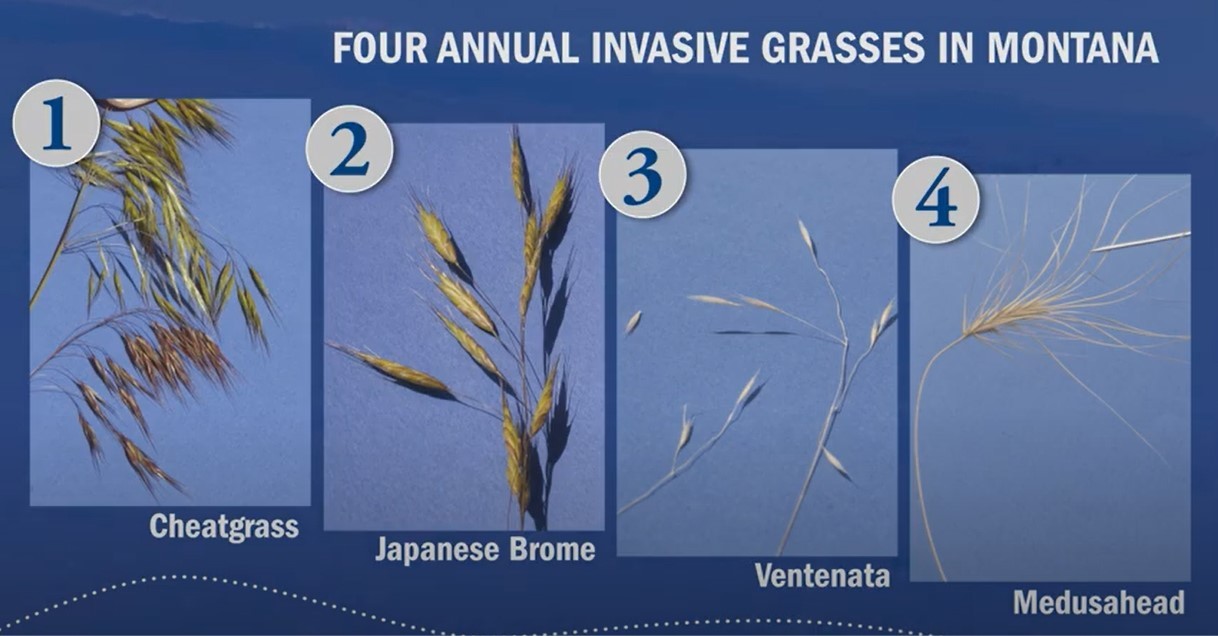
Montana State University Extension Invasive Plant Specialist, Dr. Jane Mangold describes how to identify four invasive grasses (Cheatgrass, Japanese brome, Ventenata, and Medusahead) in this awesome YouTube video. You can use this for brushing up on your own skills or share it with your local audiences, especially as spring approaches and you prepare for field season. Thanks MSU Extension!
Flathead Basin Commission Summer Meeting, July 8, 2020 (via Zoom) and Fall Meeting, September 23, 2020 (KwaTuqNuk Resort, Polson)
The Pacific Northwest Economic Region (PNWER) summit in Big Sky (July 2020) has been postponed to 2021: The PNWER Annual Summit is the leading forum where people in the policy world and the business world come together to figure out solutions to regional challenges. PNWER is recognized as the model for regional and bi-national cooperation, providing a platform for collaboration among public, private, academic, and non-profit stakeholders to work together as a region in pursuit of common goals.
North American Invasive Species Management Association (NAISMA) Conference in Whitefish, MT (Oct 2020) has been cancelled due to concerns with COVID-19 (physical distancing, travel restrictions, budget concerns amongst attendees). They will instead be moving it to a virtual conference, but Montana will have the opportunity to host in 2021 (Sept, Missoula).

Check out our website!
Follow us on Facebook!
|
|