|
UST Upcoming Proposed Rule Update
|
|

Tank registration fees have not been increased since 2003 because the statute includes a cap on those fees, and the statutory cap was reached in 2003. Passage of Senate Bill 46 during the 2025 Montana Legislative session increased the annual fee caps from $108 to $300 for a tank with a capacity of more than 1,100 gallons and from $36 to $100 for a tank of less than 1,100 gallons. The fee increase is not in effect until ARM 17.56.1001, Tank Fee Schedule, is revised
The Underground Storage Tank Program is drafting rules to implement the recently passed increase in the underground storage tank registration fee cap (SB 46). The proposed rules will increase the fees according to inflation from 2003. DEQ proposes to increase the fee for an underground storage tank with a capacity of more than 1,100 gallons from $108 per tank to $165 and from $36 to $55 per tank with a capacity of less than 1,100 gallons. These increases are reflective of the present-day calculations considering inflation that were done during the legislative session.
The department also proposes to correct one omission within 17.56.1404 (2)(b) by replacing “annual” license renewal fee with “triennial” license renewal fee. The change to a triennial license period was made through the rulemaking process in September of 2024, however this reference to the licensing period was not captured in the changes and is now inconsistent with the other updates that modified the license period from one to three years.
|
DEQ Releases UST Communication Plan
The Underground Storage Tank Draft Communication Plan went out for public review until July 18. The department received and addressed the public's comments.
The communication plan outlines the department’s plan to engage with Underground Storage Tank Stakeholders like you. The plan can be accessed here.
New UST Licenses Available!
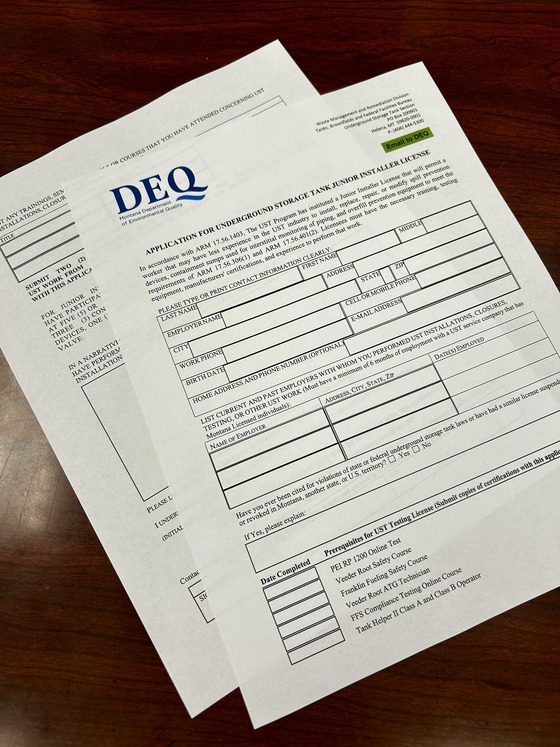 With the advent of the new 2015 EPA UST testing and inspecting requirements, a new and vast amount of UST work performing these tests is being shouldered by our new and existing Montana licensed Installers and Inspectors. Given that all testing must be done by Montana licensees, we have instituted a “Compliance Tester License” and a “Junior Installer License”. These licenses allow easier access to licensure for those who are new to the UST world with limited knowledge without becoming a full-fledged Inspector or Installer.
The requirements for a worker to be considered for the Compliance Tester License begin with meeting the following requirements:
- There is a testing and license fee of $483. This also covers the 3-year license fee.
- Must have a minimum of 6 months of employment with a UST construction company that has Montana licensed individuals.
- Must have two references attesting to their UST work including performing testing in accordance with PEI RP1200 including the use of the Montana UST Testing Forms.
- The individual must have taken a nationally recognized UST Safety Course to ensure that they are able to work safely while in the proximity of the dangerous world of UST work. Typically, this is accomplished with either the American Petroleum Institute (API) or the Franklin Fueling Systems (FFS) online training courses.
- The applicant must have training in operating and programming automatic tank gauges, including sensors, PLLD’s and tank probes. The Veeder Root ATG Technician and the FFS Compliance Testing Online courses are required by the manufacturers to perform testing on their respective equipment.
- The applicant must have training for testing in accordance with our adopted requirements, which can be satisfied by passing the PEI RP1200 online test.
- If the applicant is to be performing ALLD functionality and line tightness tests, they must submit a valid certification from the manufacturer of the testing equipment.
For the Junior Installer license, all of the above criteria also apply. The Junior Installer license allows the licensee to install, replace, repair or modify spill prevention equipment, containment sumps used for interstitial monitoring, and overfill prevention equipment. Additional criteria are:
- Participated in work at a minimum of five (5) separate facilities
- Five (5) spill bucket installations, repairs or replacements
- Three (3) overfill prevention device installations or replacements
- One (1) high-level overfill alarm installation, repair or replacement
- One (1) ball float vent valve removal
- Three (3) containment sump installations, repairs or replacements
- Completion of manufacturer's required training and certification for the equipment being installed.
The applications and reference forms are posted on the UST Website under LICENSED INDIVIDUALS/LICENSEE TESTING. We have begun testing for the new licenses. All applications and references must be reviewed and approved before scheduling a testing date. After approval, applicant contacts a local testing center for test proctoring.
After successfully passing the Compliance Testing License test, the licensee will be able to perform testing for all PEI RP1200 C1-C11 forms as well as cathodic protection and line tightness tests while their certifications are valid. This license is good for 3 years with 16 hours of continuing education credits required as do the Installers and Inspectors.
After successfully passing the Junior Installer License test, the licensee will be able to perform testing for all PEI RP1200 C1-C11 forms as well as cathodic protection and line tightness tests while their certifications are valid. The Junior Installer can also apply for construction permits and perform the required work and testing. This license is good for three years with 16 hours of continuing education credits required as well.
Licensees can obtain the Compliance Tester or Junior Installer license but are not required to obtain both. The Compliance Tester License is a sub-license of the Junior Installer License where actual installation and repair work is not necessary.
For any additional information on how to become a licensed Compliance Tester or Junior Installer in Montana, please contact the DEQ UST program at dequstprogram@mt.gov.
These are some of the common forms you’ll encounter when submitting a claim for reimbursement to Montana Petroleum Tank Release Compensation Board (PTRCB). For further information or clarification, please send your questions to Taylor.Pirre@mt.gov. Here are some best practices to consider ensuring the claim submitted is complete.
Proof of Payment (POP) – What are they and when should they be used.
Firstly, when is proof of payment required as part of a claim document? There are two main scenarios that require this:
- When the Owner is the designated payee on the Claim for Reimbursement - Form 3. A proof of payment is required to show the owner has paid the consultant.
- When a 7% markup is being claimed on a subcontractor invoice. For example, billable labor performed on-site is eligible for a markup, but vendor invoices like laboratory bills, lodging receipts, supply receipts are not eligible for markup.
Valid Proof of Payments are as follows:
- A Form 6
- A cancelled check (both the front and back side must be visible).
- A dated letter or memo on company letterhead, with the following information:
- Invoice No., Invoice Date, Invoiced Amount, Amount Received, and the Name of Company/Individual that paid your company.
- The rules governing valid forms of proof of payments as well as when they are required can be found in ARM 17.58.342 (3)(c). The requirement for a POP when the owner is the payee follows the definition of actually incurred costs and the idea of reimbursement. The Petroleum Tank Cleanup Fund is a reimbursement program. The costs that are claimed must meet the requirements of being actually incurred or spent to be reimbursed.
Assent to Audit (Form 2)
Any company that performs billable hourly labor for a petroleum release that is eligible for reimbursement from the Fund must have an Assent to Audit (Form 2) on file. This includes sub-contractors and main contractors that fit the definition of performing billable labor on the site of a Fund eligible petroleum release. This requirement was set in law, per ARM 17.58.331 and is in place in the event that an audit is needed to make sure the Fund is being used correctly. Please email Taylor.Pirre@mt.gov if you are unsure if a business or subcontractor has an existing Assent to Audit on file with the Petroleum Tank Release Compensation Board.
Designation of Representative (Form 5)
When the owner is not the payee, but would like to designate a representative to receive payment for reimbursement, a Designation of Representative - Form 5 is used. Please note that both fields 4. and 5. need to be notarized on a Form 5. A Form 5 applies to a singular release. If a consulting company has multiple releases that are being handled under the same owner and facility, a Form 5 needs to be filled out for each eligible release the consultant has designated for reimbursement. These forms need to be sent to PTRCB with the original wet signatures and notarial acts via USPS mail. The company being designated and the owner doing the designating should retain a fully executed copy of the form for their records.
For a specific citation regarding Designation of Representative rules, please see ARM 17.58.333.
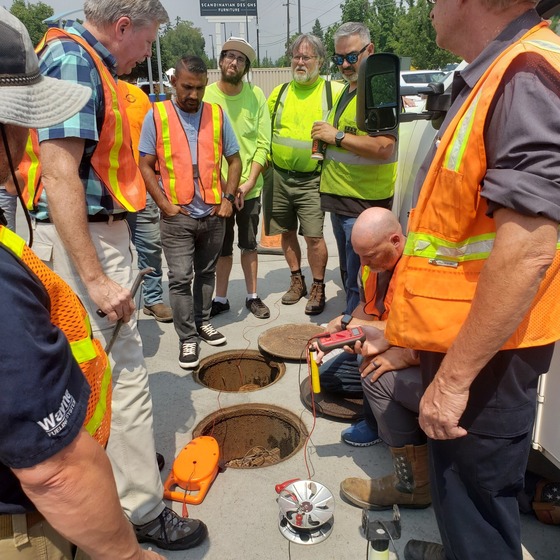 For individuals interested in becoming a licensed UST installer/remover in Montana, The Department of Environmental Quality’s (DEQ) Underground Storage Tank Program has certain requirements that must be met before they can become a licensed UST installer/remover and be able to perform the following UST work:
- Install new underground tanks.
- Install new underground piping.
- Install new parts or equipment associated with existing UST systems.
- Repair or replace damaged parts or equipment on a UST system.
- Remove and close existing UST systems.
The first step to obtaining a Montana DEQ UST Installer/Remover License is performing UST installation work under a current and in good standing UST licensed installer/remover. Almost like an apprenticeship program, a UST installer/remover license can be obtained by doing the required amount of UST installs and removals with a company or individual who is already licensed and then passing the Montana DEQ UST installer/remover examination. Below is a list of our current licensed companies who perform UST installation and removal work in Montana.
Montana Licensed UST Installer/removers:
- EnergiSystems LLC
- Marketing Specialties Inc
- Tank Management Services Inc
- Marketing Specialties Inc
- Nwestco LLC Billings
- AJM Environmental Inc
- Mile High Petroleum
- Sutey Oil Co Inc
- Coeur d’Alene Service Station Equipment
- Seneca Construction LLC
- Elliott Parts & Services Inc
- Keneco Petroleum Equipment Great Falls
- Petroleum Compliance Services
- Shumaker Trucking & Excavating Contractors Inc
- Ken Griffin Fuel Consulting
- Leonard Petroleum Equipment of Boise
- Big Sky Well Testing, LLC
- Montana Petroleum Services
- Nwestco LLC Kalispell
- HARCO Services LLC
- Petrocon Systems Inc
- Advanced Environmental Technologies
- Westmor Industries LLC
- Eastern Montana Environmental Inc
- Granite Petroleum Inc
- Mascott Equipment Co
- SME Solutions
- Petro West
- Kingston Industrial Services
- Tanknology
- Valley Farmers Supply
While working with one of the companies or individuals listed, the next step to obtaining a Montana DEQ UST installer/remover license is to participate in a minimum of three (3) new UST installations and two (2) UST removals with the licensee. A new UST installation consists of installing new tank(s), associated piping and leak detection equipment at a single facility.
The next step to receiving your Montana DEQ UST installer/removal license is to submit a completed UST Installer/Remover Application electronically to DEQ. On the application you will need to submit three professional references, with each having completed and submitted a UST Consolidated Installer/Remover/CP/Tester Reference Form.
The final step to the Montana DEQ UST installer/remover license is the individual must pass the State of Montana Installer/Remover exam with a score of 80% or better. There is a non-refundable application, examination and licensing fee of $483. The individual can contact DEQ for electronic payment or make checks payable to Montana Department of Environmental Quality - UST Section. If the individual passes the required examination and any required field practical, the $483 will cover the three-year license fees for the first triennial period.
On DEQ’s website, you can find the UST installer/remover application on the Tanks, Waste & Recycling page under the licensees tab and licensing information and continuing education. Under this tab, there is also a link titled “installer study guide recommendations” that will help for being prepared for the exam. For any additional information on how to become a licensed UST installer/remover in Montana please contact the DEQ UST program at mailto:dequstprogram@mt.gov.
Special Legislative Funding Report

The 2019 Montana Legislature appropriated a one-time $1,875,000 allocation to DEQ to be used in addressing open petroleum releases. Over the past five years, DEQ has used this funding across the state at 64 petroleum releases for investigation, cleanup and compliance monitoring projects. DEQ resolved 20 petroleum releases, and several more are nearing closure. Releases addressed with this funding were required to meet certain criteria. The majority of releases are legacy orphan sites where the current owner did not cause or contribute to the petroleum contamination.
SLF success stories include the former Mill Iron Restaurant. This release had been inactive since 1994. DEQ worked with the new property owner and was successful at getting the release investigated in 2022. The release met eligibility requirements of the Petroleum Tank Release Compensation Fund (PTRCF), and SLF monies used on the investigation will be applied to the PTRCF co-pay to allow the owner to continue to investigate and cleanup the release to meet closure criteria.
The Wise River Club reported a petroleum release in 1997 and had gone through several property owners hesitant to take on liability for the release because it was ineligible for the PTRCF. The owner, recently widowed, was looking to sell the property and retire in Arizona. She worked with DEQ to complete a remedial excavation in 2023 using SLF monies. Post-excavation groundwater monitoring has shown contamination dropping below risk-based screening levels (RBSLs) and the release will be assessed for closure in 2025. With this work completed the owner was able to sell the property and retire.
To date, the majority of the allocation has been spent and all remaining monies have been allocated to a few final projects.
|
Owners and Operators of UST systems in Montana are required to maintain a schedule of inspections, testing and leak detection monitoring. This can be onerous. There are several components of a system that must be tested. The frequency of those tests varies – Is it an annual test? A yearly inspection? It can be tricky to remember and distinguish between each type of test and keep track of deadlines.
Owning and operating a UST system carries with it a responsibility to maintain and operate the system within the rules and regulations established by the State of Montana Underground Storage Tank Act (MCA 75.11 Part 5). It’s imperative to understand the requirements, so that you can keep your facility in compliance and protect the health and safety of your employees, the public and the environment. Not all tests apply to every facility. You must know your UST system, which tests are applicable and which are not. See the summary below to help understand the UST rules (ARM 17.56) and prevent releases of petroleum from UST systems and protect the clean air, soil and water we all enjoy.
 Required Annual Testing (every year)
Annual testing of release detection equipment must be completed by a licensed installer, licensed compliance inspector, licensed junior installer, or a licensed compliance tester.
- Release Detection Equipment such as the Automatic Tank Gauge and associated probes, the ELLD/ALLD/PLLD or MLLD, and the interstitial tank and piping monitoring sensors.
Triennial Testing (every three years)
Triennial Testing must be completed by a licensed installer, licensed compliance inspector, licensed junior installer, or a licensed compliance tester.
- Spill buckets
- Drop tube shut-off valves
- High level alarms
- Auto limiter
- Ball float vent valves
- Cathodic protection systems
- Containment sumps if using interstitial monitoring for primary line leak detection method
Triennial Inspections
Active and inactive UST systems must have a compliance inspection every three years by a Montana licensed compliance inspector. They must be completed to renew the operating permit for the UST facility. These are thorough investigations into the system and can reveal problems with the UST system or incomplete UST system records, which can result in violations. These violations must be corrected before the current operating permit expires or within the timeframe provided by the UST Program in the Corrective Action Plan.
Monthly Walkthrough Inspection
- Must be recorded on the MT DEQ Monthly and Annual Walkthrough Form
- Must visually check spill buckets for damage and remove liquid or debris. This is also a good time to ensure you have current legible non-expiring DEQ issued tank tags.
- Must check for and remove obstructions from the fill pipes (like tank gauge sticks).
- Must check release detection equipment to ensure it is operational and no alarms are present.
- Must ensure records of release detection tests are current and passing.
- For double-walled spill buckets with interstitial monitoring, must check for a leak in the interstice.
- Inspect and record rectifier readings for the cathodic protection system (required every 60 days).
- Record if there were any actions taken to correct issues found during the monthly inspection.
Annual Walkthrough Inspection
- Must be recorded on the MT DEQ Monthly and Annual Walkthrough Form.
- Must visually check containment sumps for damage and petroleum contained in the sump.
- Must remove liquid and debris that might be present in the sump.
- Must visually check for releases to the environment from the sump if damage is found.
- For double-walled sumps, must additionally check for a leak in the interstice.
- Check handheld release detection equipment such as gauge sticks as applicable.
Record Keeping
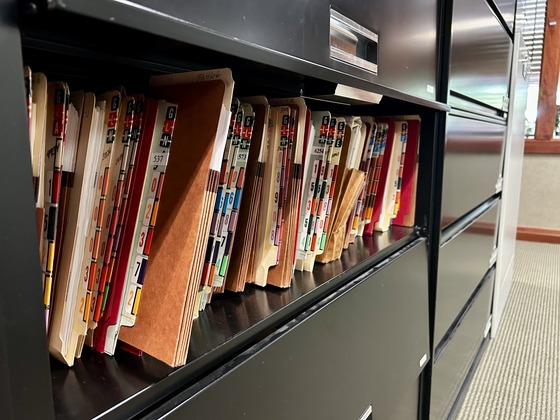
An essential part of operating an UST System is maintaining the records related to release detection, walkthrough inspections, repairs and maintenance as well as annual and triennial testing and inspections. These records are required to be maintained on-site at the UST system facility or at a readily available alternative site. The records must be readily available for inspection upon request.
What Records Do I Need to Keep?
- All annual test results
- All triennial test results
- Triennial compliance inspections
- Monthly and annual walkthrough inspections
- Cathodic protection monthly (or every 60-day) inspection records
- Cathodic protection triennial test results
- Passing monthly tank leak detection test records
- Passing monthly line leak detection test records
- Current certificate of financial responsibility form
- Records of current Class A, Class B and Class C Operators’ training
- Records of all repairs made over the lifetime of the UST system
- Documentation of UST system compatibility for >10E and >20% Biodiesel
- Records of site investigations of leak detection alarms for underground piping and tanks
Amazon Shopping Cart: UST Compliance Records Kit
This level of record keeping requires infrastructure of its own. The sample shopping cart is meant to provide examples of the types of materials used to successfully manage records and is in no way an endorsement of the products themselves.
|