Petroleum Tank Cleanup Section Special Legislative Funding Update for 2023
The Montana Legislature appropriated $1,875,000 to the Petroleum Tank Cleanup Section during the 2021 legislative session to address petroleum releases across the State. Releases addressed with this funding have to meet certain criteria and the majority are legacy orphan sites where the current owner did not cause or contribute to the petroleum contamination, but the release needs additional investigation and/or cleanup to resolve the release. Funding has also been used to hire contractors to review files and reports and write closure packets for releases.
Special Legislative Funding Project Summary for 2023
-
5 Task order projects approved and moving forward (40 total since 2021)
- 2 Cleanups
- 2 Investigations
- 1 Compliance Monitoring
- 11 Petroleum releases have used HB5 funding to assist with meeting the PTRCB copay.
-
14 Releases assessed for closure in 2023 (39 total since 2021)
- 13 Legacy Releases (25 years or older since confirmed date)
- 7 Resolved
- 2 Pending Review/Approval
- 5 Need Additional Work
- Total Spent (since 2021): $946,661.62
- Amount Left for additional projects: $840,782.25
If you have a petroleum release and want to know more about DEQ funding options to get work going and moving the release towards closure, please contact a Petroleum Tank Cleanup Section Project Officer at 406-444-6444.
Meet Your New UST Inspectors
DEQ has recently hired several new UST inspectors to help ensure that facilities are operating in a safe and up to date manner. Here are some of the new staff you may talk to or see around your facilities.
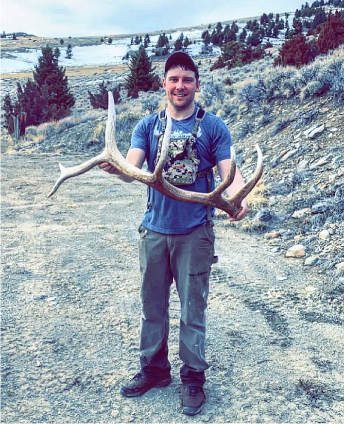
Dylan:
Dylan was born and raised in Helena, after high school he pursued a degree in science and graduated from the University of Montana Western in Dillon, MT with a degree in geology. After graduation, Dylan worked as an underground grade control geologist at the Stillwater Mine before coming to work for the State of Montana. Dylan lives in Townsend and enjoys the outdoors, shooting his bow, shed hunting, tinkering, and spending time with his four-year-old daughter.
Joey:
Born and raised on Washington’s Kitsap Peninsula, Joseph (Joey) Kane grew up with a love of the outdoors; fishing, crabbing, and recreating throughout the Puget Lowlands. To gain a higher education, Joey left for his grandparents’ home state of Montana upon graduating high school in 2016. While studying the Land Rehabilitation option of the Environmental Sciences degree at Montana State University, he became an executive member the Beta Rho Chapter of the Sigma Chi Fraternity, instructed undergraduate labs and conducted field research, and graduated with honors to accompany a minor in Soil Sciences. After successfully completing his undergraduate program, Joey left his college job, pushing cows in the Powder River Country, to fight fire for the United States Forest Service, and later as a sawyer for a private forestry company. During his time in the Last Best Place, Joey further developed a love for all things natural and cultivated a comprehensive understanding of regional land resources. A combination of experience and knowledge spurs his interest to continually improve our landscape with the Montana Department of Environmental Quality. Today, Joey spends his free time off-piste at Big Sky, fishing our pristine rivers, and chasing elk from the prairies to the mountains.
Kit:
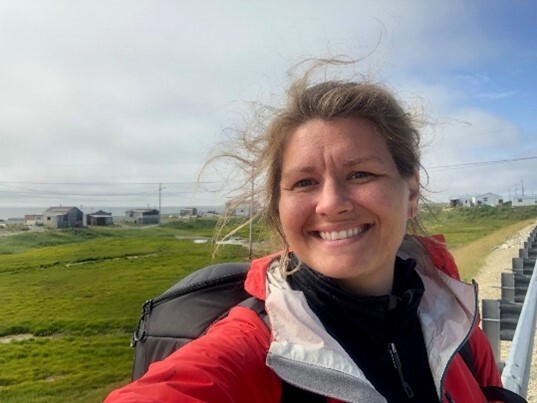 |
Kitrina (Kit) Persson grew up in Interior Alaska, enjoying skiing, snowmachining, and biking her way around her small town, until departing for college and being indoctrinated into the big city of Anchorage. After graduating she began her career with the Alaska Department of Environmental Conservation regulating the landfills in remote western Alaska communities. Missing the rural lifestyle and seeking career growth and off-grid living, she moved to Nome, Alaska gaining further experience documenting contaminated sites, and working with several Native Alaska Tribes implementing a Brownfield Program to pursue cleanup and redevelopment of blighted properties on the Seward Peninsula. Despite the merriment of the Iditarod finish line, life on the edge of the Bering Sea soon blew Kit south, where she met her husband and decided to pursue a life in the historical Capital City of Montana. Taking on yet another learning opportunity, Kitrina joined the UST program in March, excited to be able to apply her knowledge and experience with tanks to the underground world and enjoy exploring the Treasure State.
Reminder: Walkthrough Inspection Videos are Available
|
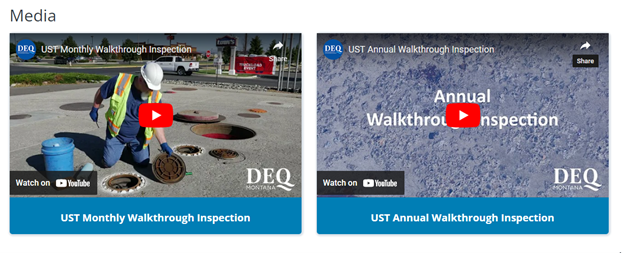
To help owners/operators train new employees on walkthrough inspections, we have created two short videos found on the bottom of our webpage at: https://deq.mt.gov/twr/Programs/ust
Monthly walkthrough inspection video: https://youtu.be/XkvaY87js8A
Annual walkthrough inspection video: https://youtu.be/zcAfz6l8UYE
 Benefits of 30-Day Walkthrough Inspections
Some of the benefits of Walkthrough inspections are:
-
understanding your system better
-
finding problems before they develop into something that can threaten the system
-
protecting the environment
-
avoid losing costly fuel
-
giving you peace of mind
We've been hearing examples of issues that were discovered during 30-Day Walkthrough Inspections:
Example #1: Maintenance personnel found upon visual inspection for the 30-Day Walkthrough that turbine sump had 16” of diesel #2 in it. This was reported immediately, and the product was shut down until the necessary repairs could be completed. If this wasn’t found during the Walkthrough Inspection, the leak could have caused diesel #2 to leak out of the sump creating a fuel release.
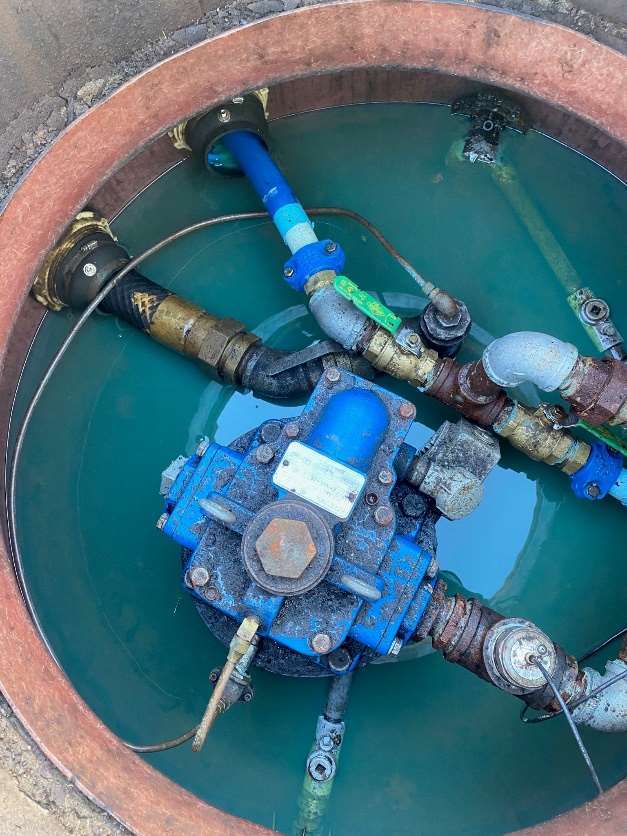 Example #2: A facility reported that there was a leak in a diesel product line found during the 30-Day Walkthrough Inspection. The location immediately shut down the High Flow Diesel #2 until repairs could be made. It turned out that a dispenser was leaking on a union causing a sump to fill up with fuel then run back into the turbine sump.
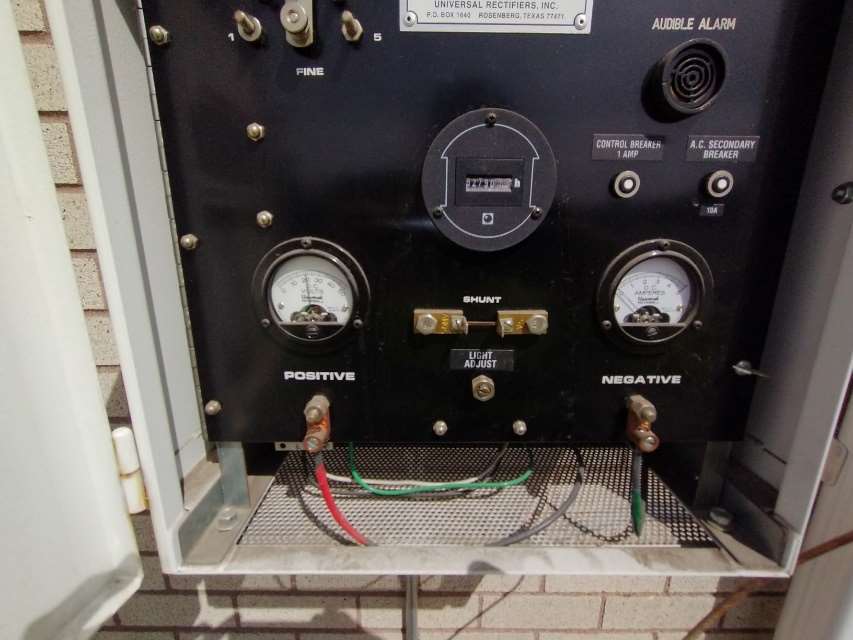
Example #3: A facility was performing the 30-Day Walkthrough Inspection when they were taking the readings off the rectifier, the cathodic protection amp reading was reported at zero. A cathodic protection engineer was hired to survey the site. The engineer explained the issues and what repairs needed to be completed. Without cathodic protection the underground tanks and associated piping are not protected which could cause premature erosion of the tanks and piping which could cause leaks into the soil.
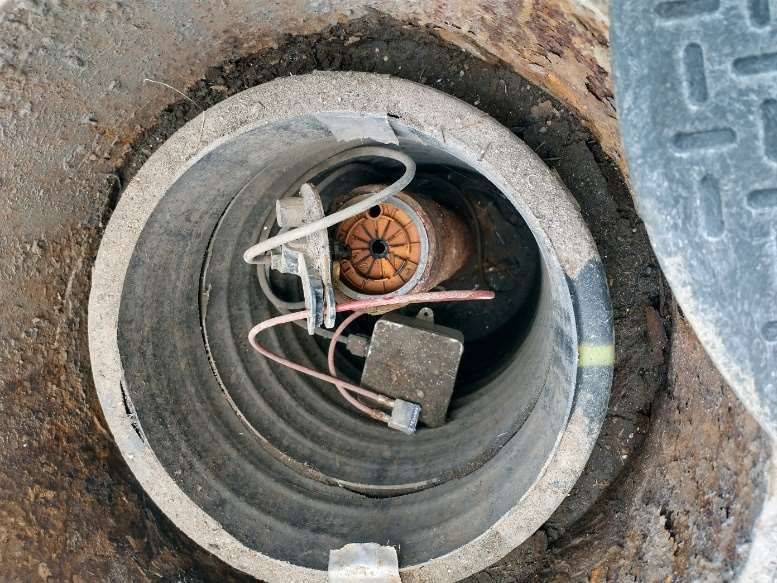
 Example #4: During the 30-Day Walkthrough Inspection, the maintenance personnel reported the need for a new seal cap for a brine spill bucket. During the Walkthrough Inspections, the maintenance personnel inspect all lids, caps, and make sure there are the appropriate locks on each device.
 Example #5: During a 30-Day Walkthrough Inspection, the maintenance personnel reported that one of the dispensers had a meter gasket leak. The location immediately shut off the shear valve to keep any fuel from being dispensed. A vendor was dispatched to make the needed repairs. Without the visual from the inspection, this leak could have gone on for longer which could cause a fuel release. The smallest of leaks, one to two drops per second is equivalent to 1.2 gallons per day and 36 gallons per month.
Additional Examples of issues found during a 30-Day Walkthrough Inspections:
- Liquid in sump with the ATG alarm not going off. The ATG needed to be programmed again to ensure that alarms go off when liquid enters the sump.
- Multiple fuel seeps on dispenser hoses. Hoses had to be replaced.
- Bulges in spill buckets. The spill buckets had to be replaced.
|