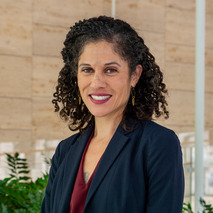
Office of Community Safety (OCS) Commissioner Toddrick Barnette announced the selection of Amanda Harrington as the next Director of the Neighborhood Safety Department (NSD). She will be tasked with leading the City’s newest department, engaging with community groups and empowering grassroots organizations, helping them mitigate the issues that can cause crime and violence in their communities.
Harrington serves the OCS Director of Design and Implementation, where she provides direction to the strategic coordination of the City’s community safety ecosystem – the purposeful collaboration of services to address prevention, response, and restoration, ensuring that the City provided the right response at the right time. She supervised the development of the community safety centers, engaging with the community dozens of times to learn of their concerns and visions for a safer Minneapolis. She also oversaw the innovation, evaluation, and implementation of new programs, such as the Community Safety Ambassadors, a program that will launch next month. Harrington will begin her new role on May 2.
Watch the news coverage
|
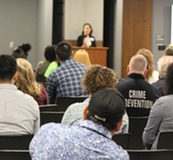
The City of Minneapolis is seeking applicants to join the Safe and Thriving Communities Work Group, a new advisory committee made up of community members who will provide input to the City on the implementation of the Safe and Thriving Communities Plan, the City’s guide to developing a fair and equitable community safety system.
With a diversity of backgrounds and experiences representing the varied demographics of our community, this group will offer advice to the Mayor, City staff, and City Council on development of the community safety ecosystem’s prevention, intervention, and restorative services beyond policing.
Members will track the implementation of the plan, identifying gaps, advising on policies and the budget, and offering feedback. The group would also be instrumental in creating community engagement opportunities.
Applications will be accepted until May 4. For more information and to apply, visit the Safe and Thriving Communities Work Group webpage on the City’s website.
You can also share the opportunity with this promotional flyer.
|
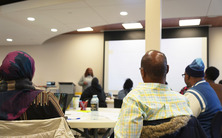
The City of Minneapolis' Neighborhood Safety Department (NSD) is seeking qualified community-based organizations to join a pre-approved list of providers for violence prevention services.
Organizations are invited to apply from April 14-May 5, through a Request for Proposals (RFP) process. Selected organizations will be eligible to receive work orders over the next three years to support efforts that help prevent and reduce violence while enhancing community safety.
What we’re looking for
We're building a pool of experienced and trusted partners who can deliver community-driven services across one of the four priority areas:
-
Hospital-based violence intervention
Programs that offer support to individuals impacted by violence during and after hospital stays, including crisis intervention and long-term case management.
-
Supportive services for youths and families
Services that strengthen families, promote youth development, and connect youth with mentors and positive role models.
-
Street engagement, community justice partnerships, and community norm change
Outreach efforts that build trust, mediate conflicts, connect high-risk individuals to resources, and foster community-wide shifts in norms around violence.
-
Environmental design and safety enhancements
Projects that improve public spaces and promote safety through neighborhood beautification, green spaces, and other environmental changes.
Who can apply
Eligible responders are non-profit organizations, neighborhood organizations, cultural organizations, places of worship/faith-based organizations, and other entities registered to do business in the State of Minnesota. Government entities are not eligible.
Learn more about the RFP on the City's website.
|
New dashboard will keep the community informed as steps are taken to address information privacy and operational safety concerns.
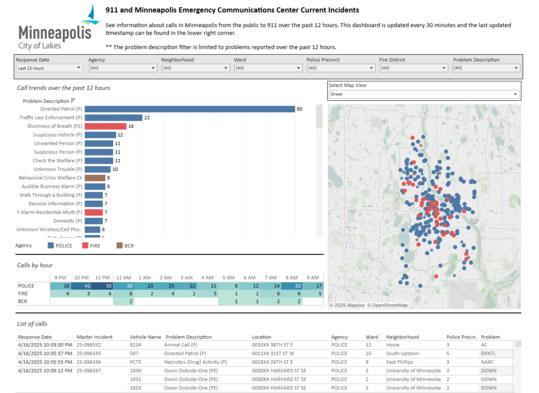 The City of Minneapolis launched a new 911 emergency incidents dashboard. The dashboard’s rollout coincides with the testing of encryption on the City’s main emergency-response communications channels to comply with Minnesota state data privacy regulations, providing additional safety and privacy for both first responders and residents. Testing will continue until May 1, when the channels will be encrypted fulltime.
The new dashboard will be updated every 30 minutes and will include the following features:
- 911 calls over the last 12 hours.
- Mapped location of incidents.
- Incidents categorized into police, fire, and BCR calls.
- Incidents categorized by date, agency, neighborhood, or problem code.
State data privacy laws and regulations and the Federal Bureau of Investigation’s (FBI) Criminal Justice Information Services Security policy require the protection of certain information related to law enforcement investigations and victims of crimes. Because tactics, locations, and private identity information are regularly broadcast over the air during incidents, real time access to the 911/Minneapolis Emergency Communications Center (MECC) main channels will be limited, ensuring only authorized entities are able to access this data. Read the full story on the City's website.

This week, April 13-19, we are honoring our Minneapolis Emergency Communications Center 911 telecommunicators during National Public Safety Telecommunicators Week.
The City of Minneapolis takes in over 600,000 calls to 911 each year. Telecommunicators are the true first responders, trained to quickly assess situations and dispatch the most appropriate support—whether it's police, fire, medical, or Behavioral Crisis Response teams. Their ability to stay composed under pressure saves lives and ensures the right response gets to the right place at the right time. Thank you for your commitment, service, and sacrifice!
Watch the news coverage
|
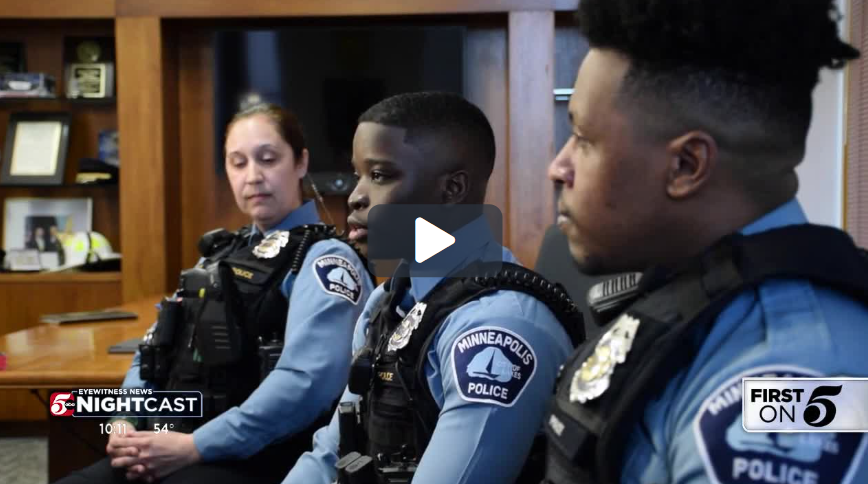 The Minneapolis Police Department is seeing a surge in the number of experienced officers joining the force. The need for more officers in Minneapolis is drastic, losing hundreds following the murder of George Floyd — the fewer officers has led to longer 911 response times, officer burnout, to less focus on investigations with investigators needing to be on patrol.
But progress to rebuild is being made — the department reports gaining 38 officers last year, including 22 “lateral hires,” which are officers that join from a different agency. That nearly two dozen is more than four times the number the year before.
Watch the news coverage
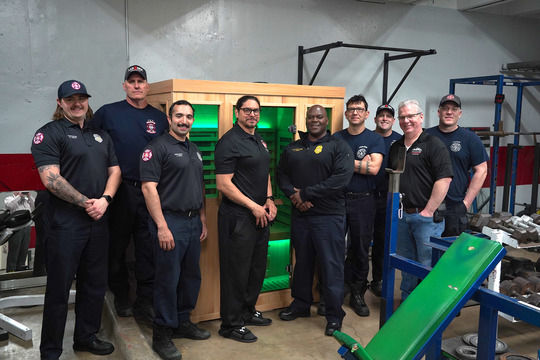 Three Minneapolis firehouses recently added a new piece of equipment to their buildings. But it isn’t for putting out fires. Stations 7, 11 and 17 had 3-person, infrared saunas installed, compliments of the Minneapolis Fire Foundation.
According to the International Association of Fire Fighters, 72 percent of firefighters die from cancer. Because there are so many products chemicals in homes (furniture, digital devices and synthetic materials), the toxins that burn increase health risks to firefighters. To compound those issues, the work itself causes physical and emotional stress that can cause mental and additional physical health concerns.
The saunas provide an additional method for Minneapolis firefighters to detoxify after the day’s work, as well as an opportunity to physically and emotionally destress. Stations 7, 11 and 17 join stations 6 and 14, which had saunas installed last summer. Plans are in the works to equip the remaining firehouses with saunas.
"Multiple studies have proven that the use of saunas to sweat out toxins and other impurities that firefighters are exposed to while firefighting can significantly lower the risk of cancers, helping to keep firefighters and, by extension, the public safe," said MFD Chief Bryan Tyner. "In addition to the donation of saunas, the Minneapolis Fire Foundation has been instrumental in obtaining and donating particulate fire hoods and decontamination kits to further reduce the risk of cancer in firefighters. The Foundation has also made arrangements for skin cancer screenings, which will be taking place in the near future and will be conducted free of charge to all interested Minneapolis firefighters."
|
Police Chief Brian O'Hara says there were 15 homicides at encampments last year, drug use was running rampant, and change had to be made.
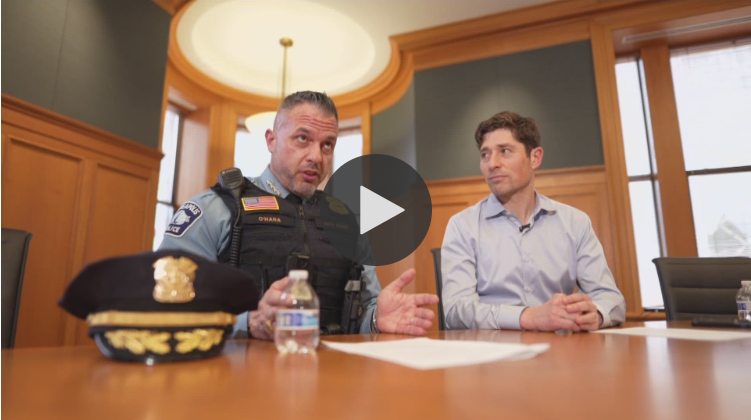 How to deal with homeless encampments is a question the City of Minneapolis has been grappling with for years. But just three months after declaring a special order to proactively address encampment safety concerns, Police Chief Brian O'Hara and Mayor Jacob Frey say a drastic step has been taken in the right direction.
"We were seeing homeless encampments as large as 150 to 200 people," Mayor Frey says. "Right now we have zero significant encampments in the city, and the largest one we're aware of is four people." Chief O'Hara says there were 15 homicides at encampments last year, drug use was running rampant, and change had to be made.
"Hundreds of overdoses the officers responded to around encampments last year," says Chief O'Hara. "You cannot exaggerate the level of harm that these things have had, both on the surrounding neighborhood, but also on the people in them." MPD says 911 and 311 calls in areas surrounding previous encampments are down 80%. Just this month, six separate encampments were either removed or prevented from forming, and the city is actively building more affordable housing for people to move into.
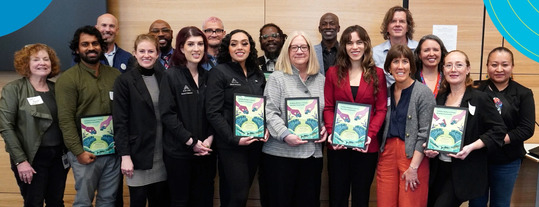 Minneapolis’ Health Department celebrated Public Health Heroes at its annual award ceremony and resource fair on April 9. The theme for this year’s banquet was Building Bridges to Create Healthier Communities. The award ceremony recognizes the vital role community members play in building healthier communities and supporting the department’s vision. Healthy lives, health equity, and healthy environments are the foundations of a vibrant Minneapolis now and into the future.
"We are all committed to building healthier communities in our city,” said Commissioner Damōn Chaplin, Minneapolis Health Department. “The Health Department cannot thrive without its community partners and individuals who play crucial roles in transforming lives. Congratulations to this year's Public Health Heroes. Minneapolis is grateful for the work you do.”
OCS In the News
|